Pregledaj u stvarnoj veličini
 Pošalji
 Podijeli
 Detalji o umjetničkom djelu

 Preuzmi
 Slični predmeti
 Rentgenska snimka
 Automatska prezentacija
Biblis
 Ulje na platnu
- Zidna umjetnost
- Academic Realism
 1884
1884- 19. stoljeće
 79.0 x 48.0 cm
 Prikaži više
Ručno rađena uljana reprodukcija
Ručno oslikano uljanim bojama na platnu u dimenzijama i okviru po vašem izboru, izrađeno po narudžbi od strane naših umjetnika. ( Kupi print Kupi digitalnu sliku)




P118B $10

P118H $10

P118W $10

P438Z $10

P508JH $12

P508YH $12

P805H $10

P805Z $10

P919BZ $10

P919G $10

P919XJ $10

P959ZH $10

P968JZ $12

W106C $8

W218G $10

W218JH $8

W218Y $10

W307PJ $10

W316G $10

W316PJ $8

W316Y $10

W398PJ $8

W4111J $10

W500HY $15

W500JH $15

W692G $12

W849H $8

W940BG $15

W953PJ $8




Odaberite jednu od naših unaprijed definiranih veličina koje odgovaraju izvornim proporcijama umjetničkog djela.

Možete unijeti vlastite dimenzije kako bi odgovarale određenom okviru ili prostoru. Ako odabrana veličina ne odgovara proporcijama izvorne slike, izrezat ćemo umjetničko djelo ili proširiti sliku dodatnim ručno oslikanim elementima. Digitalni nacrt bit će vam poslan na odobrenje prije početka proizvodnje.
Imajte na umu da pregled na ekranu ne prikazuje stvarno izrezivanje ili proširivanje. Samo će nacrt točno prikazati konačni sastav.
Iako su dostupne prilagođene veličine, preporučujemo odabir dimenzije s preddefiniranog popisa kako bismo očuvali izvorne proporcije.
Nakon narudžbe, tim AllPaintingsStore.com kontaktirat će klijenta putem e-pošte radi dobivanja uputa te dostaviti probni prikaz (mockup).
Isporuka širom svijeta () u roku od 3-4 tjedna umjesto standardnih 5 tjedana. (14 Kolovoz). Bez kompromisa u kvaliteti.

Besplatna ekspresna dostava širom svijeta

Visokokvalitetno laneno platno

Potpuno osiguranje dostave

Jamstvo povrata carine i uvoznih poreza

Garancija vjernog podudaranja boja

Politika povrata u roku od 60 dana (samo u slučaju nedostataka)

Jamstvo povrata 100% novca

Popust na više proizvoda
 Opcija stakla dostupna je samo za dimenzije manje od 110 cm

Biblis
Tehnika reprodukcije
Veličina reprodukcije
-


Ukupna cijena
$ 258
Opis umjetničkog djela
Biblis: Pogled u Tugu i Sjećanje kroz Bouguereauovo Majstorstvo
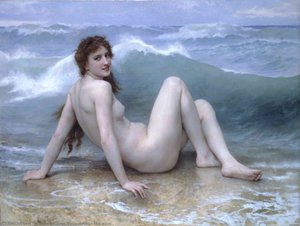
William-Adolphe Bouguereau, jedan od vodećih predstavnika francuskog akademskog slikarstva, stvorio je djelo *Biblis* 1884. godine koje daleko nadilazi pukku demonstraciju tehničke vještine; to je duboko emotivna meditacija o tuzi, sjećanju i tišini koja se pronalazi u krilu prirode. Ulje na platnu dimenzija 79 x 48 cm prikazuje mitološku figuru Biblis, sestru Ianthe, kako tuguje za tragičnom smrću svoje sestre nakon natjecanja u tkanju koje je suđeno od strane Apolona. Bouguereau, s iznimnom osjetljivošću, hvata trenutak duboke emocionalnosti, izbjegavajući dramatične prikaze tuge i umjesto toga prikazujući internalizirano iskustvo gubitka koja rezonira s univerzalnom, tihom bolnošću.Mitologija i Trenutak
Slika *Biblis* uprisutkuje mitološku figuru u trenutku duboke introspekcije. Biblis se oslanja pored stajaće vode, a njezino tijelo odražava iscrpljenost i preveliki bol. Glava joj je naslonjena na ruku, pogled usmjeren unutra – ne tražići odraz u vodi, već izgubljena u privatnoj kontemplaciji. Bouguereau namjerno izbjegava spektakularne prikaze tuge, fokusirajući se na sirovo, ljudsko jezgro gubitka. Priča nije o pompoznosti, već o univerzalnom osjećaju praznine i žalovanja koji prepoznatljiv u svakom od nas. Sama priča o Biblis, koja je zbog neuzvraćene ljubavi prema bratu Caunu, doživjela tragediju, dodaje sloj emocionalne dubine slici. Njezina tuga nije samo osobna, već i simbol ljudske ranjivosti pred nemilosrdnom sudbinom.Akademski Realizam u Punom Sjaju
Bouguereauov stil definiran je pomnošću realizma, idealizirane ljepote i besprijekornog završetka. U *Biblis*, to se očituje u savršeno prikazanoj anatomiji – svaka krivina i kontura izbrušena s gotovo fotografskom preciznošću. Njegova tehnika oslanja se na glatke, pomiješane poteze kistom koji koži daju sjajnu kvalitetu, prekrasno kontrastirani uz teksturirano lišće. Primijetite njegovo majstorsko korištenje chiaroscuroa, suptilno manipulirajući svjetlom i sjenama kako bi definirao oblik i stvorio osjećaj volumena. Bogate teksture – od mekoće kože do delikatnih listova – svjedočanstvo su Bouguereauove virtuoznosti, stečene dugogodišnjim rigoroznim obrazovanjem u École des Beaux-Arts pod vodstvom François-Édouard Picquenota. Svaki detalj, od sjaja kose do nijansi kože, pokazuje njegovu iznimnu vještinu i predanost realizmu.Odraz Epoha i Vrijednosti
Stvoren u usponu akademskog slikarstva kasnog 19. stoljeća, *Biblis* utjelovljuje umjetničke vrijednosti francuskog Salona. Ova era cijenila je teme mitologije i povijesti, te idealizirane prikazivanje ljudske figure. Bouguereau se drži tih konvencija, ali dodaje osobni pečat kroz svoju iznimnu tehničku vještinu i sposobnost da prenese duboke emocije. *Biblis* nije samo slika; to je studija ljudske duše u trenutku gubitka, prikazana s neusporedivom nježnošću i razumijevanjem. Njezina tiha tuga i introspektivna atmosfera pozivaju gledatelja da se poveže s univerzalnim iskustvom žalovanja i sjećanja, čineći je djelom koje nadilazi granice vremena i kulture.Srodna umjetnička djela


Biografija umjetnika
William-Adolphe Bouguereau (1825-1905): A Life Immersed in Beauty
Born in La Rochelle, France, on November 30th, 1825, William-Adolphe Bouguereau’s life unfolded as a profound engagement with classical ideals and an astonishing command of artistic realism. From his earliest years, he demonstrated an innate passion for art, nurtured by his family's involvement in the wine trade – a connection that instilled within him a meticulous attention to detail and observation. Recognizing his exceptional talent, Bouguereau pursued his education at the École des Beaux-Arts in Paris, where he was mentored by François-Edouard Picquenot, absorbing the wisdom of the Old Masters—Raphael and Titian—who served as guiding lights for his artistic journey. These formative influences weren’t merely stylistic imitations; they constituted the bedrock upon which Bouguereau constructed a singular vision, characterized by unparalleled anatomical precision, luminous color palettes, and an unwavering devotion to portraying beauty in its most idealized form. He wasn't simply replicating what he *saw*; rather, he sought to distill the essence of perfection—a pursuit that resonated deeply with the aesthetic sensibilities of his era.The École des Beaux-Arts and Artistic Foundations
Bouguereau’s formal training at the École des Beaux-Arts proved instrumental in shaping his artistic style. He diligently studied anatomy, mastering the intricacies of human musculature and skeletal structure—a skill that would become central to his oeuvre. His instructors emphasized the importance of disegno (drawing), encouraging students to develop a foundational understanding of form and proportion before tackling more complex compositions. Bouguereau’s meticulous draftsmanship is evident throughout his paintings, where figures are rendered with breathtaking accuracy—the subtle curve of a shoulder, the delicate blush of skin, the expressive depth of an eye. This dedication to disegno wasn't merely about technical proficiency; it was about cultivating a deep appreciation for the human form and its capacity for conveying emotion. He meticulously dissected cadavers, painstakingly reconstructing anatomical structures to achieve unparalleled realism—a practice that reflected his belief in the primacy of observation and intellectual understanding.Mythological Inspirations and Artistic Technique
Bouguereau’s artistic vision was profoundly influenced by mythology—particularly Greek mythology. He drew inspiration from tales of gods and goddesses, transforming ancient narratives into vibrant, emotionally resonant scenes. *The Birth of Venus*, arguably his most iconic work, exemplifies this approach. Bouguereau skillfully captured the ethereal beauty of Venus emerging from the sea foam—a depiction that transcends mere visual representation, conveying a sense of grace, serenity, and divine inspiration. He employed techniques honed by Titian and Raphael to achieve luminous color palettes and masterful chiaroscuro (light and shadow)—creating dramatic contrasts that heighten emotional impact. Bouguereau’s brushstrokes were deliberate and controlled, meticulously layering pigments to build up texture and depth—a testament to his unwavering commitment to artistic craftsmanship. He utilized glazing techniques—applying thin layers of translucent paint over underlying colors—to achieve subtle tonal variations and enhance the luminosity of his canvases.Genre Scenes and Portraiture: Capturing Everyday Life
Beyond mythological subjects, Bouguereau excelled in genre paintings—scenes depicting ordinary life—often infused with a sense of moral contemplation. *Bergère 1886*, for example, portrays a shepherdess tending her flock with remarkable tenderness and sensitivity—a depiction that captures the beauty of rural simplicity and evokes feelings of warmth and compassion. Bouguereau’s portraits were equally distinguished by their realism and psychological insight. He skillfully captured the essence of his subjects—their personalities, emotions, and inner lives—creating images that transcend mere likeness, conveying a profound understanding of human experience. His portraits often employed pyramidal compositions—a technique popularized by Leonardo da Vinci—to create balanced and harmonious images that drew the viewer’s eye upward toward the face of the sitter. Bouguereau's meticulous attention to detail extended beyond anatomical accuracy; he meticulously rendered fabrics, textures, and surfaces—creating canvases that were imbued with palpable materiality.Legacy and Enduring Influence
Despite facing criticism from avant-garde artists during his lifetime—particularly Picasso and Matisse—Bouguereau’s artistic legacy endured. His unwavering devotion to classical ideals—anatomical precision, luminous color palettes, and meticulous draftsmanship—continues to inspire contemporary figurative painters. Bouguereau's influence can be seen in the works of numerous artists who strive for beauty and skill—a testament to his enduring contribution to art history. He remains a pivotal figure in 19th-century French painting, representing the zenith of academic artistry and offering a timeless vision of beauty that continues to captivate audiences today. His paintings are housed in prestigious museums worldwide—including the Musée d’Orsay in Paris, The J. Paul Getty Museum, and Carnegie Museum—ensuring that his artistic achievements will be celebrated for generations to come. Song of the Angels (1881) stands as a beacon of ethereal beauty and serene composition—a masterpiece embodying Bouguereau's ability to evoke wonder and spiritual transcendence.
William-Adolphe Bouguereau
1825 - 1905 , Francuska
Osnovne informacije
- Artistic Movement Or Style: Akademska Realizam
- Artists Who Influenced This Artist:
- Rafael
- Titian
- Date Of Birth: 1825.
- Date Of Death: 1905.
- Full Name: William-Adolphe Bouguereau
- Nationality: Francuz
- Notable Artworks:
- Nymphaeum
- Bergère 1886
- Child at Bath
- Song of the Angels
- Birth of Venus
- Place Of Birth: La Rochelle, Francuska
Srodni članci

Academic Realism's Finest: 10 Masterpieces for Art Lovers & Home Decor
Explore 10 defining Academic Realism masterpieces by Bouguereau, Gérôme & Cabanel. Discover the stories behind these iconic paintings and bring timeless art into your home with museum-quality reproductions from AllPaintingsStore.com. Explore the full collection online!

Academic Art: Tradition, Technique & the Pursuit of Ideal Form in the 19th Century
Explore the world of Academic Art! Discover its history, key artists like Ingres & Bouguereau, defining techniques, and lasting influence on 19th-century painting. Learn about the Salon system and its legacy.

The Enduring Allure of the Nude: A Historical & Artistic Exploration of the Human Form
Explore the captivating history of nude art! Discover iconic paintings & artists from classical to modern eras. Uncover symbolism, techniques & find museum-quality reproductions at AllPaintingsStore.

Academic Art: Tradition, Technique & the Rise of Modernism
Explore the rich history of Academic Art – its techniques, key masters like Bouguereau & Ingres, and influence on 19th-century painting. Discover this enduring tradition.

Jean-Léon Gérôme: Academic Rigor & Orientalist Visions Shaping 19th-Century French Painting
Explore the captivating world of Jean-Léon Gérôme, a master of 19th-century academic painting & orientalism. Discover his historical works, artistic techniques, and lasting influence on art history.