Előnézet
 Megosztás
 Megosztás
 Részletek

 Letöltés
 Hasonló alkotások
 X-ray felvétel
 Diavetítés
Landscape
 Oil On Canvas
- WallArt
- Cubism
 1907
1907- Modern
 46.0 x 54.0 cm
 Tovább olvasom
Giclée / Műnyomat
Múzeumi minőségű giclée vagy vászonnyomat, gyors gyártással és rugalmas finomítási lehetőségekkel. ( Áttérés a kézzel festett másolatra Képváltás)




P118B $10

P118H $10

P118W $10

P438Z $10

P508JH $12

P508YH $12

P805H $10

P805Z $10

P919BZ $10

P919G $10

P919XJ $10

P959ZH $10

P968JZ $12

W106C $8

W218G $10

W218JH $8

W218Y $10

W307PJ $10

W316G $10

W316PJ $8

W316Y $10

W398PJ $8

W4111J $10

W500HY $15

W500JH $15

W692G $12

W849H $8

W940BG $15

W953PJ $8




Válasszon előre meghatározott méreteink közül, amelyek megfelelnek a műalkotás eredeti arányainak.

Megadhat saját méreteket is egy konkrét kerethez vagy helyszínhez igazítva. Amennyiben a kiválasztott méret nem egyezik az eredeti kép arányokkal, a műalkotást le fogjuk vágni, vagy kiegészítjük a képet tükrözött vagy egyszínű szélekkel. A gyártás megkezdése előtt egy digitális tervezetet küldünk jóváhagyásra.
Kérjük, vegye figyelembe, hogy a képernyőn látható előnézet nem tükrözi a tényleges levágást vagy kiegészítést. Csak a tervezet mutatja pontosan a végső kompozíciót.
Bár az egyedi méretek is elérhetőek, az eredeti arányok megőrzése érdekében azt javasoljuk, hogy válasszon a előre meghatározott listából származó méretet.
Világszerte történő kiszállítás területére 2 hét alatt, a szokásos 4-5 hét helyett. 5 augusztus

Ingyenes globális expressz szállítás

Prémium minőségű len vászon

Teljes szállítási biztosítás

Vámvisszatérítési Garancia

Tökéletes színpontosság garancia

60 napos visszaküldési lehetőség (csak gyártási hibák esetén)

100%-os pénzvisszatérítési garancia

Kedvezmény több termény esetén
 Az üvegkeretes opció csak 110 cm alatti méretben érhető el

Landscape
Giclée / Műnyomat
A reprodukció mérete
-


Összesített ár
$ 64
Termékinformációk
A Symphony of Color and Form
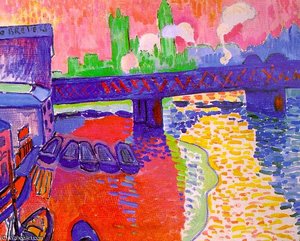
In this mesmerizing 1907 masterpiece, titled Landscape, André Derain invites the viewer into a world where reality is reimagined through the fractured lens of early modernism. The canvas serves as a vibrant stage for a Cubist exploration of nature, where the boundaries between earth and sky begin to dissolve into a rhythmic dance of geometry and light. At first glance, the eye is drawn to the striking interplay of color; a palette dominated by deep cerulean blues, lush forest greens, and unexpected, soft washes of pink creates a sensory experience that is both tranquil and electrifying. The composition is anchored by a prominent tree on the right, its branches reaching upward like delicate veins against the azure expanse, providing a structural weight that balances the ethereal, rolling hills in the distance.
The technique employed here is nothing short of transformative. Utilizing the rich, tactile medium of oil on canvas, Derain utilizes loose, expressive brushstrokes that imbue the scene with an unmistakable sense of movement. There is no rigid line to confine the landscape; instead, the artist allows colors to bleed into one another, creating a dynamic atmosphere where the air itself feels alive. This approach captures the essence of the transition from Fauvism to Cubism, showcasing a moment in art history where the emotional intensity of color meets the intellectual rigor of fragmented form. For the discerning collector or interior designer, this piece offers a sophisticated focal point that brings a sense of historical depth and avant-garde energy to any curated space.
The Spirit of Modernity and Emotional Resonance
Beyond its formal beauty, Landscape carries a profound emotional resonance, evoking the nostalgic yet forward-looking spirit of the early 20th century. The way the pinks and blues merge in the background hills suggests a dreamlike state, a landscape not merely seen but felt. This piece speaks to the human desire to find harmony within complexity—a theme that remains deeply relevant in contemporary living. The balance achieved between the grounded, earthy tones of the tree and the weightless, pastel horizons creates a psychological equilibrium that can soothe and inspire.
Owning a reproduction of such a pivotal work allows one to inhabit the same revolutionary atmosphere that Derain inhabited during his most creative years. It is more than a mere decoration; it is an invitation to contemplate the evolution of sight itself. Whether placed in a sunlit gallery or a quiet study, this painting serves as a testament to the enduring power of the Cubist movement to transform the natural world into a timeless, structured, and breathtakingly beautiful abstraction.
Hasonló műalkotások




A művész életrajza
Early Life and the Seeds of Fauvism
André Derain, born in 1880 in the charming village of Chatou near Paris, wasn’t initially destined for a life steeped in paint and canvas. Contrary to some narratives suggesting an immediate artistic awakening through encounters with fellow painters like Vlaminck or Matisse, Derain embarked on his artistic journey independently around 1895. These early explorations were often undertaken alongside Father Jacomin and his sons during countryside excursions—a formative experience that instilled a deep appreciation for the natural world. He briefly pursued engineering at the Académie Camillo in 1898, where fatefully, he crossed paths with Henri Matisse, initiating a pivotal artistic partnership. Further studies under Eugène Carrière honed his foundational skills, but it was military service from 1901 to 1904 that temporarily interrupted his burgeoning career. Upon his return, persuaded by the unwavering belief of Matisse, Derain decisively abandoned engineering and fully committed himself to painting, continuing his education at the Académie Julian. This commitment marked a turning point, setting him on a path toward becoming a central figure in one of modern art’s most revolutionary movements.The Explosive Birth of Color: Fauvism
The summer of 1905 proved to be an explosive moment for Derain and Matisse as they collaborated in the sun-drenched coastal village of Collioure. This period birthed works like “Mountains at Collioure,” characterized by a radical departure from representational color. The landscapes weren’t merely depictions of places; they were expressions of feeling, rendered through intensely vibrant, non-naturalistic hues. When their work was exhibited at the Salon d'Automne that same year, it provoked outrage and astonishment. Critic Louis Vauxcelles famously dubbed them “Les Fauves”—the wild beasts—a name initially intended as derisive but ultimately embraced by the artists themselves. Derain’s contribution to this movement wasn’t merely stylistic; he possessed a unique ability to translate emotional intensity into pure color. In 1906, Ambroise Vollard commissioned him to paint London, resulting in a series of striking canvases depicting the Thames and Tower Bridge. These weren't conventional cityscapes; they were bold interpretations, capturing the energy and atmosphere of London through an unconventional lens—a testament to Derain’s innovative vision. Influenced by artists like Van Gogh and Cézanne, he pushed the boundaries of color and form, laying the groundwork for future generations of expressionist painters.Beyond Fauvism: A Shifting Aesthetic
The initial fervor of Fauvism didn't define Derain’s entire artistic trajectory. Around 1907, his style began a significant evolution, moving away from the unrestrained chromatic exuberance toward more subdued tones and an increased emphasis on form. This period, often referred to as his “gothic” phase (1911-1914), reflected a growing interest in structure and composition. He immersed himself in the study of Old Masters, incorporating elements of Cubism while simultaneously seeking inspiration from classical forms. This wasn’t a rejection of his earlier work but rather an expansion of his artistic vocabulary. Derain's versatility extended beyond painting; in 1919, he designed the ballet “La Boutique Fantasque” for Sergei Diaghilev’s Ballets Russes, demonstrating his aptitude for theatrical design and further showcasing his diverse talents. Key works from this era, such as "Harlequin and Pierrot" and the monumental mural "Return of Ulysses," exemplify this stylistic shift—a move toward a more controlled and intellectually rigorous approach to artmaking.Legacy and Complexities
André Derain’s place in art history is secure as a co-founder of Fauvism, a movement that irrevocably altered the course of modern painting. His unique vision of London, captured in his vibrant canvases, offered a fresh perspective on an iconic city. After World War I, he gained renewed recognition for his contributions to a revival of classicism, demonstrating his adaptability and enduring artistic relevance. However, Derain’s later life was marked by controversy. During World War II, his presence in Germany drew criticism, leading to ostracization from some former supporters after the war. Despite this shadow, his influence on subsequent generations of artists remains undeniable. He died in 1954, leaving behind a body of work that continues to captivate and inspire. *His legacy is not simply one of bold colors and expressive brushstrokes but also of an artist who constantly challenged himself, explored new avenues of expression, and left an indelible mark on the landscape of modern art.* He stands as a testament to the power of artistic innovation and the complexities inherent in navigating a rapidly changing world. Derain’s journey reminds us that true artistry lies not in adhering to a single style but in the relentless pursuit of creative truth.
André Derain
1880 - 1954 , Franciaország
Rövid tények
- Artistic Movement Or Style: Fauvizmus, Kubizmus
- Artists Or Movements Influenced By This Artist:
- Matisse
- Kubizmus
- Artists Who Influenced This Artist:
- Van Gogh
- Cézanne
- Date Of Birth: 1880. június 10.
- Date Of Death: 1954. szeptember 8.
- Full Name: André Derain
- Nationality: Francia
- Notable Artworks:
- A Collioure hegyei
- Harlekin és Pierrot
- A teázás
- Place Of Birth: Chatou, Franciaország
Kapcsolódó cikkek
A kék árnyalatai: 10 ikonikus festmény a Slate Blue szín jegyében | AllPaintingsStore.com
Fedezze fel a 10 legikonikusabb festményt, melyeket a Slate Blue szín ural! Monet, Renoir és más mesterek művei inspirálnak. Vászonképek eladás, otthon dekoráció tippek a AllPaintingsStore.com-on. Explore the full collection online!

A fényrózsaszín varázsa: 10 ikonikus festmény a művészettörténetből
Fedezze fel a 10 legikonikusabb festményt, melyeket a fényrózsaszín varázsa jellemez! Monet-tól Renoir-ig, ismerje meg a művészettörténet e gyönyörű árnyalatainak szerepét. Vászonképek és reprodukciók prémium minőségben – AllPaintingsStore.com
Claude Monet 25 Mesterműve: A Fény és a Szín Zsenialitása – AllPaintingsStore.com
Fedezze fel Claude Monet 25 legikonikusabb mesterművét! Ismerje meg az impresszionizmus zseniális festőjének történetét, a fény és szín varázsát. Vásároljon exkluzív reprodukciókat otthona dekorációjához a AllPaintingsStore.com-on!

The Allure of Azure: Exploring the Symbolic & Aesthetic Depths of Blue in Art History
Explore the rich history of blue in art! Discover its symbolism, from ancient pigments to modern masterpieces by Kandinsky & Seurat. Uncover the psychological impact and cultural meanings behind this captivating hue.

Azure Visions: Exploring Representations of the Blue Dress in Western Art History
Explore the rich history of the blue dress in Western art! Discover its symbolism, from Renaissance masterpieces to modern interpretations by artists like Martin & Schiele. Uncover cultural meanings and artistic techniques.