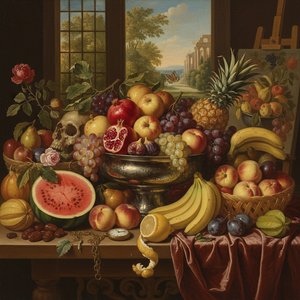
Acrylic On Canvas.

§ 1Catalogue data

Ez a műalkotás szerzői jogi védelem alatt áll
Az ezen az oldalon megjelenített műalkotások szerzői jogi védelem alatt állnak, ami azt jelenti, hogy törvényileg nem készíthetünk és nem adhatunk el belőlük pontos másolatokat. Ez a védelem olyan nemzetközi megállapodások alapján érvényesül, mint például a Berni Egyezmény és a nemzeti jogszabályok által, beleértve azokat is, amelyeket meghatározott Az USA szerzői jogi törvénye – 17. cím.
Mint tiszteletes és törvényes alternatívát, olyan egyedi, kézzel festett alkotásokat kínálunk, amelyek az eredetiből merítnek inspirációt. Tapasztalt és professzionális művészeink alaposan tanulmányozzák az eredeti stílusát, hangulatát és művészeti esszenciáját, hogy egy olyan új, egyedi alkotást hozzunk létre, amely ugyanazt az érzést kelti – miközben önálló, eredeti alkotásként létezik.
Ez a módszer teljes mértékben megfelel a szerzői jogi szabályozásnak, mivel nem tartalmazza a védett műalkotás másolását vagy duplikálását. Ehelyett ez egy kreatív újinterpretáció – egy új festmény, amely az eredetivel való összefüggései miatt hatással van rá, de nem az az.
 További információk
§ 2Abstract
A gyűjtemény leírása
Pioneering American artist Audrey Flack (1931-2024) revolutionized art with photorealism & sculpture. Explore her iconic works exploring femininity, history & vanitas.
A művész életrajza
"Hungarian Meta Description": "Audrey Flack amerikai festőművész, a fotorealisztika és szobrászat pioníere. Kiemelkedő művei a Kennedy motorcádból készült alkotásoktól kezdve a halál témáját ábrázoló vanitas képeken át a női erőt ünneplő szobrokig terjednek. Egy igazi, egyéniségű művész!"
§ 3Commentary
A Portrait of Stillness: Audrey Flack’s Untitled (426)
Audrey Flack, a name synonymous with innovation and uncompromising artistic vision, bequeathed to the art world a legacy defined by her pioneering embrace of photorealism. Born in New York City in 1931, Flack embarked on an extraordinary creative journey that began with explorations into Abstract Expressionism – mirroring the bold strokes of artists like Franz Kline – before decisively rejecting this path in favor of a method that demanded absolute fidelity to observation. This pivotal decision solidified her place as one of the foremost figures shaping American art during the 1960s and beyond, resulting in a body of work characterized by breathtaking detail and profound emotional resonance.The Genesis of Photorealism: A Reaction Against Expression
Flack’s initial fascination with Abstract Expressionism stemmed from a desire to capture the dynamism inherent in human emotion – a sentiment powerfully conveyed through gestural brushstrokes and vibrant color palettes. However, she recognized that this approach couldn't fully encapsulate her yearning for a connection with viewers that transcended mere visual sensation. Influenced by thinkers like Henri Matisse, Flack sought a more direct conduit for artistic expression, believing that art should confront reality without resorting to obfuscation or simplification. This conviction fueled her groundbreaking exploration of photorealism, a genre championed by artists like Richard Estes and Chuck Close, who painstakingly reproduced photographic images with astonishing accuracy.A Symphony of Detail: Technique and Texture
The execution of Untitled (426) exemplifies Flack’s mastery of technique. Employing oil paint on canvas—a medium chosen for its ability to achieve nuanced tonal gradations and luminous color effects—she meticulously layered thin glazes to build up surfaces with remarkable subtlety. This painstaking process allowed her to render textures with astonishing realism, capturing the velvety skin of the woman's face alongside the glossy sheen of oranges and the rough surface of aged books. The artist’s meticulous attention to detail wasn’t merely a stylistic preference; it was an integral component of Flack’s artistic philosophy—a commitment to representing the world as faithfully as possible.Symbolic Layers: Fruit, Time, and Reflection
Beyond its technical brilliance, Untitled (426) resonates with symbolic significance. The arrangement of fruits – oranges, bananas – speaks to themes of abundance and indulgence, mirroring the opulent aesthetic favored by Baroque artists like Caravaggio. Simultaneously, the inclusion of a clock serves as a poignant reminder of mortality and the passage of time—a concept explored extensively in vanitas paintings throughout art history. Furthermore, the woman’s serene gaze invites contemplation, suggesting an inner stillness amidst the visual complexity of the composition. Flack's deliberate choices elevate the artwork beyond mere depiction, transforming it into a meditation on human experience.A Legacy of Precision and Emotion
Audrey Flack’s Untitled (426) stands as a testament to her unwavering dedication to artistic innovation and her profound understanding of how art can communicate emotion. Her pioneering role in photorealism irrevocably altered the landscape of American painting, establishing a new standard for visual accuracy while simultaneously fostering an engagement with subject matter that demanded intellectual curiosity and emotional sensitivity. Today, reproductions of this iconic artwork continue to inspire collectors and interior designers alike—a lasting tribute to Flack’s enduring contribution to the art world.Kérdések és válaszok
Milyen típusú alkotás a "Untitled (426)"?
A "Untitled (426)" egy WallArt alkotás.
Hol találhatok egy útmutatót a(z) "Untitled (426)" alkotáshoz?
A „Untitled (426)”, Flack Audrey alkotása alkotáshoz elérhető egy Útmutató oldal: ez egy kinyomtatható információs lap a műről, amelyet diákok számára és tantervhez készült használatra terveztek.
Szabadon reprodukálható-e a/az „Untitled (426)”, Flack Audrey alkotása képe?
A szerzői jogokkal kapcsolatban a "Untitled (426)" mű még szerzői jog védi.


![The Procession To Calvary [detail] — Pieter Bruegel Idős, Northern Mannerism](/media/artworks/images-thumb/cd/6e/cd6ed1a8a9ff3f207ad25305adfeb0f7.jpg)


 Váltás nyomtatványra


 A bármely oldalsó méretét túlszálaló 105 cm (kb. 41 hüvelyk) meghaladó műalkotások vagy reprodukciók esetében a keret összeszerelhető készletként, szétszerelve kerül szállításra. Ez a módszer biztosítja a biztonságos szállítást, és megakadályozza a szállítás során fellépő sérüléseket.