

Oil On Canvas.

§ 1Catalogue data


§ 2Abstract
A gyűjtemény leírása
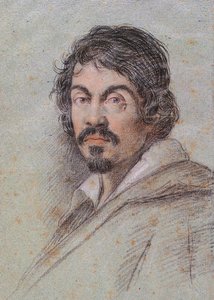
A haunting monochrome study of a man lost in reflection, this Baroque masterpiece by Caravaggio uses dramatic tenebrism to explore human vulnerability and invites you to experience its profound psychological depth.
 Összes részlet megjelenítése
A művész életrajza
Caravaggio (1571-1610): Barokk festő, aki a realizmust és a chiaroscuro drámai fényekkel ötvözte. Vallási témák, intenzív érzelmek, forradalmi stílus!
§ 3Commentary
A Portrait of Reflection: Caravaggio’s Untitled (9326)
Caravaggio's *Untitled (9326)*, a stark monochrome depiction of a man kneeling before a mirror, transcends mere representation; it embodies the profound psychological exploration characteristic of Baroque art and stands as a testament to Michelangelo Merisi da Caravaggio’s revolutionary approach to painting. Executed around 1606, this canvas resides within the esteemed collection of Cardinal Scipione Borghese at Rome—a commission that reflects Borghese's fervent patronage of artistic innovation during his era. The artwork immediately captivates with its masterful use of tenebrism – Caravaggio’s signature technique – where dramatic contrasts between light and dark dominate the composition, creating an atmosphere of intense solemnity and introspection.- Subject Matter: The central figure is a man absorbed in contemplation as he gazes upon his reflection within the mirror. This simple yet powerful image speaks volumes about human vulnerability and self-awareness—themes prevalent throughout Caravaggio’s oeuvre.
- Style & Technique: Caravaggio's style is defined by its uncompromising realism, achieved through meticulous observation of anatomy and drapery. The artist employed a rapid painting process, applying paint directly onto the canvas with minimal blending, resulting in textured surfaces that convey immediacy and emotional intensity.
- Historical Context: Painted during the height of Baroque artistic fervor—a period marked by papal patronage and an obsession with theatrical grandeur—*Untitled (9326)* aligns itself perfectly with the broader stylistic trends of the time. Caravaggio’s work challenged prevailing academic conventions, prioritizing emotional impact over idealized beauty.
- Symbolism: The skull positioned beneath the mirror is a recurring motif in Caravaggio's paintings, serving as a constant reminder of mortality—a sobering counterpoint to the man’s gaze upon his reflection.
- Emotional Impact: *Untitled (9326)* evokes feelings of melancholy and contemplation, inviting viewers to ponder questions of identity and existence. Its dramatic lighting and expressive brushstrokes powerfully communicate Caravaggio's artistic vision—one rooted in profound psychological insight and unwavering commitment to realism.
Kérdések és válaszok
Ki készítette a "untitled (9326)" alkotást, és milyen stílusú?
A „untitled (9326)” alkotását Caravaggio készítette Baroque realism stílusban. A művész és a műveszetség meghatározza a mű hagyományát.
untitled (9326) színei erőteljesnek vagy lágynak tűnnek?
A „untitled (9326)”, Caravaggio alkotása színei Monochromatic intenzitásúak.
Melyik szín tűnik ki leginkább a(z) "untitled (9326)" alkotásból?
A(z) "untitled (9326)" alkotásban leginkább a Driftwood (#9d7658) szín tűnik ki. A domináns szín hasznos, amikor egy műalkotást össze kell egyeztetni egy belső térrel.


 Váltás nyomtatványra


 A bármely oldalsó méretét túlszálaló 105 cm (kb. 41 hüvelyk) meghaladó műalkotások vagy reprodukciók esetében a keret összeszerelhető készletként, szétszerelve kerül szállításra. Ez a módszer biztosítja a biztonságos szállítást, és megakadályozza a szállítás során fellépő sérüléseket.


