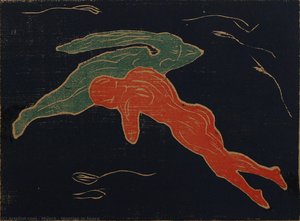
Olajfestmény vászonon.

§ 1Katalógusadatok


§ 2Absztrakt
A gyűjtemény leírása
Észrevétlenül tükrözi az emberi lélek mélységeit és érzelmi kifejezését – egyedüliség, érzékenység és halk szomorúság jellegzetes témái. Egy fiatal nő képe dominál a kompozícióban, mely nyugtalanságot és önreflexiót idéz elő.
 Összes részlet megjelenítése
A művész életrajza
Munch: A modern művész, aki a szorongást, a halált és az érzelmek viharát ábrázolta a festészetével. Fedezd fel a 'Sikoly' ikonikus alkotását és a norvég expresszionista géniuszát!
§ 3Magyarázat
A Window Into The Soul: Exploring A Masterpiece Of Emotional Expression
Edvard Munch’s *untitled (5918)* stands as an arresting testament to the anxieties simmering beneath the surface of modern consciousness—a painting that transcends mere visual representation and plunges directly into the turbulent realm of human emotion. Created in 1893, this iconic work embodies the core tenets of Expressionism, rejecting academic conventions in favor of a visceral portrayal of inner turmoil and subjective experience. Munch wasn’t concerned with capturing what he *saw*, but rather conveying how it *felt*—a profound ambition realized through masterful brushwork and a deliberate manipulation of color and form.- Subject Matter: The composition centers on two young women positioned slightly off-center, their figures deliberately unbalanced to immediately instill a sense of unease within the viewer’s gaze. Their posture speaks volumes about vulnerability and isolation, hinting at unspoken anxieties and a shared experience of melancholy.
- Style & Influences: Munch's artistic vision draws heavily from Post-Impressionist masters like Van Gogh and Gauguin—particularly their bold use of color and rejection of naturalistic depiction—yet he distinguishes himself through an uncompromising commitment to conveying raw emotion rather than objective observation.
- Symbolism & Interpretation: The painting’s symbolism is subtle yet potent—the women's postures conveying unspoken sorrow or contemplation; their faces hinting at vulnerability and resignation. The dark background serves as a canvas for Munch’s exploration of psychological depth, suggesting an internal space mirroring the emotional weight carried by the subjects.
- Contemporary Appeal: *untitled (5918)* continues to captivate audiences today because it taps into universal human emotions—loneliness, fear, and longing—offering viewers a space for introspection and empathy. Its enduring beauty lies in its ability to provoke contemplation on the complexities of existence.
Kérdések és válaszok
Mely művész és mely stílus áll a "untitled (5918)" mögött?
A „untitled (5918)” alkotását Edvard Munch készítette Expressionizmus stílusban. A művész és a műveszetség meghatározza a mű hagyományát.
Mi a(z) domináns színtónus „untitled (5918)”, Edvard Munch alkotása-nél?
A Borsványtól a sáfránysárgáig árnyalat áthatárolja a „untitled (5918)”, Edvard Munch alkotása alkotást.
Elérhető diákok számára egy „untitled (5918)”, Edvard Munch alkotása információs adatlap?
A „untitled (5918)”, Edvard Munch alkotása alkotáshoz elérhető egy Útmutató oldal: ez egy kinyomtatható információs lap a műről, amelyet diákok számára és tantervhez készült használatra terveztek.


 Váltás nyomtatványra


 A bármely oldalsó méretét túlszálaló 105 cm (kb. 41 hüvelyk) meghaladó műalkotások vagy reprodukciók esetében a keret összeszerelhető készletként, szétszerelve kerül szállításra. Ez a módszer biztosítja a biztonságos szállítást, és megakadályozza a szállítás során fellépő sérüléseket.