

Acrylic.

§ 1Catalogue data

§ 2Abstract
A gyűjtemény leírása
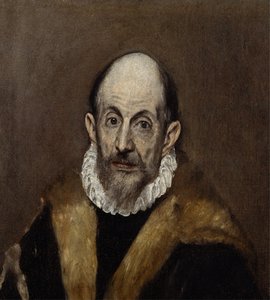
El Greco’s St. Ildefonso captures a solemn moment of contemplation amidst scholarly pursuits—a man absorbed in writing illuminated by the diffused light of Toledo, Spain during the Baroque era. Explore this evocative portrait and bring timeless artistry into your home.
 Összes részlet megjelenítése
A művész életrajza
El Greco: görög származású festő, aki a manierizmus legnagyobb alakja lett! Fedezze fel Toledo képeit, vallási művészetét és egyedi stílusát!
§ 3Commentary
A Portrait Steeped in Faith and Artistic Innovation
- El Greco’s “St. Ildefonso” transcends mere representation; it embodies the spirit of its time—the fervent piety of Toledo during the Spanish Golden Age—and showcases a revolutionary artistic vision that foreshadowed movements decades later.
- The painting depicts a man seated at a table laden with documents, illuminated by candlelight, suggesting an intellectual pursuit intertwined with spiritual contemplation. This figure is accompanied by another person standing behind him, possibly representing counsel or observation, furthering the narrative complexity of the scene.
Stylistic Brilliance: Mannerism Revisited
- El Greco’s signature style—Mannerism—rejects Renaissance ideals of proportion and harmony. Instead, he employs elongated figures, distorted perspectives, and vibrant colors to convey emotion and psychological depth.
- Notice the dramatic use of chiaroscuro – the interplay between light and shadow – which sculpts the forms of the subjects and enhances their expressive power. This technique is characteristic of Mannerist painters who sought to heighten emotional impact through theatrical lighting effects.
Technique and Materials: A Masterful Synthesis
- El Greco meticulously crafted “St. Ildefonso” using oil paint on canvas, a medium favored by artists of his era. His brushstrokes are bold and expressive, conveying movement and dynamism despite the static pose of the central figure. <
- The artist’s masterful blending of pigments creates luminous surfaces that capture the ethereal quality of candlelight—a deliberate choice to evoke a sense of solemn reverence and spiritual contemplation.
Historical Context: Toledo's Spiritual Crucible
- "St. Ildefonso" was created during a period marked by intense religious fervor in Toledo, Spain – a city that served as a bastion of Catholicism amidst the turbulent Reformation. <
- El Greco’s artistic endeavors were deeply influenced by this environment, reflecting the anxieties and aspirations of his contemporaries. The painting speaks to themes of faith, intellect, and moral responsibility—concepts central to humanist thought alongside religious dogma during the Renaissance.
Symbolism and Emotional Resonance
- The seated man represents intellectual contemplation and spiritual discernment, while the standing figure symbolizes support and guidance. The documents on the table symbolize knowledge and the pursuit of truth—elements crucial to El Greco’s artistic vision. <
- Ultimately, “St. Ildefonso” resonates with viewers through its profound emotional depth. The painting captures a moment of quiet introspection, conveying a sense of solemn dignity and spiritual yearning that transcends time and cultural boundaries.
Kérdések és válaszok
A "St. Ildefonso" jellemző arra, amit El Greco általában alkotott?
A "St. Ildefonso" a religious figure, portraiture, writing desk, human anatomy, formal setting, medieval art, crete ábrázol, míg El Greco dokumentált témái a byzantine tradition, catholic faith, spanish patronage, stylistic innovation, iconographic depth. A kettő összevetése megmutatja, hogyan kapcsolódik ez a mű a művész megszokott motívumaihoz.
Milyen hangulatot áraszt a "St. Ildefonso"?
A „St. Ildefonso”, El Greco alkotása hangulata Elegant, ami segíthet a mű megfelelő környezetbe illesztésében.
A El Greco alkotása, a "St. Ildefonso", a jogi szabadhasználatban (public domain) áll-e, és miért?
El Greco alkotása, a "St. Ildefonso", közösségi tulajdon – a szerzői jog lejártt státuszban van. A szerzői jogi védelem a művész halálától számítod, El Greco pedig 1614 évben hunyt meg.


 Váltás nyomtatványra


 A bármely oldalsó méretét túlszálaló 105 cm (kb. 41 hüvelyk) meghaladó műalkotások vagy reprodukciók esetében a keret összeszerelhető készletként, szétszerelve kerül szállításra. Ez a módszer biztosítja a biztonságos szállítást, és megakadályozza a szállítás során fellépő sérüléseket.


