Pénzvisszatérítési Garancia · 100 nap Ingyenes világszerte történő szállítás
449 587műalkotások 30 613művészek 4 660múzeumok 32nyelv
Pénznem
    Nyelv
      Ateliér · Alapítva: 2015 · Paris, Francia
      AllPaintingsStore
      allpaintingsstore.com
      Catalogue entry

      Doris standing

      Acrylic On Canvas.

      Fig. 1. Ernst Ludwig Kirchner, Doris standing. Shown as the reproduction you are specifying: , .

      § 1Catalogue data

      § 2Abstract

      A gyűjtemény leírása

      This striking canvas portrays Doris Speed in an interior setting, embodying the fervor of Expressionism. Kirchner’s masterful use of color—deep blues juxtaposed with vibrant yellows—creates a textured backdrop highlighting the figure's solemn gaze and angular pose. Influenced by Dürer & rejecting academic norms, Kirchner captures a moment of introspection amidst modern anxieties.

      A művész életrajza

      Ernst Ludwig Kirchner (1880-1938): A vezető német expresszionista, a Die Brücke alapító tagja. Fedezd fel lenyűgöző, érzelemre hangolt alkotásait a modern városokról, nők frånkójáról és tájakról – egy korai 20. századi művészet erőteljes hangszórója.

      § 3Commentary

      Doris Standing: A Study in Expressionist Tension

      Ernst Ludwig Kirchner’s “Doris Standing” is more than just a portrait; it's a distillation of the anxieties and emotional complexities characteristic of German Expressionism. Painted circa 1923, this artwork captures a moment frozen in time—a woman posed formally against a backdrop that pulsates with restless energy.

      • Subject Matter: The painting depicts Doris Speed, an English actress known for her role in “Coronation Street,” presenting her as a figure of quiet contemplation amidst the vibrant chaos of modern life.
      • Style & Technique: Kirchner’s signature Expressionist style is evident in every brushstroke. Thick impasto—a technique where paint is applied thickly onto the canvas—dominates the composition, creating palpable texture and conveying an immediacy that transcends mere representation. Bold colors – deep blues and purples for Doris' dress juxtaposed with yellows and greens in the background – heighten the emotional impact.
      • Composition: The portrait adheres to a vertical format, emphasizing Doris’ posture and attire. Her hands clasped before her contribute to a sense of stillness despite the dynamic environment behind her. Lines are employed expressively rather than realistically; short, choppy brushstrokes generate movement and texture throughout the painting.

      Historical Context: The Brücke Movement

      Kirchner’s work emerged from “Die Brücke,” a pivotal artistic group that challenged academic conventions and sought to depict the psychological realities of the era. Founded in Dresden in 1909, Die Brücke aimed to express inner turmoil and disillusionment—themes powerfully reflected in Kirchner's oeuvre. The movement reacted against the prevailing optimism of bourgeois society, embracing distortion and fragmentation as tools for conveying emotional truth.

      • Influence: Kirchner’s exploration of psychological depth aligns with broader artistic currents of his time, reflecting a desire to confront uncomfortable realities and explore the darker side of human experience.
      • Symbolism: The vibrant background—particularly the reds—symbolizes the turbulent energy of urban life, contrasting sharply with Doris' serene expression. This juxtaposition underscores the tension between inner stillness and external pressures.

      Emotional Resonance

      "Doris Standing" evokes feelings of melancholy and restraint. Kirchner’s deliberate use of muted colors and simplified forms contributes to a mood of introspection—a quiet contemplation that invites viewers to consider themes of isolation and vulnerability. The painting's textured surface encourages tactile engagement, mirroring the emotional intensity conveyed through its visual elements.

      • Artist’s Intent: Kirchner sought to capture not just an image but also a feeling—a profound awareness of human condition amidst the uncertainties of modernity.
      • Interior Design Inspiration: The artwork's palette and textural qualities could inspire designers seeking to create spaces that convey understated elegance and emotional depth.

      Material & Reproduction Considerations

      Executed in oil paint on canvas, “Doris Standing” exemplifies the meticulous craftsmanship of Expressionist artists. Reproductions aim to faithfully recreate the original’s textural richness and color vibrancy using high-quality printing techniques. Careful attention to detail ensures that the artwork's emotive power is preserved in a durable and aesthetically pleasing format.

      Kérdések és válaszok

      Hol tudok nyomtatványt vásárolni a(z) „Doris standing”, Ernst Ludwig Kirchner alkotása alkotásból?

      A "Doris standing" minőségi giclée nyomat pamutvászonon vagy archiváló vászonpapíron formátumban is elérhető. A rendelést a Művészeti nyomtatvány oldalon lehet megtenni, a kívánt méretben.

      Hol javasolt a(z) "Doris standing" Tall formátumú alkotás kihelyezését?

      A „Doris standing”, Ernst Ludwig Kirchner alkotása Tall formátumú alkotása egy Living Room számára ajánlott. A formátum és a tér együtt segítik a reprodukció elhelyezését.

      Milyen hangulatot áraszt egy enteriőrben „Doris standing”, Ernst Ludwig Kirchner alkotása?

      A Dramatic hangulatával a "Doris standing" című alkotás egy Living Room helyiségbe is javasolt.
      § 4The artist

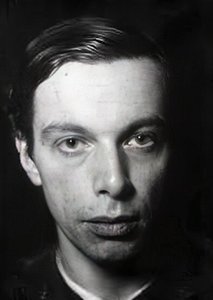
      Ernst Ludwig Kirchner

      Ernst Ludwig Kirchner

      1880 - 1938, Németország

      Quick facts about Ernst Ludwig Kirchner

      • Artistic Movement Or Style: Expressionizmus
      • Artists Or Movements Influenced By This Artist:
        • Die Brücke
        • Modern művészet
      • Artists Who Influenced This Artist:
        • Albrecht Dürer
        • Van Gogh
        • Munch
      • Date Of Birth: 1880. május 6.
      • Date Of Death: 1938. június 15.
      • Full Name: Ernst Ludwig Kirchner
      • Nationality: Német
      • Notable Artworks:
        • A utca (1908)
        • Szárazföldi táncos (1912)
        • Önismeret (1910)
      • Place Of Birth: Aschaffenburg, Németország

      A művész életrajza

      A Life Forged in Expression: The World of Ernst Ludwig Kirchner

      Ernst Ludwig Kirchner, a name inextricably linked to the raw emotional core of German Expressionism, emerged from a Germany poised on the cusp of profound transformation. His birth in Aschaffenburg, Bavaria, in 1880, wasn’t merely an arrival into the world; it was the beginning of a life deeply intertwined with artistic rebellion and personal struggle. The fragmented landscapes that shaped his early years – dictated by his father's profession as a paper scientist – instilled within him a persistent sense of displacement, a feeling that would become a recurring theme in his art. From Frankfurt to Perlen, and finally settling in Chemnitz, young Kirchner absorbed the anxieties simmering beneath the surface of a rapidly modernizing nation. Initially guided towards architecture at the Königliche Technische Hochschule in Dresden, it was the magnetic pull of painting – fueled by an admiration for masters like Albrecht Dürer and a growing disillusionment with academic conventions – that ultimately defined his artistic destiny. He found kinship with fellow revolutionaries – Fritz Bleyl, Karl Schmidt-Rottluff, and Erich Heckel – forging bonds that would irrevocably alter the course of 20th-century art.

      The Bridge Between Worlds: Die Brücke and Artistic Revolution

      In 1905, Kirchner became a founding member of *Die Brücke* (“The Bridge”), an artistic collective dedicated to dismantling traditional aesthetic boundaries and forging a new path toward a more visceral, emotionally charged form of expression. This wasn’t simply a stylistic choice; it represented a fundamental philosophical stance. The group sought inspiration from sources often dismissed by the established art world – the primal artistry of Africa and Oceania, the intensely colored visions of Vincent van Gogh, and the haunting psychological depths explored by Edvard Munch. Rejecting the idealized beauty championed by academic painting, *Die Brücke* embraced distortion, jarring color palettes, and expressive brushwork to convey the anxieties and alienation inherent in modern life. Kirchner’s early works, born from this collaborative spirit, pulsed with a restless energy, reflecting the group's shared desire to break free from artistic constraints. The studio became a crucible for experimentation, a space where social norms were challenged alongside artistic conventions. The exploration of the human form, particularly the female nude, within both urban and natural settings, became a recurring motif, allowing Kirchner to investigate movement, emotion, and the complexities of modern existence.

      Defining a Style: Urban Anxieties and Bold Visions

      Kirchner’s artistic style is immediately recognizable for its distinctive characteristics. He didn't treat color as a mere tool for accurate representation; instead, he wielded it with deliberate intensity to evoke powerful emotional responses – vibrant, often non-naturalistic hues that heightened the sense of unease or urgency within his compositions. His brushstrokes were energetic and visible, contributing to the overall feeling of immediacy and raw emotion. Figures and objects were frequently distorted or elongated, reflecting a subjective rather than objective reality. Kirchner’s paintings weren't simply depictions of scenes; they were profound explorations of the human psyche, capturing the psychological impact of modern urban life in early 20th-century Germany. Paintings like *The Street* (1908) are not merely representations of cityscapes; they are portraits of alienation, capturing the frenetic energy and emotional detachment experienced by individuals navigating a rapidly changing world. He didn’t shy away from portraying the darker aspects of modernity – the loneliness, the anonymity, the overwhelming sense of being swallowed by the sheer scale of urban existence. This unflinching gaze established him as a chronicler of his time, an artist who dared to confront the anxieties simmering beneath the surface of societal progress.

      Influences and Development: A Synthesis of Traditions

      Kirchner’s artistic development was shaped by a complex interplay of influences. He initially admired the precision and clarity of Albrecht Dürer's work, seeking a connection to Germany’s rich artistic heritage. However, he quickly moved beyond academic conventions, embracing the bold color palettes and expressive distortions of Vincent van Gogh and the psychologically charged landscapes of Edvard Munch. Crucially, Kirchner found inspiration in non-European art – particularly the primitive sculptures of Africa and Oceania – which offered him a direct connection to primal emotions and spiritual energies. This fascination with “primitive” forms led him to experiment with woodcut printing, developing a distinctive technique characterized by bold lines and stark contrasts. The influence of *Die Brücke* itself was paramount; the group’s shared commitment to emotional expression and their rejection of traditional aesthetics fostered a dynamic creative environment where Kirchner's style continued to evolve.

      Tragedy and Legacy: A Lasting Impact

      Kirchner’s life was tragically marked by personal struggles, culminating in his untimely death in 1938. The horrors of World War I triggered a severe mental breakdown, forcing him to retreat to Switzerland in search of solace. However, even in exile, he continued to create, his work reflecting the lingering trauma and isolation he experienced. The rise of Nazism brought further hardship; over 600 of his works were confiscated and branded as “degenerate” art – a devastating blow that underscored the political climate’s hostility towards modern artistic expression. Facing persecution and declining health, Kirchner tragically took his own life in Davos, Switzerland, in 1938. Despite this heartbreaking end, Ernst Ludwig Kirchner's legacy remains profoundly influential. He stands as a central figure of German Expressionism, inspiring generations of artists with his bold style, emotionally resonant depictions of modern life, and unwavering commitment to artistic truth. His work continues to be exhibited in major museums worldwide, serving as a powerful reminder of the enduring power of art to confront, challenge, and ultimately illuminate the human condition.
      • Influenced By: Albrecht Dürer, Vincent van Gogh, Edvard Munch, Primitive Art (African & Oceanic)
      • Influenced: Kirchner’s work profoundly impacted subsequent generations of Expressionist and Modern artists. His exploration of psychological themes and his innovative use of color and form continue to inspire contemporary art practices.

      § 5Comparanda

      § 6Questions

      Gyors információk

      • Notable elements or techniques: Impasto, Bold colors
      • Influences: Dürer
      • Movement: Expressionism
      • Medium: Oil paint on canvas

      Művészeti kvíz

      Minden kérdésre csak egy helyes válasz létezik.

      Kérdés 1:
      What artistic movement is Doris standing in?
      Kérdés 2:
      Describe the dominant color palette of the artwork.
      Kérdés 3:
      What technique is primarily used in creating the painting's texture?
      Kérdés 4:
      How does the artist convey emotion through the use of lines?
      Kérdés 5:
      What is a key symbolic element conveyed by the woman’s expression and posture?

      § 7Cite this entry

      AllPaintingsStore.com, “Ernst Ludwig Kirchner, Doris standing”, https://allpaintingsstore.com/hu/art/ernst-ludwig-kirchner-doris-standing-8LHTLR-en/ (accessed 2 október 2026).

      § 8The reproduction

      Kézzel készített olajfestmény reprodukció

      Kézzel festett olajvastú vászon, az Ön által választott méretben és keretben, művészeink készítik meglévőre. ( Váltás nyomtatványra Áttérés digitális képre)

      It is specified on the order sheet in the margin; the present state of that sheet reads as follows.

      Doris standing

      Reprodukciós technika

      Reprodukció mérete

      -

      Kiváló mesterművész

      Nagyobb részletesség, finomság és bővített gyártási idő

      -

      Reprodukció keretezése

      -

      -

      A bármely oldalsó méretét túlszálaló 105 cm (kb. 41 hüvelyk) meghaladó műalkotások vagy reprodukciók esetében a keret összeszerelhető készletként, szétszerelve kerül szállításra. Ez a módszer biztosítja a biztonságos szállítást, és megakadályozza a szállítás során fellépő sérüléseket.

      Szakmész összeszerelést igényel – ez nem DIY (önösszeszerelhető) termék.
      A készletet egy tapasztalt keretező szakembernek kell összeszerelnie és a vásznat feszítenie kell, fa ragasztó (nem tartalmazza a csomag), vásznfeszítő fogó és szorítók használatával, amelyek a ragasztó száradásáig a keretrészeket egymáshoz vuôngjba tartják. A helytelen összeszerelés vagy a nem egyenletes vásznfeszítés maradandó károsíthatja a műalkotást, és ez nem része a garanciánknak.

      • A készlet tartalmazza az összes tömörfa rudat, pontosan méretre vágva.

      • A mellékelt csavarokkal, valamint a sarokszerekhez szükséges faütő ragasztóval kell összeszerelnie (ez nem tartalmazható a csomagban), így a keretrendezőnek külön kell beszereznie.

      • A csomag nem tartalmazza a szükséges professzionális eszközöket: egy vászonfeszítőt és klipseket a rácsok vízszintes tartásához a ragasztó megszáradásáig.

      Fontos:
      A sarokcsatlakozásokhoz fánylagra van szükség, a keretrudakat szorítókapcsokkal kell rögzíteni, amíg a rag teljesen meg nem szárad, a kész keretre feszített vászonhoz pedig vászonfeszítő fogat szükséges. Ezek egyike sem található meg a készletben. Kérjük, rendelés előtt győződjön meg róla, hogy rendelkezik tapasztalt keretező szakemberrel.

      Névtábla

      -

      -

      Védőréteg (Lakk)

      Fényes lakk (intenzívabb színek, védelem a fény és a nedvesség hatása ellen)

      -

      Műalkotásom egyedi igényre szabása

      Példák a módosíthatóságra: az arc kicserélése az ügyfél fotójára; háziállat hozzáadása (pl. macska helyett kutya); rejtett üzenet elhelyezése a háttérben; a háttér tájainak vagy elemeinek megváltoztatása.

      -

      Sürgős

      Világszerte szóló szállítás () mindössze 3-4 hét alatt, a szokásos 5 hét helyett. (30 október). A minőség nem kérdőjelezhető.

      -

      Express szállítás

      Világszerte elérhető szállítás területre 5 héten belül. (6 november).

      A szállítás díja tartalmazza

      Összesített ár

      Ft 84358

      Included with every order

      • Ingyenes globális expressz szállítás
      • Prémium minőségű len vászon
      • Teljes körű szállítási biztosítás
      • Vámvisszatérítési Garancia
      • Hiteles színarányosság garancia
      • 100 napos visszaküldési lehetőség (csak hibás termékek esetén)
      • 100% pénzvisszatérítési garancia
      • Több darab vásárlásakor kedvezmény
      Order sheet