Pénzvisszatérítési Garancia · 100 nap Ingyenes világszerte történő szállítás
449 587műalkotások 30 613művészek 4 660múzeumok 32nyelv
Pénznem
    Nyelv
      Ateliér · Alapítva: 2015 · Paris, Francia
      AllPaintingsStore
      allpaintingsstore.com
      Catalogue entry

      Mechanical Elements on a blue background

      1948. Collage, 65.0 x 50.0 cm.

      Fig. 1. Léger Ferenc, Mechanical Elements on a blue background, 1948. Shown as the reproduction you are specifying: , .

      § 1Catalogue data

      § 2Abstract

      A gyűjtemény leírása

      Fernand Léger's 'Blue Background with Mechanical Elements' is a striking collage featuring gears, screws, and a bird against a vibrant blue backdrop—a masterful blend of abstraction and industrial imagery reflecting the artist’s fascination with modern form.

      A művész életrajza

      Fedezd fel a modern művészet egyik kiemelkedő alakját, Fernand Léger-t! Tubism, gépek és a modern élet festményei – egy forradalmi festőművész öröksége.

      § 3Commentary

      A Symphony of Gears and Birdsong

      In the quiet tension of Fernand Léger’s 1948 masterpiece, Mechanical Elements on a blue background, we encounter a visual dialogue that transcends the mere arrangement of shapes. This work, often referred to as part of his "Composition VIII" series, serves as a profound embodiment of the anxieties and aspirations defining post-reconstruction Europe. As the world grappled with the debris of World War II, Léger sought to find beauty within the industrial fragments of a rebuilding civilization. The canvas explodes with a calculated chaos of interlocking circles, squares, and triangles, all set against a deep, atmospheric blue that provides both a sense of infinite space and a somber, reflective weight.

      What makes this composition truly captivating for the modern observer is the unexpected intrusion of the organic into the mechanical. Amidst the rigid logic of gears, screws, and metallic fragments, a single bird perches atop a central structure. This delicate juxtaposition establishes a poignant tension between the cold, unyielding precision of machine construction and the fragile, ephemeral beauty of nature. It is a moment of dreamlike irrationality—a Surrealist whisper within a Constructivist shout—that invites the viewer to contemplate whether technology serves to suppress life or to provide a new stage upon which it might flourish.

      The Art of Industrial Alchemy

      Léger’s technique in this period was nothing short of revolutionary, moving beyond traditional brushwork to embrace the tactile reality of the machine age. He employed a sophisticated collage-like approach, meticulously assembling fragments that mimic metal sheeting and industrial components. This method was not merely decorative; it was an essential conceptual tool used to bridge the gap between fine art and the physical world. By integrating textures that suggest steel and iron onto the canvas, Léger transforms the act of painting into an act of engineering, creating a sense of depth and complexity that draws the eye into its intricate layers.

      For the discerning collector or interior designer, this piece offers a unique aesthetic versatility. Its style—a masterful blend of Constructivist abstraction and Surrealist whimsy—allows it to anchor a room with its bold, geometric energy while maintaining a sophisticated, contemplative mood through its cool color palette. The interplay of blue and grey tones provides a calming foundation, making it an ideal centerpiece for contemporary spaces that value intellectual depth and structural elegance. To possess a reproduction of this work is to bring into one's home a piece of history that celebrates the resilience of the human spirit amidst the relentless march of progress.

      Kérdések és válaszok

      Van-e útmutató a(z) „Mechanical Elements on a blue background”, Léger Ferenc alkotása alkotáshoz?

      A „Mechanical Elements on a blue background”, Léger Ferenc alkotása alkotáshoz elérhető egy Útmutató oldal: ez egy kinyomtatható információs lap a műről, amelyet diákok számára és tantervhez készült használatra terveztek.

      Van-e rozšíngtott valóság (AR) előnézete a(z) "Mechanical Elements on a blue background" alkotásnak?

      A(z) "Mechanical Elements on a blue background" kiterjesztett valóság (AR) előnézettel rendelkezik: a mű Kiterjesztett valóság előnézet oldalán kompatibilis eszközön megtekinthető saját környezetében.

      Hol vásárolható „Mechanical Elements on a blue background”, Léger Ferenc alkotása képmű kézzel festett másolata?

      A „Mechanical Elements on a blue background”, Léger Ferenc alkotása kézzel festett reprodukcióját közvetlenül a(z) Kézzel festett másolat oldalon is megrendelheti: kézzel festett olajfesték reprodukció lino vászonon, egyedi igény szerinti gyártással.
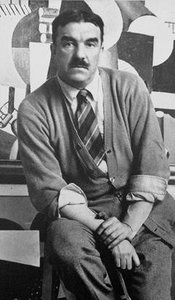
      § 4The artist

      Léger Ferenc

      Léger Ferenc

      1881 - 1955, Franciaország

      Quick facts about Léger Ferenc

      • Artistic Movement Or Style: Kubizmus, Tubizmus
      • Artists Or Movements Influenced By This Artist: ['Pop Art']
      • Artists Who Influenced This Artist: ['Paul Cézanne']
      • Date Of Birth: 1881. Feb 4.
      • Date Of Death: 1955. Aug 17.
      • Full Name: Fernand Léger
      • Nationality: Francia
      • Notable Artworks:
        • A ülő nő
        • Gépi elem
        • A nagy menet
        • Az animált táj
      • Place Of Birth: Argentan, Francia

      A művész életrajza

      A Life Forged in Form: The World of Fernand Léger

      Fernand Léger, born Joseph Fernand Henri Léger in 1881 amidst the rural landscapes of Argentan, Normandy, stands as a pivotal figure in the evolution of modern art. His journey from the farmlands of his youth to the forefront of Parisian avant-garde circles is a testament to an unwavering artistic vision and a relentless pursuit of capturing the spirit of the machine age. Unlike many of his contemporaries who embraced abstraction as a retreat from representation, Léger sought to *integrate* modernity – its dynamism, its mechanical forms, its very essence – into a new visual language that was both powerfully abstract and deeply rooted in the observable world. His early life, steeped in the physicality of agricultural labor, provided a grounding contrast to the industrialized future he would so passionately depict. Initially destined for architecture, Léger’s path shifted towards painting after arriving in Paris around 1900, supporting himself through drafting work while honing his artistic skills. This period was marked by traditional academic training, but it wasn't until encountering the groundbreaking work of Paul Cézanne that a true transformation began to unfold.

      The Birth of ‘Tubism’ and the Section d’Or

      Cézanne’s retrospective in 1907 acted as a catalyst, liberating Léger from conventional representation and propelling him towards a more geometric and structural approach. He began dismantling forms, analyzing their underlying structures, and rebuilding them on canvas with a newfound emphasis on solidity and volume. This exploration quickly led him into the orbit of Cubism, but Léger wasn’t content to simply replicate the styles of Picasso or Braque. Instead, he developed his own distinct idiom – a personal form of Cubism that critics playfully dubbed “Tubism.” Characterized by cylindrical forms, flattened planes, and bold color contrasts, Tubism celebrated the machine aesthetic long before it became a widespread artistic preoccupation. It was an art born from observing the burgeoning industrial world, recognizing beauty in its functional shapes and mechanical rhythms. Léger’s approach differed significantly; he wasn't interested in dissecting objects into fragmented geometric pieces as Picasso and Braque did. Instead, he sought to capture their essence – their inherent stability and movement – through simplified, almost monumental forms. This resulted in a style that felt both dynamic and strangely static, capturing the feeling of machinery in motion while simultaneously presenting it as a solid, enduring presence. The group *Section d’Or* (The Golden Section), formed with artists like Jean Metzinger, Henri Le Fauconnier, Francis Picabia, and Marcel Duchamp, further nurtured this exploration. This collective sought to apply mathematical principles – particularly the golden ratio – to their art, believing that these proportions held a key to achieving harmony and visual balance. Léger’s work became deeply intertwined with the Section d'Or’s investigations, reflecting a desire for order and rationality within the increasingly chaotic world of modern life.

      War, Mechanization, and a New Aesthetic

      The outbreak of World War I profoundly impacted Léger’s life and work. Serving at the front from 1914 to 1916 exposed him to the brutal realities of modern warfare – artillery barrages, aerial combat, and the dehumanizing effects of mechanized conflict. This experience didn't lead to disillusionment or a rejection of modernity; rather, it solidified his fascination with machines and their power. Sketches made during his service documented the stark beauty of military technology, transforming instruments of destruction into subjects of artistic contemplation. The repetitive patterns of trenches, the gleaming metal of tanks, and the angular forms of aircraft became sources of inspiration for Léger’s evolving style. Upon returning to civilian life, Léger’s aesthetic underwent a further evolution. His paintings began to reflect a more streamlined, mechanistic sensibility, celebrating the dynamism and efficiency of the industrial world. *Soldier with a Pipe* (1916) exemplifies this shift, showcasing simplified forms and bold colors that evoke the feeling of mechanical precision. This wasn't merely an aesthetic choice; it was a philosophical statement – an affirmation of modernity’s potential for progress and renewal, even in the wake of devastating conflict. He began to incorporate industrial materials into his work, experimenting with metal and other unconventional media alongside traditional paint.

      Legacy and Lasting Influence

      In his post-war years, Léger continued to explore the intersection of art and industry, creating works that celebrated modern life with a unique blend of abstraction and figuration. His *Paysages animés* (Animated Landscapes) series from 1921 showcased figures and animals seamlessly integrated into streamlined compositions, blurring the boundaries between organic and inorganic forms. He also experimented with sculpture and filmmaking, expanding his artistic practice beyond the confines of traditional painting. Léger’s influence on subsequent generations of artists is undeniable. His bold simplification of form, his embrace of industrial imagery, and his celebration of popular culture anticipated the emergence of Pop Art decades later. Artists like Roy Lichtenstein and Andy Warhol owe a clear debt to Léger's pioneering work. He bridged the gap between abstract art and figurative representation, demonstrating that it was possible to create works that were both intellectually rigorous and visually engaging. Léger’s legacy is not merely as a painter, but as a prophet of modernity – a visionary who dared to find beauty in the machine age and to translate its energy onto canvas with unparalleled boldness and originality. A true pioneer whose work continues to resonate with audiences today.

      Useful Information

      • Born: Argentan, France (1881)
      • Died: Gif-sur-Yvette, France (1955)
      • Key Works: *The Sitted Woman*, *Machine Element*, *The Great Parade*, *The City*
      • Movement(s): Cubism, Tubism, Modernist Art

      § 5Comparanda

      § 6Questions

      Gyors információk

      • Dimensions: 65 x 50 cm
      • Notable elements or techniques: Geometric abstraction; Collage
      • Artist: Fernand Léger
      • Year: 1948
      • Subject or theme: Industrial landscape
      • Influences:
        • Georges Braque
        • Pablo Picasso

      Művészeti kvíz

      Minden kérdésre csak egy helyes válasz létezik.

      Kérdés 1:
      What is the predominant color scheme of this painting?
      Kérdés 2:
      Fernand Léger was primarily associated with which artistic movement?
      Kérdés 3:
      The painting incorporates elements of what broader cultural phenomenon?
      Kérdés 4:
      What is the prominent visual motif represented in this artwork – besides the mechanical components?
      Kérdés 5:
      Approximately when was this painting created?

      § 7Cite this entry

      AllPaintingsStore.com, “Léger Ferenc, Mechanical Elements on a blue background (1948)”, https://allpaintingsstore.com/hu/art/fernand-leger-mechanical-elements-on-a-blue-background-8XY2LD-en/ArtistReproduction/ (accessed 1 október 2026).

      § 8The reproduction

      Kézzel készített olajfestmény reprodukció

      Kézzel festett olajvastú vászon, az Ön által választott méretben és keretben, művészeink készítik meglévőre. ( Váltás nyomtatványra Áttérés digitális képre)

      It is specified on the order sheet in the margin; the present state of that sheet reads as follows.

      Mechanical Elements on a blue background

      Reprodukciós technika

      Reprodukció mérete

      -

      Kiváló mesterművész

      Nagyobb részletesség, finomság és bővített gyártási idő

      -

      Reprodukció keretezése

      -

      -

      A bármely oldalsó méretét túlszálaló 105 cm (kb. 41 hüvelyk) meghaladó műalkotások vagy reprodukciók esetében a keret összeszerelhető készletként, szétszerelve kerül szállításra. Ez a módszer biztosítja a biztonságos szállítást, és megakadályozza a szállítás során fellépő sérüléseket.

      Szakmész összeszerelést igényel – ez nem DIY (önösszeszerelhető) termék.
      A készletet egy tapasztalt keretező szakembernek kell összeszerelnie és a vásznat feszítenie kell, fa ragasztó (nem tartalmazza a csomag), vásznfeszítő fogó és szorítók használatával, amelyek a ragasztó száradásáig a keretrészeket egymáshoz vuôngjba tartják. A helytelen összeszerelés vagy a nem egyenletes vásznfeszítés maradandó károsíthatja a műalkotást, és ez nem része a garanciánknak.

      • A készlet tartalmazza az összes tömörfa rudat, pontosan méretre vágva.

      • A mellékelt csavarokkal, valamint a sarokszerekhez szükséges faütő ragasztóval kell összeszerelnie (ez nem tartalmazható a csomagban), így a keretrendezőnek külön kell beszereznie.

      • A csomag nem tartalmazza a szükséges professzionális eszközöket: egy vászonfeszítőt és klipseket a rácsok vízszintes tartásához a ragasztó megszáradásáig.

      Fontos:
      A sarokcsatlakozásokhoz fánylagra van szükség, a keretrudakat szorítókapcsokkal kell rögzíteni, amíg a rag teljesen meg nem szárad, a kész keretre feszített vászonhoz pedig vászonfeszítő fogat szükséges. Ezek egyike sem található meg a készletben. Kérjük, rendelés előtt győződjön meg róla, hogy rendelkezik tapasztalt keretező szakemberrel.

      Névtábla

      -

      -

      Védőréteg (Lakk)

      Fényes lakk (intenzívabb színek, védelem a fény és a nedvesség hatása ellen)

      -

      Műalkotásom egyedi igényre szabása

      Példák a módosíthatóságra: az arc kicserélése az ügyfél fotójára; háziállat hozzáadása (pl. macska helyett kutya); rejtett üzenet elhelyezése a háttérben; a háttér tájainak vagy elemeinek megváltoztatása.

      -

      Sürgős

      Világszerte szóló szállítás () mindössze 3-4 hét alatt, a szokásos 5 hét helyett. (29 október). A minőség nem kérdőjelezhető.

      -

      Express szállítás

      Világszerte elérhető szállítás területre 5 héten belül. (5 november).

      A szállítás díja tartalmazza

      Összesített ár

      Ft 83357

      Included with every order

      • Ingyenes globális expressz szállítás
      • Prémium minőségű len vászon
      • Teljes körű szállítási biztosítás
      • Vámvisszatérítési Garancia
      • Hiteles színarányosság garancia
      • 100 napos visszaküldési lehetőség (csak hibás termékek esetén)
      • 100% pénzvisszatérítési garancia
      • Több darab vásárlásakor kedvezmény
      Order sheet