- Főoldal

- Olajfestmény reprodukció
- Zurbarán
- The Childhood of the Virgin

 Nyomat vásárlása Kép letöltése
 Megosztás
 Megosztás
 Részletek
 Kedvencekhez ad

 Letöltés
 Hasonló alkotások
 X-ray felvétel
 Diavetítés
The Childhood of the Virgin
 Acrylic On Canvas
- WallArt
- Baroque
 1660
1660 74.0 x 54.0 cm
 Hermitázsmúzeum
 Tovább olvasom
Kézzel készített olajfestmény reprodukció
Kézzel festett olajvastú vászon, az Ön által választott méretben és keretben, művészeink készítik meglévőre.




P118B $10

P118H $10

P118W $10

P438Z $10

P508JH $12

P508YH $12

P805H $10

P805Z $10

P919BZ $10

P919G $10

P919XJ $10

P959ZH $10

P968JZ $12

W106C $8

W218G $10

W218JH $8

W218Y $10

W307PJ $10

W316G $10

W316PJ $8

W316Y $10

W398PJ $8

W4111J $10

W500HY $15

W500JH $15

W692G $12

W849H $8

W940BG $15

W953PJ $8




Válasszon előre meghatározott méreteink közül, amelyek megfelelnek a műalkotás eredeti arányainak.

Ön megadhat saját méreteket egy adott kerethez vagy térhez igazításhoz. Ha a kiválasztott méret nem egyezik az eredeti kép arányával, akkor a műalkotást levágjuk, vagy további kézzel festett elemekkel meghosszabbítjuk a festményt. A gyártás megkezdése előtt küldünk Önnek egy digitális előnézetet jóváhagyásra.
Kérjük, vegye figyelembe, hogy a képernyőn megjelenő előnézet nem tükrözi a tényleges vágást vagy kiterjesztést. Csak az előnézet fog pontosan mutatni a végső kompozíciót.
Bár egyedi méretek állnak rendelkezésre, javasoljuk, hogy válasszon egy méretet az előre meghatározott listából az eredeti arányok megőrzése érdekében.
A rendelést követően a AllPaintingsStore.com csapata e-mailt küld az ügyfélnek az instrukciókért, és biztosít egy előnézeti képet (mockup).
Világszerte elérhető szállítás () 3-4 hét alatt a szokásos 5 hét helyett. (16 július). A minőség nem kérdőjelezhető.

Ingyenes globális expressz szállítás

Prémium minőségű len vászon

Teljes szállítási biztosítás

Vámvisszatérítési Garancia

Tökéletes színpontosság garancia

60 napos visszaküldési lehetőség (csak gyártási hibák esetén)

100%-os pénzvisszatérítési garancia

Kedvezmény több termény esetén
 Az üvegkeretes opció csak 110 cm alatti méretben érhető el

The Childhood of the Virgin
Reprodukciós technika
A reprodukció mérete
-


Összesített ár
-
A műalkotás leírása
A Moment of Serenity: Exploring Francisco de Zurbarán’s “The Childhood of the Virgin”
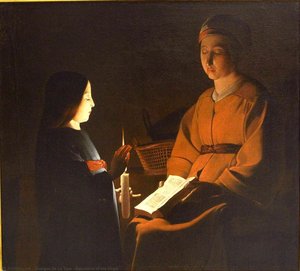
“The Childhood of the Virgin,” painted between 1658 and 1660 by Francisco de Zurbarán, stands as a testament to Baroque artistry—a sublime distillation of piety and realism that continues to captivate viewers centuries later. Currently housed in the Hermitage Museum in St Petersburg, this monumental canvas transcends mere depiction; it strives to convey an ethereal spiritual experience rooted in meticulous observation and masterful execution.Subject Matter and Composition
The painting portrays Mary Magdalene as a young girl, seated upon a simple wooden bench bathed in diffused light—a deliberate choice that underscores the artwork’s core theme: innocence and divine grace. Zurbarán eschews elaborate ornamentation or dramatic gesture, focusing instead on capturing the quiet contemplation of youth. The girl's gaze is directed slightly off-center, conveying an inner stillness that invites reflection upon faith and humility. Her hands delicately hold a green cloth—a subtle detail indicative of Zurbarán’s unwavering commitment to portraying textures with astonishing accuracy. The dark background serves as a counterpoint to the luminous figure, intensifying her presence and emphasizing the sanctity of the scene.Technique and Artistic Style
Zurbarán's technique exemplifies the Baroque ideal of *tenebrismo*, a dramatic chiaroscuro style characterized by stark contrasts between light and shadow. This masterful manipulation of illumination creates an atmosphere of solemn grandeur, highlighting Mary Magdalene’s face and clothing while enveloping the entire composition in darkness. The artist employs glazing—a layering process where thin translucent washes of color are applied over underlayers—to achieve remarkable depth and luminosity. This technique allows Zurbarán to capture the subtle nuances of light reflecting off surfaces, imbuing the painting with a palpable sense of realism. Furthermore, he meticulously renders the folds of the cloth with painstaking detail, demonstrating an unparalleled understanding of drapery and fabric texture.Historical Context and Symbolic Significance
Painted during the height of Baroque fervor in Spain—a period marked by papal patronage and fervent religious devotion— “The Childhood of The Virgin” reflects the artistic sensibilities of its time. It aligns perfectly with the broader movement’s preoccupation with portraying biblical narratives with profound emotional impact, aiming to inspire piety and reverence. Mary Magdalene's youthful depiction symbolizes purity and divine grace – qualities considered paramount in Christian iconography. The simplicity of the setting—the humble bench and the muted colors—serves as a deliberate antithesis to worldly grandeur, reinforcing the painting’s spiritual message.Emotional Impact and Legacy
“The Childhood of The Virgin” transcends its formal elements to evoke a powerful emotional response in viewers. Its serene stillness communicates an unwavering faith and humility – qualities that resonate deeply with audiences across cultures and eras. Zurbarán's ability to convey profound emotion through restrained imagery speaks volumes about the enduring power of art to inspire contemplation and elevate the spirit. The painting’s legacy continues to influence artists today, demonstrating the timeless beauty and spiritual depth achievable through meticulous observation and masterful technique. It remains a cornerstone of Baroque art history—a poignant reminder of humanity's aspiration for transcendence.Hasonló műalkotások






A művész életrajza
Early Life and Formation in Extremadura
Francisco de Zurbarán, born in Fuente de Cantos, Extremadura, Spain, in 1598, emerged from a region steeped in religious fervor and rural austerity—qualities that would profoundly shape his artistic vision. Though details of his earliest training remain somewhat elusive, we know he initially apprenticed with the local painter Alejandro de la Mina before moving to Seville to study under Alonso de Najera. It was within Najera’s workshop that Zurbarán began to absorb the burgeoning Baroque style, a dramatic departure from the more restrained artistic traditions of previous generations. Even in these formative years, a remarkable talent for capturing realistic detail and imbuing his subjects with emotional weight became apparent, hinting at the distinctive path he would forge as an artist. The stark landscapes and devout atmosphere of Extremadura instilled within him a sensibility that favored simplicity, solemnity, and a deep engagement with spiritual themes—characteristics that would define his mature work. His early years were marked by a fascination with capturing the essence of everyday life through charcoal sketches, a skill he honed before dedicating himself to painting.The Seville Period: Establishing a Singular Style
By 1614, Zurbarán had established himself in Seville, a vibrant cultural hub and the gateway to Spain’s vast American colonies. He quickly rose to prominence, establishing a successful workshop and attracting numerous commissions, primarily for religious paintings intended for churches, monasteries, and private devotional use. This period witnessed the full flowering of his signature style—a compelling blend of stark realism and intense spirituality. His early works already showcased a masterful command of *tenebrism*, a technique borrowed from Caravaggio that employed dramatic contrasts between light and shadow to create a sense of drama and emphasize the emotional intensity of his subjects. He wasn’t merely replicating what he saw; he was striving to reveal an inner truth, a profound spiritual presence within each figure. His paintings weren't simply representations of saints or biblical scenes; they were invitations to contemplation, designed to evoke a visceral response in the viewer. The influence of earlier Spanish masters like Juan Sánchez Cotán, known for his austere still lifes and precise realism, is also evident in Zurbarán’s early work, as well as the sculptural traditions prevalent in Seville at the time.Master of Tenebrism and Religious Devotion
Zurbarán's artistic prowess lay in his ability to transform religious narratives into powerfully moving visual experiences. He became renowned for his depictions of monks, nuns, martyrs, and saints—figures often portrayed in moments of profound contemplation or suffering. His *Immaculate Conception* (c. 1635), housed in the Museo de Bellas Artes in Bilbao, exemplifies this mastery; the Virgin Mary is depicted with a serene dignity, bathed in ethereal light against a dark background, conveying both purity and divine grace. Similarly, his *Agnus Dei* (c. 1640), now part of the Metropolitan Museum of Art collection, presents a poignant image of Christ as the sacrificial lamb, radiating an aura of solemnity and sacrifice. The *Sudarium of St Veronica*, with its haunting depiction of the veil bearing the imprint of Christ’s face, showcases his exceptional control over tenebrism and emotional depth. He didn't shy away from portraying the physical realities of faith—the austerity of monastic life, the pain of martyrdom—but always infused these scenes with a sense of reverence and spiritual significance. His *St Francis Receiving the Stigmata* demonstrates his ability to depict profound spiritual experiences with remarkable sensitivity and realism. The series of paintings depicting Carthusian monks further exemplifies his skill in portraying austere religious life, capturing their quiet devotion and inner peace.Royal Patronage and Lasting Legacy
Around 1630, Zurbarán achieved a significant milestone in his career when he became a court painter to Philip IV. This appointment brought him increased recognition and access to royal commissions, further solidifying his reputation as one of Spain’s leading artists. However, despite this success, his popularity waned somewhat in later years with the rise of different artistic tastes. The economic hardships facing Spain during the mid-17th century also impacted his ability to secure large-scale projects. Nevertheless, Zurbarán continued to work diligently, adapting his style and exploring new themes. His influence on Spanish Baroque art is undeniable; his dramatic use of chiaroscuro and his focus on religious themes inspired generations of artists. A circle of followers, known as the “Zurbaranistas,” emerged, continuing to push the boundaries of tenebrism and explore the expressive possibilities of light and shadow. Though he passed away in 1664, Francisco de Zurbarán left behind a rich artistic legacy that continues to be celebrated today, securing his place as one of Spain’s most important Baroque painters—a master of religious art whose works continue to resonate with viewers centuries later.- Notable Works: Immaculate Conception (c. 1635), Agnus Dei (c. 1640), Sudarium of St Veronica, St Francis Receiving the Stigmata, Paintings of Carthusian Monks.
- Historical Significance: Zurbarán’s influence on Spanish Baroque is undeniable; his use of chiaroscuro and his focus on religious themes inspired generations of artists.
Zurbarán
1598 - 1664 , Spanyolország
Rövid tények
- Artistic Movement Or Style: Barokk, Tenebrizmus
- Artists Or Movements Influenced By This Artist: ['Caravaggio']
- Artists Who Influenced This Artist: ['Juan Sánchez Cotán']
- Date Of Birth: 1598. nov. 7.
- Date Of Death: 1664. aug. 27.
- Full Name: Francisco de Zurbarán
- Nationality: Spanyol
- Notable Artworks:
- Immaculata Megváltó
- Agnus Dei
- Szent Ferenc
- Szövetelek
- Place Of Birth: Fuente de Cantos, Spanyolország
Kapcsolódó cikkek

Francisco de Zurbarán: Mysticism, Realism & the Golden Age of Spanish Painting
Explore the captivating world of Francisco de Zurbarán, a master of Spanish Baroque painting. Discover his dramatic tenebrism, religious masterpieces like 'La Porciúncula,' and lasting influence on art history.

Theatricality & Triumph: Baroque Drama in Painting & Sculpture
Explore the dramatic world of Baroque art! Discover its history, defining characteristics, & lasting influence on painting & sculpture. Expert insights into Caravaggio, Zurbarán, and Bernini – plus high-quality reproductions at AllPaintingsStore.

A 10 legmélyebb érzelmeket ébresztő műalkotás – Inspiráció otthonra a AllPaintingsStore-tól
Fedezze fel a 10 legmélyebb érzelmeket ébresztő műalkotást! Ismerje meg híres festők, mint Monet és Van Gogh történetét. Inspiráló faliképek otthonra – klasszikus és modern művészet AllPaintingsStore minőségben. Böngéssze a teljes gyűjteményt online!

Sacred Narratives Embodied: A Comprehensive Exploration of Religious Iconography in Art History
Explore the rich history of religious iconography in art! Discover symbolism, movements & masterpieces from Byzantine to Renaissance periods. Expert insights for collectors and enthusiasts at AllPaintingsStore.

The Golden Age Reforged: Dramatic Realism & Religious Zeal in Spanish Baroque Art
Explore the dramatic world of Spanish Baroque art! Discover masters like Zurbarán & the powerful influence of religious zeal on painting techniques – a guide for collectors and enthusiasts.