- Főoldal

- Olajfestmény reprodukció
- Franz Marc
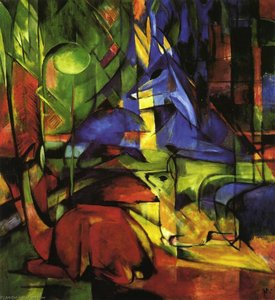
- Animals in Landscape (aka Painting with Bulls)

 Nyomat vásárlása Kép letöltése
 Megosztás
 Megosztás
 Részletek
 Kedvencekhez ad

 Letöltés
 Hasonló alkotások
 X-ray felvétel
 Diavetítés
Animals in Landscape (aka Painting with Bulls)

 Tovább olvasom
Kézzel készített olajfestmény reprodukció
Kézzel festett olajvastú vászon, az Ön által választott méretben és keretben, művészeink készítik meglévőre.




P118B $10

P118H $10

P118W $10

P438Z $10

P508JH $12

P508YH $12

P805H $10

P805Z $10

P919BZ $10

P919G $10

P919XJ $10

P959ZH $10

P968JZ $12

W106C $8

W218G $10

W218JH $8

W218Y $10

W307PJ $10

W316G $10

W316PJ $8

W316Y $10

W398PJ $8

W4111J $10

W500HY $15

W500JH $15

W692G $12

W849H $8

W940BG $15

W953PJ $8




Válasszon előre meghatározott méreteink közül, amelyek megfelelnek a műalkotás eredeti arányainak.

Ön megadhat saját méreteket egy adott kerethez vagy térhez igazításhoz. Ha a kiválasztott méret nem egyezik az eredeti kép arányával, akkor a műalkotást levágjuk, vagy további kézzel festett elemekkel meghosszabbítjuk a festményt. A gyártás megkezdése előtt küldünk Önnek egy digitális előnézetet jóváhagyásra.
Kérjük, vegye figyelembe, hogy a képernyőn megjelenő előnézet nem tükrözi a tényleges vágást vagy kiterjesztést. Csak az előnézet fog pontosan mutatni a végső kompozíciót.
Bár egyedi méretek állnak rendelkezésre, javasoljuk, hogy válasszon egy méretet az előre meghatározott listából az eredeti arányok megőrzése érdekében.
A rendelést követően a AllPaintingsStore.com csapata e-mailt küld az ügyfélnek az instrukciókért, és biztosít egy előnézeti képet (mockup).
Világszerte elérhető szállítás () 3-4 hét alatt a szokásos 5 hét helyett. (16 július). A minőség nem kérdőjelezhető.

Ingyenes globális expressz szállítás

Prémium minőségű len vászon

Teljes szállítási biztosítás

Vámvisszatérítési Garancia

Tökéletes színpontosság garancia

60 napos visszaküldési lehetőség (csak gyártási hibák esetén)

100%-os pénzvisszatérítési garancia

Kedvezmény több termény esetén
 Az üvegkeretes opció csak 110 cm alatti méretben érhető el

Animals in Landscape (aka Painting with Bulls)
Reprodukciós technika
A reprodukció mérete
-


Összesített ár
-
A műalkotás leírása
Animals in Landscape (aka Painting with Bulls): A Symphony of Color and Spirit
Franz Marc’s “Animals in Landscape” stands as a cornerstone of Expressionist art, capturing not merely a depiction of nature but an embodiment of its profound spiritual essence. Painted circa 1908-1909, this oil on canvas masterpiece exemplifies Marc's distinctive approach—bold brushstrokes and saturated hues employed to convey emotion rather than objective representation. It’s a painting that invites contemplation, prompting viewers to consider the interconnectedness of all living things and the artist’s unwavering belief in art as a vehicle for spiritual awakening.The Artist’s Vision: Marc and Expressionism
Franz Moritz Wilhelm Marc (1880-1916) was more than just a painter; he was a prophet of his time, deeply influenced by Nietzschean philosophy and seeking solace in the primal beauty of the natural world. Alongside fellow artists like Wassily Kandinsky and Alexej von Jawlensky, Marc co-founded Der Blaue Reiter (“The Blue Rider”), an influential journal that championed abstraction and emotional intensity as artistic imperatives. This group’s manifesto declared that “art must express the inner necessity of being,” a sentiment perfectly mirrored in Marc's oeuvre—particularly works like “Animals in Landscape.” His exploration of color theory, informed by Goethean science, pushed boundaries and established Expressionism as a dominant force within European art circles.A Bold Composition: Technique and Color Palette
“Animals in Landscape” showcases Marc’s masterful technique – loose, impasto brushstrokes layering pigment onto the canvas to create palpable texture and dynamism. The artist eschewed meticulous detail, prioritizing instead the conveyance of feeling through expressive color. Dominating the scene is a bull rendered in earthy reds and ochres, positioned centrally against a backdrop of deep blues and greens—a deliberate choice designed to convey strength and stability amidst the tranquility of the hillside environment. Surrounding him are two dogs and a human figure, each depicted with similar vibrant hues, reinforcing the painting’s overarching theme of harmony and unity. Marc's palette isn’t merely decorative; it’s imbued with symbolic significance—representing the earth, sky, and humanity respectively.Symbolism Rooted in Spirituality
Beyond its visual splendor, “Animals in Landscape” resonates deeply with spiritual ideas. The bull, often interpreted as representing primal masculinity and fertility, symbolizes resilience and grounding amidst the uncertainties of existence. Similarly, the dogs embody loyalty and companionship—essential qualities for navigating life’s challenges. The human figure, positioned at the top left corner, serves as a reminder of humanity's place within the grand scheme of nature, acknowledging our interdependence with all living creatures. Marc’s intention was to capture not just what he saw but what he *felt*, transforming observation into profound artistic expression.Emotional Resonance and Legacy
“Animals in Landscape” continues to captivate audiences today due to its ability to evoke a visceral response—a sense of awe, wonder, and contemplation. Its bold colors and expressive brushstrokes transcend time, speaking directly to the viewer’s emotions and inviting them into Marc's contemplative worldview. As an exemplar of Expressionist art, it exemplifies the movement’s commitment to conveying subjective experience and exploring themes of spirituality and nature—a legacy that ensures “Animals in Landscape” remains a treasured masterpiece for generations to come.




A művész életrajza
A Life Immersed in Color and Spirit
Franz Moritz Wilhelm Marc, born in Munich in 1880, was a painter whose brief but intensely focused career irrevocably altered the course of German Expressionism. His story is one of profound spiritual seeking translated into a vibrant visual language, a quest to understand the essence of life through the purity he found in the natural world—particularly within the animal kingdom. Initially influenced by his father, Wilhelm Marc, a landscape painter, young Franz’s artistic path wasn't immediately certain. He briefly considered theology, grappling with questions of faith and existence before ultimately dedicating himself to art at the Academy of Fine Arts in Munich. These early explorations into religious thought would remain deeply embedded within his work, shaping his belief that art could be a conduit for spiritual experience. His academic training provided him with technical foundations, but it was encounters with the works of Vincent van Gogh during visits to Paris that truly ignited his artistic vision. Van Gogh’s emotive use of color and raw expression resonated profoundly with Marc, liberating him from conventional techniques and setting him on a path toward a more subjective and emotionally charged style.The Blue Rider and a New Artistic Vision
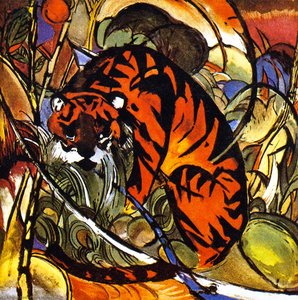
Marc's artistic development wasn’t solitary; it flourished within the dynamic context of early 20th-century Munich. He experimented with various artist groups, including the Neue Künstlervereinigung München, before co-founding *Der Blaue Reiter* (The Blue Rider) in 1911 alongside Wassily Kandinsky. This wasn’t merely a group or an exhibition series; it was a philosophical and artistic revolution. *Der Blaue Reiter* sought to move beyond mere representation, aiming instead to express inner spiritual truths through abstraction and symbolic color. The journal of the same name became a platform for disseminating these ideas, showcasing not only their own work but also that of other forward-thinking artists and exploring diverse cultural influences from folk art to primitive sculpture. Marc’s contributions during this period were pivotal. He moved away from depicting landscapes as static scenes, instead focusing on animals—horses, deer, foxes—as vessels of spiritual energy. These weren’t simply animal portraits; they were symbolic representations of innocence, harmony, and a connection to the natural world that he believed humanity had lost. The influence of Robert Delaunay’s exploration of abstract forms and vibrant colors further propelled Marc toward simplification and heightened emotional expression in his work. Paintings like *The Tiger* (1912) and *Red Deer* (1912) exemplify this shift, showcasing bold color choices and a growing focus on the inherent qualities of his subjects rather than realistic depiction.Symbolism, Color, and the Essence of Being
Marc’s artistic style is immediately recognizable for its distinctive use of color and form. He didn't employ color descriptively; instead, he imbued it with symbolic meaning. Blue represented spirituality and masculinity, yellow signified joy and femininity, and red embodied violence and materiality. These weren’t arbitrary choices but a carefully constructed system designed to convey specific emotional and philosophical ideas. His animals aren’t merely subjects; they are embodiments of these concepts. The simplification of forms—reducing figures to their essential shapes—further emphasized the underlying spiritual essence he sought to capture. *The Tower of Blue Horses* (1913), sadly lost during World War II, is perhaps the most iconic example of this approach, a powerful and evocative composition that encapsulates his artistic vision. He believed animals possessed an inherent purity and connection to nature that humans had forfeited through societal constraints and intellectualization. By portraying them with such reverence and symbolic weight, Marc sought to remind viewers of this lost harmony and inspire a deeper appreciation for the natural world. His work wasn’t about depicting *what* he saw but rather *how* he felt—a deeply personal and spiritual response to his surroundings.A Tragic End and Lasting Legacy
The outbreak of World War I in 1914 dramatically altered Marc's life and artistic trajectory. Despite seeking exemption due to his status as an artist, he was drafted into the German army, serving as a cavalryman. The horrors of war deeply affected him, yet even amidst the chaos, he continued to paint, finding solace and meaning in his art. Tragically, Franz Marc died on March 4, 1916, at the Battle of Verdun, a devastating loss for the art world. His untimely death cut short a career brimming with potential, but it also cemented his place as a pivotal figure in modern art history. His work continues to resonate today, influencing generations of artists and captivating audiences with its emotional depth and spiritual resonance. Marc’s paintings are exhibited in major museums worldwide, including the Lenbachhaus in Munich, which holds an extensive collection of his work. He is remembered not only as a pioneer of German Expressionism but also as a visionary artist who dared to explore the profound connection between art, spirituality, and the natural world—a legacy that continues to inspire awe and contemplation. His artistic vision remains a testament to the power of art to transcend the material realm and touch upon something deeper within the human spirit.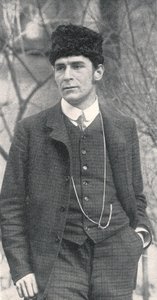
Franz Marc
1880 - 1916 , Németország
Rövid tények
- Artistic Movement Or Style: German Expressionizmus
- Artists Or Movements Influenced By This Artist: ['Állattal foglalkozó festők']
- Artists Who Influenced This Artist:
- Van Gogh
- Delaunay
- Date Of Birth: 1880. február 8.
- Date Of Death: 1916. március 4.
- Full Name: Franz Moritz Wilhelm Marc
- Nationality: Német
- Notable Artworks:
- A Tigris
- Vörös ló
- Lapostó a kék lovakról
- Place Of Birth: München, Németország
Kapcsolódó cikkek

Beastly Brushstrokes: A Historical Journey Through Animal Painting & Aesthetic Movements
Explore the rich history of animal painting across cultures & movements. Discover iconic artists, symbolism, collecting trends & expert art consultation at AllPaintingsStore.com.

A hó varázsa a művészetben: 10 ikonikus festmény, melyek elvarázsolnak – AllPaintingsStore
Fedezze fel a hó varázsát a művészetben! 10 ikonikus festmény Monet-tól Kandinsky-ig, melyek elvarázsolják Önt. Ismerje meg a történetüket és inspirálódjon otthona dekorációjához – AllPaintingsStore.

Concrete Visions: Exploring the Urban Landscape in Painting – From Realism to Contemporary Art
Explore the evolution of cityscape painting from Realism to contemporary art with AllPaintingsStore. Discover key artists & invest in timeless urban visions. Expert guidance, museum-quality reproductions.

James Ward: A Study in British Romantic Landscape and Animal Painting
Explore the captivating world of James Ward (1769-1859), a master of British Romantic landscape & animal painting. Discover his iconic 'Gordale Scar' and exquisite portraits – a timeless art investment. Learn about his influences, style, and enduring legacy.

A Német Expresszionizmus 10 Mesterműve: Érzelmek és Forradalom a Falakon
Fedezze fel a Német Expresszionizmus 10 legikonikusabb műalkotását! Kirchner, Munch és más német mesterek érzelmi festményeinek történetét bemutatva. Vászonképek, faliképek otthonába – AllPaintingsStore.com kínálata.