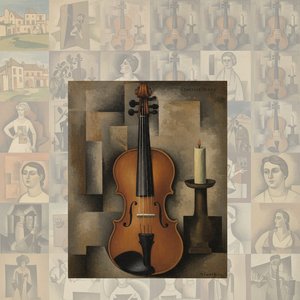
1908. Akril festmény vászonon.

§ 1Catalogue data


Ez a műalkotás szerzői jogi védelem alatt áll
Az ezen az oldalon megjelenített műalkotások szerzői jogi védelem alatt állnak, ami azt jelenti, hogy törvényileg nem készíthetünk és nem adhatunk el belőlük pontos másolatokat. Ez a védelem olyan nemzetközi megállapodások alapján érvényesül, mint például a Berni Egyezmény és a nemzeti jogszabályok által, beleértve azokat is, amelyeket meghatározott Az USA szerzői jogi törvénye – 17. cím.
Mint tiszteletes és törvényes alternatívát, olyan egyedi, kézzel festett alkotásokat kínálunk, amelyek az eredetiből merítnek inspirációt. Tapasztalt és professzionális művészeink alaposan tanulmányozzák az eredeti stílusát, hangulatát és művészeti esszenciáját, hogy egy olyan új, egyedi alkotást hozzunk létre, amely ugyanazt az érzést kelti – miközben önálló, eredeti alkotásként létezik.
Ez a módszer teljes mértékben megfelel a szerzői jogi szabályozásnak, mivel nem tartalmazza a védett műalkotás másolását vagy duplikálását. Ehelyett ez egy kreatív újinterpretáció – egy új festmény, amely az eredetivel való összefüggései miatt hatással van rá, de nem az az.
 További információk
§ 2Abstract
A gyűjtemény leírása
Discover Georges Braque’s "Large Nude," a pivotal Fauvist painting showcasing bold colors & expressive brushwork. Explore this 1908 masterpiece's serene composition and artistic significance.
A művész életrajza
Georges Braque (1882-1963): A kubista és fauvista festőművész, aki Picasso-val együtt újította meg a képi világot. Fedezd fel a 'Házak L'Estaque'-ben című alkotását és a kolázisok világát!
§ 3Commentary
A Glimpse into Early Modern Sensuality: Georges Braque’s *Large Nude* (1908)
This captivating painting by Georges Braque, created in 1908, offers a compelling window into the artistic ferment of the early 20th century. While initially categorized within Fauvism due to its vibrant color palette, *Large Nude* simultaneously foreshadows Braque’s pivotal role in developing Cubism alongside Pablo Picasso. The artwork depicts a reclining nude female figure, enveloped in a sense of quiet intimacy and repose.Fauvist Foundations & the Dawn of Abstraction
Braque's engagement with Fauvism is evident in the painting’s bold use of color. Unlike traditional academic nudes that favored subtle gradations to model form, *Large Nude* employs a rich and expressive palette – warm reds, oranges, and blues dominate the canvas. This isn’t about realistic skin tones; it's about conveying emotion and creating a visual impact through pure chromatic energy. However, even within this Fauvist framework, Braque begins to subtly deconstruct form, hinting at the geometric explorations that would soon define Cubism. The figure is not meticulously rendered but suggested through simplified shapes and planes.Technique & Composition: A Study in Form and Color
The painting’s surface is alive with visible brushstrokes, adding a tactile quality to the work. Braque doesn't blend colors seamlessly; instead, he allows them to exist side-by-side, creating a dynamic interplay of light and shadow. The composition itself is striking. The figure occupies most of the canvas, emphasizing her presence and vulnerability. The diagonal arrangement of the body creates a sense of movement and dynamism, preventing the scene from feeling static. The use of a large blue cloth draped over the figure adds both visual interest and a symbolic layer – perhaps suggesting concealment or protection.Historical Context: A Turning Point in Art History
1908 was a crucial year for Braque, marking his transition from Fauvism towards more radical experimentation. Influenced by Paul Cézanne’s late works—particularly his emphasis on geometric structure and multiple perspectives—Braque began to question traditional representational techniques. This period saw him actively exploring ways to break down forms into their essential components, a process that would ultimately lead to the birth of Cubism. *Large Nude* stands as a pivotal work in this evolution, bridging the gap between expressive color and geometric abstraction.Symbolism & Emotional Resonance
The nude figure itself is a classic subject in art history, often associated with themes of beauty, vulnerability, and sensuality. In Braque’s rendition, however, there's a sense of *interiority*. The woman isn’t presented as an object of desire but rather as a being lost in thought or peaceful slumber. The muted color palette and the loose brushwork contribute to this introspective mood. Key symbolic elements include:- The reclining pose, suggesting relaxation and vulnerability.
- The draped cloth, potentially representing concealment, protection, or a sense of privacy.
- The simplified forms, hinting at the fragmentation of perception that would become central to Cubism.
A Timeless Appeal for Collectors & Designers
*Large Nude* is more than just a beautiful painting; it’s a historical document—a testament to a moment of profound artistic innovation. Its bold colors and expressive brushwork make it a striking focal point for any interior, while its intellectual depth offers endless opportunities for contemplation. A high-quality reproduction of this work would be an invaluable addition to any art collection, bringing a touch of early modern sensibility and sophisticated elegance to the space. Its enduring appeal lies in its ability to evoke both emotional resonance and intellectual curiosity.Kérdések és válaszok
Melyik szín tűnik ki leginkább a(z) "Large nude" alkotásból?
A(z) Dióbarna (#6b4623) a(z) „Large nude”, Georges Braque alkotása domináns színe.
Megtekinthető a "Large nude" teljes képernyős diaporámaként is?
A „Large nude”, Georges Braque alkotása diaporámaként tekinthető a mű Diaváltás oldalán.
Milyen méretű „Large nude”, Georges Braque alkotása nyomatás illik a javasolt szobához?
A Nappali helyiségbe a "Large nude" alkotáshoz egy Nagy méretű méretű nyomtatást javasoljuk.


 Váltás nyomtatványra


 A bármely oldalsó méretét túlszálaló 105 cm (kb. 41 hüvelyk) meghaladó műalkotások vagy reprodukciók esetében a keret összeszerelhető készletként, szétszerelve kerül szállításra. Ez a módszer biztosítja a biztonságos szállítást, és megakadályozza a szállítás során fellépő sérüléseket.