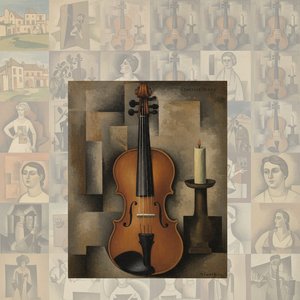
1944. Oil On Canvas, 129.0 x 193.0 cm.

§ 1Catalogue data
 Oil On Canvas
- WallArt
- Cubism
 1944
1944- Modern
 129.0 x 193.0 cm
Ez a műalkotás szerzői jogi védelem alatt áll
Az ezen az oldalon megjelenített műalkotások szerzői jogi védelem alatt állnak, ami azt jelenti, hogy törvényileg nem készíthetünk és nem adhatunk el belőlük pontos másolatokat. Ez a védelem olyan nemzetközi megállapodások alapján érvényesül, mint például a Berni Egyezmény és a nemzeti jogszabályok által, beleértve azokat is, amelyeket meghatározott Az USA szerzői jogi törvénye – 17. cím.
Mint tiszteletes és törvényes alternatívát, olyan egyedi, kézzel festett alkotásokat kínálunk, amelyek az eredetiből merítnek inspirációt. Tapasztalt és professzionális művészeink alaposan tanulmányozzák az eredeti stílusát, hangulatát és művészeti esszenciáját, hogy egy olyan új, egyedi alkotást hozzunk létre, amely ugyanazt az érzést kelti – miközben önálló, eredeti alkotásként létezik.
Ez a módszer teljes mértékben megfelel a szerzői jogi szabályozásnak, mivel nem tartalmazza a védett műalkotás másolását vagy duplikálását. Ehelyett ez egy kreatív újinterpretáció – egy új festmény, amely az eredetivel való összefüggései miatt hatással van rá, de nem az az.
 További információk
§ 2Abstract
A gyűjtemény leírása
Explore Georges Braque’s ‘The Billiard Table’ (1944). A fragmented Cubist still life in earthy tones, showcasing impasto texture & a dreamlike composition. Discover this significant 20th-century artwork.
A művész életrajza
Georges Braque (1882-1963): A kubista és fauvista festőművész, aki Picasso-val együtt újította meg a képi világot. Fedezd fel a 'Házak L'Estaque'-ben című alkotását és a kolázisok világát!
§ 3Commentary
A Fragmented World: Exploring Georges Braque’s *The Billiard Table* (1944)
Georges Braque's *The Billiard Table*, painted in 1944, is a compelling example of his mature Cubist style – a visual language he pioneered alongside Pablo Picasso. Measuring an impressive 129 x 193 cm, this oil on canvas doesn’t simply depict a billiard table; it dissects and reassembles our perception of space and form, inviting us into a world both familiar and profoundly altered.Subject & Composition: Beyond the Game
The painting presents a still life centered around a billiard table, but Braque moves far beyond simple representation. Chairs, vases, architectural fragments – all are present, yet rendered as fractured planes and overlapping geometric shapes. The composition isn’t anchored by traditional perspective; instead, multiple viewpoints collide on the canvas, creating an ambiguous and dynamic space. It's less about *seeing* a billiard room and more about experiencing its essence through fragmented impressions. The objects aren’t merely arranged; they are analyzed and rebuilt.Style & Technique: A Master of Synthetic Cubism
Braque’s style in *The Billiard Table* leans heavily towards Synthetic Cubism, a phase where the artist began to build up compositions from simplified shapes and colors rather than breaking down objects into analytical fragments. The dominant palette is one of warm, earthy tones – ochres, browns, grays – contributing to a sense of intimacy and quiet contemplation. The thick impasto brushstrokes are crucial, adding texture and physicality to the surface, emphasizing the materiality of the paint itself. Lines are angular and broken, reinforcing the fractured perspective and creating a visual rhythm that guides the eye across the canvas.Historical Context: Art in Wartime
Painted during World War II, *The Billiard Table* exists within a complex historical context. While not explicitly referencing the war, its fragmented nature can be interpreted as reflecting the disruption and uncertainty of the era. Braque, like many artists, retreated into interior spaces and still life compositions during this period, focusing on formal concerns rather than direct social commentary. However, the sense of unease and dislocation inherent in the Cubist style arguably resonates with the anxieties of wartime Europe.Symbolism & Emotional Impact: Contained Chaos
The symbolism within *The Billiard Table* is subtle but potent. The billiard table itself, a symbol of leisure and social interaction, is rendered as disjointed and incomplete. This could suggest a disruption of normalcy or a sense of loss. The overall effect isn’t one of chaos, but rather of contained chaos – a carefully constructed arrangement that hints at underlying tensions. The painting evokes a dreamlike state, prompting viewers to question their own perceptions of reality and space. It's an intellectually stimulating work that rewards close observation and contemplation.For Collectors & Designers: A Timeless Statement
*The Billiard Table* is more than just a historical artifact; it’s a timeless statement about the power of abstraction and the enduring appeal of Cubism. Its sophisticated color palette and dynamic composition make it a striking focal point for any interior space.- Its earthy tones complement both modern and traditional settings.
- The fragmented forms add visual interest and intellectual depth.
- A high-quality reproduction captures the texture and nuance of Braque’s brushwork, bringing a touch of artistic mastery to your home or office.
Kérdések és válaszok
„The Billiard Table”, Georges Braque alkotása erős kontrasztokat vagy lágy harmóniákat használ?
A "The Billiard Table" alkotásban egy Gentle kontraszt párosul egy Unified Palette harmóniával.
Ki készítette a(t) "The Billiard Table"-t, és melyik évben?
Georges Braque a "The Billiard Table" című művet 1944-ben készítette.
Mely korszakban készült a „The Billiard Table”, Georges Braque alkotása?
A „The Billiard Table”, Georges Braque alkotása a Modern korszakból származik. Ez az időszak adja meg a mű történelmi kontextusát.


 Váltás nyomtatványra


 A bármely oldalsó méretét túlszálaló 105 cm (kb. 41 hüvelyk) meghaladó műalkotások vagy reprodukciók esetében a keret összeszerelhető készletként, szétszerelve kerül szállításra. Ez a módszer biztosítja a biztonságos szállítást, és megakadályozza a szállítás során fellépő sérüléseket.