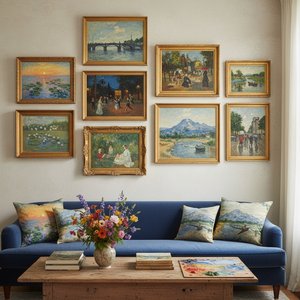
Acrylic On Canvas.

§ 1Catalogue data

Ez a műalkotás szerzői jogi védelem alatt áll
Az ezen az oldalon megjelenített műalkotások szerzői jogi védelem alatt állnak, ami azt jelenti, hogy törvényileg nem készíthetünk és nem adhatunk el belőlük pontos másolatokat. Ez a védelem olyan nemzetközi megállapodások alapján érvényesül, mint például a Berni Egyezmény és a nemzeti jogszabályok által, beleértve azokat is, amelyeket meghatározott Az USA szerzői jogi törvénye – 17. cím.
Mint tiszteletes és törvényes alternatívát, olyan egyedi, kézzel festett alkotásokat kínálunk, amelyek az eredetiből merítnek inspirációt. Tapasztalt és professzionális művészeink alaposan tanulmányozzák az eredeti stílusát, hangulatát és művészeti esszenciáját, hogy egy olyan új, egyedi alkotást hozzunk létre, amely ugyanazt az érzést kelti – miközben önálló, eredeti alkotásként létezik.
Ez a módszer teljes mértékben megfelel a szerzői jogi szabályozásnak, mivel nem tartalmazza a védett műalkotás másolását vagy duplikálását. Ehelyett ez egy kreatív újinterpretáció – egy új festmény, amely az eredetivel való összefüggései miatt hatással van rá, de nem az az.
 További információk
§ 2Abstract
A gyűjtemény leírása
Admire Georges Braque’s iconic beach scene masterpiece! Explore high-quality reproductions of ‘untitled (7227)’ – a pivotal Cubist work capturing the essence of Impressionism and modern art.
A művész életrajza
Georges Braque (1882-1963): A kubista és fauvista festőművész, aki Picasso-val együtt újította meg a képi világot. Fedezd fel a 'Házak L'Estaque'-ben című alkotását és a kolázisok világát!
§ 3Commentary
Georges Braque: A Pioneer of Cubism and the Birth of Modern Form
Georges Braque (1882-1963), a figure whose influence reverberates throughout the annals of 20th-century art, stands as one of the twin architects of Cubism alongside Pablo Picasso. Born in Argenteuil, France—a town steeped in Impressionistic heritage—Braque’s formative years instilled within him an appreciation for meticulous observation and structural clarity that would become hallmarks of his artistic vision.
Initially drawn to the craft of house painting and decoration – a profession deeply rooted in his family’s traditions – Braque possessed an innate talent that transcended mere technical skill. This early exposure fostered a profound understanding of materials and spatial relationships, providing him with invaluable groundwork for his subsequent artistic explorations.
- Formal Training: He pursued formal training at the École des Beaux-Arts in Le Havre, absorbing the precepts of academic painting while simultaneously cultivating an inquisitive spirit that would propel him toward groundbreaking innovation.
- Parisian Encounter: Moving to Paris in 1902, Braque immersed himself in the vibrant artistic atmosphere of the city, engaging with fellow artists like Marie Laurencin and Francis Picabia – figures who would become collaborators and fellow travelers on the path to artistic discovery.
The Genesis of Cubism: Deconstructing Reality
It was within this crucible of Parisian intellectual ferment that Braque encountered Picasso, sparking a collaborative partnership that irrevocably altered the course of art history. Together, they embarked upon an audacious experiment—the dismantling and reimagining of traditional artistic conventions.
Cubism wasn’t merely stylistic; it represented a fundamental epistemological shift. Artists like Braque and Picasso rejected perspectival illusion, opting instead for fractured planes that simultaneously presented multiple viewpoints of the same subject. This technique aimed to capture not just what was seen but also how it was perceived—a radical departure from the idealized representations prevalent in preceding eras.
Considered a pivotal moment in artistic history, Cubism challenged viewers to confront the complexities of visual experience and paved the way for subsequent movements like Futurism and Surrealism. Braque’s contribution was particularly significant in establishing the geometric vocabulary that would define this revolutionary style.
Notable Works & Artistic Legacy
Among Braque's most celebrated canvases is “Houses at L’Estaque,” a landscape painting executed in 1906 that exemplifies Cubist principles. The depiction of the Provençal hillside is rendered with fragmented planes and muted colors, prioritizing structural integrity over optical realism.
Furthermore, Braque’s exploration of collage—incorporating textured materials like burlap and newspaper into his paintings—represented another daring innovation. These collages served as a visual manifesto for Cubism's rejection of illusionistic representation and underscored the artist’s commitment to experimenting with new mediums.
Georges Braque’s legacy extends far beyond his artistic output. He championed abstraction, fostering a dialogue between art and science that continues to inspire artists today. His unwavering dedication to pushing boundaries solidified his position as one of the foremost figures in shaping the aesthetic landscape of the 20th century—a testament to the transformative power of artistic vision.
Kérdések és válaszok
Elérhető diaporáma a(z) „untitled (7227)”, Georges Braque alkotása alkotáshoz?
A "untitled (7227)" diaporámája megtekinthető a mű Diaváltás oldalán.
Mennyire fényes „untitled (7227)”, Georges Braque alkotása?
A „untitled (7227)”, Georges Braque alkotása fényerőségi értéke Gentle Luminance.
A "untitled (7227)" jellemző arra, amit Georges Braque általában alkotott?
A "untitled (7227)" a coastal scene, maritime art, beach composition, boat landscape, geometric forms, cubist influence, modern painting ábrázol, míg Georges Braque dokumentált témái a analytical cubism, spatial distortion, european modern art tradition, exploring form & perspective, braque’s pioneering vision legacy. A kettő összevetése megmutatja, hogyan kapcsolódik ez a mű a művész megszokott motívumaihoz.



 Váltás nyomtatványra


 A bármely oldalsó méretét túlszálaló 105 cm (kb. 41 hüvelyk) meghaladó műalkotások vagy reprodukciók esetében a keret összeszerelhető készletként, szétszerelve kerül szállításra. Ez a módszer biztosítja a biztonságos szállítást, és megakadályozza a szállítás során fellépő sérüléseket.