


 Küldés
 Megosztás
 Részletek
 Útmutató

 Letöltés
 Hasonló darabok
 Diavetítés
 Kérdések és válaszok
 Statisztika
Arithmetic


 Összes részlet megjelenítése
Szerezzen be nyomtatásra kész fájlt, amely messze túlmutat a webes előnézeten. Minden általunk értékesített digitális kép az adatbázisunkban található nagy felbontású mesterfájlból származik – általában 5 000 és 15 000 pixel szélességű –, így magabiztosan nyomtathat nagy méretben, sokat vághat a képen, vagy reprodukálhatja a legfinomabb részleteket is.
Stúdiómból egyetlen fájl sem távozik feltartózkodás nélkül. Egy digitális szakértő az eredeti festménnyel összehasonlítja a színeket, és szükség esetén korrigálja azokat, majd professzionális retusználó eszközökkel javítja a tisztaságot és a részletgazdagságot — miközben mindig hű marad a művész vonalvezetéséhez és stílusához. Az eredmény egy olyan kép, amely úgy néz ki, mint egy festmény, és nem úgy, mint egy szűrőzött szkenn.
A végső munka befejezése előtt jóvá kell hagynia a képet: szakértőnk 72 órán belül elküldi azt e-mailben ellenőrzésre. Nem tetszett? Kérhet javításokat vagy korrekciókat, illetve visszatérítést kérhet, amennyiben a minőség nem felel meg az elvárásoknak.
Ez az a minőség, amelyre a kiadók, a design stúdiók, a galériák és a nyomdaték megbízhatnak.
Digitális kép
Töltsön le nagy felbontású fájlt személyes kiállításokhoz, nyomtatáshoz és kreatív projektekhez. ( Váltás nyomtatványra Kézzel festett másolat rendelése)
Minden digitális kép rendeléséhez tartozó extrák
Szakértői digitális kézbesítés, garantáltan
Amikor a AllPaintingsStore.com szolgáltatást választja, nem csupán egy képet kap – professzionálisan felmagasított digitális műalkotást kap, amely precizitással készült, és amelyet megelégsedési gwarancia tesz biztoslássá. Az alábbiakban automatikusan minden benne 】

Gyors e-mail teslimítés
A nagy felbontású digitális képmásolatát a megrendelést követő 72 órán belül e-mailben elküldjük Önnek – azonnal használható formátumban.

MI-alapú digitális fájljavítás
Műve professzionális módon kerül optimalizálásra fejlett mesterséges intelligencia eszközök és manuális szerkesztés segítségével, biztosítva a maximális részletességet, tisztaságot és színpontosságot.

Örök életű ingyenes újradelivery
Véletlenül törölted vagy elvesztetted a fájlodat? Ne aggódj – bármikor ingyen újra megküldjük neked.

Nincs importköltség – soha
Élvezze műalkotásait azonnal, vám, illeték vagy szállítási költség nélkül – a digitális letöltések mindig adamentesek.

Színpontosság garantálása
Professzionális eszközök és színkezelés segítségével garantáljuk, hogy digitális képe a lehető legpontosabban tükrözze az eredeti színeket.

100 napos elégedettségi garancia
Ha nemມີ elégedett a digitális képével, 100 napon belül felülvizsgáljuk vagy 100% visszatérítjük az amountot – kérdés बिना.

100% Pénzvisszatérítési garancia
Nem tetszett a vásárlás? 100 napon belül teljes visszatérítést garantálunk a digitális fájl megvételétől számítva – kérdés nélkül.

Tömegrendelési kedvezmények
Vásároljon 3 képet, spóroljon 10%-et - Vásároljon 5-öt, spóroljon 15%-et - Vásároljon 10+ képet, spóroljon 20%-at. Kiváló kreatív projektekhez, galériákhoz és ügynökségekhez.
A Geometric Symphony: Decoding Giorgione’s Arithmetic
In the heart of the Venetian Renaissance, where the shimmering reflections of the Adriatic met the intellectual fervor of humanist scholarship, emerged a work of profound and enigmatic beauty. Arithmetic, attributed to the elusive master Giorgione, is not merely a study of shapes, but a window into the soul of a period obsessed with the divine order of the universe. At first glance, the viewer is met with a deceptively simple arrangement of circles and geometric forms, yet beneath this surface lies a complex tapestry of meaning. The painting functions as a visual meditation on the mathematical proportions that Renaissance thinkers believed governed both the heavens and the earth. It is a piece that invites the eye to wander through its intricate patterns, finding rhythm in the placement of each arc and line, much like a silent piece of music composed in pigment.
The technique employed in this work speaks to the very essence of Venetian colorito. Eschewing the rigid, linear constraints often found in Florentine disegno, Giorgione utilized a fresco-style approach that allows for a breathtaking luminosity. By applying thin, translucent washes of color onto the surface, the artist achieved a depth that feels almost atmospheric, as if the light itself is trapped within the layers of pigment. The palette is a sophisticated collection of earth tones—warm ochres, muted terracottas, and soft umbers—which lend the composition a timeless, organic quality. This mastery of tonal harmony ensures that even the most abstract elements feel grounded in a natural reality, creating a sense of permanence and weight that is rare in such delicate execution.
The Intersection of Science and Spirit
To understand Arithmetic, one must look toward the cultural crossroads of 1510 Venice. This was an era where the boundaries between art, science, and philosophy were fluid. The title itself serves as a clue to the painting's symbolic depth; it reflects the Renaissance fascination with classical ideals and the belief that mathematical precision was a reflection of divine perfection. Each circle and geometric intersection acts as a symbol of cosmic balance. For the modern collector or interior designer, this piece offers more than just aesthetic pleasure; it provides a focal point of intellectual intrigue. It is a work that rewards prolonged contemplation, revealing new layers of complexity each time it is viewed.
Integrating such a masterpiece into a contemporary space requires an appreciation for its emotional resonance. There is a profound stillness within the composition, a quietude that can transform a room into a sanctuary of thought. Whether placed in a minimalist gallery setting or as a sophisticated accent in a richly textured study, the painting’s ability to blend architectural structure with soft, painterly textures makes it an invaluable asset for any curated collection. It stands as a testament to Giorgione's unique ability to capture not just the visible world, but the invisible laws that shape our perception of beauty and order.
Kérdések és válaszok
Mely művészhez köthető a "Arithmetic"?
A "Arithmetic" alkotója Giorgione. A mű Giorgione nevére van katalógusozva.
Mely paletta és domináns szín határozza meg a "Arithmetic" alkotást?
A „Arithmetic”, Giorgione alkotása egy Earthy színpalettát használ, melynek domináns színe a Rosy Brown (#c6b395).
Mennyi éves volt Giorgione, amikor 1510 évben megalkotta a "Arithmetic" alkotást?
Amikor a "Arithmetic" alkotása 1510-ben készült, Giorgione – aki 1477-ben született – 33 éves volt.
Hasonló műalkotások


Művész életrajza
Giorgione (1477/8-1510), a key High Renaissance Venetian painter
Giorgio Barbarelli da Castelfranco, known to the world as Giorgione, remains one of the most elusive and captivating figures in Renaissance art. Born in the small town of Castelfranco Veneto near Venice around 1477 or 1478 – the exact year is debated – his tragically short life, ending around 1510 at the age of thirty-two or thirty-three, belies an artistic impact that continues to resonate centuries later. Unlike many of his contemporaries whose lives are well documented, Giorgione’s story is shrouded in mystery, pieced together from scant historical records and the often romanticized accounts of Giorgio Vasari. What we do know suggests a man deeply immersed in the vibrant culture of Venice, a city that fostered both artistic innovation and a sensual appreciation for beauty. He likely apprenticed under Giovanni Bellini, a leading Venetian painter, absorbing the established traditions before forging his own unique path. Early commissions included portraits of prominent figures like Doge Agostino Barbarigo, demonstrating an immediate talent for capturing likeness and status. However, it was in his departure from conventional subject matter and his revolutionary approach to painting that Giorgione truly distinguished himself. Giorgio Vasari’s biographical sketches offer tantalizing glimpses into Giorgione's life – he describes him as a man who delighted in all the beauty the world could offer, singing and playing the lute, and “putting into his pictures, the greatest beauty and the greatest variety that he could find.” His gentle obsession with the soft tones of flesh and the shade of quiet trees distinguish his paintings, and profoundly influenced his student Titian. Despite Vasari’s romanticized portrayal, verifiable information about Giorgione is scarce. He was married to Lucrezia Querinelli, and they had several children – though none survived infancy. His artistic activity flourished during this period, fueled by patronage from wealthy Venetian families and a fervent desire to explore new creative horizons.A Style Unlike Any Other: The Venetian Breakthrough
Giorgione’s artistic style marked a significant break from the prevailing Florentine emphasis on linear perspective and precise draftsmanship. He championed color, atmosphere, and an evocative moodiness that became hallmarks of the Venetian school. His technique involved softening outlines, employing subtle gradations of tone – *sfumato* – to create atmospheric effects, and prioritizing overall harmony over meticulous detail. This approach wasn’t merely a technical choice; it reflected a fundamentally different artistic sensibility. Giorgione sought not to replicate reality but to capture its essence, its fleeting emotions, and its poetic resonance. He famously stated that he wished to “paint as poets write,” aiming for an emotional impact rather than a literal representation of the scene before him. This ambition is vividly realized in masterpieces like *The Tempest* (c. 1506-1508) and *Pastoral Concert*, where hazy landscapes dominate, bathed in diffused light—a technique that would become synonymous with Venetian painting. The absence of sharp lines and pronounced shadows contributes to the paintings’ ethereal quality, inviting viewers into a realm of contemplation and emotion.Notable Works: Visions of Beauty and Mystery
Giorgione's oeuvre is remarkably small compared to his contemporaries, consisting of approximately six surviving artworks—a fact that has fueled speculation about his artistic output and contributed to his enduring mystique. Yet, these paintings are undeniably powerful, demonstrating Giorgione’s mastery of color and form. *The Tempest*, depicting a soldier and a nursing mother amidst a stormy landscape, remains one of the most debated compositions in Renaissance art. Scholars continue to wrestle with its symbolism—the enigmatic gaze of the soldier, the serene expression of the woman, and the evocative depiction of the turbulent sky—seeking to unlock its hidden meanings. Similarly, *Pastoral Concert*, celebrating musicians in a tranquil meadow, exemplifies Giorgione’s commitment to capturing mood and atmosphere above all else. The painting's harmonious colors and subtle gradations of tone create an immersive experience for the viewer, transporting them to a realm of idealized beauty. Other significant works include *Sleeping Venus*, which showcases Giorgione’s exquisite handling of color and drapery—a testament to his skill as a painter—and *Judith*, demonstrating his early exploration of dramatic narrative alongside atmospheric effects.Influence and Legacy: Shaping Venetian Art
Giorgione's influence extended far beyond his own paintings, establishing him as a pivotal figure in the development of Venetian art. He served as a mentor to Titian, who would become one of the most celebrated artists of the High Renaissance—carrying forward Giorgione’s innovations in color and atmospheric painting. The Venetian school embraced Giorgione's stylistic principles, rejecting the rigid conventions of Florentine art and prioritizing expressive emotion alongside visual beauty. This shift toward a more sensual and poetic aesthetic profoundly impacted the artistic landscape of Italy, shaping the tastes and sensibilities of subsequent generations. Giorgione’s legacy continues to inspire artists today—a reminder that true artistry lies not in slavishly imitating reality but in capturing its essence—its fleeting emotions, and its profound beauty. He remains a symbol of artistic freedom, innovation, and the power of suggestion – a painter who dared to prioritize feeling over form, atmosphere over accuracy, and poetry over narrative.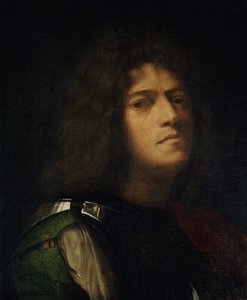
Giorgione
1477 - 1510 , Olaszország
Érmeradatok
- Artistic Movement Or Style: Magyar reneszánsz, Velencei iskola
- Artists Or Movements Influenced By This Artist: ['Titian']
- Artists Who Influenced This Artist:
- Giovanni Bellini
- Mantegna
- Date Of Birth: 1477/78 vagy 1473/74
- Date Of Death: 1510 októbere
- Full Name: Giorgio Barbarelli da Castelfranco
- Nationality: Olasz
- Notable Artworks:
- A Tempest
- Pastoral Concert
- Alvó Vénusz
- Judit
- Place Of Birth: Castelfranco Veneto, Itália