Pénzvisszatérítési Garancia · 100 nap Ingyenes világszerte történő szállítás
449 564műalkotások 30 613művészek 4 660múzeumok 32nyelv
Katalógusbejegyzés

Composition with Animals

Watercolor. Österreichische Nationalbibliothek.

1. ábra. Arcimboldo, Composition with Animals. A megadott reprodukciót mutatja: , .

§ 1Katalógusadatok

§ 2Absztrakt

A gyűjtemény leírása

Composition with Animals by Giuseppe Arcimboldo: This watercolor masterpiece showcases an astonishing assemblage of fruits and vegetables arranged to form human faces—a revolutionary technique that exemplifies the Renaissance spirit of innovation and symbolic representation.

A művész életrajza

Arcimboldo Giuseppe: Egy egyedülálló olasz festő, aki gyümölcsökkel, virágokkal és tárgyakkal alkotott szokatlan, fantáziaszerű portrékat, melyek a reneszánsz szimbolizmus és a szürrealizmus előfutára.

§ 3Magyarázat

A Symphony of Fauna: The Enchanting Vision of Arcimboldo

In the vast tapestry of the Renaissance, few threads are as vibrant or as enigmatic as those woven by Giuseppe Arcimboldo. His masterpiece, Composition with Animals, serves as a breathtaking window into a mind that saw no boundary between the natural world and the realm of pure imagination. At first glance, the viewer is met with a striking arrangement of creatures—horses, dogs, and a majestic deer—that seem to coalesce into a singular, harmonious entity. This is not merely a study of zoology, but a profound exploration of how individual forms can be reimagined to create a collective whole. The painting possesses an almost hypnotic quality, drawing the eye through a labyrinth of fur, muscle, and gaze, inviting us to look closer at the delicate balance between reality and artifice.

The technique employed in this work is nothing short of miraculous. Utilizing the subtle, luminous properties of watercolor, Arcimboldo achieves a level of detail that breathes life into every subject. One can almost feel the softness of the dog's coat and the sturdy strength of the central horses. The artist’s ability to manipulate light and shadow creates an ethereal atmosphere, where the pale, neutral background acts as a stage, allowing the rich textures of the animals to emerge with startling clarity. For the collector or the interior designer, this piece offers a unique textural depth; it is a work that changes character depending on the light of the room, offering a soft, dreamlike quality during the day and a more profound, sculptural presence under evening illumination.

Symbolism and the Renaissance Spirit

To understand Composition with Animals, one must delve into the intellectual currents of the late 16th century. Arcimboldo was a master of the scherzo—the playful, the witty, and the allegorical. While his most famous works involve faces constructed from vegetables, this animal composition speaks to a different facet of his genius: the ability to find hidden structures within nature itself. The symmetry of the two horses facing one another suggests a cosmic order, a reflection of the Renaissance belief in a structured, purposeful universe. Each creature acts as a building block in a larger, more complex narrative about the interconnectedness of all living things.

For those seeking to bring inspiration into a curated space, this artwork provides a sophisticated intellectual anchor. It is a conversation piece that transcends mere decoration. The presence of the deer, often a symbol of grace and spiritual aspiration, juxtaposed with the loyal, grounded nature of the dogs, creates an emotional resonance that is both calming and stimulating. It is a work that rewards contemplation, making it an ideal centerpiece for a library, a study, or a grand salon where art is intended to provoke thought and spark wonder.

A Timeless Legacy for the Modern Collector

Owning a reproduction of such a significant work allows one to host a piece of history within the modern home. Arcimboldo’s legacy is one of innovation—he challenged the very definition of portraiture and composition long before the advent of surrealism. By bringing this Composition with Animals into a contemporary interior, you are not just displaying a beautiful image; you are celebrating the enduring human capacity for creativity and the eternal fascination with the wild wonders of our planet.

Whether you are an art historian captivated by his Mannerist precision or a designer looking to introduce a sense of whimsical elegance to a room, this painting offers unparalleled versatility. It bridges the gap between the classical and the avant-garde, making it a timeless addition to any collection dedicated to the profound beauty of the natural world.

Kérdések és válaszok

Milyen érzést kelt „Composition with Animals”, Arcimboldo alkotása színe?

A "Composition with Animals" alkotásban a Neutrals színek Reflective érzetet kölcsönöznek.

Arcimboldo pályájának mely időszakához tartozik a „Composition with Animals”?

A "Composition with Animals" Arcimboldo alkotói pályájának High Renaissance szakaszát képviseli.

Milyen orientációjú a „Composition with Animals”, Arcimboldo alkotása?

A "Composition with Animals" formátuma Landscape. Ez hasznos, amikor tervezünk, hogy a reprodukciót hová helyezzük el.
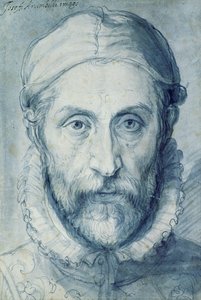
§ 4A művész

Arcimboldo

Arcimboldo

1527 - 1593, Olaszország

Gyors információk Arcimboldo művészről

  • Artistic Movement Or Style: Mannerizmus, Surrealizmus
  • Artists Or Movements Influenced By This Artist: ['Salvador Dalí']
  • Artists Who Influenced This Artist: ['Leonardo da Vinci']
  • Date Of Birth: 1527. ápril 5.
  • Date Of Death: 1593. július 11.
  • Full Name: Giuseppe Arcimboldo
  • Nationality: Olasz
  • Notable Artworks:
    • A négy évszak
    • Könyvtár
    • Vertumnus
  • Place Of Birth: Milan, Olaszország

A művész életrajza

A World Reimagined: The Enigmatic Art of Giuseppe Arcimboldo

Giuseppe Arcimboldo, a name that conjures images both whimsical and profoundly strange, remains one of the most singular figures in Renaissance art. Born in Milan in 1527, his career unfolded against the backdrop of a Europe steeped in intellectual ferment, religious upheaval, and an insatiable curiosity about the natural world. While initially recognized for more conventional works – frescoes adorning cathedrals and portraits adhering to established courtly standards – Arcimboldo’s enduring legacy rests upon a series of composite heads constructed entirely from meticulously arranged objects: fruits, vegetables, flowers, books, even musical instruments. These weren't mere playful exercises in visual trickery; they were complex allegories, imbued with symbolism that resonated deeply within the Renaissance worldview and continue to fascinate audiences today. His father, Biagio Arcimboldo, was an artist himself, providing young Giuseppe with early artistic training and likely influencing his initial foray into design work for stained glass windows and frescoes at Milan Cathedral beginning around 1549. This foundational experience honed his technical skill and eye for detail—qualities that would become hallmarks of his later, more unconventional creations.

Early Years and Artistic Foundations

Giuseppe Arcimboldo’s artistic journey began within a family steeped in the traditions of art. His father, Biagio Arcimboldo, was himself a painter, working primarily as a designer for stained glass windows and frescoes within the grand cathedral of Milan. This early exposure to craftsmanship and visual storytelling undoubtedly shaped young Giuseppe's developing skills. He received his initial training at the Duomo, learning the techniques of fresco painting and the intricacies of creating intricate designs for religious imagery. This period instilled in him a deep appreciation for detail, color theory, and the ability to translate complex ideas into visually compelling forms. It’s believed that this foundation in traditional artistic practices provided a crucial springboard for his later experimentation with more unconventional approaches. The influence of the Milanese art scene—a hub of creativity during the Renaissance—likely fostered a spirit of innovation and a willingness to challenge established norms, qualities that would ultimately define Arcimboldo's unique style.

Courtly Commissions and the Rise of a Unique Style

Arcimboldo’s trajectory took a significant turn in 1562 when he was appointed court portraitist to Ferdinand I at the Habsburg court in Vienna. This marked the beginning of over two decades serving as an artistic polymath for three successive Habsburg rulers: Maximilian II and his son, Rudolf II. This appointment thrust him into the heart of European power, providing him with unparalleled access to imperial patronage and a stimulating environment for creative exploration. Beyond painting portraits – though even these often displayed subtle eccentricities – Arcimboldo’s duties encompassed costume design, festival decorations, and the organization of imperial collections. It was within this environment of refined taste and intellectual curiosity that his signature style began to blossom. The courtly demand for novelty and spectacle provided fertile ground for experimentation, allowing him to move beyond traditional portraiture towards the creation of his celebrated “composite heads.” These weren’t born from a sudden impulse but evolved gradually, building upon Renaissance fascination with puzzles, riddles, and the exploration of hidden meanings within seemingly ordinary objects. The influence of earlier artists who experimented with *trompe l'oeil* effects and distorted perspectives can be detected, yet Arcimboldo synthesized these elements into something entirely his own—a unique visual language that challenged conventional notions of representation.

Decoding the Symbolism: More Than Meets the Eye

To dismiss Arcimboldo’s work as mere whimsicality is to overlook its profound intellectual depth. Each object within his composite portraits was carefully chosen, laden with symbolic meaning related to the sitter's character, profession, or social status. *The Librarian*, for example, isn’t simply a face constructed from books; it’s a subtle critique of scholarly pretension—a commentary on those who amass knowledge without truly engaging with its content. The animal tails forming the beard represent dusters, hinting at neglected volumes gathering dust on shelves. Similarly, his portraits of the seasons – particularly *Vertumnus*, depicting Emperor Rudolf II as the Roman god of gardens and change – are rich in botanical symbolism, reflecting the emperor’s patronage of science and natural history. These weren't intended to be immediately deciphered; they were designed to provoke contemplation, inviting viewers to unravel layers of meaning hidden within the seemingly playful arrangement of objects. The very act of constructing a human likeness from inanimate matter served as a meditation on the interconnectedness of all things—a reflection of Renaissance Neoplatonism’s belief in the underlying harmony of the universe.

Legacy and Rediscovery: A Precursor to Surrealism

Despite his success during his lifetime, Arcimboldo's reputation waned in the centuries following his death in 1593. His work was often relegated to the realm of curiosities—appreciated for its technical skill but dismissed as lacking serious artistic merit. It wasn’t until the 20th century that a renewed appreciation for his art emerged, fueled by the rise of Surrealism. Artists like Salvador Dalí recognized in Arcimboldo a kindred spirit—a visionary who dared to challenge conventional perceptions and explore the subconscious through unexpected juxtapositions of imagery. The influence of Arcimboldo can be seen in Dalí’s own dreamlike compositions and his fascination with metamorphosis and illusion. Today, Arcimboldo is celebrated as a pivotal figure in art history—a precursor to Surrealism whose innovative use of symbolism and playful distortion continues to inspire artists and captivate audiences worldwide. His paintings are housed in prestigious museums such as the Kunsthistorisches Museum in Vienna and the Louvre in Paris, ensuring that his unique vision will continue to resonate for generations to come. His legacy is a testament to the enduring power of imagination and the ability of art to transform our understanding of the world around us.

Key Achievements

* **Innovative Portraiture:** Arcimboldo revolutionized portrait painting by moving beyond traditional representations, creating composite heads that were both visually striking and intellectually stimulating. * **Symbolic Mastery:** His works are rich in symbolism, reflecting Renaissance philosophical ideas and offering layers of interpretation for viewers. * **Courtly Influence:** He served as a key artistic figure at the Habsburg court, shaping trends in design, decoration, and costume. * **Precursor to Surrealism:** His unconventional approach paved the way for later surrealist artists, demonstrating the power of dreamlike imagery and unexpected juxtapositions.

§ 5Hasonló alkotások

§ 6Kérdések

Gyors információk

  • Subject or theme: Allegory; Animal symbolism
  • Year: 1593
  • Title: Composition with Animals
  • Movement: Renaissance
  • Artistic style: Realistic

Művészeti kvíz

Minden kérdésre csak egy helyes válasz létezik.

Kérdés 1:
What artistic technique is primarily employed in Giuseppe Arcimboldo’s ‘Composition with Animals’?
Kérdés 2:
Where is the original painting 'Composition with Animals' currently housed?
Kérdés 3:
What is the predominant style of Arcimboldo’s artwork?
Kérdés 4:
The image description highlights a specific detail about the animals depicted – what is it?
Kérdés 5:
What does the title 'Composition with Animals' suggest about Arcimboldo’s artistic intentions?

§ 7Idérezze ezt a bejegyzést

AllPaintingsStore.com, “Arcimboldo, Composition with Animals”, https://allpaintingsstore.com/hu/art/giuseppe-arcimboldo-composition-with-animals-8XZ9AX-en/ArtistReproduction/ (megtekintve: 6 október 2026).

§ 8A reprodukció

Kézzel készített olajfestmény reprodukció

Kézzel festett olajvastú vászon, az Ön által választott méretben és keretben, művészeink készítik meglévőre. ( Váltás nyomtatványra Áttérés digitális képre)

A rendelési sammanbrató szélességi részén rögzítve van; a sammanbrató jelenlegi állapota a következőképpen hangzik.

Composition with Animals

Reprodukciós technika

Reprodukció mérete

-

Kiváló mesterművész

Nagyobb részletesség, finomság és bővített gyártási idő

-

Reprodukció keretezése

-

-

A bármely oldalsó méretét túlszálaló 105 cm (kb. 41 hüvelyk) meghaladó műalkotások vagy reprodukciók esetében a keret összeszerelhető készletként, szétszerelve kerül szállításra. Ez a módszer biztosítja a biztonságos szállítást, és megakadályozza a szállítás során fellépő sérüléseket.

Szakmész összeszerelést igényel – ez nem DIY (önösszeszerelhető) termék.
A készletet egy tapasztalt keretező szakembernek kell összeszerelnie és a vásznat feszítenie kell, fa ragasztó (nem tartalmazza a csomag), vásznfeszítő fogó és szorítók használatával, amelyek a ragasztó száradásáig a keretrészeket egymáshoz vuôngjba tartják. A helytelen összeszerelés vagy a nem egyenletes vásznfeszítés maradandó károsíthatja a műalkotást, és ez nem része a garanciánknak.

  • A készlet tartalmazza az összes tömörfa rudat, pontosan méretre vágva.

  • A mellékelt csavarokkal, valamint a sarokszerekhez szükséges faütő ragasztóval kell összeszerelnie (ez nem tartalmazható a csomagban), így a keretrendezőnek külön kell beszereznie.

  • A csomag nem tartalmazza a szükséges professzionális eszközöket: egy vászonfeszítőt és klipseket a rácsok vízszintes tartásához a ragasztó megszáradásáig.

Fontos:
A sarokcsatlakozásokhoz fánylagra van szükség, a keretrudakat szorítókapcsokkal kell rögzíteni, amíg a rag teljesen meg nem szárad, a kész keretre feszített vászonhoz pedig vászonfeszítő fogat szükséges. Ezek egyike sem található meg a készletben. Kérjük, rendelés előtt győződjön meg róla, hogy rendelkezik tapasztalt keretező szakemberrel.

Névtábla

-

-

Védőréteg (Lakk)

Fényes lakk (intenzívabb színek, védelem a fény és a nedvesség hatása ellen)

-

Műalkotásom egyedi igényre szabása

Példák a módosíthatóságra: az arc kicserélése az ügyfél fotójára; háziállat hozzáadása (pl. macska helyett kutya); rejtett üzenet elhelyezése a háttérben; a háttér tájainak vagy elemeinek megváltoztatása.

-

Sürgős

Világszerte szóló szállítás () mindössze 3-4 hét alatt, a szokásos 5 hét helyett. (3 november). A minőség nem kérdőjelezhető.

-

Express szállítás

Világszerte elérhető szállítás területre 5 héten belül. (10 november).

A szállítás díja tartalmazza

Összesített ár

Ft 84529

Minden rendelés mellé tartalmazva

  • Ingyenes globális expressz szállítás
  • Prémium minőségű len vászon
  • Teljes körű szállítási biztosítás
  • Vámvisszatérítési Garancia
  • Hiteles színarányosság garancia
  • 100 napos visszaküldési lehetőség (csak hibás termékek esetén)
  • 100% pénzvisszatérítési garancia
  • Több darab vásárlásakor kedvezmény
Rendelési adatlap
