Pénzvisszatérítési Garancia · 100 nap Ingyenes világszerte történő szállítás
449 587műalkotások 30 613művészek 4 660múzeumok 32nyelv
Catalogue entry

Leda

1880. Oil On Canvas, 21.0 x 34.0 cm.

Fig. 1. Gustáv Moreau, Leda, 1880. Shown as the reproduction you are specifying: , .

§ 1Catalogue data

Méretek
21.0 x 34.0 cm

§ 2Abstract

A gyűjtemény leírása

Gustave Moreau’s ‘Leda’ presents an ethereal Symbolist scene of a winged woman soaring through the sky, evoking mystery and dreamlike beauty from 1880. Discover this captivating artwork and bring its timeless allure into your space.

A művész életrajza

Fedezd fel Gustave Moreau szimbolikus világát! A 19. századi francia festő, aki mitológiai és vallási témákkal alkotott, a képzelet és az álom mestere. Érdemes megnézni a 'Salomé táncol előtted Hérodé' művét!

§ 3Commentary

A Vision of Mythic Beauty: Gustave Moreau’s “Leda”

Gustave Moreau's "Leda," painted in 1880, is not merely a depiction of a classical myth; it’s an immersion into a dreamscape, a testament to the Symbolist movement’s fascination with subjective experience and the power of allegory. This captivating artwork, measuring 21 x 34 cm, immediately draws the viewer into a world where earthly beauty intertwines with divine symbolism. Moreau, born in Paris in 1826, was a pivotal figure in challenging the artistic conventions of his era, rejecting the objective realism favored by his contemporaries to instead delve into the realms of emotion and spiritual contemplation.

  • Subject Matter: The painting portrays Leda, the queen of Sparta, famously seduced by Zeus who appeared as a swan. However, Moreau’s interpretation transcends a simple narrative; it becomes an exploration of desire, transformation, and the blurring lines between human and divine realms.
  • Symbolic Figures: Two enigmatic figures flank Leda, their identities deliberately obscured, adding to the painting's overall sense of mystery and inviting multiple interpretations. These secondary characters likely represent aspects of Leda’s psychological state or perhaps embody forces beyond her control – echoes of ancient myths and legends.

The Language of Symbolism

Moreau was a master of creating atmosphere through meticulous technique and a carefully constructed visual vocabulary. His style is characterized by opulent detail, rich color palettes—dominated by deep blues, golds, and reds—and an almost jewel-like quality to his brushwork. He employed a highly detailed approach, reminiscent of academic painting but infused with a distinctly Symbolist sensibility. The figures are rendered with a sense of languid grace, their forms elongated and idealized, contributing to the dreamlike atmosphere. Notice the meticulous rendering of textures – the feathers of the swan, the fabric of Leda’s garments—all meticulously crafted to heighten the sensory experience.

  • Color Palette: The use of intense blues and golds evokes a sense of otherworldly beauty and spiritual significance, aligning with the Symbolist movement's interest in exploring non-naturalistic color.
  • Technique: Moreau’s layering of glazes creates depth and luminosity, enhancing the painting’s ethereal quality. His brushwork is precise yet expressive, conveying both control and a sense of emotional intensity.

Historical Context and Artistic Influence

"Leda" was created during a period of significant artistic upheaval in France. The Symbolist movement, emerging in the late 19th century, reacted against the perceived materialism and superficiality of Realism and Impressionism. Artists like Moreau sought to tap into deeper psychological and spiritual truths through symbolism, mythology, and dream imagery. Moreau’s work was profoundly influenced by Pre-Raphaelites, as well as classical antiquity, blending these influences with his own unique vision. This painting exemplifies the Symbolist movement's desire to evoke emotion and provoke thought rather than simply represent reality.

Emotional Impact and Artistic Value

Moreau’s “Leda” possesses a haunting beauty that continues to resonate with viewers today. The painting’s ambiguous narrative, combined with its masterful execution, invites contemplation on themes of desire, transformation, and the human condition. This hand-painted reproduction offers an exceptional opportunity to own a piece of art history—a window into the visionary world of Gustave Moreau and the profound impact of Symbolist aesthetics. Its size (21 x 34 cm) makes it suitable for a variety of interior spaces, adding a touch of timeless elegance and intellectual depth.

Kérdések és válaszok

Letölthető-e a(z) "Leda"?

A „Leda”, Gustáv Moreau alkotása képe letölthető a mű Letöltés oldaláról: magas felbontású digitális kép letöltése.

Mi a(z) domináns színe a(z) „Leda”, Gustáv Moreau alkotása alkotásnak?

A(z) Espresso (#392121) a(z) „Leda”, Gustáv Moreau alkotása domináns színe.

Hogyan tekinthetném meg a(t) „Leda”, Gustáv Moreau alkotása diaváltogatás formájában?

Elérhető egy diaváltó: a Diaváltás oldala a(z) „Leda”, Gustáv Moreau alkotása alkotáshoz.
§ 4The artist

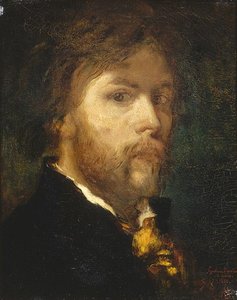
Gustáv Moreau

Gustáv Moreau

1826 - 1898, Francia

Quick facts about Gustáv Moreau

  • Artistic Movement Or Style: Szimbolizmus
  • Artists Or Movements Influenced By This Artist:
    • Matisse
    • Rouault
  • Artists Who Influenced This Artist:
    • Delacroix
    • Michelangelo
    • Da Vinci
  • Date Of Birth: 1826. április 6.
  • Date Of Death: 1898. április 18.
  • Full Name: Gustave Moreau
  • Nationality: Francia
  • Notable Artworks:
    • Salomé táncol
    • Jupiter és Semele
    • Orfeusz
    • A megjelenés
    • Desdemona
  • Place Of Birth: Párizs, Franciaország

A művész életrajza

A Dream Weaver of Symbolism: The Life and Art of Gustave Moreau

Gustave Moreau, a name inextricably linked to the ethereal beauty and profound mysteries of Symbolist painting, emerged from 19th-century Paris as an artist utterly distinct in his vision. Born in 1826 into a comfortable bourgeois family—his father a respected architect and archivist—Moreau’s early life was steeped not just in material comfort, but also in a deep appreciation for art and intellectual curiosity. From a remarkably young age, he displayed a prodigious talent for drawing, nurtured initially through traditional academic training at the École des Beaux-Arts under the guidance of figures like François-Édouard Picot. However, Moreau’s artistic trajectory swiftly diverged from the prevailing Realist and Impressionist currents dominating his time; he possessed little interest in capturing fleeting moments or rendering objective reality. Instead, he was driven by a profound desire to unlock the hidden realms of myth, religion, and the intricate workings of the human psyche – translating these inner landscapes onto canvas through a meticulously detailed and intensely colored visual language. His artistic journey became an inward exploration, a process of distilling subjective emotions and spiritual yearnings into tangible forms, employing an obsessive attention to detail and a palette often rich with opulent hues.

The Forge of Imagination: Influences and Artistic Development

Moreau’s artistic development wasn't forged in isolation; rather, it blossomed from a confluence of diverse influences. While consciously rejecting the dominant trends of his era, he drew inspiration from a remarkably broad range of sources. The dramatic use of color and exotic subject matter found in the works of Eugène Delacroix ignited within him a passionate fascination with narrative painting imbued with intense emotional resonance. He held Renaissance masters—Michelangelo and Leonardo da Vinci, in particular—in the highest esteem, deeply admiring their mastery of composition, anatomical precision, and their remarkable ability to penetrate the complexities of human psychology. Yet, Moreau’s genius lay not merely in imitation; he skillfully synthesized these influences – the dynamism of Delacroix, the anatomical rigor of the Renaissance giants – into something entirely new and uniquely his own. His pivotal journey to Italy during the 1850s proved transformative, immersing him completely within the art of antiquity and the Italian Renaissance. This experience provided a veritable treasure trove of motifs, stylistic cues, and artistic precedents that would subsequently populate his future works. Moreau meticulously copied Old Master paintings – not as mere reproductions, but as a deliberate process of absorbing their techniques, understanding their compositional strategies, and unlocking the secrets behind their enduring power. He sought to distill the essence of these masterpieces, translating them into his own distinctive visual vocabulary.

A World of Symbols: Themes and Techniques

Moreau’s paintings are not simply illustrations of myths or biblical stories; they are complex allegories designed to provoke contemplation and invite multiple interpretations. He didn't approach narratives like those of Salome, Orpheus, Jupiter and Semele, or countless others, with a desire to retell them literally. Instead, he delved into their underlying psychological and spiritual truths – exploring themes of temptation, loss, redemption, beauty, and the eternal struggle between good and evil. His canvases are often teeming with symbolic imagery: serpents representing deceitful desires, jewels embodying earthly vanities, and figures embodying abstract concepts such as grief, longing, or divine grace. Moreau masterfully created an atmosphere of dreamlike enchantment through intricate detail, rich textures, and a frequently unsettling juxtaposition of light and shadow. His technique was characterized by a painstaking layering of paint—a deliberate process that built up surfaces shimmering with iridescent colors and evoking a profound sense of otherworldliness. The strategic use of gold leaf further amplified this effect, lending his works a Byzantine quality that underscored their spiritual dimension. Crucially, Moreau wasn’t primarily concerned with capturing realistic textures or perspectives; instead, he prioritized the expressive power of color and form to convey mood, emotion, and deeper meaning.

Legacy and Influence: The Enduring Power of Symbolism

Though initially met with mixed reactions from the Parisian art establishment, Gustave Moreau gradually gained recognition as a central figure in the burgeoning Symbolist movement during the 1890s. Unlike some of his contemporaries who actively sought public acclaim, he remained largely reclusive, preferring to dedicate himself entirely to his artistic practice within the confines of his studio and home. However, his influence was undeniable. In 1893, he accepted a prestigious professorship at the École des Beaux-Arts, where he profoundly impacted generations of aspiring artists – including Henri Matisse and Georges Rouault – encouraging them to embrace imagination, symbolism, and individual expression, urging them to break free from conventional artistic constraints. Moreau’s legacy extends far beyond his own lifetime. His paintings continue to resonate with audiences today, offering glimpses into the hidden depths of the human soul and reminding us of the transformative power of art to transcend the boundaries of reality. The Musée Gustave Moreau, housed within his former studio and home in Paris, stands as a poignant testament to his enduring artistic vision—a sanctuary where visitors can immerse themselves fully in the captivating world of this extraordinary artist.

Notable Works

  • Salome Dancing before Herod: Perhaps his most iconic work, this painting exemplifies Moreau’s opulent style and his fascination with biblical narratives, capturing a moment of both beauty and impending doom.
  • Jupiter and Semele: A dramatic depiction of the Greek myth, showcasing Moreau's exceptional skill in composition, color orchestration, and conveying a sense of overwhelming power.
  • Orpheus: Several paintings by Moreau explore the myth of Orpheus, reflecting themes of loss, grief, artistic inspiration, and the bittersweet nature of beauty.
  • The Apparition: Demonstrates his ability to create ethereal and otherworldly scenes, often imbued with a sense of mystery and melancholy.
  • Desdemona: A poignant portrayal of Shakespeare’s tragic heroine, capturing her despair and vulnerability with remarkable sensitivity.

§ 5Comparanda

§ 6Questions

Gyors információk

  • Influences:
    • Mythology
    • Religion
  • Medium: Painting
  • Artist: Gustave Moreau
  • Dimensions: 21 x 34 cm
  • Artistic style: Ethereal, symbolic

§ 7Cite this entry

AllPaintingsStore.com, “Gustáv Moreau, Leda (1880)”, https://allpaintingsstore.com/hu/art/gustave-moreau-leda-8XY734-en/ArtistReproduction/ (accessed 3 október 2026).

§ 8The reproduction

Kézzel készített olajfestmény reprodukció

Kézzel festett olajvastú vászon, az Ön által választott méretben és keretben, művészeink készítik meglévőre. ( Váltás nyomtatványra Áttérés digitális képre)

It is specified on the order sheet in the margin; the present state of that sheet reads as follows.

Leda

Reprodukciós technika

Reprodukció mérete

-

Kiváló mesterművész

Nagyobb részletesség, finomság és bővített gyártási idő

-

Reprodukció keretezése

-

-

A bármely oldalsó méretét túlszálaló 105 cm (kb. 41 hüvelyk) meghaladó műalkotások vagy reprodukciók esetében a keret összeszerelhető készletként, szétszerelve kerül szállításra. Ez a módszer biztosítja a biztonságos szállítást, és megakadályozza a szállítás során fellépő sérüléseket.

Szakmész összeszerelést igényel – ez nem DIY (önösszeszerelhető) termék.
A készletet egy tapasztalt keretező szakembernek kell összeszerelnie és a vásznat feszítenie kell, fa ragasztó (nem tartalmazza a csomag), vásznfeszítő fogó és szorítók használatával, amelyek a ragasztó száradásáig a keretrészeket egymáshoz vuôngjba tartják. A helytelen összeszerelés vagy a nem egyenletes vásznfeszítés maradandó károsíthatja a műalkotást, és ez nem része a garanciánknak.

  • A készlet tartalmazza az összes tömörfa rudat, pontosan méretre vágva.

  • A mellékelt csavarokkal, valamint a sarokszerekhez szükséges faütő ragasztóval kell összeszerelnie (ez nem tartalmazható a csomagban), így a keretrendezőnek külön kell beszereznie.

  • A csomag nem tartalmazza a szükséges professzionális eszközöket: egy vászonfeszítőt és klipseket a rácsok vízszintes tartásához a ragasztó megszáradásáig.

Fontos:
A sarokcsatlakozásokhoz fánylagra van szükség, a keretrudakat szorítókapcsokkal kell rögzíteni, amíg a rag teljesen meg nem szárad, a kész keretre feszített vászonhoz pedig vászonfeszítő fogat szükséges. Ezek egyike sem található meg a készletben. Kérjük, rendelés előtt győződjön meg róla, hogy rendelkezik tapasztalt keretező szakemberrel.

Névtábla

-

-

Védőréteg (Lakk)

Fényes lakk (intenzívabb színek, védelem a fény és a nedvesség hatása ellen)

-

Műalkotásom egyedi igényre szabása

Példák a módosíthatóságra: az arc kicserélése az ügyfél fotójára; háziállat hozzáadása (pl. macska helyett kutya); rejtett üzenet elhelyezése a háttérben; a háttér tájainak vagy elemeinek megváltoztatása.

-

Sürgős

Világszerte szóló szállítás () mindössze 3-4 hét alatt, a szokásos 5 hét helyett. (31 október). A minőség nem kérdőjelezhető.

-

Express szállítás

Világszerte elérhető szállítás területre 5 héten belül. (7 november).

A szállítás díja tartalmazza

Összesített ár

Ft 84488

Included with every order

  • Ingyenes globális expressz szállítás
  • Prémium minőségű len vászon
  • Teljes körű szállítási biztosítás
  • Vámvisszatérítési Garancia
  • Hiteles színarányosság garancia
  • 100 napos visszaküldési lehetőség (csak hibás termékek esetén)
  • 100% pénzvisszatérítési garancia
  • Több darab vásárlásakor kedvezmény
Order sheet