Előnézet
 Megosztás
 Megosztás
 Részletek
 Útmutató

 Letöltés
 Hasonló darabok
 X-ray felvétel
 Diavetítés
 Statisztika
untitled (5751)

 Tovább olvasom
Kézzel készített olajfestmény reprodukció
Kézzel festett olajvastú vászon, az Ön által választott méretben és keretben, művészeink készítik meglévőre. ( Váltás nyomtatványra Áttérés digitális képre)




P118B $10

P118H $10

P118W $10

P438Z $10

P508JH $12

P508YH $12

P805H $10

P805Z $10

P919BZ $10

P919G $10

P919XJ $10

P959ZH $10

P968JZ $12

W106C $8

W218G $10

W218JH $8

W218Y $10

W307PJ $10

W316G $10

W316PJ $8

W316Y $10

W398PJ $8

W4111J $10

W500HY $15

W500JH $15

W692G $12

W849H $8

W940BG $15

W953PJ $8




Válasszon előre meghatározott méreteink közül, amelyek megfelelnek a műalkotás eredeti arányainak.

Ön megadhat saját méreteket egy adott kerethez vagy térhez igazításhoz. Ha a kiválasztott méret nem egyezik az eredeti kép arányával, akkor a műalkotást levágjuk, vagy további kézzel festett elemekkel meghosszabbítjuk a festményt. A gyártás megkezdése előtt küldünk Önnek egy digitális előnézetet jóváhagyásra.
Kérjük, vegye figyelembe, hogy a képernyőn megjelenő előnézet nem tükrözi a tényleges vágást vagy kiterjesztést. Csak az előnézet fog pontosan mutatni a végső kompozíciót.
Bár egyedi méretek állnak rendelkezésre, javasoljuk, hogy válasszon egy méretet az előre meghatározott listából az eredeti arányok megőrzése érdekében.
A rendelést követően a AllPaintingsStore.com csapata e-mailt küld az ügyfélnek az instrukciókért, és biztosít egy előnézeti képet (mockup).
Világszerte elérhető szállítás () 3-4 hét alatt a szokásos 5 hét helyett. (21 szeptember). A minőség nem kérdőjelezhető.

Ingyenes globális expressz szállítás

Prémium minőségű len vászon

Teljes körű szállítási biztosítás

Vámvisszatérítési Garancia

Tökéletes színarányosság garancia

100 napos visszaküldési garancia (csak gyártási hibás termékek esetén)

100% pénzvisszatérítési garancia

Több darab vásárlásakor kedvezmény
 Az üvegkeretes opció csak 110 cm alatti méretben érhető el

untitled (5751)
Reprodukciós technika
Reprodukció méretei
-


Összesített ár
$ 258
The Ambassadors: A Window into Tudor Ambition
Hans Holbein the Younger’s “The Ambassadors,” painted in 1533 during the artist's second and most significant period in England, is far more than a mere portrait of two men. It’s a meticulously constructed tableau – a visual embodiment of humanist ideals, intellectual ambition, and the precarious political landscape of Henry VIII’s court. The painting, currently residing within the National Gallery in London, continues to captivate viewers with its astonishing detail and subtle layers of meaning, offering a rare glimpse into the mindset of a pivotal era.
- Subject & Composition: The central figures are Jean de Dinteville, the French ambassador to England, and Charles Brandon, 1st Duke of Suffolk, a prominent member of Henry VIII’s court. They stand shoulder-to-shoulder, engaged in what appears to be a scholarly discussion, yet their postures subtly reveal an underlying tension – a reflection of the complex diplomatic relations between England and France at the time. The composition is remarkably balanced, drawing the eye across the meticulously rendered details.
- Technique & Materials: Holbein’s mastery of oil paint is immediately apparent. He employed a glazing technique, layering thin washes of color to achieve an unparalleled luminosity and depth of tone. The textures – from the velvet of the cushions to the sheen of the silver – are rendered with astonishing realism. Note the use of black chalk for the detailed drawing under the paint layers, a common practice in Holbein’s work that adds to the painting's richness and longevity.
Symbolism Woven into the Scene
“The Ambassadors” is saturated with symbolism, reflecting the intellectual currents of the Renaissance and the specific concerns of Tudor England. The objects scattered across the table are not merely decorative; they carry profound significance. The globe represents the world’s knowledge and ambition, while the celestial sphere symbolizes divine order and human aspiration. The musical instruments – a lute, a recorder, and a viola da gamba – represent the pursuit of artistic excellence and intellectual refinement. The presence of the book, open to a passage from Euclid's *Elements*, underscores the importance of mathematics and reason in understanding the universe.
- The Skull: Perhaps the most unsettling element is the small skull resting on the table. It serves as a stark reminder of mortality – a subtle yet powerful commentary on the fleeting nature of earthly achievements and the vanity of human ambition.
- The Dutch Delftware: The distinctive blue and white Delftware vases are not just decorative items; they represent the burgeoning trade between England and the Netherlands, highlighting the economic opportunities available during this period.
A Portrait of a Court – And Its Uncertainties
Beyond its individual portraits, “The Ambassadors” offers a valuable insight into the atmosphere of Henry VIII’s court. The painting reflects the era's fascination with humanism, classical learning, and worldly pursuits. However, beneath this veneer of sophistication lies an undercurrent of uncertainty – symbolized by the skull and the tense expressions of the figures. Holbein was acutely aware of the political machinations surrounding him, and his work subtly acknowledges the dangers inherent in navigating the treacherous waters of courtly life.
Painted during a period of immense change—the break with Rome, the dissolution of monasteries, and the expansion of England’s influence on the world stage— “The Ambassadors” stands as a powerful testament to the ambition, intellect, and anxieties of a nation at a critical juncture in its history. It is a masterpiece that continues to challenge and inspire viewers centuries later.
Hasonló műalkotások





A művész életrajza
A Life Etched in Detail: The World of Hans Holbein the Younger
Born around 1497 in Augsburg, Germany, Hans Holbein the Younger emerged as a defining figure of the Northern Renaissance—a master portraitist whose work continues to resonate with breathtaking realism and psychological depth. His upbringing within an artistically gifted family laid the foundation for his exceptional talent; his father, Hans Holbein the Elder, was a respected painter and printmaker who instilled in young Hans a meticulous approach to observation and technique. This early training wasn’t merely about mastering brushstrokes or mixing pigments—it was about learning to *see*, to capture not just likeness but the very essence of a subject. Holbein's initial artistic explorations occurred within his father’s workshop, where he honed his skills before embarking on a journey that would lead him through Switzerland and ultimately to the heart of the English court.From Basel to the Tudor Court: A Rising Star
After completing his apprenticeship, Holbein traveled extensively throughout Switzerland, establishing himself as an independent artist with a growing reputation. He spent several formative years in Basel, creating not only striking portraits but also religious works and intricate woodcut designs—most notably the haunting series depicting the *Dance of Death*. These early pieces reveal a burgeoning mastery of composition and a developing fascination with capturing the complexities of human emotion. His father’s influence was paramount; Holbein inherited his meticulous attention to detail and unwavering dedication to artistic excellence. The Basel period solidified Holbein's reputation as a visionary artist, pushing boundaries in both painting and printmaking—a testament to his innate talent and relentless pursuit of perfection. He skillfully blended German artistic traditions with the compositional principles of the Italian Renaissance, absorbing inspiration from masters like Albrecht Dürer.The Art of Perception: Style and Masterpieces
Holbein's artistic style is characterized by an extraordinary commitment to realism, achieved through painstaking attention to detail in rendering textures, fabrics, and the subtle nuances of facial features. He didn’t simply *paint* portraits; he meticulously constructed them, layer upon layer, capturing not just physical appearances but also the personality and inner life of his sitters. His innovative compositions further enhanced the impact of his work, often employing symbolic objects or backgrounds to convey deeper meaning. The Ambassadors (1533) stands as a testament to this approach—a complex and symbolically rich double portrait showcasing both Holbein’s technical brilliance and intellectual depth. The anamorphic skull subtly embedded within the painting serves as a stark *memento mori*, reminding viewers of the inevitability of death. This masterful depiction exemplifies Holbein's ability to transform visual representation into profound contemplation about mortality and human existence. He achieved unparalleled realism by utilizing techniques honed during his apprenticeship, meticulously studying anatomy and mastering chiaroscuro—the dramatic interplay of light and shadow—to create breathtakingly lifelike images.A Patronage That Shaped His Career: The English Court
It was in 1526 that fate intervened, drawing Holbein towards England, an event that would irrevocably alter his artistic trajectory. He arrived bearing a letter of introduction from Erasmus, the renowned humanist scholar, which opened doors to the influential circles of English society. His talent quickly captivated prominent figures like Sir Thomas More, who became both a patron and a subject for several compelling portraits. This connection proved pivotal, leading to Holbein’s appointment as a court painter to King Henry VIII in 1536—a position he held, with some interruptions, until his untimely death in 1543. His relationship with Henry VIII was marked by both artistic collaboration and political intrigue, reflecting the turbulent atmosphere of Tudor England. He produced iconic portraits of the king, solidifying his place in English history as a symbol of royal authority and artistic achievement.Legacy and Influence: A Lasting Impression
Holbein’s legacy is profound; Holbein’s portraits set a new standard for realism and psychological insight in portraiture, influencing generations of artists who followed. He achieved unparalleled renown through his meticulous observation and masterful execution—a testament to his unwavering dedication to artistic excellence. His depictions of key figures during the Tudor period provide invaluable insights into the lives and personalities of those who shaped English history.- His portraits of Henry VIII became iconic representations of royal power.
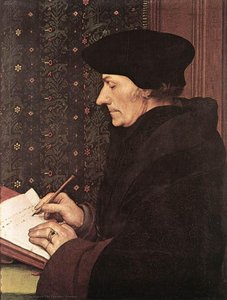
- His depiction of Erasmus of Rotterdam captured the scholar’s profound intellectual gravitas.
- He skillfully blended German artistic traditions with the compositional principles of the Italian Renaissance, absorbing inspiration from masters like Albrecht Dürer.
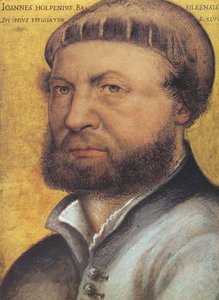
Hans Holbein a Fiatalabb
1497 - 1543 , Olaszország
Gyors információk
- Artistic Movement Or Style: Északnémeti Reneszánszi
- Artists Or Movements Influenced By This Artist: ['Korábbi portrétfestők']
- Artists Who Influenced This Artist: ['Albrecht Dürer']
- Date Of Birth: 1497
- Date Of Death: 1543
- Full Name: Hans Holbein der Jüngere
- Nationality: Német-svájci
- Notable Artworks:
- Az Építők
- Henry VIII portréja
- Erasmus portréja
- Nikolaus Kratzer
- Place Of Birth: Augsburg, Németország
Kapcsolódó cikkek
Jacob Henricus Maris: A Master of Dutch Atmospheric Realism & the Intimate Landscape
Explore the captivating world of Jacob Henricus Maris, a leading figure of the Dutch Hague School. Discover his atmospheric landscapes, signature brushstrokes & lasting influence on 19th-century art. Learn more at AllPaintingsStore.

Crimson Threads of Narrative: Exploring Symbolism & Representation in Artworks Featuring the Red Dress
Explore the rich symbolism of the red dress in art history! From ancient power displays to iconic portraits like Cézanne’s 'Madame Cezanne', discover the cultural and artistic significance behind this captivating color. Expert analysis & insights.

Sacred Narratives Embodied: A Comprehensive Exploration of Religious Iconography in Art History
Explore the rich history of religious iconography in art! Discover symbolism, movements & masterpieces from Byzantine to Renaissance periods. Expert insights for collectors and enthusiasts at AllPaintingsStore.

Hans Holbein the Younger: A Renaissance Portraitist's Mastery of Realism & Psychological Insight
Explore the life & art of Hans Holbein the Younger, a Renaissance master renowned for his strikingly realistic portraits and psychological insight. Discover iconic works like 'The Ambassadors' and delve into his lasting legacy.

Fra Angelico Mesterek: A 25 Legszebb Műalkotás a Lelki Békeért – AllPaintingsStore.com
Fedezze fel Fra Angelico 25 legszebb műalkotását! Reneszánsz festmények, angyalok és spirituális ikonfestészet a firenzei iskola mesterétől. Vásároljon exkluzív olajfestmény reprodukciókat otthonába a AllPaintingsStore.com-on. Explore the full collection online!