Pénzvisszatérítési Garancia · 100 nap Ingyenes világszerte történő szállítás
449 564műalkotások 30 613művészek 4 660múzeumok 32nyelv
Katalógusbejegyzés

Roman Capriccio

1798. Oil On Canvas. Staatliche Kunsthalle Karlsruhe.

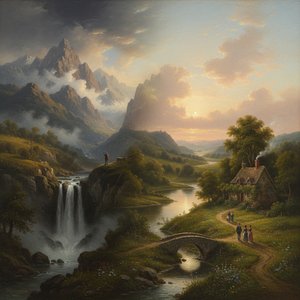
1. ábra. Hubert Robert, Roman Capriccio, 1798. A megadott reprodukciót mutatja: , .

§ 1Katalógusadatok

§ 2Absztrakt

A gyűjtemény leírása

Explore 'Project for The Disposition of the ''Grande Galerie''' by Hubert Robert, a captivating capriccio showcasing Roman ruins & French landscapes. A masterpiece of 18th-century art.

A művész életrajza

Robert Hubert (1733–1808): Franciaország egyik legkiemelkedőbb tájképfestője, aki a rombolás és a látlelet varázslatos keverékével alkotott. Fedezze fel művészetét!

§ 3Magyarázat

A Symphony of Decay and Grandeur

In the twilight of the eighteenth century, as the echoes of the French Revolution began to settle into the broader European consciousness, Hubert Robert captured a vision of Rome that transcends mere architectural documentation. His 1798 masterpiece, Roman Capriccio, is not simply a landscape; it is an evocative journey into the heart of memory and the sublime. Through his masterful use of the capriccio technique—a style defined by architectural fantasy rather than topographical accuracy—Robert invites the viewer to wander through a dreamscape where the boundaries between reality and imagination dissolve. The canvas presents a breathtaking panorama of crumbling columns, weathered arches, and majestic statues, all bathed in a hazy, golden light that suggests the warmth of a setting sun over an empire long passed.

The composition is a delicate dance of light and shadow, where Robert employs layered planes of color to create an illusionistic depth that draws the eye deep into the Roman ruins. This atmospheric approach allows the monumental structures to appear both physically imposing and ethereally transient. Amidst the skeletal remains of classical greatness, small figures—the staffage—are scattered throughout the scene. These individuals, engaged in quiet contemplation or casual interaction around the ancient sculptures, provide a vital sense of scale and human connection. Their presence transforms the ruins from cold, dead stone into a living stage, where the grandeur of the past meets the fleeting pulse of the present.

The Poetics of Time and Transformation

Beyond its visual splendor, Roman Capriccio serves as a profound meditation on the relentless march of time. To look upon these decaying structures is to witness the inevitable triumph of nature over human ambition. Robert utilizes the crumbling masonry as a powerful symbol of the ephemeral nature of power and the futility of even the most monumental architectural achievements. Yet, there is no sense of pure tragedy in this decay; instead, the artist weaves in elements of regeneration. The subtle emergence of vibrant blossoms amidst the rubble acts as a poignant counterpoint to the stone, suggesting that from the wreckage of old worlds, new beauty and hope can inevitably bloom.

For the discerning collector or interior designer, this painting offers more than just aesthetic appeal; it provides an emotional anchor for a space. The work possesses a unique ability to evoke nostalgia and a sense of wonder, making it an ideal centerpiece for rooms designed for reflection and intellectual engagement. Whether placed in a grand library or a contemporary living space, the Roman Capriccio brings with it a storied atmosphere of classical elegance and Romantic mystery. It is a piece that does not merely decorate a wall but tells a story of endurance, transformation, and the eternal beauty found within the ruins of history.

Kérdések és válaszok

Hogyan épül fel a „Roman Capriccio”, Hubert Robert alkotása színes kompozíciója?

A "Roman Capriccio" alkotásban egy Gentle kontraszt párosul egy Unified Palette harmóniával.

Elérhető diákok számára egy „Roman Capriccio”, Hubert Robert alkotása információs adatlap?

A „Roman Capriccio”, Hubert Robert alkotása alkotáshoz elérhető egy Útmutató oldal: ez egy kinyomtatható információs lap a műről, amelyet diákok számára és tantervhez készült használatra terveztek.

Ki készítette a "Roman Capriccio" alkotást, és milyen stílusú?

A „Roman Capriccio” alkotását Hubert Robert készítette Romantic Landscape stílusban. A művész és a műveszetség meghatározza a mű hagyományát.

§ 4A művész

Hubert Robert

Hubert Robert

1733 - 1808, Franciaország

Gyors információk Hubert Robert művészről

  • Artistic Movement Or Style: Római iskola, romantika
  • Artists Or Movements Influenced By This Artist: ['Romantika']
  • Artists Who Influenced This Artist:
    • Giovanni Panini
    • Piranesi
  • Date Of Birth: 1733. május 22.
  • Date Of Death: 1808. április 15.
  • Full Name: Hubert Robert
  • Nationality: Francia
  • Notable Artworks:
    • Római kikötő
    • Galatea repülése
  • Place Of Birth: Párizs, Franciaország

A művész életrajza

A Painter of Ruins and Visions: The World of Hubert Robert

Hubert Robert, a name inextricably linked to evocative landscapes and the romantic allure of ruins, occupies a unique and profoundly influential position in 18th-century French art. Born in Paris in 1733, his life unfolded against a backdrop of dramatic artistic shifts—from the opulent excesses of the Rococo to the burgeoning ideals of Neoclassicism—and was deeply shaped by the tumultuous events of the French Revolution. Robert wasn’t merely documenting decay; he was meticulously crafting visions, skillfully blending astute observation with boundless imagination to create scenes that resonated with a poignant nostalgia for the past and an anticipatory awareness of the future. His artistic journey began within the structured confines of formal training, initially under the tutelage of the sculptor Michel-Ange Slodtz, who recognized Robert’s considerable talent but wisely steered him towards painting, sensing his true calling lay in capturing the ephemeral beauty of light, atmosphere, and the subtle poetry inherent in form.

Roman Reveries: Shaping an Artistic Identity

The defining moment in Robert's artistic development arrived with his extended sojourn to Rome between 1754 and 1765. Accompanying Étienne-François de Choiseul, he immersed himself completely within the ancient city’s captivating world—a realm steeped in history, architectural grandeur, and a palpable sense of timelessness. This wasn't simply about replicating what he observed; it was an intensely transformative experience that fundamentally shaped his artistic sensibilities. For eleven years, Rome became his open-air studio, its crumbling temples, majestic arches, and overgrown gardens relentlessly fueling his imagination. He worked closely with Giovanni Paolo Panini, a master of *capriccio* compositions—fantastical views that juxtaposed classical ruins with contemporary life—but Robert quickly surpassed mere imitation, developing a distinctly personal style characterized by an almost obsessive attention to detail, a masterful command of atmospheric perspective, and a profound sensitivity to the interplay of light and shadow. He wasn’t merely painting ruins; he was capturing time itself, distilling its essence into evocative scenes that hinted at both loss and enduring beauty. His extensive sketchbook collection from this period—filled with meticulously rendered studies of Roman landmarks such as the Villa d'Este and Caprarola—provides invaluable insight into his artistic process and reveals a keen eye for architectural nuance and landscape composition. These sketches weren’t preparatory drawings; they were, in essence, finished paintings in miniature, demonstrating Robert’s ability to capture not just the appearance but also the *feeling* of a place.

Parisian Acclaim and Royal Patronage

Robert's triumphant return to Paris in 1765 marked a significant turning point in his career. He swiftly gained recognition within the established artistic circles, securing admission to the Académie Royale de Peinture et de Sculpture with “The Port of Rome, Ornamented with Different Monuments of Architecture, Ancient and Modern.” This monumental work immediately captivated audiences and critics alike, showcasing Robert’s remarkable ability to synthesize his Roman experiences into a compellingly theatrical composition. His subsequent exhibitions at the Salon—the official art exhibition of the Académie Royale—garnered widespread acclaim, drawing considerable attention to his evocative depictions of ruins, picturesque landscapes, and fantastical *capriccio* scenes. The influential critic Denis Diderot famously lauded Robert’s paintings for their ability to transport viewers to another time and place, recognizing his profound skill in evoking a sense of nostalgia and wonder. This burgeoning success quickly led to royal patronage—a testament to the esteem in which he was held by the French court. He received commissions for decorative projects within the Palace of Versailles and was subsequently appointed “Designer of the King’s Gardens,” a prestigious position that further elevated his status. Later, he became “Keeper of the King's Pictures,” responsible for overseeing the collection and ensuring its proper care—a role that underscored his expertise and dedication to preserving France’s artistic heritage.

Revolution, Resilience, and Lasting Legacy

The French Revolution presented an unprecedented and profoundly challenging period for Robert and the entire artistic community. While many artists struggled to navigate the politically volatile climate, Robert demonstrated remarkable resilience and continued to paint prolifically throughout this tumultuous era. He even endured a harrowing imprisonment during the Reign of Terror—a terrifying experience that nonetheless seemed to fuel his creative spirit, resulting in a series of poignant drawings documenting his confinement. Following the Revolution, Robert was appointed curator of the newly established Muséum Central des Arts—the future Musée du Louvre—a remarkable recognition of his expertise and unwavering commitment to safeguarding France’s cultural treasures for generations to come. He played a crucial role in organizing and cataloging the museum's vast collection, ensuring that its artistic legacy would endure. Hubert Robert died in Paris in 1808, leaving behind an extraordinary body of work—a testament to his exceptional talent, innovative vision, and enduring influence on French art. His legacy extends far beyond mere technical skill; he pioneered a genre of painting that celebrated both the beauty of decay and the timeless power of human creativity, bridging the gap between the Rococo and Neoclassical periods and anticipating many of the key characteristics of Romanticism with his fascination for history, imagination, and the evocative portrayal of lost worlds.
  • Key Influences: Giovanni Paolo Panini, Piranesi, the architectural landscape of Rome.
  • Major Themes: Ruins, landscapes, *capriccio* paintings, historical memory, the passage of time.
  • Artistic Style: Meticulous detail, atmospheric perspective, evocative lighting, blending observation with imagination.

§ 5Hasonló alkotások

§ 6Kérdések

Gyors információk

  • Influences: Jacques-Nicolas Tardieu
  • Location: Private Collection
  • Notable elements or techniques: Atmospheric perspective; Illusionistic architecture
  • Year: 1798
  • Artist: Hubert Robert

Művészeti kvíz

Minden kérdésre csak egy helyes válasz létezik.

Kérdés 1:
What artistic movement is Hubert Robert primarily associated with?
Kérdés 2:
The painting depicts a scene featuring:
Kérdés 3:
Approximately how many people are visible in the image?
Kérdés 4:
What is a 'capriccio' style of painting known for?
Kérdés 5:
In what year was Hubert Robert's painting 'Roman Capriccio' created?

§ 7Idérezze ezt a bejegyzést

AllPaintingsStore.com, “Hubert Robert, Roman Capriccio (1798)”, https://allpaintingsstore.com/hu/art/hubert-robert-roman-capriccio-D4BHAH-en/ArtistReproduction/ (megtekintve: 6 október 2026).

§ 8A reprodukció

Kézzel készített olajfestmény reprodukció

Kézzel festett olajvastú vászon, az Ön által választott méretben és keretben, művészeink készítik meglévőre. ( Váltás nyomtatványra Áttérés digitális képre)

A rendelési sammanbrató szélességi részén rögzítve van; a sammanbrató jelenlegi állapota a következőképpen hangzik.

Roman Capriccio

Reprodukciós technika

Reprodukció mérete

-

Kiváló mesterművész

Nagyobb részletesség, finomság és bővített gyártási idő

-

Reprodukció keretezése

-

-

A bármely oldalsó méretét túlszálaló 105 cm (kb. 41 hüvelyk) meghaladó műalkotások vagy reprodukciók esetében a keret összeszerelhető készletként, szétszerelve kerül szállításra. Ez a módszer biztosítja a biztonságos szállítást, és megakadályozza a szállítás során fellépő sérüléseket.

Szakmész összeszerelést igényel – ez nem DIY (önösszeszerelhető) termék.
A készletet egy tapasztalt keretező szakembernek kell összeszerelnie és a vásznat feszítenie kell, fa ragasztó (nem tartalmazza a csomag), vásznfeszítő fogó és szorítók használatával, amelyek a ragasztó száradásáig a keretrészeket egymáshoz vuôngjba tartják. A helytelen összeszerelés vagy a nem egyenletes vásznfeszítés maradandó károsíthatja a műalkotást, és ez nem része a garanciánknak.

  • A készlet tartalmazza az összes tömörfa rudat, pontosan méretre vágva.

  • A mellékelt csavarokkal, valamint a sarokszerekhez szükséges faütő ragasztóval kell összeszerelnie (ez nem tartalmazható a csomagban), így a keretrendezőnek külön kell beszereznie.

  • A csomag nem tartalmazza a szükséges professzionális eszközöket: egy vászonfeszítőt és klipseket a rácsok vízszintes tartásához a ragasztó megszáradásáig.

Fontos:
A sarokcsatlakozásokhoz fánylagra van szükség, a keretrudakat szorítókapcsokkal kell rögzíteni, amíg a rag teljesen meg nem szárad, a kész keretre feszített vászonhoz pedig vászonfeszítő fogat szükséges. Ezek egyike sem található meg a készletben. Kérjük, rendelés előtt győződjön meg róla, hogy rendelkezik tapasztalt keretező szakemberrel.

Névtábla

-

-

Védőréteg (Lakk)

Fényes lakk (intenzívabb színek, védelem a fény és a nedvesség hatása ellen)

-

Műalkotásom egyedi igényre szabása

Példák a módosíthatóságra: az arc kicserélése az ügyfél fotójára; háziállat hozzáadása (pl. macska helyett kutya); rejtett üzenet elhelyezése a háttérben; a háttér tájainak vagy elemeinek megváltoztatása.

-

Sürgős

Világszerte szóló szállítás () mindössze 3-4 hét alatt, a szokásos 5 hét helyett. (3 november). A minőség nem kérdőjelezhető.

-

Express szállítás

Világszerte elérhető szállítás területre 5 héten belül. (10 november).

A szállítás díja tartalmazza

Összesített ár

Ft 84529

Minden rendelés mellé tartalmazva

  • Ingyenes globális expressz szállítás
  • Prémium minőségű len vászon
  • Teljes körű szállítási biztosítás
  • Vámvisszatérítési Garancia
  • Hiteles színarányosság garancia
  • 100 napos visszaküldési lehetőség (csak hibás termékek esetén)
  • 100% pénzvisszatérítési garancia
  • Több darab vásárlásakor kedvezmény
Rendelési adatlap