


 Megtekintés
 Küldés
 Megosztás
 Részletek
 Útmutató

 Letöltés
 Hasonló darabok
 X-ray felvétel
 Diavetítés
 Q&A
Q&A Statisztika
Roman Ruins


 Összes részlet megjelenítése
Giclée / Műnyomat
Múzeumi minőségű giclée vagy vászonnyomat, gyors gyártással és rugalmas finomítási lehetőségekkel. ( Kézzel festett másolat rendelése Áttérés digitális képre)




P118B Ft10

P118H Ft10

P118W Ft10

P438Z Ft10

P508JH Ft12

P508YH Ft12

P805H Ft10

P805Z Ft10

P919BZ Ft10

P919G Ft10

P919XJ Ft10

P959ZH Ft10

P968JZ Ft12

W106C Ft8

W218G Ft10

W218JH Ft8

W218Y Ft10

W307PJ Ft10

W316G Ft10

W316PJ Ft8

W316Y Ft10

W398PJ Ft8

W4111J Ft10

W500HY Ft15

W500JH Ft15

W692G Ft12

W849H Ft8

W940BG Ft15

W953PJ Ft8




Válasszon előre meghatározott méreteink közül, amelyek megfelelnek a műalkotás eredeti arányainak.

Írja be a keretének vagy a falának megfelelő szélességet és magasságot. A nyomatot csak le lehet vágni, soha nem tehető nagyobbá, mint az eredeti kép, így egy eltérő alakú méretnél a kép egy része elveszik. Mielőtt bármit kinyatintanánk, küldünk egy digitális próbamodellt jóváhagyásra. Az oldalon látható kép nem tartalmazza a valós levágást — ezt csak a próbamodell mutatja meg.
Világszerte történő kiszállítás területére mindössze 2 hét alatt, a szokásos 4-5 hét helyett. (29 október)

Ingyenes globális expressz szállítás

Prémium minőségű len vászon

Teljes körű szállítási biztosítás

Vámvisszatérítési Garancia

Hiteles színarányosság garancia

100 napos visszaküldési lehetőség (csak hibás termékek esetén)

100% pénzvisszatérítési garancia

Több darab vásárlásakor kedvezmény
 Az üvegkeretes opció csak 110 cm alatti méretben érhető el

Roman Ruins
Giclée / Műnyomat
Reprodukció mérete
-


Összesített ár
Ft 20678
A Symphony of Decay and Eternal Beauty
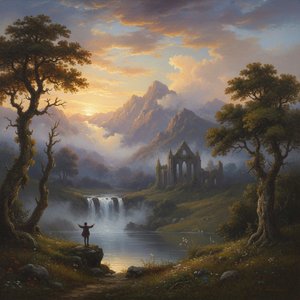
In the quietude of Hubert Robert’s Roman Ruins, one finds more than a mere depiction of crumbling stone; one encounters a profound meditation on the relentless passage of time. Created around 1760, this masterpiece serves as a window into the heart of the Romantic imagination, where the grandeur of antiquity meets the soft, persistent embrace of nature. The canvas invites the viewer to wander through a landscape where monumental architecture—once the pride of an empire—now yields to the slow, rhythmic pulse of vegetation and light. It is a scene that captures a fleeting moment of ethereal beauty, frozen in the amber of oil on canvas, offering a sense of pastoral tranquility that resonates deeply with the modern soul seeking refuge from the frenetic pace of contemporary life.
The composition is masterfully orchestrated to draw the eye deep into a world of architectural wonder and quiet human drama. A majestic, weathered archway stands as the central protagonist, its heavy columns and fractured masonry framing a vista that stretches toward an infinite horizon. Through this portal, the viewer perceives a vast, open space where the boundaries between man-made structures and the wild landscape begin to blur. The foreground is alive with the gentle rhythms of everyday existence: figures engaged in quiet contemplation, a woman tending to livestock, and children playing amidst the rocky outcrops. This juxtaposition—the monumental scale of the ruins against the intimate, humble activities of life—establishes a poignant dialogue between historical glory and the enduring continuity of the human spirit.
The Artistry of the Romantic Capriccio
Robert’s technical prowess is most evident in his command of light and texture, elements that elevate this work from a topographical study to a capriccio—a genre of imaginative fantasy. Utilizing the rich, versatile medium of oil paint, the artist achieves a remarkable tonal range that breathes life into the scene. Warm ochres, deep browns, and radiant golds dominate the palette, bathing the ruins in a sun-drenched glow that evokes a sense of nostalgic warmth. His brushwork is both deliberate and expressive; while the architectural elements are defined by structured lines, the foliage and distant clouds are rendered with a looser, more spontaneous touch. This interplay of precision and fluidity creates a dynamic atmosphere, where the light seems to dance across the textured surfaces of stone and leaf alike.
For the discerning collector or interior designer, Roman Ruins offers an unparalleled emotional depth that transcends mere decoration. The painting functions as a symbolic vessel, carrying themes of memory, loss, and the sublime power of nature. It evokes a sense of "melancholic grandeur"—a feeling of being moved by the beauty of what has passed while finding peace in the persistence of life. Integrating such a high-quality reproduction into a curated space provides more than just a visual focal point; it introduces a narrative of timelessness and sophistication. Whether placed in a sunlit library or a grand salon, Robert’s vision of the Roman past serves as an enduring inspiration, reminding us that even amidst decay, there is a profound and lasting splendor to be found.
Kérdések és válaszok
Ki készítette a(t) "Roman Ruins"-t, és mikor?
Hubert Robert a "Roman Ruins" című művet 1760-ben készítette.
A „Roman Ruins”, Hubert Robert alkotása a művész honcountryjában található?
Nem – a műtárgy külföldön található. A „Roman Ruins” mű Amerikai Egyesült Államok múzeumának gyűjteményében található, míg Hubert Robert Franciaország országban született.
Hol tudom letölteni a(t) „Roman Ruins”, Hubert Robert alkotása?
A "Roman Ruins" letölthető változatként is elérhető: a mű Letöltés oldala magas felbontású digitális kép letöltése lehetőséget kínál.
Hasonló műalkotások


A művész életrajza
A Painter of Ruins and Visions: The World of Hubert Robert
Hubert Robert, a name inextricably linked to evocative landscapes and the romantic allure of ruins, occupies a unique and profoundly influential position in 18th-century French art. Born in Paris in 1733, his life unfolded against a backdrop of dramatic artistic shifts—from the opulent excesses of the Rococo to the burgeoning ideals of Neoclassicism—and was deeply shaped by the tumultuous events of the French Revolution. Robert wasn’t merely documenting decay; he was meticulously crafting visions, skillfully blending astute observation with boundless imagination to create scenes that resonated with a poignant nostalgia for the past and an anticipatory awareness of the future. His artistic journey began within the structured confines of formal training, initially under the tutelage of the sculptor Michel-Ange Slodtz, who recognized Robert’s considerable talent but wisely steered him towards painting, sensing his true calling lay in capturing the ephemeral beauty of light, atmosphere, and the subtle poetry inherent in form.Roman Reveries: Shaping an Artistic Identity
The defining moment in Robert's artistic development arrived with his extended sojourn to Rome between 1754 and 1765. Accompanying Étienne-François de Choiseul, he immersed himself completely within the ancient city’s captivating world—a realm steeped in history, architectural grandeur, and a palpable sense of timelessness. This wasn't simply about replicating what he observed; it was an intensely transformative experience that fundamentally shaped his artistic sensibilities. For eleven years, Rome became his open-air studio, its crumbling temples, majestic arches, and overgrown gardens relentlessly fueling his imagination. He worked closely with Giovanni Paolo Panini, a master of *capriccio* compositions—fantastical views that juxtaposed classical ruins with contemporary life—but Robert quickly surpassed mere imitation, developing a distinctly personal style characterized by an almost obsessive attention to detail, a masterful command of atmospheric perspective, and a profound sensitivity to the interplay of light and shadow. He wasn’t merely painting ruins; he was capturing time itself, distilling its essence into evocative scenes that hinted at both loss and enduring beauty. His extensive sketchbook collection from this period—filled with meticulously rendered studies of Roman landmarks such as the Villa d'Este and Caprarola—provides invaluable insight into his artistic process and reveals a keen eye for architectural nuance and landscape composition. These sketches weren’t preparatory drawings; they were, in essence, finished paintings in miniature, demonstrating Robert’s ability to capture not just the appearance but also the *feeling* of a place.Parisian Acclaim and Royal Patronage
Robert's triumphant return to Paris in 1765 marked a significant turning point in his career. He swiftly gained recognition within the established artistic circles, securing admission to the Académie Royale de Peinture et de Sculpture with “The Port of Rome, Ornamented with Different Monuments of Architecture, Ancient and Modern.” This monumental work immediately captivated audiences and critics alike, showcasing Robert’s remarkable ability to synthesize his Roman experiences into a compellingly theatrical composition. His subsequent exhibitions at the Salon—the official art exhibition of the Académie Royale—garnered widespread acclaim, drawing considerable attention to his evocative depictions of ruins, picturesque landscapes, and fantastical *capriccio* scenes. The influential critic Denis Diderot famously lauded Robert’s paintings for their ability to transport viewers to another time and place, recognizing his profound skill in evoking a sense of nostalgia and wonder. This burgeoning success quickly led to royal patronage—a testament to the esteem in which he was held by the French court. He received commissions for decorative projects within the Palace of Versailles and was subsequently appointed “Designer of the King’s Gardens,” a prestigious position that further elevated his status. Later, he became “Keeper of the King's Pictures,” responsible for overseeing the collection and ensuring its proper care—a role that underscored his expertise and dedication to preserving France’s artistic heritage.Revolution, Resilience, and Lasting Legacy
The French Revolution presented an unprecedented and profoundly challenging period for Robert and the entire artistic community. While many artists struggled to navigate the politically volatile climate, Robert demonstrated remarkable resilience and continued to paint prolifically throughout this tumultuous era. He even endured a harrowing imprisonment during the Reign of Terror—a terrifying experience that nonetheless seemed to fuel his creative spirit, resulting in a series of poignant drawings documenting his confinement. Following the Revolution, Robert was appointed curator of the newly established Muséum Central des Arts—the future Musée du Louvre—a remarkable recognition of his expertise and unwavering commitment to safeguarding France’s cultural treasures for generations to come. He played a crucial role in organizing and cataloging the museum's vast collection, ensuring that its artistic legacy would endure. Hubert Robert died in Paris in 1808, leaving behind an extraordinary body of work—a testament to his exceptional talent, innovative vision, and enduring influence on French art. His legacy extends far beyond mere technical skill; he pioneered a genre of painting that celebrated both the beauty of decay and the timeless power of human creativity, bridging the gap between the Rococo and Neoclassical periods and anticipating many of the key characteristics of Romanticism with his fascination for history, imagination, and the evocative portrayal of lost worlds.- Key Influences: Giovanni Paolo Panini, Piranesi, the architectural landscape of Rome.
- Major Themes: Ruins, landscapes, *capriccio* paintings, historical memory, the passage of time.
- Artistic Style: Meticulous detail, atmospheric perspective, evocative lighting, blending observation with imagination.

Hubert Robert
1733 - 1808 , Franciaország
Rövid információk
- Artistic Movement Or Style: Római iskola, romantika
- Artists Or Movements Influenced By This Artist: ['Romantika']
- Artists Who Influenced This Artist:
- Giovanni Panini
- Piranesi
- Date Of Birth: 1733. május 22.
- Date Of Death: 1808. április 15.
- Full Name: Hubert Robert
- Nationality: Francia
- Notable Artworks:
- Római kikötő
- Galatea repülése
- Place Of Birth: Párizs, Franciaország
Kapcsolódó cikkek

Evocations of Place: A Historical Journey Through Landscape Art
Explore the rich history of landscape art with AllPaintingsStore. Discover renowned artists, movements like Impressionism & Romanticism, and expert guidance for collecting timeless pieces. Find your perfect serene escape today!

A Romantikus Tájképfestészet 10 Legikonikusabb Műalkotása – AllPaintingsStore.com
Fedezze fel a romantikus tájképfestészet 10 legikonikusabb műalkotását! Caspar David Friedrich, J.M.W. Turner és más mesterek festményeinek története – inspiráló olajfestmények otthonába. AllPaintingsStore.com: múzeumi minőségű reprodukciók és egyedi dekorációk online.

Hubert Robert: Picturing Ruins, Preserving Memory – A Study of Romantic Antiquarianism & Artistic Innovation
Explore the captivating world of Hubert Robert, master of Romantic landscape painting & 'capriccio' ruins. Discover his historical context, artistic innovations, and collecting insights with AllPaintingsStore.
Evoking Emotion & Transcendence: Romantic Landscape Painting (18th-19th Century)
Explore the emotional depth of Romantic landscape painting (18th-19th century). Discover key artists like Friedrich & Cole, and the concepts of the sublime. Expert insights for art lovers & collectors.

The Sublime and the Picturesque: Exploring Emotion & Nature in Romantic Landscape Painting
Explore the emotional power of Romantic landscape painting! Discover the sublime & picturesque traditions, key artists like Friedrich & Cole, and find your perfect artwork at AllPaintingsStore.


