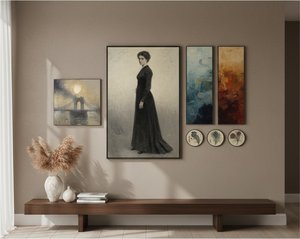
1833. Acrylic On Canvas. Nemzeti Arcképtár.

§ 1Catalogue data


Ez a műalkotás szerzői jogi védelem alatt áll
Az ezen az oldalon megjelenített műalkotások szerzői jogi védelem alatt állnak, ami azt jelenti, hogy törvényileg nem készíthetünk és nem adhatunk el belőlük pontos másolatokat. Ez a védelem olyan nemzetközi megállapodások alapján érvényesül, mint például a Berni Egyezmény és a nemzeti jogszabályok által, beleértve azokat is, amelyeket meghatározott Az USA szerzői jogi törvénye – 17. cím.
Mint tiszteletes és törvényes alternatívát, olyan egyedi, kézzel festett alkotásokat kínálunk, amelyek az eredetiből merítnek inspirációt. Tapasztalt és professzionális művészeink alaposan tanulmányozzák az eredeti stílusát, hangulatát és művészeti esszenciáját, hogy egy olyan új, egyedi alkotást hozzunk létre, amely ugyanazt az érzést kelti – miközben önálló, eredeti alkotásként létezik.
Ez a módszer teljes mértékben megfelel a szerzői jogi szabályozásnak, mivel nem tartalmazza a védett műalkotás másolását vagy duplikálását. Ehelyett ez egy kreatív újinterpretáció – egy új festmény, amely az eredetivel való összefüggései miatt hatással van rá, de nem az az.
 További információk
§ 2Abstract
A gyűjtemény leírása
James Vernon Herring’s 1833 portrait of Noah Webster captures the American lexicographer amidst a scholarly setting, showcasing a pivotal moment in language and education. This evocative painting by Herring exemplifies Black art's pioneering spirit and offers a unique opportunity to own a piece of history.
A művész életrajza
Fedezze fel James Vernon Herring (1887-1969) művészetét, az impresszionizmus által befolyásolt amerikai művészt és oktatót. Az afroamerikai művészek védelmezője és a Howard Egyetem Művészeti Osztályának alapítója. AllPaintingsStore.
§ 3Commentary
Noah Webster: A Portrait of American Linguistic Innovation
James Vernon Herring’s “Noah Webster” (1833) offers more than just a likeness; it's a potent visual statement about the burgeoning identity of the United States and the revolutionary power of language. The painting captures Noah Webster, the architect of American English, in a moment of quiet contemplation, seated comfortably amidst a landscape of knowledge – a deliberate arrangement that speaks volumes about his intellectual pursuits and the nation’s aspirations.
- Subject: The central figure is undeniably Noah Webster himself, rendered with Herring's characteristic attention to detail. His posture, hands folded in repose, conveys an air of authority tempered by thoughtful consideration.
- Setting: The background isn’t merely a backdrop; it’s a carefully constructed environment. The comfortable chair, the scattered books – these elements reinforce Webster’s role as both scholar and innovator.
- Composition: Herring employs a balanced composition, drawing the eye to Webster while subtly directing attention to the surrounding intellectual resources. The empty chair adds an element of invitation, suggesting a dialogue with ideas.
The Artist's Vision: James Vernon Herring and the Promotion of Black Art
James Vernon Herring’s artistic journey is inextricably linked to his commitment to fostering opportunities for African American artists during a period of profound social and racial inequality. Born in Clio, South Carolina, Herring’s unique familial background – a union between a Black mother and a white Jewish father – profoundly shaped his worldview and fueled his dedication to representation. His time at Howard University was pivotal, not just as a teacher but as a catalyst for transforming the institution's artistic identity. This painting reflects that influence—a conscious effort to elevate voices and perspectives often marginalized within the American art landscape.
- Context: Herring’s work emerged during a time of significant social change in America, marked by debates over slavery, national identity, and the role of education.
- Howard University Connection: Herring's association with Howard University highlights his broader mission to support Black artists and scholars.
Technique and Style: A Detailed Examination
Herring’s style is characterized by a meticulous realism, evident in the detailed rendering of Webster’s features and clothing. The use of light and shadow creates a sense of depth and volume, lending a tangible quality to the portrait. His brushwork is precise yet expressive, conveying both intellectual seriousness and a subtle warmth. The color palette – dominated by earth tones with touches of green – contributes to the painting's overall atmosphere of scholarly contemplation.
- Medium: Likely oil on canvas, allowing for rich colors and detailed brushwork.
- Brushwork: Herring’s technique demonstrates a mastery of tonal gradations and subtle modeling effects.
Symbolism and Emotional Impact
"Noah Webster: A Portrait of American Linguistic Innovation" transcends a simple likeness; it's a symbolic representation of the nation's intellectual ambitions. The books surrounding Webster represent the vastness of knowledge he sought to codify, while his posture embodies determination and foresight. The painting evokes a sense of quiet confidence and intellectual pride – qualities that defined Webster’s legacy and continue to resonate in the American lexicon today. It stands as a testament to Herring's ability to capture not just a subject's appearance but also their spirit and contribution to the nation’s cultural identity.
Kérdések és válaszok
Mennyire harmonikusak „Noah Webster”, James Vernon Herring alkotása színei?
A "Noah Webster" színharmóniája úgy van rögzítve, mint Strong Color Unity.
A "Noah Webster" jellemző arra, amit James Vernon Herring általában alkotott?
James Vernon Herring dokumentált témái – american lexicography, education, antislavery, black art advocacy, howard, national language, cultural shift, herring’s artistic vision – között a „Noah Webster” különös hangsúlyt fektet noah webster, dictionary, lexicographer, american english, language reform, 19th century, james herring-ra.
Mennyire népszerű a "Noah Webster" a Realism irányzatban?
A „Noah Webster”, James Vernon Herring alkotása a Recognized kategóriába tartozik, és a Realism irányzat részeként tekinthető.


 Váltás nyomtatványra


 A bármely oldalsó méretét túlszálaló 105 cm (kb. 41 hüvelyk) meghaladó műalkotások vagy reprodukciók esetében a keret összeszerelhető készletként, szétszerelve kerül szállításra. Ez a módszer biztosítja a biztonságos szállítást, és megakadályozza a szállítás során fellépő sérüléseket.