


 Megtekintés
 Küldés
 Megosztás
 Részletek
 Útmutató

 Letöltés
 Hasonló darabok
 X-ray felvétel
 Diavetítés
 Statisztika
Triptych
 Oil On Panel
- Northern Renaissance
 1510
1510- Renaissance
 73.0 x 56.0 cm
 Wallraf-Richartz Múzeum
 Összes részlet megjelenítése
Kézzel készített olajfestmény reprodukció
Kézzel festett olajvastú vászon, az Ön által választott méretben és keretben, művészeink készítik meglévőre. ( Váltás nyomtatványra Áttérés digitális képre)




P118B Ft10

P118H Ft10

P118W Ft10

P438Z Ft10

P508JH Ft12

P508YH Ft12

P805H Ft10

P805Z Ft10

P919BZ Ft10

P919G Ft10

P919XJ Ft10

P959ZH Ft10

P968JZ Ft12

W106C Ft8

W218G Ft10

W218JH Ft8

W218Y Ft10

W307PJ Ft10

W316G Ft10

W316PJ Ft8

W316Y Ft10

W398PJ Ft8

W4111J Ft10

W500HY Ft15

W500JH Ft15

W692G Ft12

W849H Ft8

W940BG Ft15

W953PJ Ft8




Válasszon előre meghatározott méreteink közül, amelyek megfelelnek a műalkotás eredeti arányainak.

Írja be a kívánt szélességet és magasságot, hogy illeszkedjen a keretéhez vagy a falához. Mivel ez kézzel festett alkotás, egy eltérő formájú méret esetén a művész akár festhet is valamivel többet a kép körül, vagy korolathat is belőle — az Ön döntésének megfelelően. A festés megkezdése előtt küldünk egy digitális tervezetet jóváhagyásra. Az oldalon látható kép nem tartalmazza a végeredményt — csak a tervezet mutatja meg a valódi eredményt.
A rendelést követően a AllPaintingsStore.com csapata e-mailt küld az ügyfélnek az instrukciókért, és biztosít egy előnézeti képet (mockup).
Világszerte elérhető szállítás () 3-4 hét alatt a szokásos 5 hét helyett. (27 október). A minőség nem kérdőjelezhető.

Ingyenes globális expressz szállítás

Prémium minőségű len vászon

Teljes körű szállítási biztosítás

Vámvisszatérítési Garancia

Hiteles színarányosság garancia

100 napos visszaküldési lehetőség (csak hibás termékek esetén)

100% pénzvisszatérítési garancia

Több darab vásárlásakor kedvezmény
 Az üvegkeretes opció csak 110 cm alatti méretben érhető el

Triptych
Reprodukciós technika
Reprodukció mérete
-


Összesített ár
Ft 83292
A Window into the Devotion of the Northern Renaissance
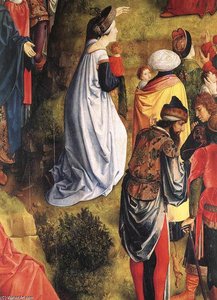
In the quiet, hallowed atmosphere of the Wallraf-Richartz-Museum in Cologne, there exists a portal to a bygone era of profound spiritual intensity. Jan De Beer’s Triptych, dating from approximately 1510, is not merely a painting but a sacred architectural experience rendered in oil and oak. As one approaches these three panels, the viewer is immediately enveloped by the dramatic grandeur of the Northern Renaissance. This masterpiece serves as a breathtaking testament to an age where art was the primary vessel for divine communication, blending the meticulous realism of the Netherlandish tradition with a burgeoning sense of theatrical scale.
The composition unfolds across three distinct panels, each measuring 73 x 56 cm, creating a rhythmic movement that guides the eye through scenes of solemn religious gatherings. De Beer utilizes the unique format of the triptych to orchestrate a narrative flow, where the central focus is anchored by grand Gothic architecture. These soaring arches and intricate stone details do more than provide a setting; they act as a symbolic bridge between the earthly realm of the figures depicted and the celestial heavens above. The artist’s ability to render light filtering through these imagined cathedrals creates a sense of depth that pulls the observer into the very heart of the liturgy.
Mastery of Light and Netherlandish Detail
The technical brilliance of Jan De Beer lies in his command over the oil medium, a technique that allowed for the exquisite layering of glazes to achieve unparalleled luminosity. Every inch of this work reveals a devotion to detail that is characteristic of the period's finest practitioners. One can observe the heavy, rich textures of ceremonial garments, the subtle sheen on polished surfaces, and the atmospheric haze that lends a sense of profound stillness to the religious assembly. This meticulous approach ensures that even the smallest element—a fold in a cloak or the shadow cast by a pillar—contributes to the overall emotional weight of the piece.
For the discerning collector or interior designer, this triptych offers an unparalleled opportunity to introduce a sense of historical gravity and sophisticated elegance into a space. The interplay of light and shadow within the painting provides a dynamic visual interest that evolves with the ambient lighting of a room. Whether placed in a curated gallery setting or as a focal point in a stately library, the work commands attention through its quiet power rather than through mere ornamentation. It is an invitation to contemplate the intersection of human craftsmanship and spiritual aspiration.
A Timeless Legacy for Modern Interiors
Beyond its historical significance, the Triptych resonates with a contemporary appreciation for storytelling and structural beauty. The piece embodies a sense of "sacred drama," where the solemnity of the figures evokes a meditative state in the viewer. This emotional resonance makes it an ideal choice for those seeking to decorate spaces intended for reflection, study, or high-end hospitality environments that require a touch of Old World prestige.
Owning a high-quality reproduction of such a significant work allows one to preserve the legacy of Jan De Beer within a modern context. It brings the rich textures and the somber, beautiful palette of the 16th century into the present day, offering a sophisticated layer of cultural depth. To display this triptych is to celebrate the enduring human desire to capture the sublime through the mastery of paint and wood.
Kérdések és válaszok
Milyen típusú műalkotás „Triptych”, Jan De Beer alkotása?
A „Triptych”, Jan De Beer alkotása művészeti alkotás a wall art kategóriába tartozik. Ez a besorolás határozza meg az eredeti alkotás típusát.
Mi a(z) domináns színe a(z) „Triptych”, Jan De Beer alkotása alkotásnak?
A(z) "Triptych" alkotásban leginkább a Clay (#b76d45) szín tűnik ki. A domináns szín hasznos, amikor egy műalkotást össze kell egyeztetni egy belső térrel.
Milyen színpaletta jellemzi a(z) „Triptych”, Jan De Beer alkotása alkotást?
A „Triptych”, Jan De Beer alkotása színek palettáját úgy jellemzik, mint Earthy. Ez a mű színeinek tömör leírása.
Hasonló műalkotások



A művész életrajza
The Master of Antwerp Mannerism
Jan De Beer stands as a luminous figure from the dawn of the sixteenth century, a period of profound spiritual and artistic transition in the Low Countries. Active primarily in Antwerp, he was a central protagonist in a loose but influential group of painters known as the Antwerp Mannerists. For many years, his individual identity remained shrouded in mystery, as much of his oeuvre was attributed to the Master of the Milan Adoration. It was only through the diligent efforts of art historians in the twentieth century that De Beer was rediscovered and reclaimed from the shadows of anonymity, revealing a painter of immense technical skill and profound religious devotion.
Born into an artistic lineage as the son of the painter Claes de Beer, Jan’s path was paved with the traditions of his craft. His early training under Gillis van Everen provided him with a foundation in the meticulous Netherlandish style, yet he would go on to transcend mere imitation. By 1504, he had achieved the prestigious status of master within the Antwerp Guild of Saint Luke, eventually rising to the esteemed position of dean. His professional life was deeply intertwined with the vibrant, bustling commerce and religious fervor of Antwerp, where he operated a large and productive workshop that shaped the visual language of the era.
A Symphony of Devotion and Detail
The work of Jan De Beer is characterized by a breathtaking marriage of Northern Renaissance realism and a burgeoning sense of theatricality. His compositions often serve as sacred windows, inviting the viewer into moments of divine encounter. In masterpieces such as his Annunciation, one finds a world where the celestial and terrestrial realms breathe in unison. He possessed a singular ability to render the weight of a heavy, ceremonial garment or the delicate, translucent sheen of a wine glass with such precision that the objects seem to possess a life of their own. This mastery of the oil medium allowed him to employ subtle gradations of light and shadow, creating a sense of volume and depth that pulls the observer into the heart of the narrative.
Beyond mere technical virtuosity, De Beer’s art is steeped in a rich tapestry of symbolism. Whether through the presence of birds hinting at divine grace or the architectural grandeur of Gothic arches acting as bridges to the heavens, every element of his work is imbued with meaning. His triptychs, such as those dating from approximately 1510 and 1515, demonstrate a sophisticated command over narrative flow, using multiple panels to orchestrate complex religious dramas that move between intimate indoor sanctuaries and expansive, sunlit vistas. In these works, the meticulous craftsmanship of the Northern tradition meets an emerging interest in human interaction and architectural scale.
Legacy and Historical Significance
Though his name fell into obscurity following the end of the sixteenth century, Jan De Beer’s influence endured through the lasting impact of the Antwerp Mannerist style. He was a contemporary of other great figures like Quentin Matsys and may have even collaborated with landscape innovators such as Joachim Patinir. His ability to maintain fame and respect during his lifetime—as noted by the Italian biographer Lodovico Guicciardini—speaks to the high regard in which he was held by his peers.
Today, De Beer is recognized not merely as a skilled craftsman, but as an artist who captured the very soul of a period in transition. His rediscovered legacy offers a vital link to the spiritual intensity of the early sixteenth century, reminding us of an age where art served as the primary vessel for divine communication and where every brushstroke was an act of profound faith.

Jan De Beer
1475 - 1528 , Netherlands
Rövid információk
- Artistic Movement Or Style: Antwerp Mannerism
- Full Name: Jan De Beer
- Notable Artworks:
- Madonna and Child with a pilgrim and an angel
- Triptych
- Annunciation
- Place Of Birth: Netherlands
- Date Of Birth: 1475
- Date Of Death: 1528
Kapcsolódó cikkek

Rólunk
Fedezze fel történetünket! A világ legjobb művészetét hozzuk az életébe szakértő válogatással, egyedi alkotásokkal és ingyenes betekintésekkel. Magánszemélyek és vállalkozások számára is elismert 2000 óta.
Goya Mesterművei: A Spanyol Lélek 25 Legikonikus Képe – AllPaintingsStore
Fedezze fel Goya 25 leglenyűgözőbb mesterművét! Ismerje meg a spanyol festő életművét, portréit és ikonikus képeit. Vásároljon prémium minőségű reprodukciókat a AllPaintingsStore.com-on, és teremtsen egyedi otthoni dekorációt klasszikus művészettel! Explore the full collection online.

Beyond Borders: The Spiritual & Stylistic Innovations of International Gothic Art
Explore the exquisite beauty & spiritual depth of International Gothic art. Discover key artists like Simone Martini & Pol de Limbourg, its origins, symbolism, and lasting influence on European painting. Expert insights at AllPaintingsStore.

Gothic Vibes: From Dark Shadows to Bold Modern Edge | The Ultimate Trend Forecast
Explore the evolution of Gothic vibes, from historical shadows to bold modern edge. Discover how dark aesthetics, noir interiors, and contemporary subcultures are redefining modern design through a high-impact, trend-focused lens.

Shadows & Splendor: A Journey Through the Soul of Gothic Art and Architectural Grandeur
Embark on a profound journey through the spiritual intensity of Gothic art. Explore the architectural marvels, luminous stained glass, and sacred sculptures that define this era of grandeur and human devotion.

