


 Előnézet
 Megosztás
 Megosztás
 Részletek
 Útmutató

 Letöltés
 Hasonló darabok
 X-ray felvétel
 Diavetítés
 Statisztika
Portrait of a Child
 Acrylic On Canvas
- WallArt
- Romantic Landscape Painting
 1835
1835 32.0 x 24.0 cm
 Metropolitan Művészeti Múzeum
 Tovább olvasom
Kézzel készített olajfestmény reprodukció
Kézzel festett olajvastú vászon, az Ön által választott méretben és keretben, művészeink készítik meglévőre. ( Váltás nyomtatványra Áttérés digitális képre)




P118B $10

P118H $10

P118W $10

P438Z $10

P508JH $12

P508YH $12

P805H $10

P805Z $10

P919BZ $10

P919G $10

P919XJ $10

P959ZH $10

P968JZ $12

W106C $8

W218G $10

W218JH $8

W218Y $10

W307PJ $10

W316G $10

W316PJ $8

W316Y $10

W398PJ $8

W4111J $10

W500HY $15

W500JH $15

W692G $12

W849H $8

W940BG $15

W953PJ $8




Válasszon előre meghatározott méreteink közül, amelyek megfelelnek a műalkotás eredeti arányainak.

Ön megadhat saját méreteket egy adott kerethez vagy térhez igazításhoz. Ha a kiválasztott méret nem egyezik az eredeti kép arányával, akkor a műalkotást levágjuk, vagy további kézzel festett elemekkel meghosszabbítjuk a festményt. A gyártás megkezdése előtt küldünk Önnek egy digitális előnézetet jóváhagyásra.
Kérjük, vegye figyelembe, hogy a képernyőn megjelenő előnézet nem tükrözi a tényleges vágást vagy kiterjesztést. Csak az előnézet fog pontosan mutatni a végső kompozíciót.
Bár egyedi méretek állnak rendelkezésre, javasoljuk, hogy válasszon egy méretet az előre meghatározott listából az eredeti arányok megőrzése érdekében.
A rendelést követően a AllPaintingsStore.com csapata e-mailt küld az ügyfélnek az instrukciókért, és biztosít egy előnézeti képet (mockup).
Világszerte elérhető szállítás () 3-4 hét alatt a szokásos 5 hét helyett. (21 szeptember). A minőség nem kérdőjelezhető.

Ingyenes globális expressz szállítás

Prémium minőségű len vászon

Teljes körű szállítási biztosítás

Vámvisszatérítési Garancia

Tökéletes színarányosság garancia

100 napos visszaküldési garancia (csak gyártási hibás termékek esetén)

100% pénzvisszatérítési garancia

Több darab vásárlásakor kedvezmény
 Az üvegkeretes opció csak 110 cm alatti méretben érhető el

Portrait of a Child
Reprodukciós technika
Reprodukció méretei
-


Összesített ár
$ 258
A Moment Frozen in Time: Unveiling Corot’s Enigmatic ‘Portrait of a Child’
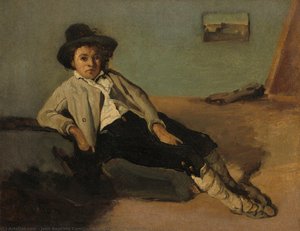
Jean-Baptiste-Camille Corot's 1835 “Portrait of a Child” is not merely a depiction of youth; it’s an invitation into the quiet contemplation that defined his artistic philosophy. Initially misidentified as a self-portrait, this intimate work reveals a young boy seated on a simple bench, lost in thought. The painting immediately draws us in with its subdued palette – predominantly earthy browns and greens—a hallmark of Corot's approach to capturing the nuances of light and atmosphere. He eschewed dramatic contrasts for a more subtle, almost melancholic effect, mirroring the pensive mood conveyed by the boy’s direct gaze. The artist masterfully employs loose brushstrokes, characteristic of his style, creating an impressionistic quality even decades before the movement formally emerged. These visible marks aren't haphazard; they contribute to the painting’s sense of immediacy and vulnerability, as if we are witnessing a fleeting moment captured on canvas.
The Mystery of Identity and Corot’s Private World
The enduring intrigue surrounding this portrait stems from its ambiguous origins. For years, it was believed to be a representation of Corot himself as a child, a notion supported by the boy's youthful features and the artist’s own documented fondness for childhood memories. However, recent scholarship suggests a different interpretation – that he is portraying an unidentified young man. This deliberate obscurity adds another layer of complexity to the work, prompting us to consider the nature of portraiture itself: is it about capturing identity or conveying a particular mood? Corot was notoriously private about his personal life and rarely painted portraits of friends or family, further intensifying the mystery surrounding this piece. The two figures in the background, rendered with minimal detail, could be members of Corot’s circle, adding to the sense of a shared, yet unspoken, narrative.
Technique and the Language of Light
Corot's technique is central to the painting’s power. He built up layers of thin washes of color, allowing the canvas to peek through in places – a deliberate choice that enhances the sense of atmosphere and depth. The light, diffused and gentle, seems to emanate from an unseen source, bathing the boy in a soft glow. Notice how he captures the play of shadows on the bench and the folds of the jacket, not with sharp delineation but with subtle gradations of tone. This masterful handling of light is reminiscent of his landscape paintings, where he sought to evoke the feeling of a particular place rather than simply depicting it realistically. The loose brushwork, combined with this delicate use of color, creates an incredibly atmospheric and emotionally resonant image.
Symbolism and the Poetics of Observation
Beyond its technical brilliance, “Portrait of a Child” is imbued with symbolic weight. The boy’s serious expression suggests introspection and perhaps even a hint of sadness – emotions that resonate deeply within the viewer. The simple setting—a bench in an undefined outdoor space—represents a sanctuary for contemplation, a place removed from the demands of daily life. Corot was fascinated by the beauty of ordinary moments and the power of observation. He believed that art should capture not just what we see but also what we feel – the quiet dignity of human existence. This painting exemplifies his ability to transform a simple scene into a profound meditation on time, memory, and the mysteries of identity.
AllPaintingsStore offers exquisite, hand-painted reproductions of this captivating work by Jean-Baptiste-Camille Corot, allowing you to bring its timeless beauty into your home or office. Each reproduction is meticulously crafted using traditional techniques, ensuring that it faithfully captures the original’s atmospheric depth and emotional resonance. Explore our collection today and experience the magic of Corot's vision firsthand.
Hasonló műalkotások



A művész életrajza
A Life Immersed in Light and Landscape
Jean-Baptiste-Camille Corot, a name that resonates with the tranquil beauty of 19th-century French landscape painting, was born into a comfortable Parisian bourgeois family on July 16, 1796. Though initially steered towards a commercial path, destiny – and perhaps an innate artistic sensibility – intervened. His early years were marked by an unconventional upbringing; entrusted to the care of a nurse in the countryside near L’Isle-Adam until age four, he developed a profound connection with nature that would indelibly shape his artistic vision. This initial immersion in rural tranquility stood in stark contrast to the bustling city life awaiting him, yet it laid the foundation for a lifelong pursuit of capturing the ephemeral qualities of light and atmosphere. His parents, successful milliners, provided financial stability, allowing Corot the freedom to explore his burgeoning passion for painting after an unsuccessful attempt at mercantile pursuits – a rare privilege for aspiring artists of that era. This support was crucial, enabling him to dedicate himself fully to artistic training without the immediate pressures of earning a livelihood.From Academic Foundations to Plein-Air Innovation
Corot’s formal artistic education began with studies under Achille Etna Michallon and later Jean-Victor Bertin, both esteemed landscape painters steeped in the neoclassical tradition. This grounding instilled in him a meticulous approach to composition and form, emphasizing clarity and structure. However, Corot wasn't content merely replicating established styles; he yearned for something more authentic, a way to convey not just *what* he saw, but *how* it felt to be immersed within the landscape. A pivotal moment arrived with his first journey to Italy in 1825. The Roman Campagna, bathed in golden light and steeped in history, ignited his imagination. He spent years sketching and painting en plein air – directly from nature – a practice that was still relatively uncommon at the time. This dedication to direct observation allowed him to capture the subtle nuances of light and shadow, the delicate atmospheric effects that would become hallmarks of his style. He wasn’t simply recording topographical details; he was striving to evoke a mood, a feeling of tranquility and harmony. His early Italian works demonstrate a clarity of form and bright palette influenced by classical ideals, yet already hint at the softer, more evocative approach that would define his mature style. He meticulously studied the masters, copying their work in the Roman galleries, but always filtered these lessons through his own increasingly sensitive perception of nature.A Bridge Between Traditions
Corot’s artistic development wasn't linear; it was a delicate balancing act between tradition and innovation. He exhibited regularly at the Paris Salon, initially gaining recognition for works rooted in neoclassical conventions. However, as he continued to explore plein-air painting, his style began to evolve. He moved away from highly finished, detailed compositions towards looser brushwork and a more muted palette. This shift wasn't a rejection of academic principles entirely; rather, it was an attempt to infuse them with the immediacy and emotional resonance of direct observation. He became a master of tonalism, using subtle variations in value to create depth and atmosphere. His landscapes weren’t about dramatic narratives or grand gestures; they were about quiet contemplation, the beauty of everyday scenes – a forest glade, a sun-dappled meadow, a tranquil riverbank. This approach resonated with a growing audience seeking respite from the rapid industrialization and social upheaval of 19th-century France. He skillfully blended elements of realism with an almost poetic sensibility, creating landscapes that felt both familiar and deeply personal. He wasn’t interested in grand pronouncements or political statements; his art was about finding beauty in the ordinary, elevating the commonplace to a realm of serene contemplation.Legacy and Enduring Influence
Jean-Baptiste-Camille Corot’s influence on subsequent generations of artists is immeasurable. He served as a crucial link between the neoclassical tradition and the emerging Impressionist movement. Artists like Monet, Pissarro, and Sisley deeply admired his ability to capture the fleeting effects of light and atmosphere, and they built upon his innovations in their own groundbreaking work. Corot’s emphasis on direct observation and plein-air painting paved the way for the Impressionists' radical departure from studio-based practices. However, Corot wasn’t simply a precursor to Impressionism; he was a unique and significant artist in his own right. His vast output – encompassing landscapes, portraits, and figure studies – continues to captivate audiences with its serene beauty and emotional depth. His works can be found in major museums around the world, including the Musée des Beaux-Arts in Dunkirk and the Musée Courbet in Ornans, France, as well as the National Gallery in London and the Metropolitan Museum of Art in New York. He died on February 22, 1875, leaving behind a legacy that continues to inspire artists and art lovers alike – a testament to the enduring power of light, landscape, and quiet contemplation. The Repose, Interrupted Reading, and Agostina remain iconic examples of his mastery, showcasing his ability to capture both the physical world and the inner life of his subjects with remarkable sensitivity and grace. His influence extends beyond painting; he fostered a spirit of artistic freedom and encouraged younger artists to find their own voice, solidifying his place as a pivotal figure in the history of art.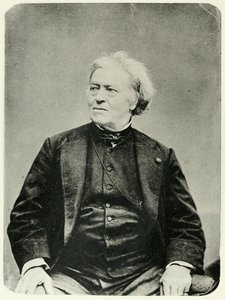
Corot
1796 - 1875 , Franciaország
Gyors információk
- Artistic Movement Or Style: Realizmus, Impresszionizmus
- Artists Or Movements Influenced By This Artist:
- Monet
- Pissarro
- Artists Who Influenced This Artist:
- Michallon
- Bertin
- Date Of Birth: 1796. 07. 16.
- Date Of Death: 1875. 02. 22.
- Full Name: Jean-Baptiste-Camille Corot
- Nationality: Francia
- Notable Artworks:
- A Repoze
- Olvassza
- Agostina
- Place Of Birth: Párizs, Franciaország
Kapcsolódó cikkek

A 19. század festészete: 10 ikonikus műalkotás a történelemből
Fedezze fel a 19. század festészetének 10 legikonikusabb műalkotását! Monet, Manet és más mesterek remekművei romantikától az impresszionizmusig. Múzeumi minőségű reprodukciók otthonába AllPaintingsStore.com-on. Ismerje meg a történeteket és inspirálódjon!

Émile Munier: Capturing 19th-Century French Life with Tender Realism
Discover Émile Munier's tender depictions of 19th-century French life. Explore his Realist style, charming paintings of children & pets, and lasting artistic legacy. Expert insights at AllPaintingsStore.

Jean-Baptiste-Camille Corot: A Poetic Realism – Bridging the Barbizon School and Early Impressionism
Explore the life & art of Camille Corot, a pivotal figure bridging the Barbizon School & Impressionism. Discover his poetic realism, signature style, and lasting influence on landscape painting. Learn more at AllPaintingsStore.
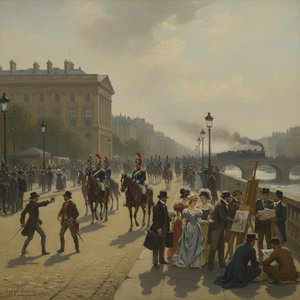
Émile Jean Horace Vernet: Romantic Realism & Depicting 19th-Century Life
Explore the life & art of Émile Jean Horace Vernet, a master of Romantic Realism. Discover his captivating battle scenes, portraits, and Orientalist works – a window into 19th-century France. Learn about his techniques & enduring legacy.
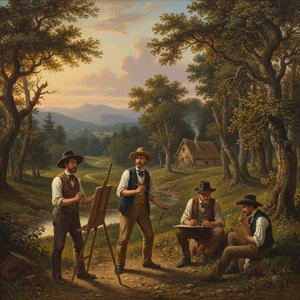
The Barbizon School: Pioneering Realism & the Pastoral Vision in 19th-Century French Painting
Explore the Barbizon School's pivotal role in 19th-century French painting. Discover how these artists revolutionized landscape art with their commitment to Realism and a profound connection to nature. Learn about key figures like Rousseau, Millet & Corot.


