


 Előnézet
 Megosztás
 Megosztás
 Részletek
 Útmutató

 Letöltés
 Hasonló darabok
 X-ray felvétel
 Diavetítés
 Statisztika
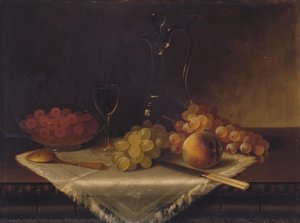
Still Life with a White Mug
 Oil On Canvas
- WallArt
- Neoclassicism
 1764
1764 52.0 x 60.0 cm
 Tovább olvasom
Kézzel készített olajfestmény reprodukció
Kézzel festett olajvastú vászon, az Ön által választott méretben és keretben, művészeink készítik meglévőre. ( Váltás nyomtatványra Áttérés digitális képre)




P118B $10

P118H $10

P118W $10

P438Z $10

P508JH $12

P508YH $12

P805H $10

P805Z $10

P919BZ $10

P919G $10

P919XJ $10

P959ZH $10

P968JZ $12

W106C $8

W218G $10

W218JH $8

W218Y $10

W307PJ $10

W316G $10

W316PJ $8

W316Y $10

W398PJ $8

W4111J $10

W500HY $15

W500JH $15

W692G $12

W849H $8

W940BG $15

W953PJ $8




Válasszon előre meghatározott méreteink közül, amelyek megfelelnek a műalkotás eredeti arányainak.

Ön megadhat saját méreteket egy adott kerethez vagy térhez igazításhoz. Ha a kiválasztott méret nem egyezik az eredeti kép arányával, akkor a műalkotást levágjuk, vagy további kézzel festett elemekkel meghosszabbítjuk a festményt. A gyártás megkezdése előtt küldünk Önnek egy digitális előnézetet jóváhagyásra.
Kérjük, vegye figyelembe, hogy a képernyőn megjelenő előnézet nem tükrözi a tényleges vágást vagy kiterjesztést. Csak az előnézet fog pontosan mutatni a végső kompozíciót.
Bár egyedi méretek állnak rendelkezésre, javasoljuk, hogy válasszon egy méretet az előre meghatározott listából az eredeti arányok megőrzése érdekében.
A rendelést követően a AllPaintingsStore.com csapata e-mailt küld az ügyfélnek az instrukciókért, és biztosít egy előnézeti képet (mockup).
Világszerte elérhető szállítás () 3-4 hét alatt a szokásos 5 hét helyett. (21 szeptember). A minőség nem kérdőjelezhető.

Ingyenes globális expressz szállítás

Prémium minőségű len vászon

Teljes körű szállítási biztosítás

Vámvisszatérítési Garancia

Tökéletes színarányosság garancia

100 napos visszaküldési garancia (csak gyártási hibás termékek esetén)

100% pénzvisszatérítési garancia

Több darab vásárlásakor kedvezmény
 Az üvegkeretes opció csak 110 cm alatti méretben érhető el

Still Life with a White Mug
Reprodukciós technika
Reprodukció méretei
-


Összesített ár
$ 258
A Moment of Stillness: Chardin’s ‘Still Life with a White Mug’
Jean-Baptiste-Siméon Chardin's “Still Life with a White Mug,” painted in 1764, is more than just a depiction of fruit and tableware; it’s a profound meditation on the beauty of simplicity and the quiet dignity of everyday life. Executed during a period of significant artistic upheaval – the Rococo style giving way to the burgeoning influence of Neoclassicism – Chardin remained steadfast in his commitment to capturing the essence of ordinary objects with an unparalleled sensitivity. This work, measuring 52 x 60 cm, offers a rare glimpse into the artist’s world, revealing a meticulous attention to detail and a masterful understanding of light and shadow that elevates these humble subjects to something truly remarkable.
- Subject Matter: The composition centers around three ripe apples and two pears arranged on a tan stone surface. A knife rests nearby, alongside a luminous white mug – the focal point of the arrangement – creating an intimate tableau reminiscent of a domestic scene.
- Technique: Chardin’s technique is characterized by his use of blended strokes and subtle gradations of tone, resulting in a soft, glowing effect that imbues the painting with a remarkable sense of warmth and tranquility. The artist's meticulous rendering of textures – from the smooth curves of the fruit to the rough surface of the stone – demonstrates an extraordinary command of form.
The Painter of the Ordinary
Chardin’s artistic vision was profoundly shaped by his upbringing. Born in Paris in 1699, he came from a family involved in cabinetmaking; his father's trade instilled within him a deep appreciation for craftsmanship and an acute awareness of materials. This influence is immediately apparent in the painting – the careful observation of light reflecting off the polished surfaces of the fruit, the subtle variations in color and texture, all speak to a trained eye attuned to the beauty of the tangible world. Unlike many of his contemporaries who sought to emulate grand historical or mythological themes, Chardin deliberately chose to depict scenes from everyday life, believing that true art could be found in the most unassuming subjects.
Symbolism and Light
The arrangement of the fruit itself carries symbolic weight. Apples, often associated with knowledge and temptation, are presented here not as objects of desire but as subjects of quiet contemplation. The pears, with their subtly different hues – golden and moss-green – add to the painting’s visual richness and suggest a harmonious balance. Crucially, Chardin's masterful use of light is central to the work's emotional impact. The light source, positioned to our left, casts delicate highlights on the fruit, creating an illusion of volume and depth. This technique not only enhances the realism of the composition but also evokes a sense of serenity and stillness – a hallmark of Chardin’s style.
Historical Context & Legacy
"Still Life with a White Mug" reflects a pivotal moment in art history, bridging the Rococo era's emphasis on ornamentation with the emerging Neoclassical interest in clarity and restraint. While Chardin never achieved widespread fame during his lifetime, his work has since been recognized as one of the most important contributions to French painting. His ability to capture the essence of human experience through simple objects continues to resonate with viewers today, making this piece a timeless testament to the power of observation and the enduring beauty of the ordinary.
Hasonló műalkotások




A művész életrajza
A Life Immersed in Quiet Observation
Jean-Baptiste-Siméon Chardin, born in Paris on November 2, 1699, occupies a unique and cherished position in the pantheon of French art. He wasn’t a painter of grand historical narratives or flamboyant mythological scenes; instead, he found profound beauty and meaning in the commonplace—the humble dignity of kitchen utensils, the gentle intimacy of domestic life, the fleeting grace of fruit arranged on a tabletop. His was an art born not of aristocratic patronage or academic ambition, but of quiet observation and a deeply felt empathy for the everyday experiences of ordinary people. Chardin’s father was a cabinetmaker, a trade that likely instilled in the young artist a sensitivity to form, texture, and the inherent beauty of materials – qualities that would become hallmarks of his mature style. He initially apprenticed with history painters Pierre-Jacques Cazes and Noël-Nicolas Coypel, but quickly discovered that his true calling lay elsewhere, diverging from the prevailing artistic trends toward a more personal and introspective vision. He rarely ventured beyond Paris, content to find endless inspiration within the familiar streets and modest homes of his neighborhood near Saint-Sulpice until 1757 when he was granted lodgings in the Louvre by Louis XV.The Evolution of a Master: From Still Life to Genre Painting
Chardin’s artistic journey began with still life, and it is here that he achieved his earliest recognition. However, these were not merely depictions of objects; they were imbued with a sense of weight, presence, and almost tactile reality. He didn't simply *represent* an object; he captured its essence, its very being. His early works, like “The Ray” (1728), demonstrate his remarkable ability to render textures – the glistening scales of the fish, the rough weave of the cloth, the cool smoothness of the stone surface. He achieved this through a masterful manipulation of light and shadow, employing a subtle impasto technique that created a palpable sense of volume and depth. The admission to the Académie Royale de Peinture et de Sculpture in 1728 with these works cemented his reputation as a rising star. As his career progressed, Chardin began to explore genre painting – scenes of everyday life featuring kitchen maids, children, and families engaged in simple activities. Works like “The Young Schoolmistress” (1740) and "Saying Grace" are poignant studies in human interaction, capturing fleeting moments of tenderness, concentration, and quiet dignity. These paintings weren’t sentimental or idealized; they were honest and unvarnished portrayals of life as it was lived by the common people of Paris.A Technique Rooted in Tactility and Light
What truly sets Chardin apart is his unique approach to painting technique. He rejected the smooth, polished surfaces favored by many of his contemporaries, opting instead for a deliberately textured impasto – a thick application of paint that created a sense of physicality and depth. This wasn’t merely a stylistic choice; it was integral to his artistic vision. The texture allowed him to capture the subtle nuances of light and shadow, creating an atmosphere of warmth and intimacy. He built up layers of paint, often using a palette knife as much as a brush, to create surfaces that seemed to radiate light from within. His color palettes were typically muted and earthy – browns, grays, ochres, and creams – but he used these colors with extraordinary sensitivity, creating harmonies and contrasts that were both subtle and profound. He was a master of *chiaroscuro*, the dramatic interplay of light and dark, using it to sculpt forms and create a sense of atmosphere. His paintings invite viewers not just to look, but to *feel* – to experience the textures, the weight, and the presence of the objects depicted.Influences and Legacy
Chardin’s artistic vision was shaped by a confluence of influences. His father's profession instilled in him an appreciation for craftsmanship and material beauty. The history painters he initially apprenticed with exposed him to classical composition and narrative techniques, which he ultimately rejected in favor of his own quiet, introspective style. However, the influence of artists like Jean-Honoré Fragonard, a contemporary painter known for his delicate brushwork and elegant compositions, is also evident in Chardin’s work. His paintings resonated deeply with later generations of artists, including Paul Cézanne, who famously declared that Chardin was “the father of us all,” acknowledging the older master’s profound understanding of form, light, and composition. Beyond his influence on painting, Chardin’s work has resonated with writers, philosophers, and art historians alike. His paintings are often seen as meditations on themes of mortality, simplicity, and the beauty of the mundane. His legacy continues to inspire artists and viewers today, reminding us that profound meaning can be found in the most ordinary of things.Exploring Chardin’s World Today
Fortunately, the opportunity to experience Chardin's artistry firsthand remains readily available. His works are prominently featured in major museums around the world, including the Musée du Louvre in Paris, the National Gallery of Art in Washington D.C., and the Hermitage Museum in Saint Petersburg. The Musée Maurice Denis in France also holds an impressive collection of French post-impressionism paintings alongside Chardin’s work, offering a fascinating context for understanding his influence on later artists. For those seeking to delve deeper into his life and art, numerous scholarly resources are available, including Georges Wildenstein's comprehensive monograph and insightful essays by Pierre Rosenberg. Furthermore, high-quality reproductions of his masterpieces can be found online at platforms like AllPaintingsStore.com, allowing admirers to bring the quiet beauty of Chardin’s world into their own homes. His paintings continue to offer a timeless invitation to slow down, observe carefully, and appreciate the simple pleasures of life.
Chardin
1699 - 1779 , Franciaország
Gyors információk
- Artistic Movement Or Style: Csendéletfestészet, Zsánerfestészet
- Artists Or Movements Influenced By This Artist:
- Paul Cézanne
- Édouard Manet
- Artists Who Influenced This Artist:
- Pierre-Jacques Cazes
- Noël-Nicolas Coypel
- Date Of Birth: November 2, 1699
- Date Of Death: December 6, 1779
- Full Name: Jean-Baptiste-Siméon Chardin
- Nationality: Francia
- Notable Artworks:
- A Kőszikva
- Szilvák kosara
- A fiatal iskolaõrző
- Place Of Birth: Párizs, Francia
Kapcsolódó cikkek

Jean-Baptiste Pater: Rococo Charm & Ephemeral Beauty of 18th-Century France
Explore the captivating world of Jean-Baptiste Pater, a master of Rococo painting. Discover his elegant *fête galante* scenes and shimmering portraits – a glimpse into 18th-century French aristocracy. Learn about his legacy & find high-quality reproductions.

A 18. Század Mesterei: 10 Képi Gyöngyem a Történelemből | AllPaintingsStore
Fedezze fel a 18. század legikonikusabb műalkotásait! Jacques-Louis David, Fragonard és más mesterek remekművei rokokó stílusban, barokk eleganciával. Művészeti reprodukciók prémium minőségben – inspirálja otthonát a AllPaintingsStore.com kínálatával! Explore the full collection online.

Jean-Baptiste-Siméon Chardin: Master of Still Life & Everyday Elegance
Explore the serene world of Jean-Baptiste-Siméon Chardin, master of still life & genre painting. Discover his revolutionary techniques, enduring legacy, and timeless depictions of everyday elegance. Learn more at AllPaintingsStore.

Oil on Canvas: A Historical & Technical Exploration of a Timeless Artistic Medium
Explore the rich history & enduring techniques of oil painting on canvas. Discover the science behind its longevity, conservation practices, and contemporary relevance. Expert insights for art enthusiasts.

The Enduring Legacy of Oil on Canvas: Technique, History & Aesthetic Impact
Explore the rich history & techniques of oil painting – from Renaissance masters to Impressionism. Discover pigments, layering methods, and why this timeless medium endures. Expert insights for artists & art enthusiasts.


