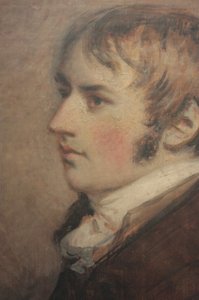
Mrs Tudor
1818. Acrylic On Canvas. Cooper Gallery.
§ 1Catalogue data
§ 2Abstract
A gyűjtemény leírása
A művész életrajza
Fedezze fel John Constable (1776-1837) ikonikus tájképeit! Romantikus angol festő, aki a Suffolk vidékének, különösen a Dedham Vale természetes szépségét ábrázolja. Kézzel festett reprodukciókat kínálunk!
§ 3Commentary
A Portrait of Quiet Strength: Exploring John Constable’s “Mrs Tudor”
John Constable's "Mrs Tudor," painted in 1818, transcends mere depiction; it embodies the Romantic spirit’s fascination with capturing the essence of human emotion within the grandeur of the English countryside. This portrait isn’t simply a likeness of a woman—it’s an invitation into a moment frozen in time, illuminated by Constable's masterful use of light and imbued with subtle psychological depth.
- Subject Matter: The painting portrays a woman seated indoors against a plain wall. Her gaze is direct, unwavering, conveying a sense of composure mingled with seriousness – qualities that resonate deeply within the Romantic aesthetic’s preoccupation with inner life and moral contemplation.
- Style & Technique: Constable's signature style—characterized by tonal impressionism—dominates “Mrs Tudor.” He eschews meticulous detail in favor of capturing the atmospheric conditions, prioritizing the interplay of light and shadow to convey mood and emotion. The muted palette contributes to this effect, emphasizing texture and creating a palpable sense of stillness.
- Historical Context: Painted during Constable’s formative years, “Mrs Tudor” reflects the burgeoning interest in psychological realism within Romantic art. Influenced by artists like Claude Lorrain, Constable sought to elevate landscape painting beyond mere topographical representation, aiming instead for an expressive portrayal of human experience against a natural backdrop.
- Symbolism: The woman’s posture and gaze invite interpretation as symbols of dignity, resilience, and perhaps even unspoken contemplation. Her stillness speaks volumes about inner fortitude—a characteristic valued during the Victorian era and powerfully conveyed by Constable's artistic vision.
The Painter’s Vision: Constable’s Embrace of Tonal Impressionism
Constable’s revolutionary approach to landscape painting wasn’t merely accidental; it stemmed from a profound conviction that art should strive to capture not just what is seen but how it feels. He meticulously studied the effects of light on surfaces—particularly on water and stone—developing techniques that would become hallmarks of his oeuvre. Unlike earlier artists who prioritized accurate color rendition, Constable prioritized tonal gradation, layering shades of gray and brown to create a luminous atmosphere that mirrored the subtleties of natural illumination.
A Window into Victorian Domestic Life
“Mrs Tudor” offers a glimpse into the domestic interiors of the early 19th century—a period marked by social conservatism and an idealized vision of rural virtue. The woman’s attire, featuring lace trim, speaks to the prevailing fashions of the time, reflecting both elegance and restraint. Yet, beyond the surface ornamentation lies a deeper exploration of human character—Constable's ability to convey emotion through subtle gestures and expressions is remarkable.
Legacy & Influence: Constable’s Enduring Impact on Landscape Art
John Constable’s influence extended far beyond his own lifetime. He established a new standard for landscape painting, inspiring generations of artists who followed him. His unwavering commitment to capturing the emotional resonance of nature cemented his place as one of Britain's greatest Romantic painters—a figure whose work continues to captivate audiences today.
Kérdések és válaszok
Elérhető-e a "Mrs Tudor" nagy felbontású letöltése?
A „Mrs Tudor”, John Constable alkotása digitális fájljának megvásárlása érdekében magas felbontású digitális kép letöltése az alábbi oldalon: Digitális alkotás.
Ki a szerzője és mikor készült a "Mrs Tudor"?
A "Mrs Tudor" alkotója John Constable, a mű pedig 1818 származik.
„Mrs Tudor”, John Constable alkotása egy világos vagy egy sötét tónusú alkotás?
A "Mrs Tudor" alkotás fényerisége összességében shadow, luminanciája pedig Soft Shadow.
§ 4The artist
John Constable
1776 - 1837, Egyesült Királyföld
Rövid információk
- Artistic Movement Or Style: Romantika
- Artists Or Movements Influenced By This Artist: ['Barbizon Schule']
- Artists Who Influenced This Artist:
- Claude Lorrain
- Ruisdael
- Date Of Birth: 1776. június 11.
- Date Of Death: 1837. április 31.
- Full Name: John Constable
- Nationality: Angol
- Notable Artworks:
- A fehér ló
- Dedham Vale
- Salisbury katedrális
- Place Of Birth: East Bergholt, Anglia
A művész életrajza
A Life Rooted in the English Landscape
John Constable (East Bergholt, Suffolk, 1776. június 11. – London, 1837. április 1.) angol tájképfestő. Jelentős szerepe volt az angol romantikus tájképfestészet történetében és alkotói stílusa meghatározó befolyást gyakorolt a francia romantikus festőkre, a barbizoni iskolára és az impresszionistákra. A Királyi Művészeti Akadémia (Royal Academy of Arts, London) tagja volt.Élete és munkássága
Suffolkban született, édesapja molnár volt. Vidéki környezetben nőtt fel, akárcsak Rembrandt. Korán elkezdett rajzolni, 21 éves korától azonban atyja munkáját kellett segítenie, majd csak 1800-ban ment el Londonba tanulni. Romantikus házasságot kötött, azaz szerelmi házasságot. A fiatal leány Maria Bicknell – evangélikus lelkész nagyapja ellenkezésére nem hallgatva – feleségül ment a festőhöz. Házasságukból született néhány gyermek, de 1828-ban a feleség tüdőbajban meghalt. Constable kiváló arcképfestő is lehetett volna, erről tanúskodik felesége képe 1816-ből. Constable sokkal fontosabbnak tartotta a tájképfestést, mint a portréfestést. Művészeti hitvallása szerint a természet közvetlen és beható tanulmányozása a legfontosabb. Próbálkozott történelmi és vallási témák feldolgozásával is pályája kezdetén, de mindig visszatért a tájképfestéshez. Pályájának kezdetén több 17. századi holland festő (Ruisdael, Koninck, Claude Lorrain (1600–1682), Rubens) és egy 18. század]i angol tájképfestő (Thomas Girtin (1775–1802) volt rá hatással. Azonban e hatások nem voltak tartósak, Constable saját megérzései és meglátásai alapján festett. Constable két jeles kortárs tájképfestővel Turnerrel és Boningtonnal indította el a 19. századi modern tájképfestészetet.Breaking with Convention: A New Vision of Nature
Constable’s artistic development was marked by a deliberate rejection of prevailing academic conventions. Dissatisfied with the idealized and often theatrical landscapes favored by the Royal Academy, he sought instead a truthful representation of nature, imbued with personal feeling. He wasn't interested in grand historical narratives or mythological scenes; his focus remained steadfastly on the familiar countryside surrounding him. This commitment to depicting ordinary subjects – hay wains, farm buildings, village life – was initially met with resistance from critics who deemed his work too commonplace and lacking in ambition. However, Constable persevered, driven by a conviction that beauty resided in the everyday. He pioneered a technique of *plein air* painting, venturing outdoors to directly observe and capture the fleeting effects of light and weather. This direct engagement with nature allowed him to infuse his canvases with an immediacy and vitality previously unseen in British landscape art. His brushwork became increasingly loose and expressive, employing impasto – thick layers of paint – to create texture and convey a sense of movement and atmosphere. He wasn’t simply recording what he saw; he was translating his emotional response to the land into visual form.Iconic Works and Lasting Influence
Constable's most celebrated works stand as testaments to his unique vision. The Hay Wain (1821), perhaps his most recognizable painting, depicts a quintessential rural scene on the River Stour, capturing the tranquility and harmony of agricultural life. Hadleigh Castle (1829) showcases his dramatic use of light and atmospheric effects, transforming a crumbling ruin into a powerful symbol of time’s passage. The series of paintings depicting Salisbury Cathedral from the Meadows (1831) demonstrates his ability to evoke different moods and times of day, revealing the cathedral as an integral part of the natural landscape. Netley Abbey (1824), with its evocative depiction of architectural grandeur amidst encroaching nature, exemplifies his skill in blending human creation with the wild beauty of the countryside. Despite facing initial struggles for recognition in England, Constable achieved considerable acclaim in France, where his innovative techniques and emotional depth resonated deeply with artists seeking a more naturalistic approach to landscape painting. He profoundly influenced the Barbizon School, a group of French painters who shared his commitment to *plein air* painting and direct observation of nature.Personal Life & Final Years
Constable’s personal life was marked by both joy and sorrow. He married Maria Bicknell in 1816, and they had seven children, though sadly several did not survive infancy. His marriage provided him with emotional support but also financial strain. Elected a Royal Academician in 1829, he continued to face criticism from some quarters, particularly regarding his unconventional techniques. His later years were shadowed by Maria’s declining health and eventual death in 1828, an event that deeply affected him. Despite these hardships, Constable remained dedicated to his art, continuing to paint until his own passing on March 31, 1837. He left behind a rich artistic legacy—a testament to his unwavering commitment to capturing the beauty and emotional resonance of the English countryside. His paintings remain powerful evocations of a bygone era, inviting viewers to experience the landscape through his uniquely sensitive eyes.§ 5Comparanda
Hasonló műalkotások
§ 6Questions
§ 7Further reading
Cite this entry
AllPaintingsStore.com, “John Constable, Mrs Tudor (1818)”, https://allpaintingsstore.com/hu/art/john-constable-mrs-tudor-AQTMAU-en/ (accessed 1 október 2026).
§ 8The reproduction
Kézzel készített olajfestmény reprodukció
Kézzel festett olajvastú vászon, az Ön által választott méretben és keretben, művészeink készítik meglévőre. ( Váltás nyomtatványra
Áttérés digitális képre)
It is specified on the order sheet in the margin; the present state of that sheet reads as follows.
Mrs Tudor
Reprodukciós technika
Reprodukció mérete
-
Kiváló mesterművész
Nagyobb részletesség, finomság és bővített gyártási idő
-
Reprodukció keretezése
-
-
A bármely oldalsó méretét túlszálaló 105 cm (kb. 41 hüvelyk) meghaladó műalkotások vagy reprodukciók esetében a keret összeszerelhető készletként, szétszerelve kerül szállításra. Ez a módszer biztosítja a biztonságos szállítást, és megakadályozza a szállítás során fellépő sérüléseket.
Szakmész összeszerelést igényel – ez nem DIY (önösszeszerelhető) termék.
A készletet egy tapasztalt keretező szakembernek kell összeszerelnie és a vásznat feszítenie kell, fa ragasztó (nem tartalmazza a csomag), vásznfeszítő fogó és szorítók használatával, amelyek a ragasztó száradásáig a keretrészeket egymáshoz vuôngjba tartják. A helytelen összeszerelés vagy a nem egyenletes vásznfeszítés maradandó károsíthatja a műalkotást, és ez nem része a garanciánknak.
A készlet tartalmazza az összes tömörfa rudat, pontosan méretre vágva.
A mellékelt csavarokkal, valamint a sarokszerekhez szükséges faütő ragasztóval kell összeszerelnie (ez nem tartalmazható a csomagban), így a keretrendezőnek külön kell beszereznie.
A csomag nem tartalmazza a szükséges professzionális eszközöket: egy vászonfeszítőt és klipseket a rácsok vízszintes tartásához a ragasztó megszáradásáig.
Fontos:
A sarokcsatlakozásokhoz fánylagra van szükség, a keretrudakat szorítókapcsokkal kell rögzíteni, amíg a rag teljesen meg nem szárad, a kész keretre feszített vászonhoz pedig vászonfeszítő fogat szükséges. Ezek egyike sem található meg a készletben. Kérjük, rendelés előtt győződjön meg róla, hogy rendelkezik tapasztalt keretező szakemberrel.
Névtábla
-
-
Védőréteg (Lakk)
Fényes lakk (intenzívabb színek, védelem a fény és a nedvesség hatása ellen)
-
Műalkotásom egyedi igényre szabása
Példák a módosíthatóságra: az arc kicserélése az ügyfél fotójára; háziállat hozzáadása (pl. macska helyett kutya); rejtett üzenet elhelyezése a háttérben; a háttér tájainak vagy elemeinek megváltoztatása.
-
Sürgős
Világszerte szóló szállítás () mindössze 3-4 hét alatt, a szokásos 5 hét helyett. (29 október). A minőség nem kérdőjelezhető.
-
Express szállítás
Világszerte elérhető szállítás területre 5 héten belül. (5 november).
A szállítás díja tartalmazza
Összesített ár
Ft 83357
Included with every order
- Ingyenes globális expressz szállítás
- Prémium minőségű len vászon
- Teljes körű szállítási biztosítás
- Vámvisszatérítési Garancia
- Hiteles színarányosság garancia
- 100 napos visszaküldési lehetőség (csak hibás termékek esetén)
- 100% pénzvisszatérítési garancia
- Több darab vásárlásakor kedvezmény


A bármely oldalsó méretét túlszálaló 105 cm (kb. 41 hüvelyk) meghaladó műalkotások vagy reprodukciók esetében a keret összeszerelhető készletként, szétszerelve kerül szállításra. Ez a módszer biztosítja a biztonságos szállítást, és megakadályozza a szállítás során fellépő sérüléseket.


