


 Megtekintés
 Küldés
 Megosztás
 Részletek
 Útmutató

 Letöltés
 Hasonló darabok
 X-ray felvétel
 Diavetítés
 Statisztika
Self-Portrait
 Drawing
- WallArt
- Expressionism
 1923
1923 47.0 x 53.0 cm
 Kunsthalle Bremen
 Összes részlet megjelenítése
Giclée / Műnyomat
Múzeumi minőségű giclée vagy vászonnyomat, gyors gyártással és rugalmas finomítási lehetőségekkel. ( Kézzel festett másolat rendelése Áttérés digitális képre)




P118B Ft10

P118H Ft10

P118W Ft10

P438Z Ft10

P508JH Ft12

P508YH Ft12

P805H Ft10

P805Z Ft10

P919BZ Ft10

P919G Ft10

P919XJ Ft10

P959ZH Ft10

P968JZ Ft12

W106C Ft8

W218G Ft10

W218JH Ft8

W218Y Ft10

W307PJ Ft10

W316G Ft10

W316PJ Ft8

W316Y Ft10

W398PJ Ft8

W4111J Ft10

W500HY Ft15

W500JH Ft15

W692G Ft12

W849H Ft8

W940BG Ft15

W953PJ Ft8




Válasszon előre meghatározott méreteink közül, amelyek megfelelnek a műalkotás eredeti arányainak.

Írja be a keretének vagy a falának megfelelő szélességet és magasságot. A nyomatot csak le lehet vágni, soha nem tehető nagyobbá, mint az eredeti kép, így egy eltérő alakú méretnél a kép egy része elveszik. Mielőtt bármit kinyatintanánk, küldünk egy digitális próbamodellt jóváhagyásra. Az oldalon látható kép nem tartalmazza a valós levágást — ezt csak a próbamodell mutatja meg.
Világszerte történő kiszállítás területére mindössze 2 hét alatt, a szokásos 4-5 hét helyett. (26 október)

Ingyenes globális expressz szállítás

Prémium minőségű len vászon

Teljes körű szállítási biztosítás

Vámvisszatérítési Garancia

Hiteles színarányosság garancia

100 napos visszaküldési lehetőség (csak hibás termékek esetén)

100% pénzvisszatérítési garancia

Több darab vásárlásakor kedvezmény
 Az üvegkeretes opció csak 110 cm alatti méretben érhető el

Self-Portrait
Giclée / Műnyomat
Reprodukció mérete
-


Összesített ár
Ft 20545
A Glimpse into the Artist's Soul: Lovis Corinth's Self-Portrait
To stand before a self-portrait by an artist of Lovis Corinth’s caliber is not merely to observe a likeness; it is to encounter a direct, unfiltered conversation with the creative spirit itself. This 1923 depiction captures the master at a moment of profound introspection. The subject gazes out from the canvas, framed by the subtle weight of his glasses and the defining sweep of his mustache—details that anchor the viewer in a specific, tangible reality. Corinth, forever navigating the rich currents between Impressionism's luminous observation and Expressionism's raw emotional outcry, offers us here a portrait steeped in both technical mastery and personal vulnerability.
The Synthesis of Style: Bridging Eras on Canvas
Corinth’s artistic journey was one of magnificent evolution. Having absorbed the naturalistic light studies of Impressionism during his formative years in Paris and Munich, he later found himself drawn into the more visceral, emotionally charged landscape of Expressionism. This Self-Portrait serves as a beautiful testament to that synthesis. While the rendering retains a certain observational clarity—a nod to the masters who preceded him—the underlying energy pulses with an expressive intensity. The technique, described as a drawing, suggests immediacy; it feels less like a carefully constructed facade and more like a thought captured before it could dissipate into memory.
Historical Echoes and Emotional Resonance
Created in 1923, this work emerges from a period of immense cultural upheaval. Corinth himself navigated the profound personal shifts that marked his life, including the devastating stroke he suffered. This context imbues the portrait with an added layer of poignant depth. The self-examination visible here transcends mere vanity; it speaks to resilience, to the enduring human need to document one's own existence against the backdrop of a changing world. For the collector or designer, this piece offers more than decoration; it provides a focal point for contemplation—a quiet monument to artistic endurance.
Bringing Corinth Home: Owning a Piece of History
Acquiring a reproduction of this Self-Portrait allows you to integrate a significant piece of art historical dialogue into your own space. The subtle nuances in the line work, the thoughtful gaze, and the palpable sense of history contained within the original make it an unparalleled statement piece. Whether placed in a study where deep thought is encouraged or a gallery wall meant to evoke intellectual depth, this artwork invites viewers to pause, look closer, and engage with the complex interplay between the artist's vision and his own enduring self.
Kérdések és válaszok
Mikor készült a "Self-Portrait", és mely művészeti irányba tartozik?
A "Self-Portrait" 1923-ben készült, a Expressionism irányzat egyik alkotásaként. A dátum és az irányzat rögzíti a művet a művészettörténetben.
A dátum alapján Self-Portrait Lovis Corinth pályájának melyik szakaszába tartozik?
A "Self-Portrait", amely 1923 évben készült, Lovis Corinth pályájának Late Period szakaszába tartozik.
Milyen hangulatot kölcsönözne a "Self-Portrait" egy térnek?
A Classic hangulatával a "Self-Portrait" című alkotás egy Lounge helyiségbe is javasolt.
Hasonló műalkotások


A művész életrajza
A Life Forged in Paint: The World of Lovis Corinth
Lovis Corinth, born Franz Heinrich Louis on July 21, 1858, in the Prussian province of East Prussia, was a figure who embodied the tumultuous transition from the 19th to the early 20th-century art world. His journey wasn’t one of immediate acclaim but rather a gradual evolution fueled by relentless study, diverse influences, and ultimately, personal tragedy. Corinth's beginnings were rooted in the rural landscapes of his birthplace, Tapiau, where his father worked as a tanner. This early exposure to the physicality of labor and the raw beauty of nature would subtly permeate his later work, even amidst more sophisticated stylistic explorations. He initially pursued studies at the Academy of Königsberg in 1876, but quickly realized that academic tradition alone wouldn’t satisfy his artistic ambitions. A period of travel followed, taking him to Munich, Antwerp, and finally Paris – each city serving as a crucial stepping stone in his development. In Munich, he absorbed the meticulous realism championed by Ludwig von Löfftz, honing his observational skills and mastering technique. Antwerp introduced him to the dramatic Baroque intensity of Rubens, while Paris exposed him to the burgeoning Impressionist movement, though his initial response was one of cautious observation rather than immediate embrace.From Naturalism to a Synthesis of Styles
Corinth’s artistic development wasn't marked by swift revolutions but by a gradual assimilation and synthesis of diverse influences. His early work leaned heavily towards naturalism, reflecting the prevailing academic standards of the time. Paintings like “In the Slaughterhouse” (1878), with its unflinching depiction of animal carcasses, demonstrate this commitment to realistic representation, yet even here, a nascent emotional intensity begins to surface. The subject matter itself—gruesome and visceral—hints at a willingness to confront uncomfortable truths, a characteristic that would become increasingly prominent in his later work. He spent considerable time studying the works of Courbet and other Realist painters, appreciating their dedication to portraying life as it was, without idealization. However, he wasn’t content with simply replicating reality; he sought to imbue his paintings with a deeper emotional resonance. His time spent in Antwerp profoundly impacted his style, introducing him to the dramatic lighting and dynamic compositions of Rubens. This exposure ignited a passion for theatricality and movement within his art. Crucially, his sojourn in Paris marked a turning point. He began to observe the Impressionists – Monet, Renoir, Degas – not as rebels against tradition but as innovators exploring new ways of capturing light and color. Initially, he approached their techniques with a degree of skepticism, preferring the solidity of academic realism. Yet, gradually, he absorbed their broken brushstrokes, vibrant palettes, and focus on fleeting moments, integrating these elements into his own evolving style. This synthesis – a blend of German realism, Baroque drama, and Impressionistic vibrancy – would become the hallmark of Corinth’s unique artistic vision.A Master of Portraiture and Landscape
While Corinth explored various genres throughout his career – including biblical scenes and mythological subjects – he is perhaps best remembered for his portraits and landscapes. His portraiture wasn't merely about capturing physical likeness; it was an attempt to penetrate the psychological depths of his sitters, revealing their inner lives through subtle gestures, expressive eyes, and carefully considered compositions. He possessed a remarkable ability to convey character and emotion with astonishing economy of means. He often depicted his friends, family, and fellow artists, creating intimate and deeply personal portraits that reveal not just their appearance but also their personalities and relationships. His subjects ranged from the wealthy art dealer Heinrich Thannhauser to his wife, Charlotte Berend-Corinth, a woman he profoundly admired and frequently portrayed in captivatingly expressive ways. Similarly, his landscapes weren't simply depictions of scenic views; they were emotional responses to nature. The Walchensee region in the Bavarian Alps became a particular source of inspiration, providing him with a wealth of motifs that he explored repeatedly throughout his later years. These paintings are characterized by their bold colors, dynamic brushwork, and a sense of raw energy that reflects Corinth’s own passionate engagement with the natural world. He wasn't interested in idyllic representations; instead, he sought to capture the untamed power and inherent drama of the landscape.Tragedy, Resilience, and Lasting Legacy
A pivotal moment in Corinth’s life – and arguably in his artistic development – was a stroke he suffered in December 1911. The paralysis it caused on his left side threatened to end his career altogether. However, with unwavering determination and the support of his wife, Charlotte Berend-Corinth, he relearned to paint, adapting to his physical limitations and developing an even more expressive style. This period marked a turning point in his work, as his paintings became increasingly bold, gestural, and emotionally charged. The experience of confronting mortality and physical vulnerability infused his art with a new sense of urgency and authenticity. He embraced a looser brushstroke and intensified color palette, anticipating many of the stylistic innovations that would define Expressionism. He continued to paint prolifically, producing some of his most powerful and memorable works during this time. Despite the physical challenges he faced, Corinth remained a vital force in the German art world, continuing to teach and mentor young artists. His legacy is not simply one of technical skill or stylistic innovation but also of resilience, courage, and an unwavering commitment to artistic expression in the face of adversity. Corinth’s influence extended beyond his own painting; he was also a respected teacher and writer on art, publishing essays such as “On Learning to Paint” in 1908, offering insights into his artistic philosophy and technical approach. He served as president of the Berlin Secession from 1915 until his death in 1925, championing progressive artistic ideas and fostering a vibrant creative community. Lovis Corinth’s legacy lies not only in his remarkable body of work but also in his unwavering commitment to artistic integrity and his ability to transform personal tragedy into profound artistic expression. He remains a pivotal figure in the history of German art, a master who bridged two eras and left an indelible mark on generations of artists to come.Key Works & Their Significance
- In the Slaughterhouse (1878): A starkly realistic depiction of animal carcasses, showcasing Corinth’s early mastery of technique and his willingness to confront unsettling subjects.
- Self-Portrait (various years): A series of self-portraits created annually on his birthday, offering a fascinating chronicle of the artist's evolving self-perception and artistic style. These works reveal a profound introspection and a fearless exploration of identity.
- Female Semi-Nude with Hat (1906): Demonstrates Corinth’s ability to blend classical motifs with impressionistic techniques, creating a sensuous and psychologically compelling portrait.
- Walchensee Series (various years): A collection of landscapes depicting the Walchensee region in Bavaria, characterized by their vibrant colors, dynamic brushwork, and emotional intensity. These paintings represent Corinth’s mature style at its most powerful and expressive.
- The Last Self-Portrait (1924): Painted shortly before his death, this work is a poignant testament to the artist's resilience and unwavering spirit in the face of physical adversity. It embodies the culmination of his artistic journey and serves as a powerful symbol of human endurance.
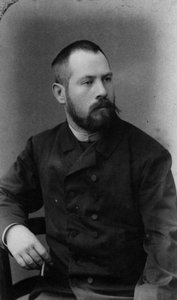
Lovis Corinth
1858 - 1925 , Holland
Rövid információk
- Artistic Movement Or Style: Impressionista & Expresszionista
- Artists Or Movements Influenced By This Artist: ['Expresszionizmus']
- Artists Who Influenced This Artist:
- Rubens
- Courbet
- Date Of Birth: 21. július 1858
- Date Of Death: 17. július 1925
- Full Name: Franz Heinrich Louis Corinth
- Nationality: Német
- Notable Artworks:
- In the Slaughterhouse
- Önellátóképek
- Nők portréi
- Place Of Birth: Tauwade, Hollandia
Kapcsolódó cikkek

A Német Expresszionizmus 10 Mesterműve: Érzelmek és Forradalom a Falakon
Fedezze fel a Német Expresszionizmus 10 legikonikusabb műalkotását! Kirchner, Munch és más német mesterek érzelmi festményeinek történetét bemutatva. Vászonképek, faliképek otthonába – AllPaintingsStore.com kínálata.

The Echo of Self: Reflectivity as a Core Theme in Art History & Contemporary Practice
Explore the rich history of self-representation in art, from Renaissance masters to modern innovators. Discover how artists use portraiture to reveal identity, emotion & the depths of the human psyche. Expert insights for collectors.

Reflecting the Self: A History of Portraiture & Psychological Insight
Explore the fascinating history of self-portraiture from Renaissance masters like Dürer & Rembrandt to modern interpretations. Discover the psychological insights and artistic techniques behind these iconic works. Expert analysis for art enthusiasts.

The Visceral Cry of a Nation: Exploring Emotion & Distortion in German Expressionism
Explore the powerful world of German Expressionism with AllPaintingsStore. Discover Kirchner, Nolde & Die Brücke's emotive masterpieces. Learn about this pivotal art movement and its lasting impact on modern art.

Lovis Corinth: Bridging Impressionism & Expressionism – A Study of Artistic Evolution
Explore the fascinating artistic journey of Lovis Corinth, a pivotal figure bridging Impressionism & Expressionism. Discover his evolution, key works, and lasting impact on modern art with AllPaintingsStore.


