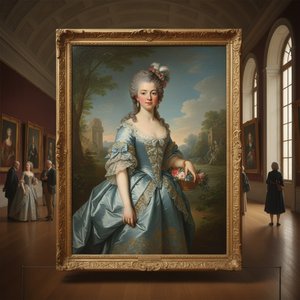
1917. Acrylic On Canvas, 87.0 x 68.0 cm.

§ 1Katalógusadatok

- 87.0 x 68.0 cm


Ez a műalkotás szerzői jogi védelem alatt áll
Az ezen az oldalon megjelenített műalkotások szerzői jogi védelem alatt állnak, ami azt jelenti, hogy törvényileg nem készíthetünk és nem adhatunk el belőlük pontos másolatokat. Ez a védelem olyan nemzetközi megállapodások alapján érvényesül, mint például a Berni Egyezmény és a nemzeti jogszabályok által, beleértve azokat is, amelyeket meghatározott Az USA szerzői jogi törvénye – 17. cím.
Mint tiszteletes és törvényes alternatívát, olyan egyedi, kézzel festett alkotásokat kínálunk, amelyek az eredetiből merítnek inspirációt. Tapasztalt és professzionális művészeink alaposan tanulmányozzák az eredeti stílusát, hangulatát és művészeti esszenciáját, hogy egy olyan új, egyedi alkotást hozzunk létre, amely ugyanazt az érzést kelti – miközben önálló, eredeti alkotásként létezik.
Ez a módszer teljes mértékben megfelel a szerzői jogi szabályozásnak, mivel nem tartalmazza a védett műalkotás másolását vagy duplikálását. Ehelyett ez egy kreatív újinterpretáció – egy új festmény, amely az eredetivel való összefüggései miatt hatással van rá, de nem az az.
 További információk
§ 2Absztrakt
A gyűjtemény leírása
Cemetery Gates by Marc Chagall - Large oil on canvas featuring Hebrew writing and symbolic arches; inspired by Jewish culture and cubist principles.
A művész életrajza
Marc Chagall ikonikus „Szórványos Szélószúró” című alkotása egy szürreális művészeti érték, mely felfedik az artista mélyebb tudatosságát és egyedi képességét a megszokott és fantasztiikus elemök ötvözésére. Mély színekkel és jelképekkel tarkított festmény!
§ 3Magyarázat
Marc Chagall’s “Cemetery Gates”: A Symphony of Memory and Myth
The painting "Cemetery Gates" by Marc Chagall isn't merely an image; it’s a portal into the artist’s subconscious, a distillation of his formative years spent amidst the vibrant tapestry of Vitebsk’s Jewish community. Completed in 1917 during a period marked by profound upheaval – the Russian Revolution reshaping Europe – Chagall’s work transcends its immediate historical context to explore universal themes of loss, faith, and the enduring power of dreams. It stands as a testament to his singular ability to transform personal experience into breathtaking visual poetry.Style and Technique: Cubist Influences Embraced
Chagall's style is famously difficult to define precisely, yet "Cemetery Gates" reveals unmistakable connections to Cubism and Surrealism. While eschewing strict geometric precision characteristic of Picasso and Braque, Chagall employs fractured planes and overlapping perspectives—a technique borrowed from the avant-garde movements—to create a dynamic sense of spatial ambiguity. This deliberate distortion isn’t aimless; it serves to convey an emotional truth that transcends literal representation. Thick impasto – heavily textured paint application – dominates the canvas, lending physicality to the ethereal figures and animating the landscape with palpable energy. The artist utilizes bold color palettes—primarily yellows, blues, and reds—to heighten visual impact and imbue the scene with a sense of dramatic intensity.Historical Context: Vitebsk Under Siege
The painting’s genesis lies in Vitebsk, Belarus, which was embroiled in escalating tensions between Bolshevik revolutionaries and Orthodox Christians as Chagall prepared for Passover celebrations. The looming threat of violence fueled Chagall's imagination, prompting him to confront anxieties about mortality and the fragility of existence. He famously recounted that he envisioned a gate—a symbol of transition and remembrance—with Hebrew inscriptions, reflecting his deep spiritual convictions. This imagery resonated powerfully with Vitebsk’s Jewish population, who were grappling with uncertainty and facing imminent danger from advancing Red Army forces. Chagall's decision to depict this scene wasn’t simply an artistic impulse; it was a courageous assertion of identity in the face of political repression.Symbolism: Recurring Motifs Reflect Inner Landscape
“Cemetery Gates” is replete with symbolic elements that illuminate Chagall’s psychological landscape. The gate itself represents both death and rebirth, embodying the cyclical nature of life and the inevitability of loss. Above the gate soar stylized birds—a motif frequently appearing in Chagall's oeuvre—symbolizing aspiration, freedom, and spiritual transcendence. Beneath the gate stretches a desolate landscape populated by trees bearing fruit – representing fertility and resilience amidst hardship. The figures depicted within the painting are rendered in fantastical proportions, reflecting Chagall’s preoccupation with dreamlike imagery and blurring the boundaries between reality and imagination. Notably, Chagall included himself amongst the figures, emphasizing his own role as witness to both personal trauma and artistic creation.Emotional Impact: A Balm for Grief
Ultimately, “Cemetery Gates” transcends its historical circumstances to offer a profound meditation on grief and remembrance. Despite its depiction of death—a subject fraught with anxiety—the painting exudes an atmosphere of serenity and hope. Chagall’s masterful use of color and texture evokes feelings of warmth, compassion, and spiritual solace. The luminous hues bathe the scene in an ethereal glow, conveying a sense of timeless beauty that transcends temporal concerns. Viewing “Cemetery Gates” is akin to embarking on a journey into the artist's soul—a pilgrimage toward understanding the complexities of human experience and acknowledging the enduring legacy of memory. It remains a powerfully evocative masterpiece, continuing to inspire audiences worldwide with its haunting grandeur and unwavering conviction in the transformative power of art.Kérdések és válaszok
Javasolt ajándék ötletnek a "Cemetery Gates"?
Ajándékul a „Cemetery Gates”, Marc Chagall alkotása kiváló választás Wedding, de más alkalmakra is tökéletes választás.
„Cemetery Gates”, Marc Chagall alkotása színei tel愈tek vagy fakók?
A "Cemetery Gates" színeinek telítettsége Subtle Color.
Megtekinthetném „Cemetery Gates”, Marc Chagall alkotása alkotást más megvilágítás mellett is?
A „Cemetery Gates” rétegről rétegre vizsgálható a mű alkotásának X-ray felvétel oldalán, amely egy restaurátori fényasztal alapján készült interaktív néző, és tizenegyi optikai rétegben mutatja be a képet.



 Váltás nyomtatványra


 A bármely oldalsó méretét túlszálaló 105 cm (kb. 41 hüvelyk) meghaladó műalkotások vagy reprodukciók esetében a keret összeszerelhető készletként, szétszerelve kerül szállításra. Ez a módszer biztosítja a biztonságos szállítást, és megakadályozza a szállítás során fellépő sérüléseket.