Pénzvisszatérítési Garancia · 100 nap Ingyenes világszerte történő szállítás
449 587műalkotások 30 613művészek 4 660múzeumok 32nyelv
Catalogue entry

David and Bathsheba

1956. Lithograph, 51.0 x 33.0 cm.

Fig. 1. Marc Chagall, David and Bathsheba, 1956. Shown as the reproduction you are specifying: , .

§ 1Catalogue data

Méretek
51.0 x 33.0 cm

§ 2Abstract

A gyűjtemény leírása

Marc Chagall's 'David and Bathsheba' (1956) is a surreal lithograph depicting a biblical scene with dreamlike figures, symbolic elements, and a melancholic mood. Explore its expressive lines & haunting beauty.

A művész életrajza

Marc Chagall ikonikus „Szórványos Szélószúró” című alkotása egy szürreális művészeti érték, mely felfedik az artista mélyebb tudatosságát és egyedi képességét a megszokott és fantasztiikus elemök ötvözésére. Mély színekkel és jelképekkel tarkított festmény!

§ 3Commentary

A Dreamscape of Desire and Divine Judgment

Marc Chagall’s “David and Bathsheba” (1956) isn't merely a depiction of a biblical narrative; it’s an immersion into the artist’s intensely personal, almost hallucinatory world. Created during a period of profound reflection for Chagall, this lithograph transcends simple storytelling, becoming a poignant exploration of desire, betrayal, and the weighty consequences of human action. The work immediately captivates with its stark monochrome palette – black ink against pristine white paper – lending it an immediate sense of timelessness and gravitas. It’s a visual poem rendered in charcoal-like lines, echoing the raw emotion at its core.

The composition itself is deliberately unsettling. Bathsheba, positioned slightly off-center yet dominating the vertical space, isn't presented with idealized beauty; instead, she appears vulnerable and contemplative, her form subtly distorted – a hallmark of Chagall’s style. The architectural element behind her, fragmented and almost dissolving into abstraction, creates an atmosphere of instability and suggests the crumbling foundations of David’s moral compass. Above all, the bird—a recurring motif in Chagall's work—looms large, its presence ambiguous; is it a symbol of divine observation, a harbinger of impending doom, or perhaps simply a reflection of the artist’s own restless imagination? The palm tree, a potent emblem of hope and resilience, offers a fragile counterpoint to the prevailing sense of melancholy.

The Language of Line and Symbol

Chagall's masterful use of line is central to the artwork’s power. He abandons realistic representation in favor of expressive gestures – loose, swirling lines that convey movement, emotion, and a profound sense of spontaneity. Hatching and cross-hatching are employed not just for tonal variation but also to build texture, suggesting the roughness of skin, the solidity of stone, and the ethereal quality of the dreamscape. The lines themselves seem to vibrate with an inner energy, mirroring the turmoil within the scene. The simplification of shapes – figures reduced to symbolic forms rather than anatomical accuracy – further emphasizes this emotional intent.

Lithography, Chagall’s chosen medium, perfectly suited his vision. This printmaking technique allows for incredible detail and a remarkable range of tonal values achieved through subtle variations in ink pressure. The resulting image possesses a captivating depth and luminosity, despite its monochromatic palette. The absence of a defined light source adds to the work's enigmatic quality; instead, Chagall relies on contrasts between light and shadow to sculpt form and create a sense of dramatic tension.

A Reflection of Jewish Folklore and Inner Turmoil

“David and Bathsheba” is deeply rooted in Chagall’s personal mythology. The biblical story itself—a tale of lust, betrayal, and divine retribution—resonates with themes prevalent in Jewish folklore concerning the dangers of unchecked desire and the consequences of transgression. The bird, frequently interpreted as a symbol of the soul or divine presence, reinforces this spiritual dimension. Furthermore, the artwork can be viewed as an exploration of Chagall’s own internal struggles – his grappling with faith, memory, and the complexities of human relationships. The melancholic mood is palpable, suggesting a profound sense of regret and the enduring weight of past actions.

This lithograph offers more than just a visual representation of a biblical scene; it's an invitation to contemplate the timeless themes of desire, morality, and the search for redemption. A reproduction captures this evocative power, allowing viewers to immerse themselves in Chagall’s dreamlike world and experience the emotional depth of his masterpiece.

Kérdések és válaszok

Hogyan tekinthetném meg a(t) „David and Bathsheba”, Marc Chagall alkotása diaváltogatás formájában?

A „David and Bathsheba”, Marc Chagall alkotása diaporámaként tekinthető a mű Diaváltás oldalán.

Elérhető-e a "David and Bathsheba" minőségi nyomtatványként?

A „David and Bathsheba”, Marc Chagall alkotása nyomtatott példányát egyszerűen megrendelheti a következő oldalon: minőségi giclée nyomat pamutvászonon vagy archiváló vászonpapíron, a Művészeti nyomtatvány kautta.

Mely paletta és domináns szín határozza meg a "David and Bathsheba" alkotást?

A „David and Bathsheba”, Marc Chagall alkotása egy Neutrals színpalettát használ, melynek domináns színe a Putty (#e4ded1).
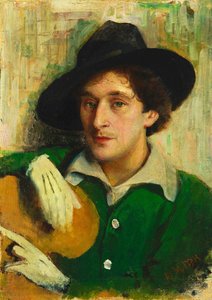
§ 4The artist

Marc Chagall

Marc Chagall

1887 - 1985, Білорусь

Quick facts about Marc Chagall

  • Artistic Movement Or Style: Современный стиль
  • Artists Or Movements Influenced By This Artist: ['Сюрреализм']
  • Artists Who Influenced This Artist:
    • Леон Бакст
    • Дюманьи
  • Date Of Birth: 6 július 1887
  • Date Of Death: 28 március 1985
  • Full Name: Marc Chagall
  • Nationality: Білім беруші
  • Notable Artworks:
    • В городе Витебск
    • Белая распятие
  • Place Of Birth: Liozna, Беларусь

A művész életrajza

A Life Painted in Dreams: The World of Marc Chagall

Marc Chagall, born Moishe Shagal in 1887 in the small Belarussian town of Liozna near Vitebsk, wasn’t merely a painter; he was a poet of color, a weaver of dreams, and a chronicler of memory. His life, spanning nearly a century, mirrored the tumultuous currents of the 20th century, yet his art remained steadfastly rooted in a deeply personal vision—one infused with the folklore of his Hasidic Jewish upbringing and an unwavering belief in the power of imagination. Vitebsk itself was more than just a birthplace; it became the emotional core of his artistic universe, a recurring motif populated by flying figures, whimsical animals, and the vibrant hues of remembered landscapes. The town’s unique blend of cultures—Russian Orthodox churches alongside bustling Jewish marketplaces—forged an aesthetic sensibility that would defy easy categorization throughout his long career. Though he sought formal training first with a local sign painter and later in St. Petersburg under Léon Bakst, and then in Paris at the Académie de la Grande Chaumière, Chagall never fully embraced any single artistic movement. He absorbed elements of Cubism, Symbolism, and Fauvism, but always filtered them through his own intensely personal lens, creating a style that was uniquely, unmistakably Chagall.

Early Years and Artistic Beginnings

Chagall’s formative years were marked by hardship and displacement. Born into a family of impoverished Jewish artisans, he experienced the trauma of pogroms—violent anti-Jewish riots—which instilled in him a lifelong preoccupation with themes of persecution and resilience. Despite these challenges, Chagall possessed an innate talent for drawing and painting from a young age. He initially studied at Vitebsk Art School, where he honed his skills under Léon Bakst, a prominent figure in the Ballets Russes avant-garde movement. This exposure to theatrical art profoundly influenced his visual language, fostering a fascination with dynamism and expressive gesture. However, Chagall’s artistic ambitions extended beyond the confines of academic training; he sought inspiration from folk traditions—particularly Jewish folklore—which would become central to his artistic vision. His early canvases already hinted at the distinctive style that would define his career: bold color palettes, flattened perspectives, and fantastical imagery—elements that defied conventional realism.

The Symbolism of Vitebsk

Vitebsk remained an indelible presence in Chagall’s imagination throughout his life. The town served as a constant source of inspiration for his paintings, appearing repeatedly in works such as I and the Village (1911) and *Over Vitebsk* (1920-1922). These canvases aren't merely depictions of place; they are explorations of identity, memory, and the relationship between the individual and community. The village isn’t rendered realistically but as a fragmented collection of recollections, imbued with symbolic meaning. Houses tumble upside down, figures float in midair, and animals mingle seamlessly—creating an otherworldly atmosphere that captures the essence of Vitebsk's cultural landscape. Chagall’s use of color was particularly striking during this period. He employed vibrant hues—blues, yellows, reds—to convey emotion rather than literal representation, reflecting the spiritual fervor of his Jewish upbringing. This stylistic approach wasn’t accidental; it stemmed from a desire to move beyond mere imitation of reality and capture the essence of feeling, the weight of memory, and the power of folklore.

The Influence of Cubism and Surrealism

While Chagall rejected strict adherence to any single artistic movement, he absorbed influences from Cubism and Surrealism—particularly from Pablo Picasso and André Breton. He experimented with fragmented perspectives and geometric forms, as seen in works like *The Chapel of Saint Helena* (1927), adapting cubist techniques to express his inner vision. Simultaneously, Chagall embraced the dreamlike logic of Surrealism, incorporating fantastical imagery and irrational juxtapositions into his canvases. This fusion of styles resulted in a distinctive visual language characterized by lyrical abstraction—a hallmark of his artistic oeuvre. He sought inspiration from biblical narratives and Jewish mysticism, translating these themes into emotionally charged paintings that explored profound questions about faith, suffering, and redemption.

Major Achievements and Legacy

Throughout his prolific career, Chagall achieved international acclaim for his monumental canvases and innovative stained glass windows. His masterpiece, *White Crucifixion* (1937), stands as a poignant meditation on the horrors of Nazism and Jewish persecution—a testament to his artistic courage and moral conviction. He continued to produce works during World War II, reflecting the anxieties and uncertainties of the time. Following the war, Chagall emigrated to New York City, where he established himself as one of America’s leading artists. His paintings from this period explored themes of exile and displacement, capturing the spirit of a generation grappling with trauma and loss. He received numerous prestigious commissions, including the ceiling of the Paris Opera (1964), a breathtaking explosion of color and form that celebrated musical masterpieces. And his stunning stained glass windows for the Hadassah Hebrew University Medical Center synagogue in Jerusalem—a project undertaken in collaboration with Anatoly Yankilevich—transformed sacred space into an immersive experience of light and color. Marc Chagall’s legacy extends beyond his artistic creations; it resides in the enduring power of his vision—a vision that celebrates love, memory, and the boundless possibilities of the human imagination. He left behind a body of work that is both deeply personal and universally accessible, inviting viewers to lose themselves in a world painted with dreams and illuminated by hope. His art continues to inspire, challenge, and move us, ensuring that his vibrant and imaginative spirit will live on for generations to come.

§ 5Comparanda

§ 6Questions

Gyors információk

  • Dimensions: 51 x 33 cm
  • Artist: Marc Chagall
  • Influences: Chagall
  • Medium: Lithograph
  • Subject or theme: Biblical scene

§ 7Cite this entry

AllPaintingsStore.com, “Marc Chagall, David and Bathsheba (1956)”, https://allpaintingsstore.com/hu/art/marc-chagall-david-and-bathsheba-D3J2NG-en/ArtistReproduction/ (accessed 4 október 2026).

§ 8The reproduction

Kézzel készített olajfestmény reprodukció

Kézzel festett olajvastú vászon, az Ön által választott méretben és keretben, művészeink készítik meglévőre. ( Váltás nyomtatványra Áttérés digitális képre)

It is specified on the order sheet in the margin; the present state of that sheet reads as follows.

David and Bathsheba

Reprodukciós technika

Reprodukció mérete

-

Kiváló mesterművész

Nagyobb részletesség, finomság és bővített gyártási idő

-

Reprodukció keretezése

-

-

A bármely oldalsó méretét túlszálaló 105 cm (kb. 41 hüvelyk) meghaladó műalkotások vagy reprodukciók esetében a keret összeszerelhető készletként, szétszerelve kerül szállításra. Ez a módszer biztosítja a biztonságos szállítást, és megakadályozza a szállítás során fellépő sérüléseket.

Szakmész összeszerelést igényel – ez nem DIY (önösszeszerelhető) termék.
A készletet egy tapasztalt keretező szakembernek kell összeszerelnie és a vásznat feszítenie kell, fa ragasztó (nem tartalmazza a csomag), vásznfeszítő fogó és szorítók használatával, amelyek a ragasztó száradásáig a keretrészeket egymáshoz vuôngjba tartják. A helytelen összeszerelés vagy a nem egyenletes vásznfeszítés maradandó károsíthatja a műalkotást, és ez nem része a garanciánknak.

  • A készlet tartalmazza az összes tömörfa rudat, pontosan méretre vágva.

  • A mellékelt csavarokkal, valamint a sarokszerekhez szükséges faütő ragasztóval kell összeszerelnie (ez nem tartalmazható a csomagban), így a keretrendezőnek külön kell beszereznie.

  • A csomag nem tartalmazza a szükséges professzionális eszközöket: egy vászonfeszítőt és klipseket a rácsok vízszintes tartásához a ragasztó megszáradásáig.

Fontos:
A sarokcsatlakozásokhoz fánylagra van szükség, a keretrudakat szorítókapcsokkal kell rögzíteni, amíg a rag teljesen meg nem szárad, a kész keretre feszített vászonhoz pedig vászonfeszítő fogat szükséges. Ezek egyike sem található meg a készletben. Kérjük, rendelés előtt győződjön meg róla, hogy rendelkezik tapasztalt keretező szakemberrel.

Névtábla

-

-

Védőréteg (Lakk)

Fényes lakk (intenzívabb színek, védelem a fény és a nedvesség hatása ellen)

-

Műalkotásom egyedi igényre szabása

Példák a módosíthatóságra: az arc kicserélése az ügyfél fotójára; háziállat hozzáadása (pl. macska helyett kutya); rejtett üzenet elhelyezése a háttérben; a háttér tájainak vagy elemeinek megváltoztatása.

-

Sürgős

Világszerte szóló szállítás () mindössze 3-4 hét alatt, a szokásos 5 hét helyett. (1 november). A minőség nem kérdőjelezhető.

-

Express szállítás

Világszerte elérhető szállítás területre 5 héten belül. (8 november).

A szállítás díja tartalmazza

Összesített ár

Ft 84489

Included with every order

  • Ingyenes globális expressz szállítás
  • Prémium minőségű len vászon
  • Teljes körű szállítási biztosítás
  • Vámvisszatérítési Garancia
  • Hiteles színarányosság garancia
  • 100 napos visszaküldési lehetőség (csak hibás termékek esetén)
  • 100% pénzvisszatérítési garancia
  • Több darab vásárlásakor kedvezmény
Order sheet