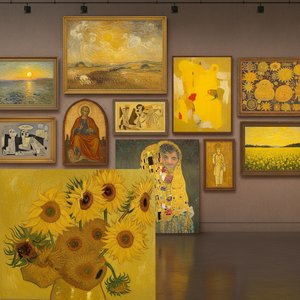
1963. Oil On Canvas.

§ 1Katalógusadatok


Ez a műalkotás szerzői jogi védelem alatt áll
Az ezen az oldalon megjelenített műalkotások szerzői jogi védelem alatt állnak, ami azt jelenti, hogy törvényileg nem készíthetünk és nem adhatunk el belőlük pontos másolatokat. Ez a védelem olyan nemzetközi megállapodások alapján érvényesül, mint például a Berni Egyezmény és a nemzeti jogszabályok által, beleértve azokat is, amelyeket meghatározott Az USA szerzői jogi törvénye – 17. cím.
Mint tiszteletes és törvényes alternatívát, olyan egyedi, kézzel festett alkotásokat kínálunk, amelyek az eredetiből merítnek inspirációt. Tapasztalt és professzionális művészeink alaposan tanulmányozzák az eredeti stílusát, hangulatát és művészeti esszenciáját, hogy egy olyan új, egyedi alkotást hozzunk létre, amely ugyanazt az érzést kelti – miközben önálló, eredeti alkotásként létezik.
Ez a módszer teljes mértékben megfelel a szerzői jogi szabályozásnak, mivel nem tartalmazza a védett műalkotás másolását vagy duplikálását. Ehelyett ez egy kreatív újinterpretáció – egy új festmény, amely az eredetivel való összefüggései miatt hatással van rá, de nem az az.
 További információk
§ 2Absztrakt
A gyűjtemény leírása
Explore Marc Chagall’s ‘Music’ (1963) – a vibrant expressionist painting of angels, musicians & joyful celebration. Discover its dreamlike style and bold colors.
A művész életrajza
Marc Chagall ikonikus „Szórványos Szélószúró” című alkotása egy szürreális művészeti érték, mely felfedik az artista mélyebb tudatosságát és egyedi képességét a megszokott és fantasztiikus elemök ötvözésére. Mély színekkel és jelképekkel tarkított festmény!
§ 3Magyarázat
A Symphony of Color and Spirit: Exploring Marc Chagall’s *Music* (1963)
Marc Chagall's *Music*, painted in 1963, is a captivating explosion of color and form – a quintessential example of his unique artistic vision. This isn’t merely a depiction *of* music; it *is* music visualized, translated into a vibrant tapestry of emotion and spiritual yearning. The painting invites viewers into a dreamlike realm where reality bends to the will of imagination, offering a powerful testament to Chagall's enduring legacy as an early modernist master.Subject & Composition: A Celebration of Joyful Chaos
The composition is immediately striking for its unconventionality. An ethereal angel hovers centrally, seemingly conducting or inspiring the lively gathering below. This group isn’t a neatly arranged orchestra; rather, it's a joyous, almost chaotic assembly of musicians and figures engaged in ecstatic celebration. Diagonal lines dominate, creating a dynamic sense of movement and energy that sweeps across the canvas. Forms are fragmented and abstracted, eschewing realistic representation for expressive power. The overall effect is one of buoyant exuberance – a visual embodiment of musical harmony and communal joy.Style & Technique: A Chagallian Signature
*Music* exemplifies Chagall’s signature style, deeply rooted in his Belarusian-Jewish heritage and infused with elements of Cubism, Symbolism, and Fauvism. The painting is characterized by its dreamlike imagery, bold color palette, and expressive brushwork. Chagall employed a loose, gestural application of oil paint – an *impasto* technique that creates a rich, textured surface. Visible brushstrokes contribute to the artwork’s energetic feel, emphasizing the act of creation itself. The flattened perspective minimizes depth, prioritizing emotional impact over spatial accuracy—a hallmark of his approach.Symbolism & Meaning: Layers of Interpretation
Chagall's work is rich in symbolism, and *Music* is no exception. The angel, a recurring motif in his oeuvre, often represents divine inspiration or spiritual revelation. The open book held by the angel can be interpreted as representing knowledge, wisdom, or perhaps even musical scores themselves. The musicians symbolize joy, community, and the power of art to uplift the human spirit. Recurring motifs like violins – seen in works such as The Green Violinist and The Blue Fiddler– often represent a connection to his cultural roots and personal memories. Chagall frequently blended religious symbolism with secular themes, creating a unique visual language that resonated deeply with audiences.Historical Context & Chagall’s Life
Born in 1887 in Liozna, Belarus (then part of the Russian Empire), Marc Zakharovich Chagall experienced a childhood steeped in Jewish tradition and the vibrant folklore of his native land. His early life profoundly influenced his artistic development, providing him with a wealth of imagery and themes that he would revisit throughout his career. As an artist who navigated both Russia and France – experiencing political upheaval and cultural shifts—Chagall’s work often reflects a sense of displacement and longing, but also resilience and hope. *Music*, created later in his life, demonstrates a continued exploration of these themes with a renewed sense of optimism and celebration. His ability to transcend boundaries made him one of the most important figures in 20th-century art.Emotional Impact & Interior Design
*Music* evokes a powerful sense of ecstatic energy, spiritual revelation, and unbridled joy. It’s a visually arresting piece that invites contemplation and inspires a feeling of upliftment. Its vibrant colors and dynamic composition make it a striking focal point for any interior space. The painting's bold aesthetic lends itself well to modern or eclectic settings, adding a touch of whimsy and sophistication. A high-quality reproduction of *Music* can bring the artist’s unique vision into your home, creating an atmosphere of creativity and inspiration.Kérdések és válaszok
Mely művészeti irányba és mely korszakba sorolható a „Music”, Marc Chagall alkotása?
A „Music”, Marc Chagall alkotása a Expressionism irányzat alkotása, mely alkotójának Modern kor korszakából származik.
A „Music”, Marc Chagall alkotása portré, tájékép vagy négyzet alakú kompozíció?
A "Music" formátuma Tall. Ez hasznos, amikor tervezünk, hogy a reprodukciót hová helyezzük el.
Mikor készült a "Music", és mely művészeti irányba tartozik?
A „Music”, Marc Chagall alkotása alkotás 1963-ból származik, és a Expressionism stílushoz tartozik.


 Váltás nyomtatványra


 A bármely oldalsó méretét túlszálaló 105 cm (kb. 41 hüvelyk) meghaladó műalkotások vagy reprodukciók esetében a keret összeszerelhető készletként, szétszerelve kerül szállításra. Ez a módszer biztosítja a biztonságos szállítást, és megakadályozza a szállítás során fellépő sérüléseket.