


 Előnézet
 Megosztás
 Megosztás
 Részletek
 Útmutató

 Letöltés
 Hasonló darabok
 X-ray felvétel
 Diavetítés
 Statisztika
Night
 Oil On Canvas
- WallArt
- Surrealism
 1953
1953- Modern
 145.0 x 113.0 cm
 Tovább olvasom
Vásároljon nagy felbontású, javított digitális képet, amely minőségében messze felülmúlja az online előnézetet.
Minden fájlt szakembereink a legmodernebb eszközök és precíz, kézi retusálás segítségével készítenek el aprólékosan. Gondoskodunk arról, hogy minden kép kivételes tisztasággal, pontos színhelyességgel és részletgazdag finomsággal rendelkezzen.
A végleges fájl 72 órán belül e-mailben megérkezik, professzionális, szerkesztői és nyomtatási környezetbe optimalizálva az azonnali használathoz. Ez ugyanaz a minőség, amelyben a legmeghatározóbb tervezőstúdiók, kiadók és galériák is megbízhatnak.
Digitális kép
Töltsön le nagy felbontású fájlt személyes kiállításokhoz, nyomtatáshoz és kreatív projektekhez. ( Váltás nyomtatványra Kézzel festett másolat vásárlása)
Minden digitális kép rendeléséhez tartozó extrák
Szakértői digitális kézbesítés, garantáltan
Amikor a AllPaintingsStore.com szolgáltatást választja, nem csupán egy képet kap – professzionálisan felmagasított digitális műalkotást kap, amely precizitással készült, és amelyet megelégsedési gwarancia tesz biztoslássá. Az alábbiakban automatikusan minden benne 】

Gyors e-mail teslimítés
A nagy felbontású digitális képmásolatát a megrendelést követő 72 órán belül e-mailben elküldjük Önnek – azonnal használható formátumban.

MI-alapú digitális képjavítás
Műve professzionális módon kerül optimalizálásra fejlett mesterséges intelligencia eszközök és manuális szerkesztés segítségével, biztosítva a maximális részletességet, tisztaságot és színpontosságot.

Örök életű ingyenes újradatás
Véletlenül törölted vagy elvesztetted a fájlodat? Ne aggódj – bármikor ingyen újra megküldjük neked.

Nincs importköltség – soha
Élvezze műalkotásait azonnal, vám, illeték vagy szállítási költség nélkül – a digitális letöltések mindig adamentesek.

Színpontosság garantálása
Professzionális eszközök és színkezelés segítségével garantáljuk, hogy digitális képe a lehető legpontosabban tükrözze az eredeti színeket.

100 napos elégedettségi garancia
Ha nemມີ elégedett a digitális képével, 100 napon belül felülvizsgáljuk vagy 100% visszatérítjük az amountot – kérdés बिना.

100% Pénzvisszatérítési garancia
Nem tetszett a vásárlás? 100 napon belül teljes visszatérítést garantálunk a digitális fájl megvételétől számítva – kérdés nélkül.

Tömegrendelési kedvezmények
Vásároljon 3 képet, spóroljon 10%-et - Vásároljon 5-öt, spóroljon 15%-et - Vásároljon 10+ képet, spóroljon 20%-at. Kiváló kreatív projektekhez, galériákhoz és ügynökségekhez.
A Dreamscape Unveiled: The Surreal Magic of Marc Chagall’s Night
In the quiet depths of 1953, Marc Chagall conjured a vision that defies the boundaries of reality, inviting us into a realm where the laws of physics surrender to the whims of the subconscious. His masterpiece, Night, is not merely a painting but a portal into a personal mythology, a place where memory and dream coalesce under an expansive indigo sky. As we gaze upon this canvas, we find ourselves suspended in a nocturnal reverie, caught between the tangible world of a stylized village and the ethereal flight of symbolic figures. The composition breathes with a sense of profound intimacy, pulling the viewer into a landscape that feels both alien and deeply familiar, much like the fragmented recollections of a childhood dream. The visual narrative is anchored by a striking, surreal central motif: a horse, rendered in earthy tones of ochre and muted brown, carrying a woman draped in flowing robes. This figure, often interpreted as a symbol of spiritual ascension or fertility, moves through the night with a grace that transcends gravity. Accompanying this procession are whimsical elements—a bird-headed man and a child—that populate the scene with a sense of enchantment and mystery. Chagall’s use of color is nothing short of transformative; while deep blues and purples dominate the heavens to evoke a tranquil yet melancholic atmosphere, sudden bursts of yellow and orange illuminate the village buildings and baskets of fruit. These warm accents act as beacons of life and abundance, providing a luminous contrast to the cool, nocturnal shadows.Technique and the Poetics of Naïve Art
To understand Night is to embrace the beauty of the unrefined. Chagall’s technique leans heavily into the traditions of Naïve Art, intentionally eschewing the rigid academic conventions of perspective and anatomical precision in favor of emotional truth. His brushwork is loose, gestural, and remarkably intuitive, capturing the immediate pulse of a feeling rather than the meticulous detail of an object. By flattening the perspective, Chagall removes the distance between the viewer and the subject, creating a sense of immersion that is essential to the Surrealist experience. There is no illusionistic realism here; instead, there is a deliberate reliance on vibrant hues and simplified forms to communicate the weight of human emotion and the lightness of fantasy. For the collector or the interior designer, this piece offers more than just aesthetic beauty; it provides a profound emotional anchor. The painting’s ability to evoke both peace and wonder makes it a versatile centerpiece for any sophisticated space. Whether placed in a quiet study to inspire contemplation or as a bold statement in a contemporary living area, Night brings with it the storied legacy of Chagall’s Belarusian roots and his lifelong devotion to the poetry of color. It is an invitation to look beyond the surface of the everyday and to find the extraordinary hidden within the shadows of the night.Gyakran Ismételt Kérdések
Hogyan találhatok olyan műalkotásokat, amelyek hasonlítanak a(z) „Night”, Marc Chagall alkotása alkotásra?
A „Night”, Marc Chagall alkotása alkotással hasonló műwerkepek a műalkotás Hasonló műalkotások oldalán gyűjthetők össze.
Mi magyarázza a „Night”, Marc Chagall alkotása szerzői jogi helyzetét?
A "Night" szerzői jogi státusza - még szerzői jogにより védi - a művész 1985 évi halálából következik.
Milyen kontraszt jellemzi „Night”, Marc Chagall alkotása alkotást?
A „Night”, Marc Chagall alkotása Balanced kontrasztot mutat a világos és sötét részek között.
Hasonló műalkotások


Művész életrajza
A Life Painted in Dreams: The World of Marc Chagall
Marc Chagall, born Moishe Shagal in 1887 in the small Belarussian town of Liozna near Vitebsk, wasn’t merely a painter; he was a poet of color, a weaver of dreams, and a chronicler of memory. His life, spanning nearly a century, mirrored the tumultuous currents of the 20th century, yet his art remained steadfastly rooted in a deeply personal vision—one infused with the folklore of his Hasidic Jewish upbringing and an unwavering belief in the power of imagination. Vitebsk itself was more than just a birthplace; it became the emotional core of his artistic universe, a recurring motif populated by flying figures, whimsical animals, and the vibrant hues of remembered landscapes. The town’s unique blend of cultures—Russian Orthodox churches alongside bustling Jewish marketplaces—forged an aesthetic sensibility that would defy easy categorization throughout his long career. Though he sought formal training first with a local sign painter and later in St. Petersburg under Léon Bakst, and then in Paris at the Académie de la Grande Chaumière, Chagall never fully embraced any single artistic movement. He absorbed elements of Cubism, Symbolism, and Fauvism, but always filtered them through his own intensely personal lens, creating a style that was uniquely, unmistakably Chagall.Early Years and Artistic Beginnings
Chagall’s formative years were marked by hardship and displacement. Born into a family of impoverished Jewish artisans, he experienced the trauma of pogroms—violent anti-Jewish riots—which instilled in him a lifelong preoccupation with themes of persecution and resilience. Despite these challenges, Chagall possessed an innate talent for drawing and painting from a young age. He initially studied at Vitebsk Art School, where he honed his skills under Léon Bakst, a prominent figure in the Ballets Russes avant-garde movement. This exposure to theatrical art profoundly influenced his visual language, fostering a fascination with dynamism and expressive gesture. However, Chagall’s artistic ambitions extended beyond the confines of academic training; he sought inspiration from folk traditions—particularly Jewish folklore—which would become central to his artistic vision. His early canvases already hinted at the distinctive style that would define his career: bold color palettes, flattened perspectives, and fantastical imagery—elements that defied conventional realism.The Symbolism of Vitebsk
Vitebsk remained an indelible presence in Chagall’s imagination throughout his life. The town served as a constant source of inspiration for his paintings, appearing repeatedly in works such as I and the Village (1911) and *Over Vitebsk* (1920-1922). These canvases aren't merely depictions of place; they are explorations of identity, memory, and the relationship between the individual and community. The village isn’t rendered realistically but as a fragmented collection of recollections, imbued with symbolic meaning. Houses tumble upside down, figures float in midair, and animals mingle seamlessly—creating an otherworldly atmosphere that captures the essence of Vitebsk's cultural landscape. Chagall’s use of color was particularly striking during this period. He employed vibrant hues—blues, yellows, reds—to convey emotion rather than literal representation, reflecting the spiritual fervor of his Jewish upbringing. This stylistic approach wasn’t accidental; it stemmed from a desire to move beyond mere imitation of reality and capture the essence of feeling, the weight of memory, and the power of folklore.The Influence of Cubism and Surrealism
While Chagall rejected strict adherence to any single artistic movement, he absorbed influences from Cubism and Surrealism—particularly from Pablo Picasso and André Breton. He experimented with fragmented perspectives and geometric forms, as seen in works like *The Chapel of Saint Helena* (1927), adapting cubist techniques to express his inner vision. Simultaneously, Chagall embraced the dreamlike logic of Surrealism, incorporating fantastical imagery and irrational juxtapositions into his canvases. This fusion of styles resulted in a distinctive visual language characterized by lyrical abstraction—a hallmark of his artistic oeuvre. He sought inspiration from biblical narratives and Jewish mysticism, translating these themes into emotionally charged paintings that explored profound questions about faith, suffering, and redemption.Major Achievements and Legacy
Throughout his prolific career, Chagall achieved international acclaim for his monumental canvases and innovative stained glass windows. His masterpiece, *White Crucifixion* (1937), stands as a poignant meditation on the horrors of Nazism and Jewish persecution—a testament to his artistic courage and moral conviction. He continued to produce works during World War II, reflecting the anxieties and uncertainties of the time. Following the war, Chagall emigrated to New York City, where he established himself as one of America’s leading artists. His paintings from this period explored themes of exile and displacement, capturing the spirit of a generation grappling with trauma and loss. He received numerous prestigious commissions, including the ceiling of the Paris Opera (1964), a breathtaking explosion of color and form that celebrated musical masterpieces. And his stunning stained glass windows for the Hadassah Hebrew University Medical Center synagogue in Jerusalem—a project undertaken in collaboration with Anatoly Yankilevich—transformed sacred space into an immersive experience of light and color. Marc Chagall’s legacy extends beyond his artistic creations; it resides in the enduring power of his vision—a vision that celebrates love, memory, and the boundless possibilities of the human imagination. He left behind a body of work that is both deeply personal and universally accessible, inviting viewers to lose themselves in a world painted with dreams and illuminated by hope. His art continues to inspire, challenge, and move us, ensuring that his vibrant and imaginative spirit will live on for generations to come.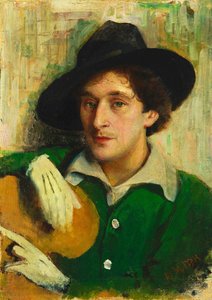
Marc Chagall
1887 - 1985 , Білорусь
Rövid tények
- Artistic Movement Or Style: Современный стиль
- Artists Or Movements Influenced By This Artist: ['Сюрреализм']
- Artists Who Influenced This Artist:
- Леон Бакст
- Дюманьи
- Date Of Birth: 6 július 1887
- Date Of Death: 28 március 1985
- Full Name: Marc Chagall
- Nationality: Білім беруші
- Notable Artworks:
- В городе Витебск
- Белая распятие
- Place Of Birth: Liozna, Беларусь

