Pénzvisszatérítési Garancia · 100 nap Ingyenes világszerte történő szállítás
449 587műalkotások 30 613művészek 4 660múzeumok 32nyelv
Catalogue entry

Fresh Widow

Oil On Canvas.

Fig. 1. Marcel Duchamp, Fresh Widow. Shown as the reproduction you are specifying: , .

§ 1Catalogue data

§ 2Abstract

A gyűjtemény leírása

A művész életrajza

Marcel Duchamp: Egy francia avant-garde művész, aki megváltoztatta az művészi alkotás értelmét és új irányokat mutatott be a modern művészet története során.

§ 3Commentary

Introduction to the Artist

Marcel Duchamp, a prominent figure in the art world, was born on July 28, 1887, in Blainville-Crevon, France. He is widely recognized for his significant contributions to the Dada movement and Surrealism. As an influential artist, he explored various artistic styles and mediums throughout his career, including painting, sculpture, ready-mades, and conceptual art.

The Painting: Fresh Widow

Fresh Widow, created by Duchamp in 1920, is an exceptional piece of artwork that embodies the essence of the Dada movement. This oil painting measures 64 x 45 cm and features a unique composition of black squares on a white background, resembling mourning crepe. The title itself is a pun, referencing French windows (Fenêtre Française) and their resemblance to widows in mourning attire.

Media and Style

Duchamp employed oil as the primary medium for Fresh Widow, allowing him to create a monochromatic palette that highlights the contrast between black and white. The geometric shapes and minimalistic design reflect Duchamp's inclination towards Conceptual Art, which prioritizes ideas over aesthetics.

Historical Context

The Fresh Widow painting was created during a pivotal time in art history when the Dada movement emerged as a reaction to World War I's devastation and disillusionment. The movement aimed to challenge traditional notions of art, culture, and society by incorporating unconventional materials and techniques.

Duchamp's Legacy

Marcel Duchamp's groundbreaking work has left an indelible mark on the art world. His exploration of various artistic styles and mediums has inspired countless artists, and his contributions to the Dada movement continue to influence contemporary art practices.

Conclusion

In conclusion, Fresh Widow by Marcel Duchamp is a remarkable piece of artwork that embodies the spirit of the Dada movement and showcases Duchamp's innovative approach to art-making. To learn more about this painting or explore other works by Marcel Duchamp, visit Fresh Widow at AllPaintingsStore.

Recommended Readings:

Kérdések és válaszok

Milyen színharmóniát mutat be „Fresh Widow”, Marcel Duchamp alkotása?

A „Fresh Widow”, Marcel Duchamp alkotása színei Discordant Palette harmóniát mutatnak be. A harmónia azt írja le, hogyan kapcsolódnak egymáshoz a színek.

Ismer-e más neveket a "Fresh Widow" alkotója, Marcel Duchamp?

Marcel Duchamp a következő más néven is ismert: Henri-Robert-Marcel Duchamp, Rrose Sélavy.

Hogyan épül fel a „Fresh Widow”, Marcel Duchamp alkotása színes kompozíciója?

A „Fresh Widow”, Marcel Duchamp alkotása színes kompozíció egy Statement kontrasztot és egy Discordant Palette harmóniát ötvöz.
§ 4The artist

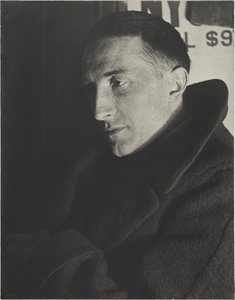
Marcel Duchamp

Marcel Duchamp

1887 - 1968, Franciaország

Quick facts about Marcel Duchamp

  • Artistic Movement Or Style:
    • Kubizmus
    • Dadaizmus
    • Szürrealizmus
  • Artists Or Movements Influenced By This Artist: ['Minimalizmus']
  • Date Of Birth: 28 július 1887
  • Date Of Death: 2 október 1968
  • Full Name: Marcel Duchamp
  • Nationality: Francia-amerikai
  • Notable Artworks:
    • Fúvóka
    • L.H.O.O.Q.
    • A Nagy Üveg
  • Place Of Birth: Blainville, Franciaország

A művész életrajza

Marcel Duchamp (1887–1968): A Revolutionary Spirit

Marcel Duchamp, born Henri-Robert-Marcel Duchamp in 1887 in Blainville-Crevon, Normandy, was more than an artist; he was a philosophical provocateur who fundamentally altered the course of modern art. His early life, though seemingly conventional – nurtured within a family that appreciated artistic expression with both brothers pursuing successful careers as artists – hinted at the iconoclasm to come. Duchamp initially pursued formal training, mastering traditional techniques and experimenting with post-impressionist styles. However, this academic foundation served not as an end in itself, but as a springboard for questioning the very nature of art, its purpose, and its definition. He wasn’t content merely to depict the world; he sought to challenge how we perceive it, and what constitutes artistic value. This restless intellectual curiosity would become the defining characteristic of his prolific career.

Early Life and Artistic Beginnings

Duchamp's formative years were marked by a familial tradition of artistic inclination. His father, Eugène Duchamp, was a notary, yet four of the six Duchamp children embraced art as their vocation. Jacques Villon, Marcel’s elder brother, established himself as a painter, demonstrating an early aptitude for visual expression. Raymond Duchamp-Villon followed suit, pursuing sculpture with considerable success. Marcel himself began experimenting with painting at a young age, producing *Portrait of Marcel Lefrançois* (1904), which showcased his nascent stylistic sensibilities and technical prowess. His studies at the École des Beaux-Arts in Paris yielded mixed results—he famously failed to pass the final exam—but this setback fueled his determination to forge his own artistic path, independent from established conventions.

Cubism: A Dialogue with Tradition

Duchamp’s initial engagement with Cubism, evident in works like *Portrait of Chess Players* (1911), represented a crucial step beyond purely decorative pursuits. He absorbed the influence of Picasso and Braque, adopting their innovative techniques for dissecting visual reality into fragmented planes and multiple perspectives—a deliberate departure from traditional representation. However, Duchamp didn’t simply replicate Cubist aesthetics; he interrogated its underlying principles, questioning whether it truly captured the essence of experience. The pervasive disillusionment stemming from World War I profoundly impacted his artistic vision, propelling him toward Dadaism as a reaction against perceived intellectual and moral failings.

Dadaism: Rebellion Against Reason

The horrors of World War I galvanized Duchamp’s rebellious spirit, leading him to embrace Dadaism—a movement born out of utter despair and vehement rejection of logic, reason, and the prevailing artistic values of the time. Dadaists sought to dismantle accepted norms through absurdity, chance, and provocation, rejecting any attempt at rational explanation or aesthetic judgment. Within this anarchic framework, Duchamp unleashed his most radical innovation: the ‘readymade’. This concept—taking an ordinary manufactured object and declaring it art—challenged the very definition of artistic skill and authorship. His seminal work, *Fountain* (1917), a porcelain urinal signed “R. Mutt,” epitomized Dada’s irreverence for convention and ignited a furious debate about the role of the artist in society.

The Readymades and Conceptual Art: A Paradigm Shift

Duchamp's embrace of the readymade irrevocably altered the trajectory of art history, establishing him as a progenitor of Conceptual Art—an artistic movement that prioritizes idea over material execution. Objects like *L.H.O.O.Q.* (1919), a postcard reproduction of the Mona Lisa defaced with a mustache and goatee, served as biting critiques of cultural icons and artistic traditions. These works weren’t judged on their visual beauty; they demanded contemplation and provoked viewers to confront uncomfortable questions about art's role in shaping our perceptions of reality. Duchamp’s unwavering conviction that art should reside in the mind—not merely in the eye—continues to resonate powerfully within contemporary artistic discourse. His legacy extends far beyond his individual creations, influencing countless artists who followed him and reshaping our understanding of what constitutes artistic expression.

Later Years: Surrealism and Continued Innovation

Duchamp’s artistic explorations continued throughout his life, encompassing film, sculpture, and collaborative projects with fellow artists like Man Ray. He participated in Surrealist exhibitions organized by André Breton, demonstrating an enduring fascination with the subconscious mind and its capacity to generate unexpected imagery. His monumental *Etant donnés* (1965–6), a reconstructed version of *The Large Glass*, represents his final artistic endeavor—a complex symbolic work that embodies his lifelong preoccupation with challenging conventions and provoking intellectual engagement. Marcel Duchamp died in Neuilly-sur-Seine on October 2, 1968, leaving behind an unparalleled body of work that cemented his place as one of the most influential figures in modern art history.

§ 5Comparanda

§ 6Questions

Gyors információk

  • Movement: Dadaism
  • Medium: Oil on canvas
  • Title: Fresh Widow
  • Dimensions: 64 x 45 cm
  • Artistic style: Minimalist, Conceptual

Művészeti kvíz

Minden kérdésre csak egy helyes válasz létezik.

Kérdés 1:
What is the primary artistic movement associated with Marcel Duchamp’s ‘Fresh Widow’?
Kérdés 2:
The title 'Fresh Widow' is a pun referencing which element of the painting?
Kérdés 3:
What medium did Duchamp primarily use to create ‘Fresh Widow’?
Kérdés 4:
The composition of ‘Fresh Widow’ – black squares on a white background – is most indicative of what artistic approach?
Kérdés 5:
During the time ‘Fresh Widow’ was created, what historical event significantly influenced the Dada movement?

§ 7Cite this entry

AllPaintingsStore.com, “Marcel Duchamp, Fresh Widow”, https://allpaintingsstore.com/hu/art/marcel-duchamp-fresh-widow-7YLJ65-en/ArtistReproduction/ (accessed 3 október 2026).

§ 8The reproduction

Kézzel készített olajfestmény reprodukció

Kézzel festett olajvastú vászon, az Ön által választott méretben és keretben, művészeink készítik meglévőre. ( Váltás nyomtatványra Áttérés digitális képre)

It is specified on the order sheet in the margin; the present state of that sheet reads as follows.

Fresh Widow

Reprodukciós technika

Reprodukció mérete

-

Kiváló mesterművész

Nagyobb részletesség, finomság és bővített gyártási idő

-

Reprodukció keretezése

-

-

A bármely oldalsó méretét túlszálaló 105 cm (kb. 41 hüvelyk) meghaladó műalkotások vagy reprodukciók esetében a keret összeszerelhető készletként, szétszerelve kerül szállításra. Ez a módszer biztosítja a biztonságos szállítást, és megakadályozza a szállítás során fellépő sérüléseket.

Szakmész összeszerelést igényel – ez nem DIY (önösszeszerelhető) termék.
A készletet egy tapasztalt keretező szakembernek kell összeszerelnie és a vásznat feszítenie kell, fa ragasztó (nem tartalmazza a csomag), vásznfeszítő fogó és szorítók használatával, amelyek a ragasztó száradásáig a keretrészeket egymáshoz vuôngjba tartják. A helytelen összeszerelés vagy a nem egyenletes vásznfeszítés maradandó károsíthatja a műalkotást, és ez nem része a garanciánknak.

  • A készlet tartalmazza az összes tömörfa rudat, pontosan méretre vágva.

  • A mellékelt csavarokkal, valamint a sarokszerekhez szükséges faütő ragasztóval kell összeszerelnie (ez nem tartalmazható a csomagban), így a keretrendezőnek külön kell beszereznie.

  • A csomag nem tartalmazza a szükséges professzionális eszközöket: egy vászonfeszítőt és klipseket a rácsok vízszintes tartásához a ragasztó megszáradásáig.

Fontos:
A sarokcsatlakozásokhoz fánylagra van szükség, a keretrudakat szorítókapcsokkal kell rögzíteni, amíg a rag teljesen meg nem szárad, a kész keretre feszített vászonhoz pedig vászonfeszítő fogat szükséges. Ezek egyike sem található meg a készletben. Kérjük, rendelés előtt győződjön meg róla, hogy rendelkezik tapasztalt keretező szakemberrel.

Névtábla

-

-

Védőréteg (Lakk)

Fényes lakk (intenzívabb színek, védelem a fény és a nedvesség hatása ellen)

-

Műalkotásom egyedi igényre szabása

Példák a módosíthatóságra: az arc kicserélése az ügyfél fotójára; háziállat hozzáadása (pl. macska helyett kutya); rejtett üzenet elhelyezése a háttérben; a háttér tájainak vagy elemeinek megváltoztatása.

-

Sürgős

Világszerte szóló szállítás () mindössze 3-4 hét alatt, a szokásos 5 hét helyett. (31 október). A minőség nem kérdőjelezhető.

-

Express szállítás

Világszerte elérhető szállítás területre 5 héten belül. (7 november).

A szállítás díja tartalmazza

Összesített ár

Ft 84488

Included with every order

  • Ingyenes globális expressz szállítás
  • Prémium minőségű len vászon
  • Teljes körű szállítási biztosítás
  • Vámvisszatérítési Garancia
  • Hiteles színarányosság garancia
  • 100 napos visszaküldési lehetőség (csak hibás termékek esetén)
  • 100% pénzvisszatérítési garancia
  • Több darab vásárlásakor kedvezmény
Order sheet