


 Előnézet
 Megosztás
 Megosztás
 Részletek
 Útmutató

 Letöltés
 Hasonló darabok
 X-ray felvétel
 Diavetítés
 Statisztika
The thicket


 Tovább olvasom
Az ezen az oldalon megjelenített műalkotások szerzői jogi védelem alatt állnak, ami azt jelenti, hogy törvényileg nem készíthetünk és nem adhatunk el belőlük pontos másolatokat. Ez a védelem olyan nemzetközi megállapodások alapján érvényesül, mint például a Berni Egyezmény és a nemzeti törvények által, beleértve azokat is, amelyeket meghatározott Az USA szerzői jogi törvénye – 17. cím.
Mint tiszteletes és törvényes alternatívát, olyan egyedi, kézzel festett alkotásokat kínálunk, amelyek az eredetiből merítnek inspirációt. Tapasztalt és professzionális művészeink alaposan tanulmányozzák az eredeti stílusát, hangulatát és művészeti esszenciáját, hogy egy olyan új, egyedi alkotást hozzunk létre, amely ugyanazt az érzést kelti – miközben önálló, eredeti alkotásként létezik.
Ez a módszer teljes mértékben megfelel a szerzői jogi szabályozásnak, mivel nem tartalmazza a védett műalkotás másolását vagy duplikálását. Ehelyett ez egy kreatív újinterpretáció – egy új festmény, amely az eredetivel való összefüggései miatt hatással van rá, de nem az az.
Kézzel készített olajfestmény reprodukció
Kézzel festett olajvastú vászon, az Ön által választott méretben és keretben, művészeink készítik meglévőre. ( Váltás nyomtatványra Áttérés digitális képre)




P118B Ft10

P118H Ft10

P118W Ft10

P438Z Ft10

P508JH Ft12

P508YH Ft12

P805H Ft10

P805Z Ft10

P919BZ Ft10

P919G Ft10

P919XJ Ft10

P959ZH Ft10

P968JZ Ft12

W106C Ft8

W218G Ft10

W218JH Ft8

W218Y Ft10

W307PJ Ft10

W316G Ft10

W316PJ Ft8

W316Y Ft10

W398PJ Ft8

W4111J Ft10

W500HY Ft15

W500JH Ft15

W692G Ft12

W849H Ft8

W940BG Ft15

W953PJ Ft8




Válasszon előre meghatározott méreteink közül, amelyek megfelelnek a műalkotás eredeti arányainak.

Írja be a kívánt szélességet és magasságot, hogy illeszkedjen a keretéhez vagy a falához. Mivel ez kézzel festett alkotás, egy eltérő formájú méret esetén a művész akár festhet is valamivel többet a kép körül, vagy korolathat is belőle — az Ön döntésének megfelelően. A festés megkezdése előtt küldünk egy digitális tervezetet jóváhagyásra. Az oldalon látható kép nem tartalmazza a végeredményt — csak a tervezet mutatja meg a valódi eredményt.
A rendelést követően a AllPaintingsStore.com csapata e-mailt küld az ügyfélnek az instrukciókért, és biztosít egy előnézeti képet (mockup).
Világszerte elérhető szállítás () 3-4 hét alatt a szokásos 5 hét helyett. (24 október). A minőség nem kérdőjelezhető.

Ingyenes globális expressz szállítás

Prémium minőségű len vászon

Teljes körű szállítási biztosítás

Vámvisszatérítési Garancia

Tökéletes színarányosság garancia

100 napos visszaküldési garancia (csak gyártási hibás termékek esetén)

100% pénzvisszatérítési garancia

Több darab vásárlásakor kedvezmény
 Az üvegkeretes opció csak 110 cm alatti méretben érhető el

The thicket
Reprodukciós technika
Reprodukció méretei
-


Összesített ár
Ft 82575
A Moment of Intimacy: Exploring Duchamp's "The Thicket"
Marcel Duchamp’s “The Thicket,” painted around 1918, is not merely a depiction of two women; it’s a carefully constructed meditation on the very essence of artistic representation and human connection. This evocative work, rendered in a predominantly blue palette, immediately draws the viewer into an intimate tableau – one of quiet contemplation and tender interaction. The scene unfolds with a remarkable simplicity: a kneeling woman, bathed in the cool tones of the background, receives a gentle touch from the standing figure behind her. The composition avoids overt narrative, instead focusing on capturing a fleeting moment, a shared experience that resonates with universal themes of vulnerability and affection.
Duchamp’s Revolutionary Approach
Created during a period of immense artistic upheaval – the rise of Cubism, Futurism, and the burgeoning Dada movement – “The Thicket” exemplifies Duchamp's radical departure from traditional representational art. Born Henri-Robert-Marcel Duchamp in 1887, he rejected the academic constraints of his early training, famously declaring that art should be ‘about the idea,’ not just a skillful rendering of reality. This philosophy is powerfully evident here; the painting’s power lies not in its technical execution – though it demonstrates a clear understanding of color and form – but in its ability to provoke thought about the nature of perception and artistic value. Duchamp's influence extends far beyond his immediate contemporaries, shaping the course of 20th-century art and paving the way for Conceptual Art.
Technique and Composition
The painting’s technique is characterized by a deliberate flatness of field and a restrained use of color. The blue tones dominate, creating a sense of melancholy and introspection. Duchamp's brushwork is precise yet subtly textured, avoiding any illusionistic depth. The composition itself is deceptively simple: the diagonal lines created by the figures and trees lead the eye through the scene, while the kneeling woman’s posture invites the viewer to step into the intimate space she occupies. The background trees, rendered with a degree of abstraction, serve not as mere decorative elements but as integral components of the overall composition, contributing to the painting's sense of depth and atmosphere.
Symbolism and Emotional Resonance
"The Thicket" resists easy interpretation, deliberately blurring the lines between representation and abstraction. The act of kneeling suggests submission or reverence, while the hand on the head represents comfort, protection, or perhaps even a subtle power dynamic. The blue palette contributes to an atmosphere of quiet contemplation and emotional vulnerability. Duchamp’s work invites viewers to engage with their own interpretations, recognizing that art's true value lies not in its literal depiction but in its ability to evoke emotion and stimulate thought. This piece is a testament to Duchamp's belief that the artist's role is to challenge conventions and provoke dialogue, making it a profoundly significant addition to the canon of modern art.
Gyakran Ismételt Kérdések
Hová sorolható a "The thicket" Marcel Duchamp életművében?
A "The thicket" megosztja Marcel Duchamp többi művével a Dadaist Conceptual Art stílust és a rögzített témákat: challenging artistic norms, dadaist critique of art, questioning traditional beauty”, “provocative conceptual statement”, “reflecting intellectual rebellion.
Hogyan ötvöli a technika és a stílus magát a "The thicket" alkotást?
A „The thicket”, Marcel Duchamp alkotása ötvözi a Acrylic On Canvas technikát a Dadaist Conceptual Art stílussal. A technika és a művészeti irány a mű elkészítését és stílusát írja le.
Hol vásárolhatok egy nyomtatványt a(z) „The thicket”, Marcel Duchamp alkotása alkotásból?
A „The thicket”, Marcel Duchamp alkotása nyomata közvetlenül a következő oldalon rendelhető meg: Minőségi műalkotás nyomat: minőségi giclée nyomat pamutvászonon vagy archiváló vászonpapíron.
Hasonló műalkotások


A művész életrajza
Marcel Duchamp (1887–1968): A Revolutionary Spirit
Marcel Duchamp, born Henri-Robert-Marcel Duchamp in 1887 in Blainville-Crevon, Normandy, was more than an artist; he was a philosophical provocateur who fundamentally altered the course of modern art. His early life, though seemingly conventional – nurtured within a family that appreciated artistic expression with both brothers pursuing successful careers as artists – hinted at the iconoclasm to come. Duchamp initially pursued formal training, mastering traditional techniques and experimenting with post-impressionist styles. However, this academic foundation served not as an end in itself, but as a springboard for questioning the very nature of art, its purpose, and its definition. He wasn’t content merely to depict the world; he sought to challenge how we perceive it, and what constitutes artistic value. This restless intellectual curiosity would become the defining characteristic of his prolific career.Early Life and Artistic Beginnings
Duchamp's formative years were marked by a familial tradition of artistic inclination. His father, Eugène Duchamp, was a notary, yet four of the six Duchamp children embraced art as their vocation. Jacques Villon, Marcel’s elder brother, established himself as a painter, demonstrating an early aptitude for visual expression. Raymond Duchamp-Villon followed suit, pursuing sculpture with considerable success. Marcel himself began experimenting with painting at a young age, producing *Portrait of Marcel Lefrançois* (1904), which showcased his nascent stylistic sensibilities and technical prowess. His studies at the École des Beaux-Arts in Paris yielded mixed results—he famously failed to pass the final exam—but this setback fueled his determination to forge his own artistic path, independent from established conventions.Cubism: A Dialogue with Tradition
Duchamp’s initial engagement with Cubism, evident in works like *Portrait of Chess Players* (1911), represented a crucial step beyond purely decorative pursuits. He absorbed the influence of Picasso and Braque, adopting their innovative techniques for dissecting visual reality into fragmented planes and multiple perspectives—a deliberate departure from traditional representation. However, Duchamp didn’t simply replicate Cubist aesthetics; he interrogated its underlying principles, questioning whether it truly captured the essence of experience. The pervasive disillusionment stemming from World War I profoundly impacted his artistic vision, propelling him toward Dadaism as a reaction against perceived intellectual and moral failings.Dadaism: Rebellion Against Reason
The horrors of World War I galvanized Duchamp’s rebellious spirit, leading him to embrace Dadaism—a movement born out of utter despair and vehement rejection of logic, reason, and the prevailing artistic values of the time. Dadaists sought to dismantle accepted norms through absurdity, chance, and provocation, rejecting any attempt at rational explanation or aesthetic judgment. Within this anarchic framework, Duchamp unleashed his most radical innovation: the ‘readymade’. This concept—taking an ordinary manufactured object and declaring it art—challenged the very definition of artistic skill and authorship. His seminal work, *Fountain* (1917), a porcelain urinal signed “R. Mutt,” epitomized Dada’s irreverence for convention and ignited a furious debate about the role of the artist in society.The Readymades and Conceptual Art: A Paradigm Shift
Duchamp's embrace of the readymade irrevocably altered the trajectory of art history, establishing him as a progenitor of Conceptual Art—an artistic movement that prioritizes idea over material execution. Objects like *L.H.O.O.Q.* (1919), a postcard reproduction of the Mona Lisa defaced with a mustache and goatee, served as biting critiques of cultural icons and artistic traditions. These works weren’t judged on their visual beauty; they demanded contemplation and provoked viewers to confront uncomfortable questions about art's role in shaping our perceptions of reality. Duchamp’s unwavering conviction that art should reside in the mind—not merely in the eye—continues to resonate powerfully within contemporary artistic discourse. His legacy extends far beyond his individual creations, influencing countless artists who followed him and reshaping our understanding of what constitutes artistic expression.Later Years: Surrealism and Continued Innovation
Duchamp’s artistic explorations continued throughout his life, encompassing film, sculpture, and collaborative projects with fellow artists like Man Ray. He participated in Surrealist exhibitions organized by André Breton, demonstrating an enduring fascination with the subconscious mind and its capacity to generate unexpected imagery. His monumental *Etant donnés* (1965–6), a reconstructed version of *The Large Glass*, represents his final artistic endeavor—a complex symbolic work that embodies his lifelong preoccupation with challenging conventions and provoking intellectual engagement. Marcel Duchamp died in Neuilly-sur-Seine on October 2, 1968, leaving behind an unparalleled body of work that cemented his place as one of the most influential figures in modern art history.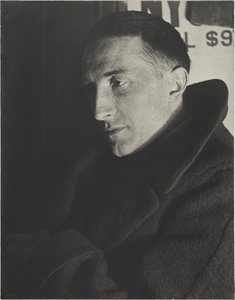
Marcel Duchamp
1887 - 1968 , Franciaország
Gyors információk
- Artistic Movement Or Style:
- Kubizmus
- Dadaizmus
- Szürrealizmus
- Artists Or Movements Influenced By This Artist: ['Minimalizmus']
- Date Of Birth: 28 július 1887
- Date Of Death: 2 október 1968
- Full Name: Marcel Duchamp
- Nationality: Francia-amerikai
- Notable Artworks:
- Fúvóka
- L.H.O.O.Q.
- A Nagy Üveg
- Place Of Birth: Blainville, Franciaország
Kapcsolódó cikkek

AllPaintingsStore.com F.A.Q.: Elevate Your Decor with Premium Textured Giclée Prints
Discover the distinction of AllPaintingsStore.com premium textured Giclée prints. Expertly crafted with archival 12-color pigments and museum-grade substrates, our prints offer unparalleled vividness for the discerning collector seeking luxury, durability, and timeless elegance.


