


 Megtekintés
 Küldés
 Megosztás
 Részletek
 Útmutató

 Letöltés
 Hasonló darabok
 X-ray felvétel
 Diavetítés
 Statisztika
Pulpit


 Összes részlet megjelenítése
Giclée / Műnyomat
Múzeumi minőségű giclée vagy vászonnyomat, gyors gyártással és rugalmas finomítási lehetőségekkel. ( Kézzel festett másolat rendelése Áttérés digitális képre)




P118B Ft10

P118H Ft10

P118W Ft10

P438Z Ft10

P508JH Ft12

P508YH Ft12

P805H Ft10

P805Z Ft10

P919BZ Ft10

P919G Ft10

P919XJ Ft10

P959ZH Ft10

P968JZ Ft12

W106C Ft8

W218G Ft10

W218JH Ft8

W218Y Ft10

W307PJ Ft10

W316G Ft10

W316PJ Ft8

W316Y Ft10

W398PJ Ft8

W4111J Ft10

W500HY Ft15

W500JH Ft15

W692G Ft12

W849H Ft8

W940BG Ft15

W953PJ Ft8




Válasszon előre meghatározott méreteink közül, amelyek megfelelnek a műalkotás eredeti arányainak.

Írja be a keretének vagy a falának megfelelő szélességet és magasságot. A nyomatot csak le lehet vágni, soha nem tehető nagyobbá, mint az eredeti kép, így egy eltérő alakú méretnél a kép egy része elveszik. Mielőtt bármit kinyatintanánk, küldünk egy digitális próbamodellt jóváhagyásra. Az oldalon látható kép nem tartalmazza a valós levágást — ezt csak a próbamodell mutatja meg.
Világszerte történő kiszállítás területére mindössze 2 hét alatt, a szokásos 4-5 hét helyett. (28 október)

Ingyenes globális expressz szállítás

Prémium minőségű len vászon

Teljes körű szállítási biztosítás

Vámvisszatérítési Garancia

Hiteles színarányosság garancia

100 napos visszaküldési lehetőség (csak hibás termékek esetén)

100% pénzvisszatérítési garancia

Több darab vásárlásakor kedvezmény
 Az üvegkeretes opció csak 110 cm alatti méretben érhető el

Pulpit
Giclée / Műnyomat
Reprodukció mérete
-


Összesített ár
Ft 20705
Hasonló műalkotások


A művész életrajza
A Master of Baroque Flourish: The Life and Art of Michiel van der Voort
Michiel van der Voort the Elder, born in Antwerp in 1667 and passing away in the same city in 1737, stands as a pivotal figure in the transition from High Baroque to the more refined sensibilities of the Rococo period. Though perhaps not a household name like Rubens or Van Dyck, his influence on Flemish sculpture—particularly in ecclesiastical art—was profound. Nicknamed “Welgemaeckt” (Well-Made), van der Voort earned this moniker through the exceptional quality and intricate detail of his work, which graced many of Flanders’ most important churches. His life unfolded during a period of relative stability following the tumultuous religious wars that had plagued the region, allowing for a flourishing of artistic patronage and expression. He wasn't merely a sculptor; he was a storyteller in stone, capable of imbuing his creations with both dramatic power and subtle emotional nuance.Early Training and Artistic Foundations
Van der Voort’s early life remains somewhat shrouded in mystery, but it is known that he received rigorous training within the Antwerp guild system. The artistic climate of Antwerp at this time was steeped in the legacy of masters like François Duquesnoy, whose dynamic compositions and anatomical precision undoubtedly shaped van der Voort's developing style. The influence of Peter Paul Rubens also looms large; while van der Voort worked primarily in sculpture, the Baroque master’s emphasis on movement, theatricality, and emotional intensity is clearly discernible in his work. He was a keen observer of the human form, striving for realism but always tempered by an inherent sense of grace and elegance. His early works demonstrate a mastery of technical skill—the ability to render textures, drapery, and anatomical detail with remarkable accuracy—but also hint at a burgeoning artistic personality eager to move beyond mere imitation.The Pulpits: A Defining Achievement
Van der Voort’s most celebrated achievements are undoubtedly his pulpits. These were not simply platforms for delivering sermons; they were elaborate architectural and sculptural ensembles designed to inspire awe and reverence. The pulpit he created in 1723 stands as a testament to his genius—a Gothic cathedral rendered in wood, teeming with intricate carvings of biblical scenes, allegorical figures, and symbolic motifs. The sheer complexity of these structures is astonishing, requiring not only exceptional sculpting skills but also a deep understanding of architectural principles and theological iconography. He didn't just carve the wood; he breathed life into it, creating dynamic compositions that drew the eye upwards towards the heavens. The pulpit’s design reflects a blend of late Baroque exuberance and a growing appreciation for Classical forms—a hallmark of van der Voort’s evolving style. These pulpits became focal points within their respective churches, transforming the act of worship into a more immersive and emotionally engaging experience.Beyond the Pulpit: Busts and Secular Works
While best known for his ecclesiastical commissions, van der Voort also produced a significant body of secular sculpture, including busts and allegorical figures. His bust of Jacobus Franciscus van Caverson, for example, showcases his ability to capture not only the physical likeness of his subject but also their inner character. These portraits are characterized by a remarkable degree of realism—the subtle nuances of expression, the texture of skin and hair, the weight of the gaze—but they also possess a certain idealized quality that elevates them beyond mere representation. He explored mythological and allegorical subjects as well, demonstrating his versatility and intellectual curiosity. These works reveal a sculptor deeply engaged with the artistic currents of his time, capable of adapting his style to suit a variety of themes and purposes.Legacy and Historical Significance
Michiel van der Voort’s influence extended far beyond his own lifetime. He trained numerous sculptors who carried on his legacy, disseminating his techniques and aesthetic principles throughout Flanders and beyond. His work represents a crucial link between the High Baroque exuberance of the 17th century and the more refined sensibilities of the Rococo period.- He bridged the gap between dramatic intensity and Classical elegance.
- His pulpits transformed church interiors into immersive spaces for worship.
- His busts showcase a remarkable ability to capture both physical likeness and inner character.

Michiel Van Der Voort
1667 - 1737 , Belgium
Rövid információk
- Full Name: Michiel van der Voort
- Nationality: Belgian
- Date Of Birth: 1667
- Date Of Death: 1737
- Place Of Birth: Antwerp, Belgium
- Notable Artworks: ['Pulpit Design']
- Artistic Movement Or Style: Baroque Sculpture
- Artists Who Influenced This Artist: ['Jacobus Franciscus']
Kapcsolódó cikkek

Theatricality & Triumph: Baroque Drama in Painting & Sculpture
Explore the dramatic world of Baroque art! Discover its history, defining characteristics, & lasting influence on painting & sculpture. Expert insights into Caravaggio, Zurbarán, and Bernini – plus high-quality reproductions at AllPaintingsStore.

A művészettörténet 10 legikonikusabb bronzszobra – AllPaintingsStore.com
Fedezze fel a művészettörténet 10 legikonikusabb bronzszobrát! Ismerje meg Rodint, Michelangelót és más mestereket. Luxus minőségű nyomatok otthonába – AllPaintingsStore.com.

The Enduring Form: Exploring Themes & Techniques in Sculpture Across Historical Periods
Explore the rich history of sculpture from ancient masterpieces to contemporary innovations. Discover key techniques, influential artists & investment potential for discerning art collectors.

The Dramatic Flourish: Exploring the Baroque Movement's Enduring Legacy in Art History
Explore the dramatic world of Baroque art! Discover iconic artists like Caravaggio & Rubens, defining techniques, and its lasting impact on art history. Expert insights for collectors & enthusiasts at AllPaintingsStore.
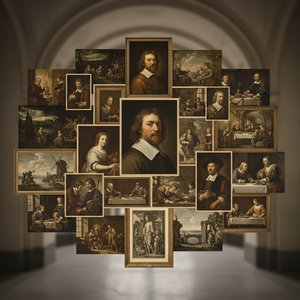
Rembrandt legikonikusabb művei: 25 mestermű a vászonon – AllPaintingsStore
Fedezze fel Rembrandt van Rijn 25 legikonikusabb művét! Barokk portrék, bibliai jelenetek és önarcképek a Holland aranykorból. Művészeti reprodukciók prémium minőségben – AllPaintingsStore. Explore the full collection online!

