Megtekintés
 Küldés
 Megosztás
 Részletek

 Letöltés
 Hasonló darabok
 X-ray felvétel
 Diavetítés
Everest Range

 Összes részlet megjelenítése
Giclée / Műnyomat
Múzeumi minőségű giclée vagy vászonnyomat, gyors gyártással és rugalmas finomítási lehetőségekkel. ( Kézzel festett másolat rendelése Kép letöltése)




P118B $10

P118H $10

P118W $10

P438Z $10

P508JH $12

P508YH $12

P805H $10

P805Z $10

P919BZ $10

P919G $10

P919XJ $10

P959ZH $10

P968JZ $12

W106C $8

W218G $10

W218JH $8

W218Y $10

W307PJ $10

W316G $10

W316PJ $8

W316Y $10

W398PJ $8

W4111J $10

W500HY $15

W500JH $15

W692G $12

W849H $8

W940BG $15

W953PJ $8




Válasszon előre meghatározott méreteink közül, amelyek megfelelnek a műalkotás eredeti arányainak.

Megadhat saját méreteket is egy konkrét kerethez vagy helyszínhez igazítva. Amennyiben a kiválasztott méret nem egyezik az eredeti kép arányokkal, a műalkotást le fogjuk vágni, vagy kiegészítjük a képet tükrözött vagy egyszínű szélekkel. A gyártás megkezdése előtt egy digitális tervezetet küldünk jóváhagyásra.
Kérjük, vegye figyelembe, hogy a képernyőn látható előnézet nem tükrözi a tényleges levágást vagy kiegészítést. Csak a tervezet mutatja pontosan a végső kompozíciót.
Bár az egyedi méretek is elérhetőek, az eredeti arányok megőrzése érdekében azt javasoljuk, hogy válasszon a előre meghatározott listából származó méretet.
Világszerte történő kiszállítás területére mindössze 2 hét alatt, a szokásos 4-5 hét helyett. (20 augusztus)

Ingyenes globális expressz szállítás

Prémium minőségű len vászon

Teljes körű szállítási biztosítás

Vámvisszatérítési Garancia

Hiteles színpontosság garancia

60 napos visszaküldési lehetőség (csak hibás termékek esetén)

100% pénzvisszatérítési garancia

Több darab vásárlása esetén kedvezmény
 Az üvegkeretes opció csak 110 cm alatti méretben érhető el

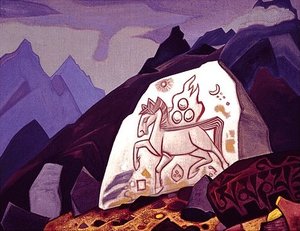
Everest Range
Giclée / Műnyomat
Reprodukció mérete
-


Összesített ár
$ 64
Gyűjthető leírása
A Symphony of Peaks and Spirit: Exploring Nicholas Roerich’s Everest Range
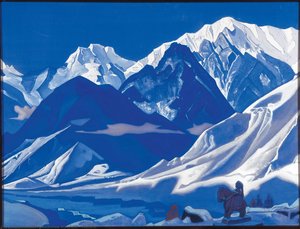
The painting “Everest Range,” attributed to Russian artist Nicholas Roerich (1874-1947), isn't simply a landscape depiction; it’s an embodiment of Roereich’s profound spiritual vision interwoven with masterful artistic execution. Captured in shades of ethereal blue and luminous white, the artwork transports viewers into the heart of the Himalayan mountain range—a region that held immense significance for Roerich personally and symbolically.- Subject Matter: The painting focuses on a panoramic vista showcasing several prominent peaks of Everest, conveying an impression of grandeur and majesty. Roereich’s meticulous attention to detail captures the textures of snow-covered summits and the subtle nuances of atmospheric haze.
- Style: Roerich's style aligns with Symbolism and Transcendental Impressionism—a movement that sought to express inner spiritual experience rather than merely representing external reality. This stylistic choice distinguishes “Everest Range” from more conventional landscape paintings of its time.
Technique: Layers of Color and Texture
Roereich employed a technique characterized by thin, translucent glazes applied over preparatory underdrawings. These glazes allowed for the gradual building up of color intensity while maintaining luminosity—a hallmark of his distinctive aesthetic. The artist skillfully utilized layering to create depth and dimension, mirroring the geological formations of Everest itself. Furthermore, Roereich’s meticulous brushwork contributes to a palpable sense of movement within the stillness of the mountain scene.Historical Context: Roereich's Quest for Cosmic Harmony
Created during Roereich’s extensive expeditions into Tibet and Mongolia—undertaken between 1928 and 1937— “Everest Range” reflects his fervent belief in the interconnectedness of humanity and the cosmos. Inspired by ancient Tibetan mysticism and shamanistic traditions, Roereich sought to depict landscapes imbued with spiritual energy—places where the veil between worlds was thin. The painting serves as a visual manifestation of his concept of ‘Harmonic Cosmos,’ representing an attempt to capture the sublime beauty of nature alongside its underlying spiritual essence.Symbolism: Peaks as Representations of Consciousness
The towering peaks depicted in “Everest Range” transcend their topographical accuracy; they function as symbolic representations of human consciousness striving for enlightenment. Roereich’s use of color—particularly the dominant blues—evokes feelings of serenity, contemplation, and transcendence. The luminous white highlights suggest purity and illumination—symbols central to Roereich's spiritual worldview.Emotional Impact: A Moment Frozen in Time
Ultimately, “Everest Range” succeeds in conveying a profound emotional resonance. It invites viewers to contemplate the immensity of nature alongside its inherent spirituality. The painting’s tranquil atmosphere and masterful execution inspire awe and reverence—capturing not just the visual splendor of Everest but also the intangible feeling of encountering something truly sublime.Hasonló műalkotások


A művész életrajza
A Life Immersed in Art and Spirit
Nicholas Roerich, born October 9, 1874, in the vibrant cultural heart of Saint Petersburg, Russia, was a figure whose life transcended the boundaries of artistic expression. He wasn’t merely a painter; he was an archaeologist, a writer, a philosopher, and a tireless advocate for peace and cultural preservation. His upbringing, steeped in both intellectual rigor – his father was a notary public – and artistic appreciation thanks to his mother, laid the foundation for a remarkably multifaceted career. Roerich simultaneously pursued studies in law and art at St. Petersburg University and the Imperial Academy of Arts beginning in 1893, demonstrating an early commitment to a broad understanding of the world. This dual path wasn’t contradictory for him; rather, it reflected a belief that artistic vision needed grounding in historical context and intellectual discipline. He received his artist designation in 1897 and completed his law degree the following year, setting the stage for a life dedicated to both creative exploration and reasoned action.The Allure of Symbolism and Theatrical Innovation
Roerich’s artistic development was profoundly shaped by the currents of Russian Symbolism, a movement that sought to evoke emotional and spiritual depths through evocative imagery and suggestive forms. He quickly became involved with Sergei Diaghilev's influential “World of Art” society, eventually assuming its presidency from 1910 to 1916. This association proved pivotal, exposing him to a network of innovative artists, composers, and thinkers who were redefining the landscape of Russian art. His early work revealed a fascination with archaeology and stage design, leading to groundbreaking collaborations with Diaghilev’s Ballets Russes. Roerich's designs for productions like Alexander Borodin's *Prince Igor* (1909) and, most famously, Igor Stravinsky’s revolutionary *The Rite of Spring* (1913), were not simply backdrops; they were integral components of the theatrical experience. He blended meticulous historical research with a bold imaginative vision, creating visually stunning environments that amplified the emotional power of the music and choreography. These designs weren't merely decorative; they were attempts to evoke primordial forces and ancient rituals, reflecting the Symbolist interest in myth and spirituality. His work was also influenced by apocrypha and medieval sectarian writings like the Dove Book, adding layers of esoteric meaning to his artistic creations.A Journey Towards Mysticism and Himalayan Visions
As Roerich’s career progressed, his paintings underwent a significant transformation, increasingly embracing mystical and spiritual themes. This shift was fueled by his growing interest in Theosophy and Eastern religions, philosophies that emphasized the interconnectedness of all things and the pursuit of inner wisdom. His *Architectural Studies* series (1904–1905) showcased not only his architectural skill but also a deep commitment to preserving cultural heritage, foreshadowing his later advocacy for protecting art during times of conflict. Recurring motifs began to emerge in his work: majestic landscapes, ancient cities shrouded in mystery, and figures imbued with spiritual significance like St. Panteleimon and Kuan Yin. He embarked on extensive travels throughout Central Asia, conducting archaeological research and documenting ancient cultures, experiences that deeply informed his artistic vision and reinforced his belief in the importance of cultural understanding. The Himalayas became a central subject in his paintings, representing not just a geographical location but a realm of profound spiritual power and enlightenment.Key Works & Continuing Relevance
- Saint Nicholas: A detailed monochrome mural showcasing medieval art and heraldic symbolism.
- City: Evocative depictions of ancient urban landscapes, reflecting his archaeological interests.
- Lake of the Nagas: A tempera painting blending symbolism and nature, exemplifying his unique artistic vision.
A Pioneer of Cultural Preservation
Beyond his artistic achievements, Nicholas Roerich was a passionate advocate for the protection of cultural treasures. Recognizing the devastating impact of war on art and architecture, he dedicated much of his life to promoting international cooperation in safeguarding these invaluable legacies. He spearheaded the creation of the Roerich Pact in 1935 – an international treaty designed to prevent the destruction of cultural objects during armed conflicts. This initiative garnered him widespread recognition and numerous nominations for the Nobel Peace Prize, underscoring his profound humanitarianism and commitment to a world where culture is valued and protected. His tireless efforts stand as a testament to the belief that art and heritage are essential components of human civilization, deserving of our utmost care and respect.
Roerich, Nicholas
1874 - 1947 , Oroszország
A művészről röviden
- Artistic Movement Or Style: Szimbolizmus, Spirituális művészet
- Artists Or Movements Influenced By This Artist: ['Orosz szimbolizmus']
- Artists Who Influenced This Artist:
- Diaghilev
- Stasov
- Date Of Birth: 1874. okt. 9.
- Date Of Death: 1947. dec. 13.
- Full Name: Nicholas Roerich
- Nationality: Orosz
- Notable Artworks:
- Szent Miklós
- Város
- Nagas-tavaszi tó
- Place Of Birth: Szentpétervár, Oroszország
Kapcsolódó cikkek

Nicholas Roerich: Mysticism, Mountains & the Search for Ageless Wisdom in Art
Explore the captivating art of Nicholas Roerich – a visionary painter whose Himalayan landscapes blend spiritual mysticism with cultural preservation. Discover his legacy & symbolism.

A Tájkép Mesterei: 10 Képi Gyöngyem a Természet Szerelemről – AllPaintingsStore.com
Fedezze fel a 10 legikonikusabb tájkép festményt! Monet, Van Gogh és más mesterek művei inspirálnak. Művészeti reprodukciók magas minőségben – tökéletes dekoráció otthonába. Böngésszen AllPaintingsStore.com-on!

A Romantikus Tájképfestészet 10 Legikonikusabb Műalkotása – AllPaintingsStore.com
Fedezze fel a romantikus tájképfestészet 10 legikonikusabb műalkotását! Caspar David Friedrich, J.M.W. Turner és más mesterek festményeinek története – inspiráló olajfestmények otthonába. AllPaintingsStore.com: múzeumi minőségű reprodukciók és egyedi dekorációk online.

Evocations of Place: A Historical Journey Through Landscape Art
Explore the rich history of landscape art with AllPaintingsStore. Discover renowned artists, movements like Impressionism & Romanticism, and expert guidance for collecting timeless pieces. Find your perfect serene escape today!

John Constable 25 Mesterműve: A Természet Lényege Vászonon – AllPaintingsStore.com
Fedezze fel John Constable 25 legszebb művészeti alkotását! Ismerje meg a romantika ikonikus tájképeit, Dedham Vale szépségét és a természet lenyűgöző ábrázolásait. Vászonkép reprodukcióinkkal eleganciát csempészhet otthonába – AllPaintingsStore.com