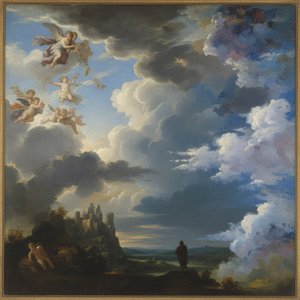
1931. Acrylic.

§ 1Catalogue data


§ 2Abstract
A gyűjtemény leírása
Nicholas Roerich’s ethereal River Chandra captures majestic mountains bathed in crimson hues beneath swirling white clouds—a stunning testament to the artist's Symbolist style and 1931 vision. Explore this captivating landscape reproduction and bring its timeless beauty into your home.
 Összes részlet megjelenítése
A művész életrajza
Roerich: szimbolista festő, a Balett Russe tervezője, a Himalája és a spirituális művészet mestere. Kulturális örökség védelmezője, a Roerich Paktum kezdeményezője.
§ 3Commentary
A Visionary Landscape: Exploring Nicholas Roerich’s “River Chandra”
- Subject Matter: This breathtaking landscape depicts the majestic Himalayas, rendered with an unparalleled sensitivity to light and atmosphere. The painting captures a serene vista of towering mountains enveloped in swirling clouds—specifically, two prominent white formations dominating the upper reaches of the composition.
- Style: Roereich’s artistic style is firmly rooted in Symbolism and Transcendental Impressionism. He eschewed purely representational depiction, opting instead to convey spiritual ideas and emotions through color and form. The painting embodies a profound connection between nature and the divine—a hallmark of his distinctive approach.
- Technique: Roereich employed a masterful glazing technique, layering thin washes of pigment over each other to achieve luminous effects and subtle tonal variations. This meticulous process allowed him to capture the ethereal quality of the mountains and clouds, creating an illusion of depth that transcends mere visual observation. The artist utilized tempera on canvas, a medium known for its durability and ability to preserve color vibrancy.
- Historical Context: Created in 1931, “River Chandra” emerged during Roereich’s prolific period of artistic exploration—particularly his engagement with Eastern mysticism and shamanic traditions. His travels throughout Tibet and Mongolia profoundly influenced his worldview and fueled his desire to depict landscapes imbued with spiritual significance. The painting reflects the broader cultural movement toward synthesizing Western scientific observation with Eastern philosophical contemplation.
- Symbolism: The white clouds symbolize purity, enlightenment, and transcendence—concepts central to Roereich’s cosmology. They represent the boundless expanse of consciousness and invite viewers to contemplate the mysteries of existence. The river itself symbolizes flow, continuity, and the cyclical nature of life, mirroring the spiritual journey toward self-realization.
- Emotional Impact: “River Chandra” evokes a feeling of awe and wonder—a visceral response to the grandeur of the natural world combined with an inner contemplation of its spiritual essence. It’s more than just a beautiful image; it's an invitation to reconnect with one’s own intuition and experience the transformative power of art.
Kérdések és válaszok
Mennyire harmonikusak „River Chandra”, Roerich, Nicholas alkotása színei?
A "River Chandra" színharmóniája úgy van rögzítve, mint Softly Mixed Palette.
Milyen hangulatot áraszt a "River Chandra"?
„River Chandra”, Roerich, Nicholas alkotása művészeti alkotásának összhangulata Ethereal. Ez az érzet foglalja össze a mű általános atmoszféráját.
Milyen szín vezeti a „River Chandra”, Roerich, Nicholas alkotása kompozícióját?
A „River Chandra”, Roerich, Nicholas alkotása domináns színe a Putty (#d5bfc4).


 Váltás nyomtatványra


 A bármely oldalsó méretét túlszálaló 105 cm (kb. 41 hüvelyk) meghaladó műalkotások vagy reprodukciók esetében a keret összeszerelhető készletként, szétszerelve kerül szállításra. Ez a módszer biztosítja a biztonságos szállítást, és megakadályozza a szállítás során fellépő sérüléseket.