Előnézet
 Megosztás
 Megosztás
 Részletek
 Útmutató

 Letöltés
 Hasonló darabok
 X-ray felvétel
 Diavetítés
 Statisztika
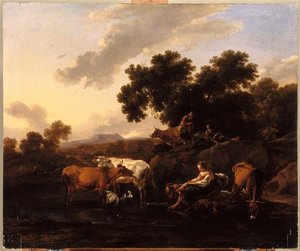
Herdsmen and Herds at a Waterfall
 Oil On Canvas
- WallArt
- Dutch Italianate Landscape
 1665
1665- Renaissance
 110.0 x 153.0 cm
 Gemäldegalerie Alte Meister
 Tovább olvasom
Kézzel készített olajfestmény reprodukció
Kézzel festett olajvastú vászon, az Ön által választott méretben és keretben, művészeink készítik meglévőre. ( Váltás nyomtatványra Áttérés digitális képre)




P118B $10

P118H $10

P118W $10

P438Z $10

P508JH $12

P508YH $12

P805H $10

P805Z $10

P919BZ $10

P919G $10

P919XJ $10

P959ZH $10

P968JZ $12

W106C $8

W218G $10

W218JH $8

W218Y $10

W307PJ $10

W316G $10

W316PJ $8

W316Y $10

W398PJ $8

W4111J $10

W500HY $15

W500JH $15

W692G $12

W849H $8

W940BG $15

W953PJ $8




Válasszon előre meghatározott méreteink közül, amelyek megfelelnek a műalkotás eredeti arányainak.

Ön megadhat saját méreteket egy adott kerethez vagy térhez igazításhoz. Ha a kiválasztott méret nem egyezik az eredeti kép arányával, akkor a műalkotást levágjuk, vagy további kézzel festett elemekkel meghosszabbítjuk a festményt. A gyártás megkezdése előtt küldünk Önnek egy digitális előnézetet jóváhagyásra.
Kérjük, vegye figyelembe, hogy a képernyőn megjelenő előnézet nem tükrözi a tényleges vágást vagy kiterjesztést. Csak az előnézet fog pontosan mutatni a végső kompozíciót.
Bár egyedi méretek állnak rendelkezésre, javasoljuk, hogy válasszon egy méretet az előre meghatározott listából az eredeti arányok megőrzése érdekében.
A rendelést követően a AllPaintingsStore.com csapata e-mailt küld az ügyfélnek az instrukciókért, és biztosít egy előnézeti képet (mockup).
Világszerte elérhető szállítás () 3-4 hét alatt a szokásos 5 hét helyett. (21 szeptember). A minőség nem kérdőjelezhető.

Ingyenes globális expressz szállítás

Prémium minőségű len vászon

Teljes körű szállítási biztosítás

Vámvisszatérítési Garancia

Tökéletes színarányosság garancia

100 napos visszaküldési garancia (csak gyártási hibás termékek esetén)

100% pénzvisszatérítési garancia

Több darab vásárlásakor kedvezmény
 Az üvegkeretes opció csak 110 cm alatti méretben érhető el

Herdsmen and Herds at a Waterfall
Reprodukciós technika
Reprodukció méretei
-


Összesített ár
$ 258
Nicolaes Pieterszoon Berchem: Herdsmen and Herds at a Waterfall – A Symphony of Light and Pastoral Ideal
The painting “Herdsmen and Herds at a Waterfall” by Nicolaes Pieterszoon Berchem, completed around 1665, transcends mere depiction; it embodies the very essence of Dutch Golden Age landscape artistry—a harmonious blend of Northern realism infused with Southern Romantic idealism. More than just capturing a picturesque vista, Berchem meticulously crafted an experience for the viewer, transporting them to a serene realm where humanity and nature coexist in perfect equilibrium. This essay delves into the intricacies of this masterpiece, exploring its stylistic choices, technical prowess, historical significance, and enduring emotional resonance.- Style & Influences: Berchem’s work firmly establishes itself within the burgeoning “Dutch Italianate Landscape” movement—a reaction to the prevailing Baroque style that prioritized dramatic grandeur and theatricality. Artists like Berchem sought inspiration from the idealized landscapes of Italy, particularly those championed by artists such as Claude Lorrain and Gaspar Piquerol, incorporating elements of classical mythology and biblical allegory into their compositions. This stylistic convergence reflects a broader cultural preoccupation with elevating the human spirit through contemplation of sublime beauty.
- Technique & Composition: Berchem’s masterful brushwork is immediately apparent upon observation. He employs a technique characterized by soft, luminous glazing—a layering process that builds up color gradually to achieve an ethereal glow—particularly evident in the dappled sunlight filtering through the foliage and illuminating the cascading waterfall. The artist meticulously renders textures with remarkable precision, capturing the rugged contours of the mountainside and the velvety sheen of moss-covered rocks. Furthermore, Berchem’s compositional arrangement guides the eye upward towards the distant peaks, creating a sense of depth and perspective that enhances the overall impression of grandeur.
- Historical Context: Created during Berchem's prolific artistic output—approximately 850 paintings attributed to him—the painting reflects the intellectual climate of its time. The Dutch Republic experienced unprecedented economic prosperity fueled by maritime trade, fostering a burgeoning appreciation for scientific inquiry and humanist ideals. Landscape painting served as a vehicle for conveying moral lessons and celebrating the virtues of piety and contemplation, aligning seamlessly with the dominant religious sensibilities of the era.
- Symbolism & Narrative: Beyond its aesthetic beauty, “Herdsmen and Herds at a Waterfall” carries profound symbolic weight. The depiction of shepherds tending their flocks symbolizes pastoral innocence and spiritual renewal—a recurring motif in Northern European art during the Baroque period. The waterfall itself represents purification and transcendence, mirroring biblical narratives of baptism and divine grace. Berchem’s subtle inclusion of mythological figures—such as Apollo and Daphne—further enriches the painting's narrative tapestry, hinting at themes of transformation and divine intervention.
- Emotional Impact: Ultimately, “Herdsmen and Herds at a Waterfall” succeeds in evoking a powerful emotional response from the viewer. The tranquil atmosphere conveyed by Berchem’s masterful brushwork inspires feelings of serenity and contemplation—a testament to his ability to capture the sublime beauty of nature and imbue it with spiritual significance. Its enduring appeal lies in its capacity to transport us beyond the mundane concerns of daily life, inviting us to immerse ourselves in a realm of idealized pastoral splendor.
Further Exploration & Reproduction Recommendations
To appreciate Berchem’s artistic vision fully, consider visiting Herdsmen and Herds at a Waterfall, a stunning reproduction available at AllPaintingsStore. Alternatively, delve deeper into Berchem's life and oeuvre by exploring Nicolaes Pieterszoon Berchem on Wikipedia: Nicolaes Pieterszoon Berchem. For a comprehensive understanding of his artistic legacy, consult Herdsmen and Herds at a Waterfall - BERCHEM, Nicolaes on the Web Gallery of Art.Hasonló műalkotások


A művész életrajza
A Golden Light on Pastoral Dreams: The Life and Art of Nicolaes Pietersz Berchem
Nicolaes Pietersz Berchem, a name that resonates with the idyllic landscapes of the Dutch Golden Age, was more than simply a painter; he was an architect of atmosphere, a weaver of dreams bathed in golden light. Born in Haarlem in 1620, his artistic journey unfolded during a period of remarkable transformation for the Netherlands – a time defined by burgeoning trade, scientific curiosity, and a profound appreciation for the natural world. Berchem didn’t merely depict landscapes; he crafted evocative scenes brimming with classical allusion, gentle narratives, and an enduring sense of tranquility that continues to captivate viewers centuries later. His story is one of artistic apprenticeship, Italian inspiration, and ultimately, a lasting legacy as a master of pastoral beauty. The foundations of his skill were laid within his own family, with his father, Pieter Claesz, being a celebrated still-life painter whose influence undoubtedly shaped Nicolaes’ early eye for detail and composition. However, young Nicolaes sought broader instruction, apprenticing under a remarkable succession of Dutch masters: Jan van Goyen, known for his subtle tonal landscapes; Pieter de Grebber, admired for his dynamic compositions; Jan Baptist Weenix, with whom he would later travel to Italy; Jan Wils, and Claes Cornelisz. Moeyaert. These diverse influences provided the bedrock for Berchem’s versatile style, and earned him the affectionate nickname “Berghem,” a playful twist on his family name originating from anecdotes within Van Goyen's workshop – or perhaps linked to his father’s hometown of Berchem near Antwerp – adding a touch of endearing informality to the esteemed artist.The Italianate Awakening
The pivotal moment in Berchem’s artistic development arrived between 1642 and 1645 when he journeyed to Italy alongside Jan Baptist Weenix. This was not merely a geographical relocation, but an immersion into a world that would profoundly shape his aesthetic vision. The Italian landscape, with its rolling hills, ancient ruins, and sun-drenched vistas, ignited a passion within Berchem. He filled sketchbooks with drawings of classical architecture, pastoral scenes, and the vibrant life he encountered, absorbing the romantic spirit of Italy and preparing to translate it onto canvas upon his return to the Netherlands. This experience marked a turning point, shifting his focus towards what would become known as the “Dutch Italianate” style – a genre characterized by idealized depictions of the Italian countryside infused with Northern European realism and meticulous attention to detail. He wasn’t simply copying; he was internalizing the essence of Italy, its light, its atmosphere, and its sense of timeless beauty, ready to reimagine it through his own unique artistic lens. The influence of Claude Lorrain, a prominent Italian landscape painter who spent most of his life in Italy, is particularly evident in Berchem’s work, as both artists shared a fascination with the idealized Arcadia – a mountainous region in the Peloponnesus of Greece that had become synonymous with an imaginary, idyllic Italian paradise. The literary works *Eclogae (Bucolica)* and *Georgica*, by the Italian poet Vergilius, evoking the Italian Arcadian landscape, were translated into Dutch by Karel van Mander and appeared in 1597 as *Bucolica en Georgica, dat is, Ossenstal en landtwerck*.A Prolific Master of Light and Atmosphere
Upon returning to Haarlem, Berchem quickly established himself as a leading figure in the Dutch Italianate landscape tradition. He produced an astonishing number of paintings – estimates range upwards of 850, though many works have been misattributed over time – demonstrating both his prolific output and enduring popularity. His landscapes are instantly recognizable for their warm, golden light, often bathing scenes in the soft glow of dawn or dusk. This luminosity isn’t merely a technical achievement; it imbues his paintings with a sense of tranquility, nostalgia, and timeless beauty. Berchem didn't simply paint what he *saw*; he painted how he *felt* about what he saw, creating an emotional resonance that draws the viewer into the scene. His compositions are carefully balanced, often featuring classical ruins as evocative reminders of the past, alongside figures engaged in pastoral activities – shepherds tending their flocks, travelers resting by a stream, or mythological scenes unfolding amidst idyllic settings. He was also highly sought after for his skill as a *staffage* painter, adding compelling human and animal figures to the works of other artists like Allaert van Everdingen and Gerrit Dou, enhancing their compositions with life and narrative detail. Notable examples include “Hunters Resting,” “A Peasant playing a Hurdy-Gurdy to a Woman and Child”, “Landscape with a Nymph and Satyr” and "The Ford".Legacy and Enduring Influence
Nicolaes Pietersz Berchem’s influence extended far beyond his own prolific career. He was a dedicated teacher, nurturing the talents of numerous artists including Abraham Begeyn, Johannes van der Bent, his son Nicolaes, Isaack Croonenbergh, Simon Dubois, Karel du Jardin, and even potentially Jan Frans Soolmaker. His artistic vision resonated with subsequent generations, notably impacting French Rococo painter Jean-Baptiste Pillement and the Dutch ‘Cleves Romanticism’ landscape painters like Barend Cornelis Koekkoek. He died in Amsterdam in 1683, leaving behind a legacy that continues to illuminate the world of art with its golden light and pastoral dreams. Berchem's contribution lies in his masterful bridging of Northern realism and Southern romanticism. He didn’t merely imitate Italian landscapes; he reinterpreted them through a distinctly Dutch lens, creating a unique style that celebrated both the beauty of nature and the human connection to it. His paintings continue to be admired for their technical skill, evocative atmosphere, and enduring appeal – a testament to his status as a true master of the Dutch Golden Age. His work remains a poignant reminder of a time when art sought not just to represent the world, but to elevate it.
Berchem Nicolaes
1620 - 1683 , Holland
Gyors információk
- Artistic Movement Or Style: Olasz stílusú tájképfestészet
- Artists Who Influenced This Artist:
- Jan van Goyen
- Pieter Claesz.
- Jan Baptist Weenix
- Date Of Birth: 1620. október 1.
- Date Of Death: 1683. február 18.
- Full Name: Nicolaes Pieterszoon Berchem
- Nationality: Hollandi
- Notable Artworks:
- Szántóföldi pásztorok
- Egy olasz kikötő tájképe
- Északi táj fantázia Tivoli fényében
- Place Of Birth: Haarlem, Hollandia
Kapcsolódó cikkek

Golden Light & Dutch Skies: Bringing the Magic of Dutch Golden Age Landscapes into Your Home
Transform your home with the breathtaking light of Dutch Golden Age landscapes. Discover how hand-painted oil reproductions of masterworks like Ruisdael and Vermeer bring timeless elegance, atmosphere, and soulful texture to modern interiors. Elevate your space with museum-quality art.

Nicolaes Berchem: Dutch Golden Age Pastoralism & the Evolution of Landscape Painting
Explore the captivating world of Nicolaes Berchem, a leading Dutch Golden Age painter. Discover his idyllic landscapes, masterful technique & lasting influence on art history. Learn more at AllPaintingsStore.
A Hollandi Aranykor 10 Mesterműve: Festmények, Amelyek Megváltoztatták a Világot | AllPaintingsStore.com
Fedezze fel a Hollandi Aranykor 10 legikonikusabb műalkotását! Rembrandt, Vermeer és más mesterek festményeinek történeteit olvassa el. Barokk stílus, klasszikus művészet – inspirálódjon otthon dekorációjához a AllPaintingsStore.com-on! Fedezze fel a teljes gyűjteményt online.

Charles Leickert: Capturing the Dutch Golden Age Light – A Comprehensive Study of Technique, Context, and Legacy
Explore the captivating winter landscapes of Charles Leickert, a master of Dutch Golden Age light & atmosphere. Discover his techniques, symbolism, and lasting legacy – a comprehensive study for art enthusiasts and collectors.

Golden Light & Dutch Skies: The Timeless Magic of Dutch Golden Age Landscapes
Discover the breathtaking beauty of Dutch Golden Age landscapes. Explore the mastery of light, chiaroscuro, and 17th-century realism through an expert art history lens, celebrating the enduring legacy of the Dutch Masters for discerning collectors and art lovers.