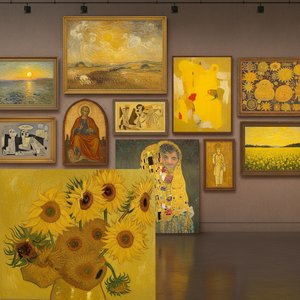
1962. Acrylic On Canvas.

§ 1Catalogue data


Ez a műalkotás szerzői jogi védelem alatt áll
Az ezen az oldalon megjelenített műalkotások szerzői jogi védelem alatt állnak, ami azt jelenti, hogy törvényileg nem készíthetünk és nem adhatunk el belőlük pontos másolatokat. Ez a védelem olyan nemzetközi megállapodások alapján érvényesül, mint például a Berni Egyezmény és a nemzeti jogszabályok által, beleértve azokat is, amelyeket meghatározott Az USA szerzői jogi törvénye – 17. cím.
Mint tiszteletes és törvényes alternatívát, olyan egyedi, kézzel festett alkotásokat kínálunk, amelyek az eredetiből merítnek inspirációt. Tapasztalt és professzionális művészeink alaposan tanulmányozzák az eredeti stílusát, hangulatát és művészeti esszenciáját, hogy egy olyan új, egyedi alkotást hozzunk létre, amely ugyanazt az érzést kelti – miközben önálló, eredeti alkotásként létezik.
Ez a módszer teljes mértékben megfelel a szerzői jogi szabályozásnak, mivel nem tartalmazza a védett műalkotás másolását vagy duplikálását. Ehelyett ez egy kreatív újinterpretáció – egy új festmény, amely az eredetivel való összefüggései miatt hatással van rá, de nem az az.
 További információk
§ 2Abstract
A gyűjtemény leírása
This artwork is a captivating exploration of Surrealist principles, featuring bold lines, vibrant yellow hues, and symbolic elements reflecting the myth of Danaë. Discover more about Picasso’s legacy and Surrealism's influence on modern art.
A művész életrajza
Pablo Picasso (1881-1973) forradalmázó spanyol festő és szobrász, a kubizmus mediatartója és a különböző stílusok mestere volt. Az olyan ikonikus művek alkotójaként, mint a Guernica és az Avignon nők, öröksége ma is inspirál.
§ 3Commentary
A Vision of Eros and Illusion – Danaë by Pablo Picasso
Pablo Ruiz Picasso’s “Danaë,” completed in 1962, stands as a cornerstone of Surrealism—a movement that dared to delve into the subconscious mind and transform dreams into tangible artistic expression. More than just a depiction of mythological narrative, this painting is an audacious assertion of Picasso's stylistic prowess and his unwavering fascination with exploring primal emotions.
- Subject Matter: The artwork portrays Danaë, daughter of Acrisius and Electra, seduced by Zeus in the guise of Argus Panoptes. This retelling of Greek mythology captures a moment of intense vulnerability and erotic tension—a confrontation between divine power and human desire.
- Style & Technique: Picasso’s signature Surrealist style is immediately recognizable through its bold geometric forms juxtaposed against vibrant, saturated colors. The artist employs a reductive approach, stripping away detail to emphasize essential shapes and lines, creating an unsettling yet captivating visual experience. Thick impasto—a technique involving applying paint thickly onto the canvas—adds textural richness and contributes to the painting’s dramatic impact.
The Yellow Canvas – Symbolism and Atmosphere
Dominating the composition is a striking expanse of yellow pigment, radiating warmth and energy. This deliberate choice transcends mere color; it embodies the very essence of desire—a luminous hue that pulsates with erotic fervor. Picasso skillfully utilizes this dominant shade to establish an atmosphere of suspense and intrigue, mirroring the psychological turmoil experienced by Danaë as she awaits Zeus’s arrival.
- Geometric Composition: The painting's structure is characterized by angular lines and geometric shapes—a hallmark of Surrealist aesthetics. These forms disrupt traditional perspective, forcing the viewer to confront unsettling realities hidden beneath a veneer of calm.
- Symbolic Elements: Beyond the central figure, Picasso incorporates subtle symbolic elements that enrich the narrative’s depth. The chair and couch serve as anchors for the scene, grounding it in domestic space while simultaneously highlighting Danaë's exposed vulnerability.
A Legacy of Surrealist Innovation
“Danaë” exemplifies Picasso’s commitment to pushing artistic boundaries—a refusal to adhere to conventional standards and a relentless pursuit of innovative expression. Its influence extends far beyond the realm of painting, inspiring artists across disciplines to explore the transformative potential of subconscious imagery.
- Contextual Significance: Created during Picasso’s prolific period in Surrealism, “Danaë” aligns perfectly with the movement's core tenets—challenging rational thought and embracing irrational impulses.
- Further Exploration: For a deeper understanding of Picasso’s artistic vision and the broader context of Surrealist art, consider visiting LaM – Lille Métropole Museum of Modern, Contemporary and Outsider Art (Discover the Lille Métropole Museum) where you can immerse yourself in masterpieces from this revolutionary era.
Related Works
Interested in exploring more of Picasso’s captivating oeuvre? Discover “The Abduction” (Pablo Picasso: The Abduction) and “Untitled (100)” (Pablo Picasso: Untitled (100)) for additional insights into his artistic evolution.
Kérdések és válaszok
Milyen elhelyezés és milyen térhelyiség ajánlott a(z) „Danae”, Pablo Picasso alkotása számára?
A "Danae" művet Accent célokra javasoljuk, a legalkalmasabb helyszín pedig egy Living Room.
Milyen hangulatot áraszt a "Danae"?
A „Danae”, Pablo Picasso alkotása hangulata Dramatic, ami segíthet a mű megfelelő környezetbe illesztésében.
Milyen nemzetiség áll a „Danae” Surrealism-ének hátterében?
A Surrealism korszak alkotása, a "Danae", egy Spanyolország-ban született művész munkája.



 Váltás nyomtatványra


 A bármely oldalsó méretét túlszálaló 105 cm (kb. 41 hüvelyk) meghaladó műalkotások vagy reprodukciók esetében a keret összeszerelhető készletként, szétszerelve kerül szállításra. Ez a módszer biztosítja a biztonságos szállítást, és megakadályozza a szállítás során fellépő sérüléseket.