Pénzvisszatérítési Garancia · 100 nap Ingyenes világszerte történő szállítás
449 564műalkotások 30 613művészek 4 660múzeumok 32nyelv
Katalógusbejegyzés

Cathedral

Acrylic On Canvas.

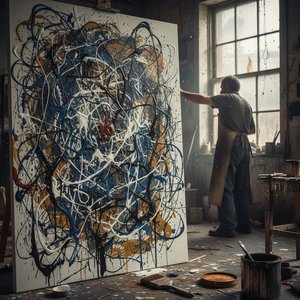
1. ábra. Jackson Pollock, Cathedral. A megadott reprodukciót mutatja: , .

§ 1Katalógusadatok

§ 2Absztrakt

A gyűjtemény leírása

Experience Jackson Pollock's 'Cathedral,' a mesmerizing drip painting showcasing his abstract expressionist style and innovative technique. A vibrant testament to artistic vision!

A művész életrajza

Paul Jackson Pollock (1912-1956) amerikai festő, az absztrakt expresszionizmus egyik alapítója. Drip technológiája, a képek spontán, dinamikus alkotásai, melyek a művész mozgását és érzelmeit tükrözik. #Pollock #AbsztraktExpresszionizmus

§ 3Magyarázat

Introduction to Jackson Pollock and Abstract Expressionism

Paul Jackson Pollock, known professionally as Jackson Pollock, was an American painter and a major figure in the abstract expressionist movement. He is best known for his unique style of drip painting, which he developed during the 1940s and 1950s. Abstract expressionism emerged in the mid-20th century as a reaction against conceptual art and minimal art of the 1970s, characterized by intense subjectivity and rough handling of materials.

The Cathedral: A Testament to Pollock's Artistic Vision

"Cathedral" is a classic example of Pollock's drip painting technique, which involves pouring or splattering paint onto an unprimed canvas laid on the floor. The result is a complex web of lines and shapes that create a dynamic and visually engaging composition. In this painting, Pollock uses a limited color palette, consisting primarily of black, white, and gray, to create a sense of depth and movement. "Cathedral" is a testament to Pollock's artistic vision and his ability to convey emotion through abstract forms. The painting invites the viewer to explore its intricate details and to find their own meaning in its complex web of lines and shapes. It is a masterpiece of abstract expressionism, demonstrating Pollock's unique style and his contribution to the development of modern art.

The Significance of Jackson Pollock's Art

Pollock's art has had a profound impact on the world of modern art. His drip painting technique was revolutionary, breaking away from traditional methods of painting and paving the way for new forms of expression. Pollock's work is also significant because it challenged conventional notions of what constitutes art. By creating abstract compositions that were open to interpretation, he encouraged viewers to engage with his work on a deeper level and to find their own meaning in his paintings.

Conclusion

"Cathedral" is a masterpiece of abstract expressionism, demonstrating Pollock's unique style and his contribution to the development of modern art. It invites viewers to explore its intricate details and to find their own meaning in its complex web of lines and shapes. As a testament to Pollock's artistic vision and his ability to convey emotion through abstract forms, "Cathedral" is an essential work for any art lover or collector.

Kérdések és válaszok

Milyen hangulatot áraszt a "Cathedral"?

„Cathedral”, Jackson Pollock alkotása művészeti alkotásának összhangulata Dramatic. Ez az érzet foglalja össze a mű általános atmoszféráját.

Mely művészeti irányba és mely korszakba sorolható a „Cathedral”, Jackson Pollock alkotása?

A „Cathedral”, Jackson Pollock alkotása a Abstract Expressionism irányzat alkotása, mely alkotójának Modern kor korszakából származik.

Hol találhatok egy útmutatót a(z) "Cathedral" alkotáshoz?

A „Cathedral”, Jackson Pollock alkotása Útmutató oldala egy kinyomtatható, kétoldalas információs adatlapot kínál: magát a műalkotást az azonosító táblázattal, egy időrendi sávot, amely a művész életkorába helyezi a alkotást, a művész további treballatait, a megmért színpalettát, valamint négy különböző stílusban, azonnal másolható idézeteket.

§ 4A művész

Jackson Pollock

Jackson Pollock

1912 - 1956, Egyesült Államok

Gyors információk Jackson Pollock művészről

  • Artistic Movement Or Style: Absztrakt expresszionizmus
  • Artists Or Movements Influenced By This Artist: ['Surrealizmus']
  • Artists Who Influenced This Artist: ['Thomas Hart Benton']
  • Date Of Birth: 1912. jan 28.
  • Date Of Death: 1956. aug 11.
  • Full Name: Paul Jackson Pollock
  • Nationality: Amerikai
  • Notable Artworks:
    • Number 1, 1950
    • Blue Poles
    • Convergence
  • Place Of Birth: Cody, Wyoming

A művész életrajza

Early Life and the Seeds of Innovation

Paul Jackson Pollock, born in Cody, Wyoming, in 1912, was a restless spirit from the outset. His early life was marked by frequent relocation as his father pursued work as a land surveyor across the vast landscapes of the American West. This itinerant existence instilled in young Pollock a deep connection to the natural world and an exposure to diverse cultures, particularly through encounters with Native American art during those surveying trips – impressions that would subtly permeate his artistic vision later in life. Though he never explicitly imitated Indigenous styles, the raw energy and spiritual resonance of these early experiences undoubtedly left their mark. Pollock’s formal artistic training began at the Manual Arts High School in Los Angeles, followed by studies at the Art Students League of New York under the tutelage of Thomas Hart Benton. Benton, a prominent figure in the Regionalist movement, emphasized rhythmic composition and narrative themes rooted in American life. While Pollock initially absorbed these lessons, his inherent inclination leaned toward more abstract explorations. He was also profoundly impacted by Mexican muralists like José Clemente Orozco, whose powerful depictions of social struggle resonated deeply with him. These early influences laid a foundation, but it was the burgeoning world of Surrealism that truly unlocked Pollock’s artistic potential.

The Birth of Action Painting and a Revolutionary Technique

The 1930s saw Pollock experimenting with various techniques, seeking alternatives to traditional brushwork. He began pouring paint, exploring its fluidity and unpredictable nature. However, it was around 1947 that his artistic trajectory underwent a radical transformation. Abandoning the easel altogether, Pollock laid canvases directly on the floor, initiating what would become known as his “drip technique.” He then proceeded to drip, splash, and fling paint onto the canvas from above, orchestrating a dynamic dance between artist, medium, and surface. This wasn’t merely about applying paint; it was about embodying the act of creation itself. Pollock's canvases became arenas for physical expression, capturing the immediacy of his gestures and emotions. The resulting paintings are characterized by their “all-over” composition – a lack of central focus that invites the viewer to explore the entire surface as a unified field of energy. Intricate networks of lines and colors intertwine, creating a visual complexity that is both captivating and challenging. He employed unconventional tools—sticks, knives, even syringes—to manipulate the paint in unpredictable ways, further emphasizing the spontaneous nature of his process.
  • He mixed unconventional materials into the paint, such as sand and tar.
  • His technique was a direct rejection of traditional brushwork and compositional rules.

Influence and Development

Pollock’s artistic journey wasn't solely defined by his groundbreaking drip technique. He drew inspiration from diverse sources, including the works of European modernists like Piet Mondrian and Wassily Kandinsky, as well as the vibrant murals of Mexican artists such as Diego Rivera. The influence of Surrealism is also evident in his early work, particularly his exploration of subconscious imagery and dreamlike landscapes. His time at the Art Students League under Thomas Hart Benton provided a crucial grounding in traditional painting techniques, which he later subverted to create his own unique style. His marriage to Lee Krasner was pivotal; she not only provided emotional support but also encouraged his artistic experimentation and helped him navigate the complexities of the New York art scene.

Iconic Works and Lasting Legacy

Pollock’s most celebrated works—such as Number 1, 1950 (Lavender Mist), One: Number 31, 1950, Blue Poles: Number 11, 1952, and *Convergence*—are testaments to his revolutionary technique. These paintings are not simply images; they are records of a performance, imbued with the artist’s physical presence and emotional intensity. The dynamic energy that emanates from these canvases is palpable, drawing viewers into a world of pure abstraction. Key Works:
  • Lavender Mist (1950)
  • One: Number 31 (1950)
  • Blue Poles (1952)
  • Convergence (1956)
His style transcends mere aesthetics; it's an exploration of process over product. Pollock sought to capture the immediacy of his actions and emotions on canvas, rejecting traditional notions of composition and representation. He delved into Jungian psychology, exploring archetypes and the subconscious in his art, seeking to tap into universal symbols and primal energies. Pollock’s impact on the history of art is immeasurable. He fundamentally altered the way artists approached painting, breaking free from easel-based methods and embracing a more performative approach. His work helped solidify New York City's position as a global center for modern art, shifting the focus away from European dominance. His influence can be seen in the work of countless artists who followed, including those associated with Color Field painting and later forms of abstract expressionism. Despite initial skepticism, Pollock’s legacy is now firmly established as one of the most important and influential figures in 20th-century art.

§ 5Hasonló alkotások

§ 6Kérdések

Gyors információk

  • Influences: Regionalism
  • Notable elements: Drip painting technique
  • Year: 1947
  • Artistic style: Action Painting
  • Dimensions: 89.06 x 181.61 cm
  • Title: Cathedral

Művészeti kvíz

Minden kérdésre csak egy helyes válasz létezik.

Kérdés 1:
What is the primary technique employed by Jackson Pollock in ‘Cathedral’?
Kérdés 2:
The color palette predominantly used in ‘Cathedral’ consists mainly of:
Kérdés 3:
Jackson Pollock is most associated with which art movement?
Kérdés 4:
What does the term ‘cathedra’ refer to in the context of a cathedral church?
Kérdés 5:
According to the description, what is a key characteristic of Pollock’s technique that distinguishes it from traditional painting methods?

§ 7Idérezze ezt a bejegyzést

AllPaintingsStore.com, “Jackson Pollock, Cathedral”, https://allpaintingsstore.com/hu/art/paul-jackson-pollock-cathedral-8EWJWD-en/ (megtekintve: 8 október 2026).

§ 8A reprodukció

Kézzel készített olajfestmény reprodukció

Kézzel festett olajvastú vászon, az Ön által választott méretben és keretben, művészeink készítik meglévőre. ( Váltás nyomtatványra Áttérés digitális képre)

A rendelési sammanbrató szélességi részén rögzítve van; a sammanbrató jelenlegi állapota a következőképpen hangzik.

Cathedral

Reprodukciós technika

Reprodukció mérete

-

Kiváló mesterművész

Nagyobb részletesség, finomság és bővített gyártási idő

-

Reprodukció keretezése

-

-

A bármely oldalsó méretét túlszálaló 105 cm (kb. 41 hüvelyk) meghaladó műalkotások vagy reprodukciók esetében a keret összeszerelhető készletként, szétszerelve kerül szállításra. Ez a módszer biztosítja a biztonságos szállítást, és megakadályozza a szállítás során fellépő sérüléseket.

Szakmész összeszerelést igényel – ez nem DIY (önösszeszerelhető) termék.
A készletet egy tapasztalt keretező szakembernek kell összeszerelnie és a vásznat feszítenie kell, fa ragasztó (nem tartalmazza a csomag), vásznfeszítő fogó és szorítók használatával, amelyek a ragasztó száradásáig a keretrészeket egymáshoz vuôngjba tartják. A helytelen összeszerelés vagy a nem egyenletes vásznfeszítés maradandó károsíthatja a műalkotást, és ez nem része a garanciánknak.

  • A készlet tartalmazza az összes tömörfa rudat, pontosan méretre vágva.

  • A mellékelt csavarokkal, valamint a sarokszerekhez szükséges faütő ragasztóval kell összeszerelnie (ez nem tartalmazható a csomagban), így a keretrendezőnek külön kell beszereznie.

  • A csomag nem tartalmazza a szükséges professzionális eszközöket: egy vászonfeszítőt és klipseket a rácsok vízszintes tartásához a ragasztó megszáradásáig.

Fontos:
A sarokcsatlakozásokhoz fánylagra van szükség, a keretrudakat szorítókapcsokkal kell rögzíteni, amíg a rag teljesen meg nem szárad, a kész keretre feszített vászonhoz pedig vászonfeszítő fogat szükséges. Ezek egyike sem található meg a készletben. Kérjük, rendelés előtt győződjön meg róla, hogy rendelkezik tapasztalt keretező szakemberrel.

Névtábla

-

-

Védőréteg (Lakk)

Fényes lakk (intenzívabb színek, védelem a fény és a nedvesség hatása ellen)

-

Műalkotásom egyedi igényre szabása

Példák a módosíthatóságra: az arc kicserélése az ügyfél fotójára; háziállat hozzáadása (pl. macska helyett kutya); rejtett üzenet elhelyezése a háttérben; a háttér tájainak vagy elemeinek megváltoztatása.

-

Sürgős

Világszerte szóló szállítás () mindössze 3-4 hét alatt, a szokásos 5 hét helyett. (6 november). A minőség nem kérdőjelezhető.

-

Express szállítás

Világszerte elérhető szállítás területre 5 héten belül. (13 november).

A szállítás díja tartalmazza

Összesített ár

Ft 84383

Minden rendelés mellé tartalmazva

  • Ingyenes globális expressz szállítás
  • Prémium minőségű len vászon
  • Teljes körű szállítási biztosítás
  • Vámvisszatérítési Garancia
  • Hiteles színarányosság garancia
  • 100 napos visszaküldési lehetőség (csak hibás termékek esetén)
  • 100% pénzvisszatérítési garancia
  • Több darab vásárlásakor kedvezmény
Rendelési adatlap