Pénzvisszatérítési Garancia · 100 nap Ingyenes világszerte történő szállítás
449 587műalkotások 30 613művészek 4 660múzeumok 32nyelv
Pénznem
    Nyelv
      Ateliér · Alapítva: 2015 · Paris, Francia
      AllPaintingsStore
      allpaintingsstore.com
      Catalogue entry

      Interior

      1888. Oil On Canvas, 92.0 x 73.0 cm.

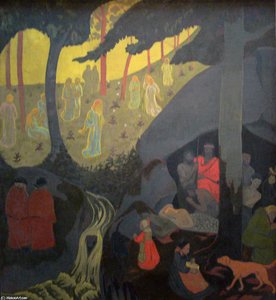
      Fig. 1. Paul Sérusier, Interior, 1888. Shown as the reproduction you are specifying: , .

      § 1Catalogue data

      § 2Abstract

      A gyűjtemény leírása

      A serene domestic scene captured through the lens of 1888 Realism, this oil painting by Paul Sérusier depicts intimate rural life with earthy tones and naturalistic detail, inviting you to bring this timeless moment home.

      A művész életrajza

      Paul Sérusier (1864-1927) francia festő, a Nabis csoport egyik alapítója és a modern művészet úgymeg kezdeteinek meghatározó alakja. Cloisonnism stílusával, a tájak és figurák expresszív ábrázolásával jelent meg, inspirálva ezzel a tömegét.

      § 3Commentary

      A Quiet Moment in Time: The Soul of Serusier's Interior

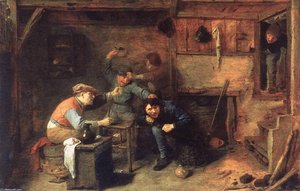
      In the quiet corners of art history, certain works possess the unique ability to freeze a moment of profound simplicity, turning the mundane into something eternal. Paul Sérusier’s 1888 masterpiece, Interior, is precisely such a work. This oil on canvas, measuring 92 x 73 cm, invites the viewer into a rustic, domestic sanctuary that feels both intimately personal and universally relatable. At first glance, we encounter a scene of humble labor: a man standing in contemplation, his figure anchored by a white shirt and dark trousers, while a woman sits upon the stone floor, her hands lost in the rhythmic, meditative task of working with yarn or thread. There is no grand drama here, only the soft, heavy pulse of everyday life, captured with a precision that honors the dignity of the working class.

      The atmosphere of the painting is thick with a sense of warmth and seclusion. Sérusier utilizes a palette dominated by earthy tones—deep browns, muted ochres, and soft shadows—which wrap the figures in a protective, domestic embrace. The lighting is masterfully subdued, suggesting the gentle, filtered glow of natural light entering a simple rural home. This careful manipulation of light does more than just illuminate the room; it creates a psychological depth, casting soft shadows that lend weight to the wooden walls and the textured stone floor. For the collector or interior designer, this piece offers a grounding presence, providing a sense of stability and historical weight to any curated space.

      The Intersection of Realism and the Nabis Movement

      While Interior is deeply rooted in the Realist tradition—a movement dedicated to the honest depiction of contemporary life—it also serves as a fascinating precursor to the avant-garde shifts that would soon redefine modern art. Sérusier, a pivotal figure in the Les Nabis group, was a painter who sought to bridge the gap between the tangible world and the symbolic essence of subject matter. In this work, we see the seeds of his later, more experimental styles, such as Cloisonnism and Synthetism. Although the figures are rendered with naturalistic detail, there is an emerging sense of flattened form and a deliberate arrangement of shapes that hints at the artist's growing interest in abstraction.

      The composition is a masterclass in balance and harmony. The placement of the man on the left and the woman on the right creates a visual equilibrium that guides the eye through the domestic landscape, from the texture of the wooden walls to the delicate movement of the thread. This structural integrity ensures that the painting remains visually captivating even upon repeated viewings. For those seeking to adorn a home with art that inspires contemplation, this piece acts as a window into a bygone era, offering a sophisticated blend of historical significance and aesthetic grace. It is not merely a depiction of a room; it is an invitation to slow down, to breathe, and to find beauty in the quietest rhythms of existence.

      Kérdések és válaszok

      Milyen helyet foglal el a művészettörténelemben a "Interior"?

      A „Interior”, Paul Sérusier alkotása a Realism irányzat alkotása, a 19th Century korszakból. Ezek együtt adják meg a mű helyét a művészettörténetben.

      Hol találhatók statisztikák a(z) „Interior”, Paul Sérusier alkotása kapcsán?

      A "Interior" számára létre van hozva egy Statisztikák oldal. Ez az oldal ábrázolja a mű és a művész többi alkotásának havi látogatottságát, országon és nyelvenként bontva.

      Milyen módon kapcsolódik a "Interior" stílusa alkotójának korához?

      A „Interior” a Realism irányzat alkotása, készítője pedig a 19. század korszakban tevékenykedett.

      § 4The artist

      Paul Sérusier

      Paul Sérusier

      1864 - 1927, Franciaország

      Quick facts about Paul Sérusier

      • Artistic Movement Or Style: Post-Impressionista
      • Artists Or Movements Influenced By This Artist:
        • Les Nabis
        • Synthetizmus
      • Artists Who Influenced This Artist:
        • Paul Gauguin
        • Maurice Denis
      • Date Of Birth: November 9, 1864
      • Date Of Death: October 7, 1927
      • Full Name: Louis-Paul-Henri Sérusier
      • Nationality: Francia
      • Notable Artworks:
        • A Talisman
        • L'averse
        • Melancholy
      • Place Of Birth: Párizs, Franciaország

      A művész életrajza

      Early Life and Artistic Beginnings

      Paul Sérusier, a pivotal figure in the development of modern art, was born on November 9th, 1864, in the heart of Paris. His upbringing within a prosperous middle-class family provided him with an exceptional education, beginning at the Lycée Fontane – later known as Lycée Condorcet – where he immersed himself in classical philosophy, Greek and Latin studies, and the sciences. This rigorous foundation laid the groundwork for his future artistic explorations. Notably, Sérusier’s classmates included fellow artists who would profoundly influence his trajectory, including Maurice Denis, Édouard Vuillard, and Ker-Xavier Roussel. His father, a successful businessman involved in the perfume industry, ensured that Paul received an upbringing conducive to pursuing his passions, recognizing his innate talent and desire for artistic expression. This familial support allowed Sérusier to dedicate himself fully to his burgeoning career as a painter, free from the constraints of immediate financial concerns.

      The Pont-Aven Years: Gauguin’s Influence and Cloisonnism

      Sérusier's artistic journey truly took shape during the summer of 1888 when he traveled to Pont-Aven in Brittany. This picturesque coastal village became a vibrant hub for artists seeking inspiration and camaraderie, drawing figures like Paul Gauguin, Emile Bernard, and many others. It was within this environment that Sérusier encountered Gauguin, whose artistic philosophy and techniques exerted a powerful influence on the young painter. Gauguin encouraged Sérusier to break free from traditional academic painting practices, urging him to embrace pure colors, simplified forms, and a more intuitive approach to representation. This guidance culminated in the creation of *Bois d’Amour* (1888), a seminal work that exemplifies Sérusier's pioneering use of cloisonnism – a technique characterized by bold, flat shapes delineated by dark outlines, creating an almost mosaic-like effect. This innovative approach marked a significant departure from conventional painting methods and foreshadowed the development of abstract art.

      The Nabis Movement: Synthesis and Symbolism

      Building upon his experiences at Pont-Aven, Sérusier became a key figure in the formation of the *Nabis* (meaning “prophet”) group – a collective of artists united by their desire to synthesize diverse artistic influences. Alongside Paul Gauguin, Maurice Denis, Pierre Bonnard, and Édouard Vuillard, the Nabis sought to create a new visual language that blended elements of Post-Impressionism, Symbolism, and even hints of Japanese aesthetics. The group met regularly at Ranson’s studio in Paris, engaging in spirited discussions about art, philosophy, and spirituality. Sérusier's work during this period reflected the Nabis’ emphasis on subjective experience, emotional expression, and a rejection of purely representational painting. He explored themes of melancholy, solitude, and the beauty of the natural world, often employing muted colors and evocative compositions to convey his inner state.

      Notable Works and Lasting Legacy

      Throughout his career, Sérusier produced a remarkable body of work that continues to captivate viewers today. Key pieces include *L’Averse* (1893), a poignant depiction of a rainy day in Paris, which showcases his mastery of color and composition; the portrait of Paul Ranson (1890), offering a glimpse into the artist's personality; and *The Snake Eaters* (1894), a striking image that reflects the group’s interest in symbolism and mythology. Later in life, Sérusier taught at the École Ranson, further disseminating his artistic ideas and mentoring a new generation of artists. He also published “ABC de la peinture” in 1921, a seminal work exploring the fundamentals of painting. Paul Sérusier passed away on October 7th, 1927, in Morlaix, leaving behind a legacy as one of the most influential figures in the transition from Impressionism to modern art. His pioneering use of abstraction and his contributions to the Nabis movement continue to inspire artists today.

      § 5Comparanda

      § 6Questions

      Gyors információk

      • Subject or theme: Domestic scene of everyday life
      • Year: 1888
      • Medium: Oil on canvas
      • Dimensions: 92 x 73 cm
      • Notable elements or techniques: Bold colors and flattened forms

      § 7Cite this entry

      AllPaintingsStore.com, “Paul Sérusier, Interior (1888)”, https://allpaintingsstore.com/hu/art/paul-serusier-interior-8XYQQS-en/ (accessed 3 október 2026).

      § 8The reproduction

      Kézzel készített olajfestmény reprodukció

      Kézzel festett olajvastú vászon, az Ön által választott méretben és keretben, művészeink készítik meglévőre. ( Váltás nyomtatványra Áttérés digitális képre)

      It is specified on the order sheet in the margin; the present state of that sheet reads as follows.

      Interior

      Reprodukciós technika

      Reprodukció mérete

      -

      Kiváló mesterművész

      Nagyobb részletesség, finomság és bővített gyártási idő

      -

      Reprodukció keretezése

      -

      -

      A bármely oldalsó méretét túlszálaló 105 cm (kb. 41 hüvelyk) meghaladó műalkotások vagy reprodukciók esetében a keret összeszerelhető készletként, szétszerelve kerül szállításra. Ez a módszer biztosítja a biztonságos szállítást, és megakadályozza a szállítás során fellépő sérüléseket.

      Szakmész összeszerelést igényel – ez nem DIY (önösszeszerelhető) termék.
      A készletet egy tapasztalt keretező szakembernek kell összeszerelnie és a vásznat feszítenie kell, fa ragasztó (nem tartalmazza a csomag), vásznfeszítő fogó és szorítók használatával, amelyek a ragasztó száradásáig a keretrészeket egymáshoz vuôngjba tartják. A helytelen összeszerelés vagy a nem egyenletes vásznfeszítés maradandó károsíthatja a műalkotást, és ez nem része a garanciánknak.

      • A készlet tartalmazza az összes tömörfa rudat, pontosan méretre vágva.

      • A mellékelt csavarokkal, valamint a sarokszerekhez szükséges faütő ragasztóval kell összeszerelnie (ez nem tartalmazható a csomagban), így a keretrendezőnek külön kell beszereznie.

      • A csomag nem tartalmazza a szükséges professzionális eszközöket: egy vászonfeszítőt és klipseket a rácsok vízszintes tartásához a ragasztó megszáradásáig.

      Fontos:
      A sarokcsatlakozásokhoz fánylagra van szükség, a keretrudakat szorítókapcsokkal kell rögzíteni, amíg a rag teljesen meg nem szárad, a kész keretre feszített vászonhoz pedig vászonfeszítő fogat szükséges. Ezek egyike sem található meg a készletben. Kérjük, rendelés előtt győződjön meg róla, hogy rendelkezik tapasztalt keretező szakemberrel.

      Névtábla

      -

      -

      Védőréteg (Lakk)

      Fényes lakk (intenzívabb színek, védelem a fény és a nedvesség hatása ellen)

      -

      Műalkotásom egyedi igényre szabása

      Példák a módosíthatóságra: az arc kicserélése az ügyfél fotójára; háziállat hozzáadása (pl. macska helyett kutya); rejtett üzenet elhelyezése a háttérben; a háttér tájainak vagy elemeinek megváltoztatása.

      -

      Sürgős

      Világszerte szóló szállítás () mindössze 3-4 hét alatt, a szokásos 5 hét helyett. (31 október). A minőség nem kérdőjelezhető.

      -

      Express szállítás

      Világszerte elérhető szállítás területre 5 héten belül. (7 november).

      A szállítás díja tartalmazza

      Összesített ár

      Ft 84358

      Included with every order

      • Ingyenes globális expressz szállítás
      • Prémium minőségű len vászon
      • Teljes körű szállítási biztosítás
      • Vámvisszatérítési Garancia
      • Hiteles színarányosság garancia
      • 100 napos visszaküldési lehetőség (csak hibás termékek esetén)
      • 100% pénzvisszatérítési garancia
      • Több darab vásárlásakor kedvezmény
      Fedezze fel a műalkotásokat témák, stílusok és jellemzők szerint csoportosítva.
      Order sheet