


 Előnézet
 Megosztás
 Megosztás
 Részletek
 Útmutató

 Letöltés
 Hasonló darabok
 X-ray felvétel
 Diavetítés
 Statisztika
Self-Portrait, Sitting by His Easel at Skagen Beach
 Oil On Panel
- Impressionism
 1902
1902- 19th Century
 54.0 x 45.0 cm
 Tovább olvasom
Kézzel készített olajfestmény reprodukció
Kézzel festett olajvastú vászon, az Ön által választott méretben és keretben, művészeink készítik meglévőre. ( Váltás nyomtatványra Áttérés digitális képre)




P118B $10

P118H $10

P118W $10

P438Z $10

P508JH $12

P508YH $12

P805H $10

P805Z $10

P919BZ $10

P919G $10

P919XJ $10

P959ZH $10

P968JZ $12

W106C $8

W218G $10

W218JH $8

W218Y $10

W307PJ $10

W316G $10

W316PJ $8

W316Y $10

W398PJ $8

W4111J $10

W500HY $15

W500JH $15

W692G $12

W849H $8

W940BG $15

W953PJ $8




Válasszon előre meghatározott méreteink közül, amelyek megfelelnek a műalkotás eredeti arányainak.

Ön megadhat saját méreteket egy adott kerethez vagy térhez igazításhoz. Ha a kiválasztott méret nem egyezik az eredeti kép arányával, akkor a műalkotást levágjuk, vagy további kézzel festett elemekkel meghosszabbítjuk a festményt. A gyártás megkezdése előtt küldünk Önnek egy digitális előnézetet jóváhagyásra.
Kérjük, vegye figyelembe, hogy a képernyőn megjelenő előnézet nem tükrözi a tényleges vágást vagy kiterjesztést. Csak az előnézet fog pontosan mutatni a végső kompozíciót.
Bár egyedi méretek állnak rendelkezésre, javasoljuk, hogy válasszon egy méretet az előre meghatározott listából az eredeti arányok megőrzése érdekében.
A rendelést követően a AllPaintingsStore.com csapata e-mailt küld az ügyfélnek az instrukciókért, és biztosít egy előnézeti képet (mockup).
Világszerte elérhető szállítás () 3-4 hét alatt a szokásos 5 hét helyett. (21 szeptember). A minőség nem kérdőjelezhető.

Ingyenes globális expressz szállítás

Prémium minőségű len vászon

Teljes körű szállítási biztosítás

Vámvisszatérítési Garancia

Tökéletes színarányosság garancia

100 napos visszaküldési garancia (csak gyártási hibás termékek esetén)

100% pénzvisszatérítési garancia

Több darab vásárlásakor kedvezmény
 Az üvegkeretes opció csak 110 cm alatti méretben érhető el

Self-Portrait, Sitting by His Easel at Skagen Beach
Reprodukciós technika
Reprodukció méretei
-


Összesített ár
$ 258
A Moment Frozen in Light: The Soul of Skagen
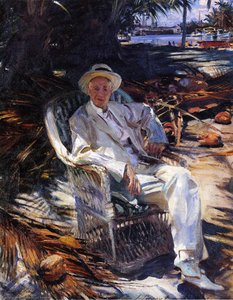
In the delicate interplay of salt spray and golden sunlight, Peder Severin Krøyer captures more than just a landscape; he captures a state of being. Self-Portrait, Sitting by His Easel at Skagen Beach, painted in 1902, serves as a profound window into the creative spirit during the height of the Skagen Painters' movement. The scene unfolds with a breathtaking sense of tranquility, where the artist himself is nestled within the coastal landscape, his gaze directed toward the canvas as if attempting to trap the very essence of the Danish coast. Through his masterful use of Impressionist techniques, Krøyer invites us into a world where the boundaries between the observer and the observed begin to dissolve, leaving only the pure, rhythmic pulse of the sea and the quiet dedication of the artist at work.
The composition is a masterclass in atmospheric depth. As one gazes upon the painting, the eye is led from the intimate details of the artist’s workspace—the texture of the easel and the focused posture of the man—out toward the expansive horizon. In the distance, two boats drift upon the water, acting as silent sentinels of the maritime life that defined the Skagen community. The presence of other figures, scattered subtly across the shoreline, adds a layer of human connection to the vastness of nature, suggesting that while the artist is in a moment of solitary creation, he is part of a larger, breathing ecosystem of life and light.
Technique and the Impressionist Legacy
Krøyer’s technical prowess is most evident in his ability to manipulate light, a hallmark of his celebrated Impressionist style. The painting is not merely a depiction of objects, but a study of how light interacts with every surface—the way it glints off the crest of a wave, the soft diffusion through the coastal air, and the subtle shadows cast by the artist’s hat and beard. Using oil on panel, Krøyer achieved a luminous quality that feels almost ethereal. His brushwork, while precise enough to maintain a sense of realism, possesses a fluid, rhythmic energy that mimics the movement of the wind and tide.
For the discerning collector or interior designer, this piece offers an unparalleled opportunity to introduce a sense of "blue hour" serenity into a living space. The color palette, dominated by the cool tones of the sea and the warm, sun-drenched hues of the sand, creates a sophisticated balance that complements both classical and contemporary decor. A high-quality reproduction of this work does more than decorate a wall; it brings an infusion of Scandinavian light and historical prestige into a room, acting as a focal point that inspires contemplation and calm.
A Legacy of Artistic Devotion
Beyond its aesthetic beauty, the painting carries a deep symbolic weight. It is a testament to the concept of the artist as a witness to nature. By placing himself within the frame, Krøyer bridges the gap between the internal world of human emotion and the external world of natural splendor. This self-portrait is an intimate dialogue with his own vocation, reflecting the dedication required to translate the fleeting beauty of a moment into a permanent legacy. To possess a reproduction of this masterpiece is to hold a piece of art history—a fragment of the golden age of Danish painting that continues to resonate with anyone who finds beauty in the quiet, luminous moments of life.
Hasonló műalkotások




A művész életrajza
A Life Painted in Light: The World of Peder Severin Krøyer
Peder Severin Krøyer, a name perhaps less instantly recognizable than some of his Impressionist contemporaries, nevertheless occupies a pivotal position within Scandinavian art. Born in Stavanger, Norway, on July 23, 1851, Krøyer’s early life was marked by an unusual upbringing; raised not by his biological mother but by her sister and brother-in-law, the Danish zoologist Henrik Nikolai Krøyer, he found himself transplanted to Copenhagen and immersed in a world of scientific inquiry alongside artistic cultivation. This unique foundation – a blend of observation, precision, and aesthetic sensibility – would profoundly shape his approach to painting. While details of his earliest years remain somewhat elusive, it’s clear that an aptitude for art was nurtured from a young age, leading to enrollment at the Royal Danish Academy of Art at just fourteen. He quickly distinguished himself, demonstrating a natural talent that promised a successful career.Early Training and Artistic Beginnings
Krøyer's artistic journey began firmly rooted in realism, particularly portraiture – a genre highly esteemed and financially viable during his formative years. He excelled at capturing likenesses, securing commissions that established him as a sought-after artist within Danish society. His father, Henrik Nikolai Krøyer, was a respected zoologist who instilled in Peder Severin a fascination with the natural world and meticulous attention to detail—qualities that would inform his artistic technique throughout his life. At the age of nine, Krøyer began his formal art education under private tutelage, developing foundational skills before entering Copenhagen’s Technical Institute at fifteen. This early exposure to both scientific observation and artistic practice proved invaluable, shaping his worldview and preparing him for his studies at the Royal Danish Academy of Art. In 1870 he was awarded the gold medal, as well as a scholarship—a testament to his exceptional talent and dedication. His debut as a painter was in 1871 at Charlottenborg with a portrait of Frans Schwartz, establishing him as an artist recognized by his peers.The Impressionist Influence
Between 1877 and 1881 Krøyer travelled extensively in Europe, meeting artists, studying art, and developing his skills and outlook. He stayed in Paris and studied under Léon Bonnat, absorbing the revolutionary ideas of Impressionism—Claude Monet, Alfred Sisley, Edgar Degas, Pierre-Auguste Renoir and Édouard Manet—artists who dared to abandon traditional techniques in favor of capturing fleeting moments of light and atmosphere. He wasn’t merely copying Impressionist styles; rather, he synthesized them with his existing realist training, creating a distinctive aesthetic that balanced meticulous observation with an evocative sense of mood and transience. This approach is evident in his landscapes—particularly those depicting the coastal scenery of Skagen—where he skillfully renders the interplay of light and color to convey not just visual information but also emotional resonance.Skagen: A Community of Artists and Inspiration
The turning point in Krøyer’s career – and arguably the period for which he is most celebrated – came with his discovery of Skagen, a remote fishing village on the northern tip of Denmark. He first arrived there in 1882, drawn by the dramatic coastal landscapes and the unique quality of light that bathed the region. Skagen quickly became more than just a location; it was an artistic haven, attracting a vibrant colony of painters, writers, and intellectuals. Krøyer became central to this community, forging close friendships with artists like Michael and Anna Ancher, and writer Holger Drachmann. He married Marie Triepcke in 1889, who herself was a talented painter and frequent subject in his work. It was at Skagen that Krøyer truly found his voice, producing some of his most iconic paintings—scenes of beach life, fishermen at work, and intimate portraits of his fellow artists. Summer Evening on Skagen’s Southern Beach, perhaps his most famous work, exemplifies this period; it's a masterful depiction of light, atmosphere, and the camaraderie of the artistic circle. The painting is not merely a representation of a scene but an evocation of a feeling – a sense of peace, belonging, and the ephemeral beauty of summer. ## Legacy and Recognition Krøyer died in 1909 at Skagen—a tragic end for a man who had dedicated his life to capturing the essence of artistic inspiration. His paintings continue to captivate audiences today, demonstrating Krøyer’s remarkable ability to blend realism with Impressionistic techniques—creating works that are both visually stunning and emotionally resonant. He remains a towering figure in Scandinavian art, remembered not only for his technical skill but also for his profound engagement with the human condition. His contribution lies not only in his artistic output but also in his role as a catalyst for cultural change—helping to establish Skagen as a center of artistic innovation and fostering a spirit of collaboration among artists. He is honored by museums across Denmark, including The Hirschsprung Collection and Skagens Museum, where visitors can immerse themselves in the world of Krøyer’s art and explore his enduring legacy.
peder severin kroyer
1851 - 1909 , Norvégia
Gyors információk
- Artistic Movement Or Style: Realizmus és impresszionizmus
- Artists Who Influenced This Artist: ['Claude Monet']
- Date Of Birth: 1851
- Date Of Death: 1909
- Full Name: Peder Severin Krøyer
- Nationality: Norvégia
- Notable Artworks:
- Hip, Hip, Hurrah!
- Nyári nap Skagenon Déli parton
- Tarde de verano en Skagen
- Place Of Birth: Stavanger
Kapcsolódó cikkek

Peder Severin Krøyer: Capturing the Ephemeral Light of Danish Modern Life
Explore the luminous world of Peder Severin Krøyer, a master of Danish Impressionism. Discover his iconic Skagen paintings, artistic evolution, and lasting legacy. Learn about collecting Krøyer's works & find museum-quality reproductions.

Evoking the Horizon: A Historical & Artistic Exploration of Coastal Scenes in Painting
Explore the rich history of coastal scenes in painting! Discover Impressionist masterpieces, American realism & contemporary visions. Learn about renowned artists and find your perfect seascape at AllPaintingsStore.

A 10 legikonikus impresszionista tájkép: Művészeti remekművek otthonába – AllPaintingsStore.com
Fedezze fel a 10 legikonikus impresszionista tájkép festményt! Monet, Renoir és más mesterek alkotásainak története. Olajfestmények, vászonképek otthonába – AllPaintingsStore.com kínálatából. Explore the full collection online!

Anna Ancher: Capturing Light & Domesticity in the Skagen Tradition
Discover Anna Ancher (1859-1935), a leading figure of the Skagen Painters. Explore her captivating depictions of domestic life, masterful use of light, and lasting legacy in Danish Impressionism. Learn more at AllPaintingsStore.

Impressionistic Realism's Finest: 10 Masterpieces for Your Home | AllPaintingsStore
Journey through Impressionistic Realism with 10 iconic masterpieces by Monet, Renoir & Van Gogh. Explore art history, techniques & find museum-quality reproductions for your home at AllPaintingsStore.com. Discover all masterpieces online!

