Pénzvisszatérítési Garancia · 100 nap Ingyenes világszerte történő szállítás
449 564műalkotások 30 613művészek 4 660múzeumok 32nyelv
Katalógusbejegyzés

Binodini

1949. Oil, 646.0 x 1070.0 cm. National Gallery of Modern Art.

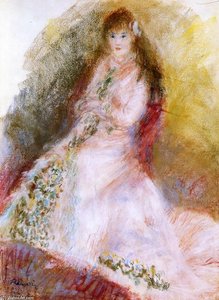
1. ábra. Ramkinkar Baij, Binodini, 1949. A megadott reprodukciót mutatja: , .

§ 1Katalógusadatok

Méretek
646.0 x 1070.0 cm

§ 2Absztrakt

A gyűjtemény leírása

Experience the captivating inner conflict of Binodini, a striking portrait by Ramkinkar Baij (1949), whose textured oil work invites you to discover its depth.

A művész életrajza

Ramkinkar Baij (1906-1980) was a pioneering Indian sculptor & painter, considered the father of modern Indian sculpture. Known for contextual modernism and blending Western & Indian styles in works like 'Santal Family'. Explore his legacy at AllPaintingsStore

§ 3Magyarázat

The Enigma in White: Exploring Ramkinkar Baij's 'Binodini'

To stand before Binodini is not merely to observe a portrait; it is to step into a moment of profound, suspended contemplation. This masterful work by Ramkinkar Baij captures the essence of an inner life—a beautiful young woman from Manipur’s aristocratic lineage, caught in what seems to be a delicate confluence of thought and emotion. The painting transcends simple representation, offering instead a window into the complexities of the human spirit. Baij, whose genius was rooted in his ability to perceive the soul beneath the surface, has gifted us an image that resonates with both timeless elegance and modern psychological depth.

Technique and Tactility: A Masterclass in Medium

What immediately draws the eye is the remarkable texture achieved by Baij. Executed in oil upon gunny cloth—a material choice that speaks to his daring experimentation—the surface itself becomes a participant in the artwork’s narrative. He has not simply painted; he has built up layers of pigment, creating a palpable, almost sculptural quality to the paint. This thick application gives the slim figure an undeniable volume, making the portrait feel intensely present. The artist's handling is both tender and robust, allowing the viewer to sense the physical weight of the subject while simultaneously feeling the lightness of her dilemma.

Symbolism and the Gaze: Capturing Inner Conflict

The subject’s gaze is perhaps the most arresting element. Her eyes, wide and directed straight out of the canvas, meet the viewer's scrutiny with an unnerving directness. It is a look that seems to ask questions without uttering a single word. The flowing white dress enhances this sense of ethereal vulnerability, contrasting beautifully with the warm, yellowish embrace of the background. Noticeable details, such as the books placed near her—one in the lower left and another toward the upper right—suggest themes of knowledge, study, or perhaps conflicting narratives vying for her attention. These elements anchor the emotional ambiguity, suggesting that her internal conflict is intellectual as much as it is emotional.

Historical Resonance and Enduring Appeal

Painted in 1949, Binodini stands at a pivotal moment in Indian modern art. Ramkinkar Baij was not content with tradition; he was forging a new visual language for India. This portrait exemplifies his lifelong fascination with capturing the subject’s inner self rather than merely documenting her outward appearance. For collectors and designers alike, this piece offers more than mere decoration; it is an heirloom of artistic revolution. Reproducing this work allows one to bring home not just a painting, but a tangible connection to the pioneering spirit of modern Indian art.

Kérdések és válaszok

Miért van az, hogy a "Binodini" szerzői jogi állapota ilyen?

A „Binodini”, Ramkinkar Baij alkotása még szerzői jog védi állapotban van. A szerzői jogi védelem időtartama a művész halálától számítódik, amely 1980 évben történt.

Hová sorolható a "Binodini" Ramkinkar Baij életművében?

A "Binodini" megosztja Ramkinkar Baij többi művével a Modern Indian Art stílust és a rögzített témákat: santiniketan art school influence, study of inner self, manipur aristocratic life depiction, exploration of human emotion.

Hogyan ötvölik a kontraszt és a harmónia a(z) "Binodini" alkotásban?

A "Binodini" alkotásban egy Gentle kontraszt párosul egy Unified Palette harmóniával.

§ 4A művész

Ramkinkar Baij

Ramkinkar Baij

1906 - 1980, India

Gyors információk Ramkinkar Baij művészről

  • Full Name: Ramkinkar Baij
  • Nationality: Indian
  • Date Of Birth: 1906
  • Date Of Death: 1980
  • Place Of Birth: Bankura, India
  • Notable Artworks:
    • Portrait of Rabindranath Tagore
    • Santal Family
    • Picnic
  • Artistic Movement Or Style: Contextual Modernism
  • Artists Who Influenced This Artist: ['Nandalal Bose']
  • Artists Or Movements Influenced By This Artist: ['Santiniketan']

A művész életrajza

The Architect of Modern Indian Form

Ramkinkar Baij (1906-1980) stands as a monumental figure in the annals of Indian art history, rightfully recognized as the progenitor of modern Indian sculpture. Born on May 25th, 1906, in the rustic landscapes of Bankura, West Bengal, Baij’s artistic journey was far more than a mere pursuit of aesthetic perfection; it was a profound mission to redefine the very essence of Indian identity through form and texture. His life's work served as a bridge between the ancient rhythms of rural India and the burgeoning international modernist movement, forging a path that allowed Indian art to breathe with a new, contemporary vitality.

His formative years were deeply rooted in the soil of Bengal, where the rhythms of village life and an innate appreciation for local craftsmanship first took hold. This early connection to the earth would later become the heartbeat of his sculptural language. A pivotal moment in his early development occurred when the journalist Ramananda Chatterjee recognized his raw talent through striking portraits of Indian freedom fighters during the Nonviolent Resistance movement. This exposure not only provided him with a platform but also infused his work with a sense of social urgency and nationalistic fervor that would persist throughout his career.

The Santiniketan Transformation

The trajectory of Baij’s genius was irrevocably altered when he enrolled at Visva-Bharati University in Santiniketan. Under the mentorship of the legendary Nandalal Bose, Baij entered an intellectual sanctuary where Rabindranath Tagore’s vision of liberation flourished. It was within this unique environment that he began to develop his signature style of contextual modernism. This approach was not a simple imitation of Western trends; rather, it was a sophisticated, deliberate fusion of European modernist principles—such as dynamic movement and expressive abstraction—with the indigenous traditions and lived realities of the Indian people.

As a faculty member at Kala Bhavana, the art school established by Tagore, Baij became a cornerstone of Santiniketan’s reputation as India’s premier center for modern art. He moved away from the polished, classical finishes of traditional sculpture, opting instead for rugged, textured surfaces that mirrored the raw energy of his subjects. His mastery extended beyond sculpture into painting, where he utilized oil to capture both the spiritual depth and the physical vitality of his surroundings. In works such as Picnic, one can witness this vibrant blend of European modernism and Indian classical tradition, a dynamic interplay of color and motion that invites the viewer into a spirited, outdoor narrative.

Legacy of the Earth and Spirit

The historical significance of Ramkinkar Baij lies in his courage to experiment with unconventional materials and themes. He was a pioneer in using cement and laterite, materials that allowed him to create large-scale, rugged figures that felt as though they had emerged directly from the Bengal landscape. His most iconic subjects were often the marginalized communities, such as the Santal tribes, whose strength and dignity he immortalized in works like Santal Family. Through these depictions, he elevated the everyday struggle of the rural populace to the level of high art.

Even in his more intimate portraiture, such as the evocative Binodini (1949), Baij demonstrated an unparalleled ability to convey complex human emotions and inner conflicts through textured, heavy brushwork. His legacy is defined by several key contributions:

  • The Creation of a New Language: He successfully synthesized Western modernism with Indian aesthetic sensibilities, creating a unique vernacular for 20th-century Indian art.
  • Material Innovation: By utilizing cement and other non-traditional media, he broke the shackles of classical sculpture and introduced a sense of raw, tactile reality.
  • Social Consciousness: His work served as a powerful medium for documenting the lives, struggles, and dignity of the Indian peasantry and freedom fighters.
  • Institutional Impact: As a teacher and leader at Kala Bhavana, he helped shape the pedagogical foundations of modern Indian art education.

Today, Ramkinkar Baij is remembered not just as a sculptor, but as a visionary who captured the soul of a nation in transition. His works remain enduring testaments to the power of art to bridge the gap between tradition and modernity, making him an eternal icon of the Indian modernist movement.

§ 5Hasonló alkotások

§ 6Kérdések

Gyors információk

  • Year: 1949
  • Subject or theme: Portrait of a young woman
  • Medium: Oil on gunny cloth
  • Title: Binodini

Művészeti kvíz

Minden kérdésre csak egy helyes válasz létezik.

Kérdés 1:
Who is the artist of the painting 'Binodini'?
Kérdés 2:
What medium was 'Binodini' painted on?
Kérdés 3:
The subject of the portrait, Binodini, belonged to which region?
Kérdés 4:
What characteristic is noted about Ramkinkar Baij's approach to painting portraits?
Kérdés 5:
What technique did Ramkinkar Baij use with paint on 'Binodini' to give it a tactile quality?

§ 7Idérezze ezt a bejegyzést

AllPaintingsStore.com, “Ramkinkar Baij, Binodini (1949)”, https://allpaintingsstore.com/hu/art/ramkinkar-baij-binodini-D3ZHCV-en/ArtistReproduction/ (megtekintve: 7 október 2026).

§ 8A reprodukció

Kézzel készített olajfestmény reprodukció

Kézzel festett olajvastú vászon, az Ön által választott méretben és keretben, művészeink készítik meglévőre. ( Váltás nyomtatványra Áttérés digitális képre)

A rendelési sammanbrató szélességi részén rögzítve van; a sammanbrató jelenlegi állapota a következőképpen hangzik.

Binodini

Reprodukciós technika

Reprodukció mérete

-

Kiváló mesterművész

Nagyobb részletesség, finomság és bővített gyártási idő

-

Reprodukció keretezése

-

-

A bármely oldalsó méretét túlszálaló 105 cm (kb. 41 hüvelyk) meghaladó műalkotások vagy reprodukciók esetében a keret összeszerelhető készletként, szétszerelve kerül szállításra. Ez a módszer biztosítja a biztonságos szállítást, és megakadályozza a szállítás során fellépő sérüléseket.

Szakmész összeszerelést igényel – ez nem DIY (önösszeszerelhető) termék.
A készletet egy tapasztalt keretező szakembernek kell összeszerelnie és a vásznat feszítenie kell, fa ragasztó (nem tartalmazza a csomag), vásznfeszítő fogó és szorítók használatával, amelyek a ragasztó száradásáig a keretrészeket egymáshoz vuôngjba tartják. A helytelen összeszerelés vagy a nem egyenletes vásznfeszítés maradandó károsíthatja a műalkotást, és ez nem része a garanciánknak.

  • A készlet tartalmazza az összes tömörfa rudat, pontosan méretre vágva.

  • A mellékelt csavarokkal, valamint a sarokszerekhez szükséges faütő ragasztóval kell összeszerelnie (ez nem tartalmazható a csomagban), így a keretrendezőnek külön kell beszereznie.

  • A csomag nem tartalmazza a szükséges professzionális eszközöket: egy vászonfeszítőt és klipseket a rácsok vízszintes tartásához a ragasztó megszáradásáig.

Fontos:
A sarokcsatlakozásokhoz fánylagra van szükség, a keretrudakat szorítókapcsokkal kell rögzíteni, amíg a rag teljesen meg nem szárad, a kész keretre feszített vászonhoz pedig vászonfeszítő fogat szükséges. Ezek egyike sem található meg a készletben. Kérjük, rendelés előtt győződjön meg róla, hogy rendelkezik tapasztalt keretező szakemberrel.

Névtábla

-

-

Védőréteg (Lakk)

Fényes lakk (intenzívabb színek, védelem a fény és a nedvesség hatása ellen)

-

Műalkotásom egyedi igényre szabása

Példák a módosíthatóságra: az arc kicserélése az ügyfél fotójára; háziállat hozzáadása (pl. macska helyett kutya); rejtett üzenet elhelyezése a háttérben; a háttér tájainak vagy elemeinek megváltoztatása.

-

Sürgős

Világszerte szóló szállítás () mindössze 3-4 hét alatt, a szokásos 5 hét helyett. (5 november). A minőség nem kérdőjelezhető.

-

Express szállítás

Világszerte elérhető szállítás területre 5 héten belül. (12 november).

A szállítás díja tartalmazza

Összesített ár

Ft 83772

Minden rendelés mellé tartalmazva

  • Ingyenes globális expressz szállítás
  • Prémium minőségű len vászon
  • Teljes körű szállítási biztosítás
  • Vámvisszatérítési Garancia
  • Hiteles színarányosság garancia
  • 100 napos visszaküldési lehetőség (csak hibás termékek esetén)
  • 100% pénzvisszatérítési garancia
  • Több darab vásárlásakor kedvezmény
Rendelési adatlap