Megtekintés
 Küldés
 Megosztás
 Részletek

 Letöltés
 Hasonló darabok
 X-ray felvétel
 Diavetítés
Kaplan and baum

 Összes részlet megjelenítése
Giclée / Műnyomat
Múzeumi minőségű giclée vagy vászonnyomat, gyors gyártással és rugalmas finomítási lehetőségekkel. ( Kézzel festett másolat rendelése Kép letöltése)




P118B $10

P118H $10

P118W $10

P438Z $10

P508JH $12

P508YH $12

P805H $10

P805Z $10

P919BZ $10

P919G $10

P919XJ $10

P959ZH $10

P968JZ $12

W106C $8

W218G $10

W218JH $8

W218Y $10

W307PJ $10

W316G $10

W316PJ $8

W316Y $10

W398PJ $8

W4111J $10

W500HY $15

W500JH $15

W692G $12

W849H $8

W940BG $15

W953PJ $8




Válasszon előre meghatározott méreteink közül, amelyek megfelelnek a műalkotás eredeti arányainak.

Megadhat saját méreteket is egy konkrét kerethez vagy helyszínhez igazítva. Amennyiben a kiválasztott méret nem egyezik az eredeti kép arányokkal, a műalkotást le fogjuk vágni, vagy kiegészítjük a képet tükrözött vagy egyszínű szélekkel. A gyártás megkezdése előtt egy digitális tervezetet küldünk jóváhagyásra.
Kérjük, vegye figyelembe, hogy a képernyőn látható előnézet nem tükrözi a tényleges levágást vagy kiegészítést. Csak a tervezet mutatja pontosan a végső kompozíciót.
Bár az egyedi méretek is elérhetőek, az eredeti arányok megőrzése érdekében azt javasoljuk, hogy válasszon a előre meghatározott listából származó méretet.
Világszerte történő kiszállítás területére mindössze 2 hét alatt, a szokásos 4-5 hét helyett. (16 augusztus)

Ingyenes globális expressz szállítás

Prémium minőségű len vászon

Teljes körű szállítási biztosítás

Vámvisszatérítési Garancia

Hiteles színpontosság garancia

60 napos visszaküldési lehetőség (csak hibás termékek esetén)

100% pénzvisszatérítési garancia

Több darab vásárlása esetén kedvezmény
 Az üvegkeretes opció csak 110 cm alatti méretben érhető el

Kaplan and baum
Giclée / Műnyomat
Reprodukció mérete
-


Összesített ár
$ 64
Gyűjthető leírása
A Singular Vision of Reality: René Magritte’s “Kaplan and Baum”
René Magritte's "Kaplan and Baum," published in 1983 by II Editions International Investor, Inc., stands as a cornerstone of Surrealist art—a deceptively simple image brimming with philosophical inquiry into perception and the elusive nature of truth. This meticulously reproduced catalogue raisonné delves into the artist’s groundbreaking exploration of visual representation, offering invaluable insight for scholars and collectors alike.- Subject Matter: The artwork depicts a solitary hand resting on a vibrant orange surface, dominated by two prominent red fingernails. Its outstretched posture invites contemplation, creating an immediate connection with the viewer.
- Style & Technique: Magritte’s signature style—characterized by meticulous detail and unsettling juxtapositions—is evident in the precise rendering of the hand and nail texture. The use of etching in colors contributes to a subtle luminosity that enhances the image's enigmatic quality.
- Historical Context: Produced during Magritte’s prolific period, “Kaplan and Baum” aligns with his broader preoccupation with challenging conventional notions of reality. It echoes themes explored in works like "The Lovers," where Magritte dismantles romantic ideals through paradoxical imagery.
Symbolism & Conceptual Depth
Beyond its aesthetic appeal, “Kaplan and Baum” operates on a deeper symbolic level. The orange background serves as a neutral canvas against which the red nails command attention—representing perhaps an insistent intrusion of the visible into the realm of subconscious thought. As Gilbert E. Kaplan and Timothy Baum eloquently articulate in their catalogue, Magritte’s intention was not merely to depict what is seen but to provoke reflection on how we perceive and interpret the world around us. The hand itself symbolizes vulnerability and openness, mirroring Magritte's artistic quest for authenticity amidst illusion.The Reproduction & Its Significance
AllPaintingsStore.com’s faithful reproduction captures the essence of Magritte’s original etching, preserving its textural nuances and subtle color palette. Offered in various sizes, this print allows enthusiasts to experience the profound impact of Surrealist art firsthand—bringing a piece of Belgian artistic heritage into any interior space. Furthermore, exploring the catalogue raisonné provides invaluable context for appreciating Magritte's contribution to 20th-century visual culture.Further Exploration
Interested in delving deeper into René Magritte’s oeuvre? Visit the Magritte Museum in Brussels—a treasure trove of Surrealist masterpieces—and explore related articles examining his artistic philosophy and enduring legacy. Don't miss the opportunity to acquire a stunning reproduction of “Kaplan and Baum” from AllPaintingsStore.com, securing a timeless emblem of artistic innovation.


A művész életrajza
Early Life and the Seeds of Surrealism
René Magritte, born René François Ghislain Magritte on November 21, 1898, in Lessines, Belgium, emerged into a world that would profoundly shape his enigmatic artistic vision. His early years were marked by an unsettling event – the suicide of his mother when he was just thirteen. The image of her body being recovered from the River Sambre, with her dress obscuring her face, became a haunting motif that would subtly permeate his later work, manifesting in veiled figures and a persistent exploration of hidden realities. This early trauma instilled within him a fascination with mystery, loss, and the unsettling power of what remains unseen. While details of his childhood remain somewhat elusive, it’s clear this formative experience laid the groundwork for his lifelong questioning of perception and representation. He began drawing lessons at age ten, revealing an innate inclination towards visual expression, but initially explored Impressionism before embarking on a path that would lead him to become one of the most significant figures in Surrealist art.Artistic Development and Influences
Magritte’s artistic journey was not immediate or straightforward. He studied at the Académie Royale des Beaux-Arts in Brussels, yet found its traditional methods stifling. His early work experimented with Futurism and Cubism, absorbing elements of these avant-garde movements but ultimately rejecting their purely formal concerns. It wasn't until encountering Giorgio de Chirico’s painting *The Song of Love* in 1922 that Magritte discovered a resonance that would irrevocably alter his artistic course. De Chirico’s dreamlike landscapes and unsettling juxtapositions unlocked within Magritte a new way of seeing – a world where the familiar could be rendered strange, and the ordinary imbued with profound mystery. This encounter sparked his commitment to Surrealism, though he often maintained a unique distance from its more overtly psychological or automatic approaches. He preferred a meticulous, almost clinical precision in his painting, using realistic techniques to depict illogical scenarios.The Heart of Surrealism: Challenging Reality
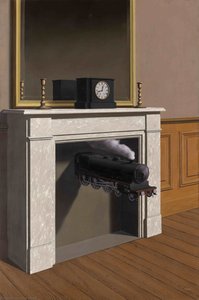
By 1926, Magritte had fully embraced the tenets of Surrealism, producing *Le Jockey Perdu (The Lost Jockey)*, widely considered his first truly surrealist work. However, his brand of Surrealism was distinct. He wasn’t interested in exploring the subconscious through free association or dream imagery in the manner of some of his contemporaries. Instead, Magritte sought to challenge viewers' perceptions of reality by presenting ordinary objects in unexpected contexts, forcing them to question their assumptions about the world around them. Iconic works like *The Treachery of Images (This is not a pipe)* (1929) brilliantly deconstructs the relationship between image and object, reminding us that a representation is never the thing itself. *Les Amants (The Lovers)* (1927-1928), with its shrouded figures, echoes the trauma of his mother’s death while simultaneously exploring themes of concealment and intimacy. *Time Transfixed* (1938) presents a locomotive bursting through a brick wall, disrupting our sense of space and time. And *The Human Condition* (1933), a canvas within a canvas, blurs the boundaries between representation and reality, prompting us to consider how we perceive and interpret the world.Later Life, Recognition, and Enduring Legacy
Despite initial struggles for recognition, Magritte’s work gradually gained prominence, particularly in the United States with exhibitions in 1936 and later retrospective shows at the Museum of Modern Art (1965) and the Metropolitan Museum of Art (1992). He remained politically engaged throughout his life, advocating for artistic autonomy. He continued to refine his signature style, exploring themes of repetition, illusion, and the power of language in paintings that are both intellectually stimulating and visually arresting. Magritte died on August 15, 1967, leaving behind a body of work that continues to captivate and challenge audiences worldwide. His influence extends far beyond the realm of painting, impacting pop art, minimalist art, conceptual art, and even advertising and film. Today, his paintings are held in major museum collections around the globe, including the Musées royaux des beaux-arts de Belgique in Brussels, which houses the Magritte Museum – dedicated entirely to his work and boasting the world’s largest collection of his creations.- Museum Collections: Musées royaux des beaux-arts de Belgique, Brussels; Magritte Museum.
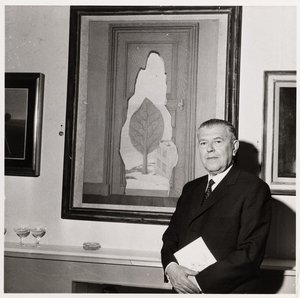
Magritte
1898 - 1967 , Belgium
A művészről röviden
- Artistic Movement Or Style: Szürrealizmus
- Artists Or Movements Influenced By This Artist:
- Pop art
- Minimalista művészet
- Artists Who Influenced This Artist: ['Giorgio de Chirico']
- Date Of Birth: November 21, 1898
- Date Of Death: August 15, 1967
- Full Name: René François Ghislain Magritte
- Nationality: Belga
- Notable Artworks:
- Les Amants
- A kép árulása
- Idő vetve
- Place Of Birth: Lessines, Belgium
Kapcsolódó cikkek

Pop Surrealism Trend Forecast: Integrating Bold Pop Art and Dreamlike Fantasy into Modern Hospitality Design
Elevate hospitality interiors with Pop Surrealism. Discover how to integrate bold pop art and dreamlike fantasy into hotel design through professional-grade, hand-painted oil reproductions, large-scale murals, and custom multi-panel sets tailored for high-volume procurement.