Pénzvisszatérítési Garancia · 100 nap Ingyenes világszerte történő szállítás
449 587műalkotások 30 613művészek 4 660múzeumok 32nyelv
Pénznem
    Nyelv
      Ateliér · Alapítva: 2015 · Paris, Francia
      AllPaintingsStore
      allpaintingsstore.com
      Catalogue entry

      The Return

      1940. Oil On Canvas.

      Fig. 1. Magritte, The Return, 1940. Shown as the reproduction you are specifying: , .

      § 1Catalogue data

      § 2Abstract

      A gyűjtemény leírása

      Explore René Magritte’s ‘The Return,’ a surrealist masterpiece featuring a floating cloud & enigmatic nest. Discover this iconic 1940 oil painting's dreamlike beauty.

      A művész életrajza

      Magritte: A szürrealista festő, aki a valóságot megkérdőjelezte! Képei a 'Szívszorító csók', 'A lovagló' és más ikonikus művekkel kihívják az elképzeléseinket. Nézze meg a szokatlan világát!

      § 3Commentary

      A Dreamscape of Potential: Exploring René Magritte’s ‘The Return’

      ‘The Return’ (1940) by René Magritte is a quintessential example of Surrealist painting, inviting viewers into a world where the familiar becomes unsettlingly strange. This captivating piece transcends simple representation, prompting contemplation on perception, reality, and the fragile beauty of existence.

      Subject Matter & Composition

      The artwork presents a striking juxtaposition of natural and artificial elements. A large, cloud-like form dominates the upper portion of the canvas, rendered in cool shades of blue with subtle white accents that suggest atmospheric depth. Below this ethereal shape rests a small, meticulously depicted nest containing three eggs – symbols of potential life and nascent beginnings. The composition is grounded by a dark silhouette of trees along the horizon line, providing a sense of spatial recession while simultaneously enhancing the dreamlike quality. Magritte masterfully flattens perspective, creating an ambiguous space that feels both expansive and contained.

      Style & Technique

      ‘The Return’ embodies the core tenets of Surrealism – illogical juxtapositions, unexpected scale shifts, and a deliberate disruption of conventional reality. Magritte's technique is characterized by smooth, precise brushstrokes and meticulous rendering. He achieves a polished finish that belies the unsettling nature of his subject matter. The use of oil paint on canvas allows for rich color saturation and subtle tonal variations, contributing to the painting’s atmospheric depth. Lines are primarily geometric and defined, contrasting with the amorphous shapes of the cloud and nest.

      Historical Context & Artistic Influences

      Created in 1940, during a period of global upheaval leading up to and including World War II, ‘The Return’ can be interpreted as reflecting anxieties about fragility and renewal. Magritte's artistic journey began with Impressionism before evolving through Cubism and Futurism, ultimately culminating in his signature Surrealist style. He rejected the purely abstract tendencies of some contemporaries, instead grounding his fantastical imagery in recognizable forms. His work often engages with philosophical questions regarding representation and reality – a hallmark of the Surrealist movement’s exploration of the subconscious mind.

      Symbolism & Interpretation

      The symbolism within ‘The Return’ is layered and open to interpretation. The cloud, simultaneously natural and seemingly constructed, could represent the ephemeral nature of thought or the illusionary quality of perception. The nest and eggs are potent symbols of hope, vulnerability, and the cycle of life. Their placement beneath the imposing cloud suggests a delicate balance between potential and threat. Some scholars suggest the painting explores themes of return – perhaps to innocence, to origins, or to a state of pre-conscious awareness. The overall effect is one of quiet contemplation, inviting viewers to project their own meanings onto the scene.

      Emotional Impact & Aesthetic Appeal

      ‘The Return’ evokes a sense of both wonder and unease. Its dreamlike atmosphere and ambiguous imagery create a lingering emotional resonance. The painting's cool color palette and precise execution contribute to its sophisticated aesthetic, making it a compelling addition to any art collection or interior space. Its subtle yet powerful symbolism invites ongoing engagement, rewarding repeated viewing with new insights and interpretations. This artwork is not merely a visual experience; it’s an invitation to explore the depths of the imagination and question the nature of reality itself.

      Collecting & Reproduction

      • Original works by René Magritte are highly sought after by collectors worldwide.
      • High-quality reproductions allow art enthusiasts to experience the beauty and intrigue of ‘The Return’ in their homes or offices.
      • This piece complements a variety of interior design styles, from modern minimalist to eclectic bohemian.
      • Consider pairing it with neutral color palettes to enhance its visual impact.

      Kérdések és válaszok

      Hol tudok nyomtatványt vásárolni a(z) „The Return”, Magritte alkotása alkotásból?

      A „The Return”, Magritte alkotása nyomata közvetlenül a következő oldalon rendelhető meg: Művészeti nyomtatvány: minőségi giclée nyomat pamutvászonon vagy archiváló vászonpapíron.

      Hol találhatók statisztikák a(z) „The Return”, Magritte alkotása kapcsán?

      A „The Return”, Magritte alkotása statisztikái a mű Statisztikák oldalán érhetőek el: a mű havi látogatottsága, a művész alkotásainak megtekintése, valamint a legutóbbi látogatók országos és nyelvi lebontása.

      Megrendelhető-e a "The Return" olajfestmény kézzel festett másolata?

      A „The Return”, Magritte alkotása kézzel festett másolataival a ez a weboldal oldalon találkozhat, kézzel festett olajfesték reprodukció lino vászonon formában, melyet a(z) Kézzel festett másolat oldalon lehet megrendelni.
      § 4The artist

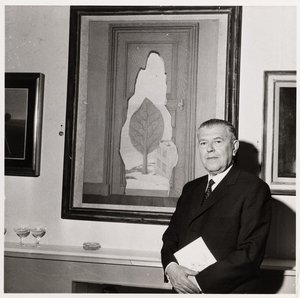
      Magritte

      Magritte

      1898 - 1967, Belgium

      Quick facts about Magritte

      • Artistic Movement Or Style: Szürrealizmus
      • Artists Or Movements Influenced By This Artist:
        • Pop art
        • Minimalista művészet
      • Artists Who Influenced This Artist: ['Giorgio de Chirico']
      • Date Of Birth: November 21, 1898
      • Date Of Death: August 15, 1967
      • Full Name: René François Ghislain Magritte
      • Nationality: Belga
      • Notable Artworks:
        • Les Amants
        • A kép árulása
        • Idő vetve
      • Place Of Birth: Lessines, Belgium

      A művész életrajza

      Early Life and the Seeds of Surrealism

      René Magritte, born René François Ghislain Magritte on November 21, 1898, in Lessines, Belgium, emerged into a world that would profoundly shape his enigmatic artistic vision. His early years were marked by an unsettling event – the suicide of his mother when he was just thirteen. The image of her body being recovered from the River Sambre, with her dress obscuring her face, became a haunting motif that would subtly permeate his later work, manifesting in veiled figures and a persistent exploration of hidden realities. This early trauma instilled within him a fascination with mystery, loss, and the unsettling power of what remains unseen. While details of his childhood remain somewhat elusive, it’s clear this formative experience laid the groundwork for his lifelong questioning of perception and representation. He began drawing lessons at age ten, revealing an innate inclination towards visual expression, but initially explored Impressionism before embarking on a path that would lead him to become one of the most significant figures in Surrealist art.

      Artistic Development and Influences

      Magritte’s artistic journey was not immediate or straightforward. He studied at the Académie Royale des Beaux-Arts in Brussels, yet found its traditional methods stifling. His early work experimented with Futurism and Cubism, absorbing elements of these avant-garde movements but ultimately rejecting their purely formal concerns. It wasn't until encountering Giorgio de Chirico’s painting *The Song of Love* in 1922 that Magritte discovered a resonance that would irrevocably alter his artistic course. De Chirico’s dreamlike landscapes and unsettling juxtapositions unlocked within Magritte a new way of seeing – a world where the familiar could be rendered strange, and the ordinary imbued with profound mystery. This encounter sparked his commitment to Surrealism, though he often maintained a unique distance from its more overtly psychological or automatic approaches. He preferred a meticulous, almost clinical precision in his painting, using realistic techniques to depict illogical scenarios.

      The Heart of Surrealism: Challenging Reality

      By 1926, Magritte had fully embraced the tenets of Surrealism, producing *Le Jockey Perdu (The Lost Jockey)*, widely considered his first truly surrealist work. However, his brand of Surrealism was distinct. He wasn’t interested in exploring the subconscious through free association or dream imagery in the manner of some of his contemporaries. Instead, Magritte sought to challenge viewers' perceptions of reality by presenting ordinary objects in unexpected contexts, forcing them to question their assumptions about the world around them. Iconic works like *The Treachery of Images (This is not a pipe)* (1929) brilliantly deconstructs the relationship between image and object, reminding us that a representation is never the thing itself. *Les Amants (The Lovers)* (1927-1928), with its shrouded figures, echoes the trauma of his mother’s death while simultaneously exploring themes of concealment and intimacy. *Time Transfixed* (1938) presents a locomotive bursting through a brick wall, disrupting our sense of space and time. And *The Human Condition* (1933), a canvas within a canvas, blurs the boundaries between representation and reality, prompting us to consider how we perceive and interpret the world.

      Later Life, Recognition, and Enduring Legacy

      Despite initial struggles for recognition, Magritte’s work gradually gained prominence, particularly in the United States with exhibitions in 1936 and later retrospective shows at the Museum of Modern Art (1965) and the Metropolitan Museum of Art (1992). He remained politically engaged throughout his life, advocating for artistic autonomy. He continued to refine his signature style, exploring themes of repetition, illusion, and the power of language in paintings that are both intellectually stimulating and visually arresting. Magritte died on August 15, 1967, leaving behind a body of work that continues to captivate and challenge audiences worldwide. His influence extends far beyond the realm of painting, impacting pop art, minimalist art, conceptual art, and even advertising and film. Today, his paintings are held in major museum collections around the globe, including the Musées royaux des beaux-arts de Belgique in Brussels, which houses the Magritte Museum – dedicated entirely to his work and boasting the world’s largest collection of his creations.
      • Museum Collections: Musées royaux des beaux-arts de Belgique, Brussels; Magritte Museum.
      Magritte's enduring legacy lies in his ability to make us see the familiar anew, to question our assumptions about reality, and to appreciate the power of art to provoke thought and inspire wonder. He wasn’t simply painting images; he was crafting visual paradoxes that continue to resonate with viewers decades after their creation, solidifying his position as a true master of Surrealism and a pivotal figure in 20th-century art.

      § 5Comparanda

      § 6Questions

      Gyors információk

      • artist: René Magritte
      • title: The Return
      • style: Surrealist
      • subject: Cloud, nest, eggs, tree line

      Művészeti kvíz

      Minden kérdésre csak egy helyes válasz létezik.

      Kérdés 1:
      To which artistic movement does 'The Return' by René Magritte belong?
      Kérdés 2:
      What is a prominent visual element in 'The Return', creating a sense of the unreal?
      Kérdés 3:
      What year was 'The Return' painted?
      Kérdés 4:
      Magritte’s style is often characterized by what technique regarding perspective?

      § 7Cite this entry

      AllPaintingsStore.com, “Magritte, The Return (1940)”, https://allpaintingsstore.com/hu/art/rene-magritte-the-return-8XYUAT-en/ArtistReproduction/ (accessed 1 október 2026).

      § 8The reproduction

      Kézzel készített olajfestmény reprodukció

      Kézzel festett olajvastú vászon, az Ön által választott méretben és keretben, művészeink készítik meglévőre. ( Váltás nyomtatványra Áttérés digitális képre)

      It is specified on the order sheet in the margin; the present state of that sheet reads as follows.

      The Return

      Reprodukciós technika

      Reprodukció mérete

      -

      Kiváló mesterművész

      Nagyobb részletesség, finomság és bővített gyártási idő

      -

      Reprodukció keretezése

      -

      -

      A bármely oldalsó méretét túlszálaló 105 cm (kb. 41 hüvelyk) meghaladó műalkotások vagy reprodukciók esetében a keret összeszerelhető készletként, szétszerelve kerül szállításra. Ez a módszer biztosítja a biztonságos szállítást, és megakadályozza a szállítás során fellépő sérüléseket.

      Szakmész összeszerelést igényel – ez nem DIY (önösszeszerelhető) termék.
      A készletet egy tapasztalt keretező szakembernek kell összeszerelnie és a vásznat feszítenie kell, fa ragasztó (nem tartalmazza a csomag), vásznfeszítő fogó és szorítók használatával, amelyek a ragasztó száradásáig a keretrészeket egymáshoz vuôngjba tartják. A helytelen összeszerelés vagy a nem egyenletes vásznfeszítés maradandó károsíthatja a műalkotást, és ez nem része a garanciánknak.

      • A készlet tartalmazza az összes tömörfa rudat, pontosan méretre vágva.

      • A mellékelt csavarokkal, valamint a sarokszerekhez szükséges faütő ragasztóval kell összeszerelnie (ez nem tartalmazható a csomagban), így a keretrendezőnek külön kell beszereznie.

      • A csomag nem tartalmazza a szükséges professzionális eszközöket: egy vászonfeszítőt és klipseket a rácsok vízszintes tartásához a ragasztó megszáradásáig.

      Fontos:
      A sarokcsatlakozásokhoz fánylagra van szükség, a keretrudakat szorítókapcsokkal kell rögzíteni, amíg a rag teljesen meg nem szárad, a kész keretre feszített vászonhoz pedig vászonfeszítő fogat szükséges. Ezek egyike sem található meg a készletben. Kérjük, rendelés előtt győződjön meg róla, hogy rendelkezik tapasztalt keretező szakemberrel.

      Névtábla

      -

      -

      Védőréteg (Lakk)

      Fényes lakk (intenzívabb színek, védelem a fény és a nedvesség hatása ellen)

      -

      Műalkotásom egyedi igényre szabása

      Példák a módosíthatóságra: az arc kicserélése az ügyfél fotójára; háziállat hozzáadása (pl. macska helyett kutya); rejtett üzenet elhelyezése a háttérben; a háttér tájainak vagy elemeinek megváltoztatása.

      -

      Sürgős

      Világszerte szóló szállítás () mindössze 3-4 hét alatt, a szokásos 5 hét helyett. (29 október). A minőség nem kérdőjelezhető.

      -

      Express szállítás

      Világszerte elérhető szállítás területre 5 héten belül. (5 november).

      A szállítás díja tartalmazza

      Összesített ár

      Ft 83357

      Included with every order

      • Ingyenes globális expressz szállítás
      • Prémium minőségű len vászon
      • Teljes körű szállítási biztosítás
      • Vámvisszatérítési Garancia
      • Hiteles színarányosság garancia
      • 100 napos visszaküldési lehetőség (csak hibás termékek esetén)
      • 100% pénzvisszatérítési garancia
      • Több darab vásárlásakor kedvezmény
      Order sheet