


 Előnézet
 Megosztás
 Megosztás
 Részletek
 Útmutató

 Letöltés
 Hasonló darabok
 X-ray felvétel
 Diavetítés
 Statisztika
Unexpected answer


 Tovább olvasom
Vásároljon nagy felbontású, javított digitális képet, amely minőségében messze felülmúlja az online előnézetet.
Minden fájlt szakembereink a legmodernebb eszközök és precíz, kézi retusálás segítségével készítenek el aprólékosan. Gondoskodunk arról, hogy minden kép kivételes tisztasággal, pontos színhelyességgel és részletgazdag finomsággal rendelkezzen.
A végleges fájl 72 órán belül e-mailben megérkezik, professzionális, szerkesztői és nyomtatási környezetbe optimalizálva az azonnali használathoz. Ez ugyanaz a minőség, amelyben a legmeghatározóbb tervezőstúdiók, kiadók és galériák is megbízhatnak.
Digitális kép
Töltsön le nagy felbontású fájlt személyes kiállításokhoz, nyomtatáshoz és kreatív projektekhez. ( Váltás nyomtatványra Kézzel festett másolat vásárlása)
Minden digitális kép rendeléséhez tartozó extrák
Szakértői digitális kézbesítés, garantáltan
Amikor a AllPaintingsStore.com szolgáltatást választja, nem csupán egy képet kap – professzionálisan felmagasított digitális műalkotást kap, amely precizitással készült, és amelyet megelégsedési gwarancia tesz biztoslássá. Az alábbiakban automatikusan minden benne 】

Gyors e-mail teslimítés
A nagy felbontású digitális képmásolatát a megrendelést követő 72 órán belül e-mailben elküldjük Önnek – azonnal használható formátumban.

MI-alapú digitális képjavítás
Műve professzionális módon kerül optimalizálásra fejlett mesterséges intelligencia eszközök és manuális szerkesztés segítségével, biztosítva a maximális részletességet, tisztaságot és színpontosságot.

Örök életű ingyenes újradatás
Véletlenül törölted vagy elvesztetted a fájlodat? Ne aggódj – bármikor ingyen újra megküldjük neked.

Nincs importköltség – soha
Élvezze műalkotásait azonnal, vám, illeték vagy szállítási költség nélkül – a digitális letöltések mindig adamentesek.

Színpontosság garantálása
Professzionális eszközök és színkezelés segítségével garantáljuk, hogy digitális képe a lehető legpontosabban tükrözze az eredeti színeket.

100 napos elégedettségi garancia
Ha nemມີ elégedett a digitális képével, 100 napon belül felülvizsgáljuk vagy 100% visszatérítjük az amountot – kérdés बिना.

100% Pénzvisszatérítési garancia
Nem tetszett a vásárlás? 100 napon belül teljes visszatérítést garantálunk a digitális fájl megvételétől számítva – kérdés nélkül.

Tömegrendelési kedvezmények
Vásároljon 3 képet, spóroljon 10%-et - Vásároljon 5-öt, spóroljon 15%-et - Vásároljon 10+ képet, spóroljon 20%-at. Kiváló kreatív projektekhez, galériákhoz és ügynökségekhez.
A Threshold of Mystery: The Enigma of Magritte’s Vision
In the quiet, unsettling realm of René Magritte’s 1933 masterpiece, Unexpected Answer, the boundary between the known and the unknowable begins to dissolve. At first glance, the viewer is presented with a scene of deceptive simplicity: a doorway, framed by textured brickwork, bathed in a diffused, somber light. Yet, as one lingers before this oil on canvas, the domestic familiarity of the setting is punctured by a profound sense of displacement. Magritte does not merely paint a door; he paints a rupture in reality. The central focus—a dark, void-like shadow cast against the wall—suggests the presence of a figure, yet the person remains tantalizingly absent, their identity swallowed by the very light that reveals them. It is a painting that refuses to be solved, inviting the observer into a psychological landscape where every shadow holds a secret and every corner whispers of the unseen.
This work stands as a quintessential pillar of the Surrealist movement, a period defined by its rebellion against the constraints of rational logic. Magritte, working alongside contemporaries like André Breton, sought to tap into the irrational forces of the human subconscious. In Unexpected Answer, he achieves this through a masterful manipulation of form and illusion. The technique is deceptively smooth, utilizing subtle tonal variations to create an illusory depth that pulls the eye toward the irregular, human-shaped void within the door. There is a haunting tension in the way the light interacts with the textures of the brick and wood, creating a space that feels both physically tangible and existentially hollow. For the collector or the lover of fine art, this piece offers more than visual interest; it offers an intellectual challenge, a window into the "mystery" that Magritte himself claimed was the very essence of his work.
Symbolism and the Architecture of the Subconscious
To gaze upon Unexpected Answer is to confront the profound complexities of human perception. The symbolism embedded within the composition is deeply rooted in the artist's own history and the broader Surrealist fascination with the hidden self. The irregular shape cut through the door, vaguely reminiscent of a human silhouette or perhaps two figures caught in an embrace, serves as a powerful metaphor for the layers of identity that we conceal from the world. Magritte often utilized motifs of veiled faces and obscured subjects—a technique many scholars link to the traumatic memory of his mother’s death, where her face was shrouded by her clothing. In this painting, the "answer" promised by the title is intentionally withheld, leaving the viewer to grapple with questions of presence and absence, of what lies behind the threshold, and whether we can ever truly know the reality that exists beyond our immediate sight.
For interior designers and curators, this artwork serves as a sophisticated focal point, capable of injecting a sense of contemplative depth into any space. Its muted palette and dramatic use of chiaroscuro allow it to integrate seamlessly into modern, minimalist, or classical settings, providing a conversation piece that transcends mere decoration. A high-quality reproduction of this work does not just adorn a wall; it transforms a room into a gallery of thought. It invites guests to pause, to wonder, and to engage with the beautiful, unsettling ambiguity of the human condition. In an era of constant visual noise, Magritte’s ability to evoke such profound stillness and mystery remains an unparalleled gift to the world of fine art.
Gyakran Ismételt Kérdések
Mely művész és mely stílus áll a "Unexpected answer" mögött?
A „Unexpected answer” alkotását Magritte készítette Surrealist Art stílusban. A művész és a műveszetség meghatározza a mű hagyományát.
Hogyan tölthetem le a(z) „Unexpected answer”, Magritte alkotása képét?
A „Unexpected answer”, Magritte alkotása képe letölthető a mű alkotásának Letöltés oldaláról: magas felbontású digitális kép letöltés.
Milyen technikával készült a „Unexpected answer”, Magritte alkotása?
A „Unexpected answer”, Magritte alkotása technikája Oil On Canvas. A reprodukciók célja ezen technika megjelenítésének hiteles återadása.
Művész életrajza
Early Life and the Seeds of Surrealism
René Magritte, born René François Ghislain Magritte on November 21, 1898, in Lessines, Belgium, emerged into a world that would profoundly shape his enigmatic artistic vision. His early years were marked by an unsettling event – the suicide of his mother when he was just thirteen. The image of her body being recovered from the River Sambre, with her dress obscuring her face, became a haunting motif that would subtly permeate his later work, manifesting in veiled figures and a persistent exploration of hidden realities. This early trauma instilled within him a fascination with mystery, loss, and the unsettling power of what remains unseen. While details of his childhood remain somewhat elusive, it’s clear this formative experience laid the groundwork for his lifelong questioning of perception and representation. He began drawing lessons at age ten, revealing an innate inclination towards visual expression, but initially explored Impressionism before embarking on a path that would lead him to become one of the most significant figures in Surrealist art.Artistic Development and Influences
Magritte’s artistic journey was not immediate or straightforward. He studied at the Académie Royale des Beaux-Arts in Brussels, yet found its traditional methods stifling. His early work experimented with Futurism and Cubism, absorbing elements of these avant-garde movements but ultimately rejecting their purely formal concerns. It wasn't until encountering Giorgio de Chirico’s painting *The Song of Love* in 1922 that Magritte discovered a resonance that would irrevocably alter his artistic course. De Chirico’s dreamlike landscapes and unsettling juxtapositions unlocked within Magritte a new way of seeing – a world where the familiar could be rendered strange, and the ordinary imbued with profound mystery. This encounter sparked his commitment to Surrealism, though he often maintained a unique distance from its more overtly psychological or automatic approaches. He preferred a meticulous, almost clinical precision in his painting, using realistic techniques to depict illogical scenarios.The Heart of Surrealism: Challenging Reality
By 1926, Magritte had fully embraced the tenets of Surrealism, producing *Le Jockey Perdu (The Lost Jockey)*, widely considered his first truly surrealist work. However, his brand of Surrealism was distinct. He wasn’t interested in exploring the subconscious through free association or dream imagery in the manner of some of his contemporaries. Instead, Magritte sought to challenge viewers' perceptions of reality by presenting ordinary objects in unexpected contexts, forcing them to question their assumptions about the world around them. Iconic works like *The Treachery of Images (This is not a pipe)* (1929) brilliantly deconstructs the relationship between image and object, reminding us that a representation is never the thing itself. *Les Amants (The Lovers)* (1927-1928), with its shrouded figures, echoes the trauma of his mother’s death while simultaneously exploring themes of concealment and intimacy. *Time Transfixed* (1938) presents a locomotive bursting through a brick wall, disrupting our sense of space and time. And *The Human Condition* (1933), a canvas within a canvas, blurs the boundaries between representation and reality, prompting us to consider how we perceive and interpret the world.Later Life, Recognition, and Enduring Legacy
Despite initial struggles for recognition, Magritte’s work gradually gained prominence, particularly in the United States with exhibitions in 1936 and later retrospective shows at the Museum of Modern Art (1965) and the Metropolitan Museum of Art (1992). He remained politically engaged throughout his life, advocating for artistic autonomy. He continued to refine his signature style, exploring themes of repetition, illusion, and the power of language in paintings that are both intellectually stimulating and visually arresting. Magritte died on August 15, 1967, leaving behind a body of work that continues to captivate and challenge audiences worldwide. His influence extends far beyond the realm of painting, impacting pop art, minimalist art, conceptual art, and even advertising and film. Today, his paintings are held in major museum collections around the globe, including the Musées royaux des beaux-arts de Belgique in Brussels, which houses the Magritte Museum – dedicated entirely to his work and boasting the world’s largest collection of his creations.- Museum Collections: Musées royaux des beaux-arts de Belgique, Brussels; Magritte Museum.
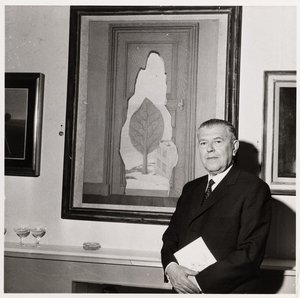
Magritte
1898 - 1967 , Belgium
Rövid tények
- Artistic Movement Or Style: Szürrealizmus
- Artists Or Movements Influenced By This Artist:
- Pop art
- Minimalista művészet
- Artists Who Influenced This Artist: ['Giorgio de Chirico']
- Date Of Birth: November 21, 1898
- Date Of Death: August 15, 1967
- Full Name: René François Ghislain Magritte
- Nationality: Belga
- Notable Artworks:
- Les Amants
- A kép árulása
- Idő vetve
- Place Of Birth: Lessines, Belgium

