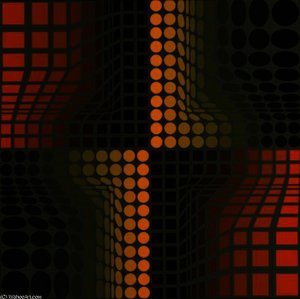
Akril festmény vászonon.

§ 1Katalógusadatok

Ez a műalkotás szerzői jogi védelem alatt áll
Az ezen az oldalon megjelenített műalkotások szerzői jogi védelem alatt állnak, ami azt jelenti, hogy törvényileg nem készíthetünk és nem adhatunk el belőlük pontos másolatokat. Ez a védelem olyan nemzetközi megállapodások alapján érvényesül, mint például a Berni Egyezmény és a nemzeti jogszabályok által, beleértve azokat is, amelyeket meghatározott Az USA szerzői jogi törvénye – 17. cím.
Mint tiszteletes és törvényes alternatívát, olyan egyedi, kézzel festett alkotásokat kínálunk, amelyek az eredetiből merítnek inspirációt. Tapasztalt és professzionális művészeink alaposan tanulmányozzák az eredeti stílusát, hangulatát és művészeti esszenciáját, hogy egy olyan új, egyedi alkotást hozzunk létre, amely ugyanazt az érzést kelti – miközben önálló, eredeti alkotásként létezik.
Ez a módszer teljes mértékben megfelel a szerzői jogi szabályozásnak, mivel nem tartalmazza a védett műalkotás másolását vagy duplikálását. Ehelyett ez egy kreatív újinterpretáció – egy új festmény, amely az eredetivel való összefüggései miatt hatással van rá, de nem az az.
 További információk
§ 2Absztrakt
A gyűjtemény leírása
Fedezd fel Victor Vasarely egyedülálló geometriai művészetét! Nézd meg az Op Art nagy újdonságát és annak maradék hatását a modern művészetre és dizájnra.
A művész életrajza
Fedezd fel Victor Vasarely (1906-1997) világát! Op art, kinetikus művészet, geometriai absztrakt képei és a modern művészet meghatározó alakja. Magyar művészettörténet egyik legkiemelkedőbb képviselője.
§ 3Magyarázat
Barson-N: A Geometric Symphony of Color and Illusion
Victor Vasarely’s “Barson-N” stands as a testament to the burgeoning fascination with optical illusions during the mid-20th century – specifically, Op Art. Born Károly Vaszary in Pécs, Croatia (then Austria-Hungary), Vasarely embarked on an artistic journey that began with medical studies but swiftly pivoted towards visual expression fueled by the influential Bauhaus movement.
The painting itself is deceptively simple at first glance. It presents a mesmerizing arrangement of concentric circles interwoven with intersecting triangles against a muted beige background. These geometric forms aren’t merely decorative; they actively manipulate perception, creating an unsettling yet captivating effect where shapes appear to shift and vibrate subtly as the viewer moves across the canvas.
The Bauhaus Influence & Geometric Abstraction
Vasarely's formative years at Sándor Bortnyik’s Műhely solidified his commitment to functional design principles and geometric abstraction – core tenets of the Bauhaus school. This intellectual grounding profoundly shaped his artistic vision, prioritizing clarity and precision over representational accuracy.
Bauhaus championed a radical departure from traditional academic art, advocating for an aesthetic rooted in mathematical ratios and elemental forms. Vasarely embraced this ethos wholeheartedly, distilling complex visual concepts into meticulously crafted geometric compositions.
Op Art: Challenging Perception
“Barson-N” exemplifies the essence of Op Art – Optical Art – a movement spearheaded by Vasarely and Bridget Riley in the 1960s. Artists like Vasarely deliberately sought to disrupt viewers’ expectations about how they perceive visual stimuli.
Through techniques such as illusionistic layering and subtle variations in color, Op Art artists aimed to generate an optical vibration that tricked the eye into perceiving movement where none existed. This was achieved by exploiting the way our brains process visual information—specifically, how retinal cells respond to light and color changes.
Symbolism & Emotional Resonance
While ostensibly devoid of recognizable imagery, “Barson-N” possesses a powerful symbolic resonance. The circles represent wholeness and unity – concepts central to Vasarely’s philosophical explorations into the nature of consciousness and perception. Simultaneously, the triangles inject dynamism and tension into the composition, mirroring the underlying complexities of human experience.
Ultimately, Vasarely's masterpiece invites contemplation on how our senses shape our understanding of reality. It’s a visual paradox that lingers in the mind long after viewing—a reminder that beauty can reside in abstraction and that art has the capacity to challenge our assumptions about what we see.
Technical Considerations & Legacy
Vasarely employed a meticulous layering technique, applying thin washes of color onto canvas followed by subsequent additions of opaque pigments. This method ensured maximum luminosity and allowed for precise control over tonal variations—crucial elements in achieving the desired optical illusion.
“Barson-N” remains an iconic example of geometric abstraction and Op Art’s enduring influence on contemporary art and design. Its exploration of visual perception continues to inspire artists and designers today, demonstrating Vasarely's unwavering dedication to pushing artistic boundaries and redefining our relationship with the world around us.
Kérdések és válaszok
Milyen hangulatot kölcsönözne a "Barson-N" egy térnek?
A Nyugodt hangulatával a "Barson-N" című alkotás egy Nappali helyiségbe is javasolt.
Melyik szín tűnik ki leginkább a(z) "Barson-N" alkotásból?
A(z) Ftalozöld (#213d21) a(z) „Barson-N”, Vasarely alkotása domináns színe.
Milyen összefüggésben áll a "Barson-N" témája Vasarely megszokott motíveivel?
Vasarely dokumentált témái – bauhaus aesthetic & geometry, optical illusion exploration, formal composition emphasis, visual perception challenge, iconic geometric pioneer – között a „Barson-N” különös hangsúlyt fektet geometric pattern, optical illusion, color field painting, kinetic art, bauhaus influence, abstraction, visual perception-ra.


 Váltás nyomtatványra


 A bármely oldalsó méretét túlszálaló 105 cm (kb. 41 hüvelyk) meghaladó műalkotások vagy reprodukciók esetében a keret összeszerelhető készletként, szétszerelve kerül szállításra. Ez a módszer biztosítja a biztonságos szállítást, és megakadályozza a szállítás során fellépő sérüléseket.