- Főoldal

- Vászonra nyomtatás
- Vasarely
- Kodd-k

 Megosztás
 Megosztás
 Részletek

 Letöltés
 Hasonló alkotások
 Diavetítés
Kodd-k


 Tovább olvasom
Giclée / Műnyomat
Múzeumi minőségű giclée vagy vászonnyomat, gyors gyártással és rugalmas finomítási lehetőségekkel. ( Áttérés a kézzel festett másolatra Képváltás)




































Válasszon előre meghatározott méreteink közül, amelyek megfelelnek a műalkotás eredeti arányainak.

Megadhat saját méreteket is egy konkrét kerethez vagy helyszínhez igazítva. Amennyiben a kiválasztott méret nem egyezik az eredeti kép arányokkal, a műalkotást le fogjuk vágni, vagy kiegészítjük a képet tükrözött vagy egyszínű szélekkel. A gyártás megkezdése előtt egy digitális tervezetet küldünk jóváhagyásra.
Kérjük, vegye figyelembe, hogy a képernyőn látható előnézet nem tükrözi a tényleges levágást vagy kiegészítést. Csak a tervezet mutatja pontosan a végső kompozíciót.
Bár az egyedi méretek is elérhetőek, az eredeti arányok megőrzése érdekében azt javasoljuk, hogy válasszon a előre meghatározott listából származó méretet.
Világszerte történő kiszállítás területére 2 hét alatt, a szokásos 4-5 hét helyett. 4 augusztus

Ingyenes globális expressz szállítás

Prémium minőségű len vászon

Teljes szállítási biztosítás

Vámvisszatérítési Garancia

Tökéletes színpontosság garancia

60 napos visszaküldési lehetőség (csak gyártási hibák esetén)

100%-os pénzvisszatérítési garancia

Kedvezmény több termény esetén
 Az üvegkeretes opció csak 110 cm alatti méretben érhető el

Kodd-k
Giclée / Műnyomat
A reprodukció mérete
-


Összesített ár
$ 64
Termékinformációk
A Geometric Dance: Unveiling Victor Vasarely’s *Kodd-k*
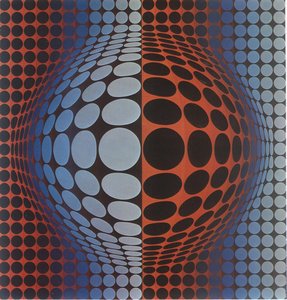
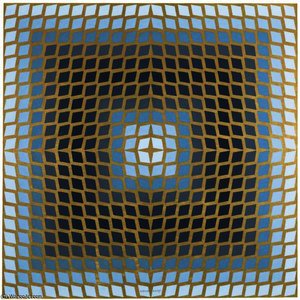
The seemingly simple image of a blue and black checkered square – *Kodd-k*, as it's known – by Victor Vasarely is, in fact, an invitation to a profound exploration of perception. This artwork, meticulously reproduced on AllPaintingsStore.com, isn’t merely a decorative element; it’s a carefully constructed illusion, a testament to the artist’s pioneering work within the Op Art movement and his deep engagement with the principles of kinetic art. The photograph captures a design that immediately draws the eye, its stark contrast and repeating patterns creating a visual rhythm that subtly shifts with every glance. It's an experience rather than a static image, echoing the core tenets of Vasarely’s artistic philosophy – to challenge our understanding of space and movement through purely geometric forms.The Birth of Optical Illusions: Vasarely and Op Art
Born in 1906 in Pécs, Croatia, Victor Vasarely's trajectory was remarkably unconventional. Initially destined for a medical career, he abandoned it to pursue painting, driven by an innate fascination with visual phenomena. This pursuit led him to the influential Műhely workshop, profoundly shaped by the Bauhaus movement’s emphasis on functional design and geometric abstraction. It was here that Vasarely began to systematically investigate how our eyes perceive depth and movement. *Kodd-k*, created in the mid-20th century, exemplifies this approach perfectly. The artwork deliberately manipulates visual cues – the checkerboard pattern, the varying sizes of squares, the carefully placed white borders – to create an optical illusion that seems to shift and shimmer before your eyes. This technique anticipates the broader development of Op Art, a movement dedicated to producing visually stimulating effects through precise geometric arrangements.Technique and Materiality: A Precision Reproduction
AllPaintingsStore’s hand-painted reproductions of *Kodd-k* are not simply copies; they are meticulously crafted interpretations of Vasarely's original vision. The process begins with a high-resolution scan of the artwork, allowing for an incredibly detailed transfer to the canvas. Skilled artisans then employ traditional painting techniques – layering acrylic paints with painstaking accuracy – to faithfully recreate the artist’s intended effect. The use of vibrant blues and blacks ensures that the illusion of depth and movement is preserved, while the careful attention to detail guarantees a reproduction that captures the essence of Vasarely's groundbreaking work. The result is a piece that feels both timeless and remarkably contemporary.Symbolism and Emotional Impact: Beyond the Geometry
While rooted in geometric abstraction, *Kodd-k* possesses an undeniable emotional resonance. The controlled chaos of the pattern evokes a sense of dynamism and energy, mirroring the artist’s fascination with movement and perception. The artwork can be interpreted as a meditation on order and disorder, structure and illusion – fundamental themes explored throughout Vasarely's career. Its impact extends beyond mere visual stimulation; it invites contemplation about our relationship to space, time, and the very nature of seeing. This piece is ideal for interior design projects seeking a bold statement or for art collectors interested in owning a significant work from one of the 20th century’s most influential artists.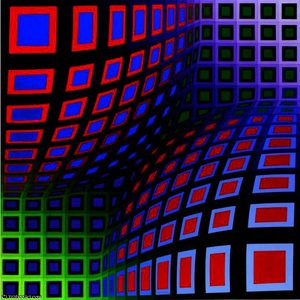




A művész életrajza
A Life Forged in Geometry: The World of Victor Vasarely
Victor Vasarely’s journey to becoming a pioneer of Op Art and kinetic art was anything but predetermined. Born Károly Vaszary in 1906 in Pécs, a city then nestled within Austria-Hungary (now Croatia), his early life hinted at a path far removed from the canvas; he initially pursued medical studies at Eötvös Loránd University in Budapest. However, the allure of visual expression proved too strong, leading him to abandon medicine for the world of painting in 1927, enrolling at the Podolini-Volkmann Academy. This decision marked not merely a change in vocation but the beginning of a lifelong exploration into the fundamental principles governing perception and form. A pivotal moment arrived with his enrollment in Sándor Bortnyik’s workshop – Műhely – a school deeply influenced by the Bauhaus movement. Here, Vasarely absorbed the tenets of functional design and geometric abstraction, seeds that would blossom into his signature style. These formative years weren't simply about acquiring technique; they were about dismantling traditional artistic conventions and embracing a new visual language rooted in logic and precision.From Early Abstraction to the Dawn of Op Art
The late 1920s and early 1930s witnessed Vasarely’s gradual departure from representational art, as he delved deeper into the realm of geometric abstraction. Works like “Blue Study” and “Green Study,” created in 1929, exemplify this transition – a deliberate shedding of narrative content in favor of pure form and color relationships. While influenced by masters such as Piet Mondrian and Kazimir Malevich, Vasarely wasn’t content to simply emulate their styles. He sought to transcend the static compositions of his predecessors, aiming for a dynamism that would actively engage the viewer's perception. This quest led him to Paris in 1930, where he established himself as a graphic designer and advertising artist, honing his skills while continuing to develop his unique artistic vision. It was during this period that he began experimenting with techniques that would later become hallmarks of Op Art – manipulating shapes and colors to create illusions of movement and depth. The seeds were sown for a revolution in visual experience.The Systematic Illusion: Defining a Movement
By the 1960s, Victor Vasarely had fully emerged as a leading figure in the burgeoning Op Art movement. Unlike many artists who relied on intuition and spontaneous expression, Vasarely approached his work with a distinctly systematic methodology. He employed grids and mathematical principles to generate patterns that created powerful optical illusions – visual vibrations, swirling effects, and sensations of depth where none physically existed. This wasn’t about trickery; it was about revealing the inherent dynamism within perception itself. He believed in reproducibility and mass appeal, aiming to democratize art by making it accessible beyond the confines of galleries and museums. His work challenged viewers to question their own visual experience, forcing them to actively participate in the creation of meaning. He wasn’t merely painting pictures; he was constructing experiences.Beyond the Canvas: Kinetic Exploration and a Lasting Legacy
Vasarely’s artistic exploration didn’t stop at static illusions. He increasingly ventured into kinetic art, creating works that incorporated actual movement or appeared to move through carefully orchestrated visual effects. “Georges Pompidou” (1976), a large kinematic object installed at the Centre Pompidou in Paris, stands as a testament to this ambition – an integration of art with architecture and urban design on a grand scale. He also demonstrated remarkable innovation by applying his designs to commercial products, most notably through his collaboration with Rosenthal porcelain, resulting in the iconic “Suomi” tableware series. This willingness to blur the boundaries between fine art and functional objects further underscored his belief in art’s potential to permeate everyday life. The establishment of the Fondation Vasarely in Aix-en-Provence ensured the preservation and promotion of his extensive body of work, while a remarkable event – the inclusion of serigraphs aboard the French-Soviet spacecraft Salyut 7 in 1982 – symbolized the global recognition of his art and its connection to the broader human endeavor of exploration. Victor Vasarely’s legacy extends far beyond the realm of painting; he profoundly influenced graphic design, fashion, interior design, and even early computer graphics, inspiring generations with his innovative vision and unwavering commitment to exploring the possibilities of perception. He remains a pivotal figure in modern art history, a true visionary who dared to challenge our understanding of what art could be.Historical Significance
Vasarely’s contribution to art history is multifaceted. He moved beyond traditional painting techniques to create works that actively engage the viewer’s perception. His systematic approach challenged conventional notions of artistic creativity and paved the way for computer-generated art and digital design. By embracing reproducibility and commercial applications, Vasarely blurred the boundaries between fine art and popular culture, leaving an enduring mark on both. He wasn't simply creating aesthetically pleasing objects; he was conducting visual experiments that revealed fundamental truths about how we see the world. His work continues to resonate today, reminding us of the power of abstraction, the beauty of geometry, and the endless possibilities of human creativity.
Vasarely
1906 - 1997 , Kroatia
Rövid tények
- Artistic Movement Or Style: Op Art, kinetikus művészet
- Artists Or Movements Influenced By This Artist:
- Grafikai tervezés
- Belsőépítészet
- Artists Who Influenced This Artist:
- Mondrian
- Malevich
- Date Of Birth: 1906. ápril 9.
- Date Of Death: 1997. március 15.
- Full Name: Victor Vasarely
- Nationality: Magyar–francia
- Notable Artworks:
- Blue Study
- Zebra
- Suomi
- Place Of Birth: Pécs, Kárpátia
Kapcsolódó cikkek

Minimalista Művészet: A Top 10 Legikonikusabb Darab a Lakberendezésben
Fedezze fel a top 10 minimalista műalkotást! Mark Rothko, Agnes Martin és más ikonikus festők letisztult világát. Inspirálódjon modern képekkel, absztrakt vászonképekkel és hozzon létre nyugtató belső teret. Prémium minőségű reprodukciók a AllPaintingsStore.com-on!
Victor Vasarely: Pioneering Op Art & Democratizing Visual Experience
Explore the revolutionary world of Victor Vasarely, father of Op Art. Discover his geometric masterpieces, artistic system, & lasting impact on modern design. A guide for discerning art collectors.

A 10 legnyugodtabb műalkotás: Klasszikus festmények otthoni harmóniáért
Fedezze fel a 10 legnyugodtabb műalkotást! Monet, Van Gogh és más híres festők remekművei inspirálnak. Klasszikus tájképek, absztrakt művészet – teremtse meg békés otthonát AllPaintingsStore.com minőségi reprodukcióival. Explore the full collection online!

The Enduring Appeal of Geometric Patterns in Art: A Historical & Contemporary Exploration
Explore the captivating history of geometric abstraction in art, from ancient roots to contemporary masters. Expert insights for collectors & enthusiasts. Discover key artists, movements & investment potential.
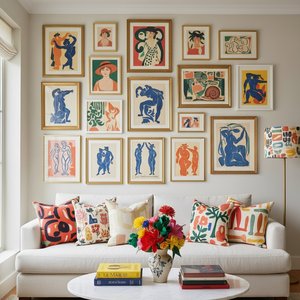
Henri Matisse 25 Mesterműve: Színek és Érzések Világa - AllPaintingsStore
Fedezze fel Henri Matisse 25 legikonikusabb művét! Ismerje meg a fauvizmus színeit, az expresszionizmus formáit és a modern művészet mesterének életművét. Vászonképek, nyomatok – inspiráció otthonába a AllPaintingsStore.com-on!