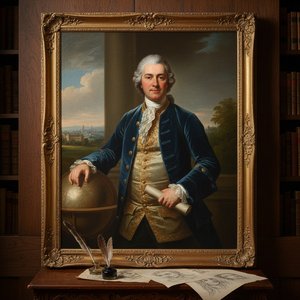
1745. Acrylic On Canvas, 90.0 x 70.0 cm.

§ 1Katalógusadatok

- 90.0 x 70.0 cm


§ 2Absztrakt
A gyűjtemény leírása
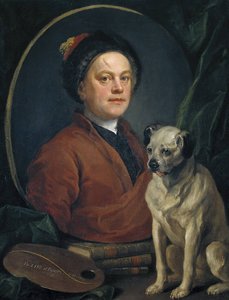
William Hogarth's 'Self-Portrait' (1745) captures the artist amidst books and his dog, reflecting his life as an observer of London society & a pioneering satirical painter. A unique glimpse into his world.
 Összes részlet megjelenítése
A művész életrajza
Fedezd fel Hogarth szatirikus világát! A 18. századi london festője, aki a társadalmi kritikával és a realista stílussal alkotott. Nézd meg az A Harlot's Progress és A Rake's Progress sorozatait!
§ 3Magyarázat
A Glimpse Behind the Brush: William Hogarth's Introspective Masterpiece
William Hogarth’s 1745 self-portrait isn’t merely a likeness; it’s a meticulously crafted window into the mind of one of England’s most astute and satirical observers. Painted during a period of profound social and artistic transformation, this work transcends the conventional portraiture of its time, offering a rare and intimate glimpse into the life and sensibility of the artist himself. The painting immediately draws the eye with Hogarth's direct gaze – a shrewd, almost challenging look that speaks volumes about his intellectual curiosity and unwavering commitment to documenting the realities of London society.

The scene is deceptively simple, yet brimming with carefully orchestrated details. Hogarth, clad in a vibrant red coat – a bold choice that immediately commands attention – sits amidst a clutter of books and artistic paraphernalia: a palette smeared with paint, scattered sketches, and open volumes hinting at his scholarly pursuits. Beside him rests a loyal pug dog, Trump, a constant companion depicted with an air of quiet contemplation, mirroring perhaps the artist’s own thoughtful disposition. This inclusion isn't arbitrary; it speaks to Hogarth’s deep affection for animals and subtly reinforces the theme of domesticity within his broader social commentary.
The Satirical Eye: Hogarth’s Social Commentary
Hogarth was far more than a painter; he was a visual chronicler of 18th-century London. His earlier works, such as *Marriage A-la-Mode* and *Gin Lane*, exposed the hypocrisy and moral decay lurking beneath the veneer of polite society. This self-portrait, however, offers a different perspective – one of introspection and artistic engagement. It’s a moment captured before the storm of his satirical campaigns, suggesting a quiet contemplation on his role as an artist and observer. The books surrounding him are not simply props; they represent Hogarth's deep engagement with classical literature and philosophy, informing his approach to art and his critical analysis of human behavior.
The inclusion of the palette is particularly significant. It’s a visual declaration of Hogarth’s profession, but also a subtle reminder of the labor involved in creating art – a labor that demanded both skill and relentless observation. The arrangement of objects around him isn't random; it’s carefully constructed to create a sense of domestic comfort and intellectual stimulation, reflecting Hogarth’s own values and priorities.
Neoclassical Roots & Artistic Legacy
Painted in the wake of the Neoclassical movement, this self-portrait reflects the influence of classical ideals – particularly in its emphasis on order, clarity, and rational composition. Hogarth's meticulous attention to detail, his use of realistic rendering, and his carefully balanced arrangement of elements are all hallmarks of the Neoclassical style. However, unlike many of his contemporaries who slavishly imitated ancient models, Hogarth infused his work with a distinctly English sensibility, using satire and social commentary to critique contemporary society.
Furthermore, this painting anticipates Hogarth’s later works, particularly *The Rake's Progress* and *The Harlot’s Progress*, which continued his exploration of moral decay and social injustice. It serves as a crucial bridge between his early, more observational work and his later, more overtly satirical output. The self-portrait offers a rare insight into the evolution of Hogarth’s artistic vision – from a keen observer of human nature to a powerful voice of social critique.
A Reproduction for Your Space
AllPaintingsStore is proud to offer high-quality, hand-painted reproductions of William Hogarth's Self-Portrait. Each reproduction captures the painting’s rich detail, vibrant colors, and evocative atmosphere with exceptional accuracy. Whether you are a seasoned art collector or simply seeking to add a touch of historical elegance to your home, this reproduction is a stunning addition to any collection. It’s more than just an image; it's a tangible connection to one of England’s most influential artists and a captivating window into the world of 18th-century London.
Kérdések és válaszok
Van-e útmutató a(z) „Self portrait”, Hogarth alkotása alkotáshoz?
A "Self portrait" útmutatója a mű Útmutató oldala – egy kinyomtatható adatlap, amely bemutatja a művet a leírással, a szerzői megjegyzéssel és az azonosító táblázattal (művész, dátumok, technika, eredeti méret, gyűjtemény) együtt.
Milyen anyagból készült a "Self portrait"?
A „Self portrait”, Hogarth alkotása technikája Acrylic On Canvas. A reprodukciók célja ezen technika megjelenítésének hiteles återadása.
Melyik szobához ajánlott a „Self portrait”, Hogarth alkotása, színei alapján végezve?
A Earthy színeinek köszönhetően a „Self portrait”, Hogarth alkotása alkotást egy Living Roomba javasoljuk; ezt a választást éppen a színek harmóniája teszi lehetővé.


 Váltás nyomtatványra


 A bármely oldalsó méretét túlszálaló 105 cm (kb. 41 hüvelyk) meghaladó műalkotások vagy reprodukciók esetében a keret összeszerelhető készletként, szétszerelve kerül szállításra. Ez a módszer biztosítja a biztonságos szállítást, és megakadályozza a szállítás során fellépő sérüléseket.