Pénzvisszatérítési Garancia · 100 nap Ingyenes világszerte történő szállítás
449 587műalkotások 30 613művészek 4 660múzeumok 32nyelv
Pénznem
    Nyelv
      Ateliér · Alapítva: 2015 · Paris, Francia
      AllPaintingsStore
      allpaintingsstore.com
      Catalogue entry

      Below Zero

      Acrylic On Canvas, 60.0 x 71.0 cm.

      Fig. 1. Winslow Homer, Below Zero. Shown as the reproduction you are specifying: , .

      § 1Catalogue data

      § 2Abstract

      A gyűjtemény leírása

      Explore 'Below Zero,' Winslow Homer's evocative black & white painting of resilience against harsh winter. A stunning depiction of endurance and quiet determination, perfect for art lovers.

      A művész életrajza

      Winslow Homer (1836-1910): Amerikai realista festőművész, aki tengeri tájakat, amerikai életképeket és a természeti erő ábrázolásával vált híressé. Fedezze fel műveit!

      § 3Commentary

      The Stark Beauty of Winslow Homer's Below Zero

      Winslow Homer’s “Below Zero,” painted circa 1893, isn’t merely a depiction of a winter landscape; it’s a profound meditation on human endurance against the relentless indifference of nature. This iconic work, currently residing in the Yale University Art Gallery, immediately commands attention with its monochrome palette – a carefully orchestrated symphony of grays and whites that evokes the biting cold and desolate beauty of a northern winter. Homer masterfully utilizes tonal variations to sculpt form and texture, creating an illusion of depth and roughness within the snowdrifts and the figures’ heavy coats, suggesting both the physical burden of travel and the protective layers against the elements.

      The composition is deceptively simple yet powerfully effective. Two bundled figures, their faces obscured by fur caps, struggle through a vast expanse of snow, their sleds trailing behind them like extensions of their weary bodies. The strategic placement of three sleds acts as leading lines, drawing the viewer’s eye into the heart of the scene and emphasizing the arduous journey ahead. The low horizon line amplifies the scale of the landscape, dwarfing the figures and underscoring their vulnerability within this immense, unforgiving environment. Homer eschews sentimentality; there's no dramatic rescue or heroic gesture here, only a quiet determination etched onto the faces of those who persevere.

      A Realist’s Observation: Technique and Materials

      Homer’s approach to “Below Zero” is firmly rooted in realism, a departure from the romanticized landscapes often favored by his contemporaries. He achieved this through painstaking observation and a deliberate restraint in his brushwork. The painting likely originated with charcoal or graphite on paper, meticulously rendered before being translated into grayscale tones – a technique that allowed Homer to control light and shadow with exceptional precision. The subtle gradations of tone create an astonishing sense of texture; the snow appears not as a uniform surface but as a complex interplay of ridges, drifts, and shadowed recesses. The artist’s skillful manipulation of value—the delicate shifts between dark and light—is what truly breathes life into this otherwise stark scene.

      Historical Context: The American Experience

      To understand “Below Zero,” it's crucial to consider the historical context in which Homer painted. The late 19th century was a period of rapid industrialization and urbanization in America, yet many rural communities still clung fiercely to traditional ways of life. Homer’s work often explored these themes – the dignity of labor, the challenges faced by ordinary people, and the enduring connection between humanity and the natural world. “Below Zero” can be seen as a reflection on this broader American experience, capturing the spirit of resilience in the face of hardship. Interestingly, Homer himself spent time living in Belmont, Massachusetts, at the Homer House, which served as inspiration for many of his works depicting rural life.

      Symbolism and Emotional Resonance

      Beyond its literal depiction of a winter journey, “Below Zero” resonates with deeper symbolic meanings. The figures’ struggle against the elements represents humanity's ongoing battle against adversity – a theme that transcends specific historical contexts. The cold itself can be interpreted as a metaphor for isolation, hardship, and the challenges of survival. Yet, despite the bleakness of the scene, there is also a sense of quiet dignity and perseverance in the figures’ actions. “Below Zero” isn't about celebrating triumph; it’s about acknowledging the inherent difficulty of life while simultaneously affirming the human spirit’s capacity to endure. The painting leaves the viewer with a profound sense of respect for those who face hardship with unwavering determination, reminding us of our own resilience in the face of life’s inevitable challenges.

      Kérdések és válaszok

      Hol javasolt a(z) "Below Zero" Landscape formátumú alkotás kihelyezését?

      A formátum (Landscape) és a javasolt helyiség (Living Room) a „Below Zero”, Winslow Homer alkotása alkotáshoz tartozó két elhelyezési adat.

      Milyen nyomtatási méretet és vízszességet javasol a „Below Zero”, Winslow Homer alkotása?

      A „Below Zero”, Winslow Homer alkotása egyik nyomatásához a Medium méretű, Landscape elrendezésű nyomtatást javasoljuk.

      Mi a(z) domináns színe a(z) „Below Zero”, Winslow Homer alkotása alkotásnak?

      A „Below Zero”, Winslow Homer alkotása domináns színe a Gray (#756e66).
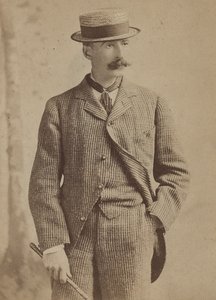
      § 4The artist

      Winslow Homer

      Winslow Homer

      1836 - 1910, Egyesült Államok

      Quick facts about Winslow Homer

      • Artistic Movement Or Style: Amerikai Realizmus
      • Artists Or Movements Influenced By This Artist: ['Amerikai festők']
      • Artists Who Influenced This Artist:
        • Barbizon Schule
        • Courbet
        • Millet
      • Date Of Birth: Feb 24, 1836
      • Date Of Death: Sept 29, 1910
      • Full Name: Winslow Homer
      • Nationality: Amerikai
      • Notable Artworks:
        • Breezing Up
        • A Szántóföldi Gyűjtő
        • A Gulf Stream
      • Place Of Birth: Boston, USA

      A művész életrajza

      A Brush with the American Spirit: The Life and Art of Winslow Homer

      Winslow Homer, born in Boston in 1836, wasn’t sculpted by the traditional European art academies that shaped so many of his contemporaries. Instead, he emerged from a distinctly American experience, one rooted in practicality and observation. His journey began not with grand historical canvases, but as a commercial illustrator at the tender age of twelve for Harper's Weekly. This early apprenticeship was formative, honing an exceptional ability to capture scenes with clarity and detail – skills that would become hallmarks of his mature work. He wasn’t learning perspective in Paris; he was learning to *see* America, its people, and its unfolding story. The bustling streets of Boston, the quiet dignity of rural New England life, these were his first subjects, rendered with a precision born of necessity for the demands of print media. This foundation allowed him to transition into painting, initially in watercolor, before fully embracing the expressive potential of oil paints.

      Early Life and Artistic Beginnings

      Homer’s childhood was marked by a close relationship between his parents—Charles Savage Homer, a merchant with restless ambitions, and Henrietta Maria Benson Homer, a gifted amateur watercolorist who instilled in him a lifelong appreciation for artistic observation. His father's entrepreneurial spirit propelled him to seek fortune abroad, leaving young Winslow largely under his mother’s tutelage. From Cambridge, Massachusetts, where he attended school, Homer developed an early fascination with drawing and sketching—skills that would prove invaluable throughout his career. He began honing his craft by copying the works of established artists, gaining experience in mastering technique and capturing visual impressions. This formative period instilled in him a disciplined approach to artmaking that would characterize his later work. His mother’s encouragement fostered his artistic talent and nurtured his innate sensitivity to beauty—traits that would become integral to Homer's distinctive style.

      The Civil War Years: Witnessing History Through Art

      The American Civil War profoundly impacted Homer’s artistic vision, transforming him from a painter of idyllic landscapes into a chronicler of the brutal realities of conflict. As a war correspondent for Harper’s Weekly, he documented the daily lives of soldiers and civilians—not grand battles or strategic maneuvers—but rather the quiet moments of grief, resilience, and human suffering amidst chaos. This experience instilled in him an unwavering commitment to portraying truthfulness and empathy—values that would permeate his paintings throughout his life. Homer eschewed romanticized depictions of heroism, focusing instead on capturing the psychological impact of war on ordinary people. His sketches for Harper’s Weekly are considered singular examples of wartime reporting, demonstrating his remarkable ability to convey emotion through visual imagery. The Civil War served as a catalyst for Homer's artistic evolution, prompting him to explore themes of trauma and vulnerability—themes that would become central to his oeuvre.

      A Master of Watercolor and Oil: Exploring Diverse Techniques

      Homer’s artistic versatility extended beyond watercolor; he excelled in oil painting, achieving remarkable textural depth and luminosity through a technique rooted in direct observation from nature. He embraced the expressive potential of oil paints while retaining the fluidity and spontaneity characteristic of watercolor—a duality that defined his distinctive style. Homer's studio was located primarily in New York City, yet he frequently traveled to Pennsylvania, the Catskills, and Gloucester, Maine, drawing inspiration from these varied landscapes. These excursions fueled his creativity and informed his artistic vision, resulting in paintings that captured both grandeur and intimacy. He meticulously built up layers of paint—often applying them with a palette knife—creating surfaces rich in texture and color—a technique that distinguishes Homer’s work from many of his contemporaries. His masterful handling of light—particularly the dramatic effects achieved during Maine summers—became a hallmark of his artistic style.

      Legacy: An Icon of American Realism

      Winslow Homer stands as one of America's most celebrated painters, recognized for his unflinching portrayal of the human condition and his profound engagement with the natural world. His paintings—particularly *The Gulf Stream*, *Breezing Up (A Fair Wind)*, and *Innocence*—remain enduring symbols of American artistic achievement. Homer’s influence extended beyond his own time, inspiring subsequent generations of artists who sought to capture the spirit of their nation with similar honesty and conviction. He rejected academic conventions in favor of a direct painting approach—a stylistic choice that cemented his place as a pioneer of American Realism. His legacy is defined by his ability to convey emotion through visual imagery—to communicate profound truths about human experience without resorting to sentimentality or embellishment. Homer’s enduring appeal lies in his unwavering commitment to portraying the beauty and complexity of America—a commitment that continues to resonate with audiences today. He remains a pivotal figure in the history of American art, ensuring his place as one of its most influential voices.

      § 5Comparanda

      § 6Questions

      Gyors információk

      • Movement: Realism
      • Medium: Charcoal/Graphite on Paper
      • Title: Below Zero
      • Dimensions: 60 x 71 cm
      • Subject or theme: Human endurance

      Művészeti kvíz

      Minden kérdésre csak egy helyes válasz létezik.

      Kérdés 1:
      What is the primary subject matter depicted in Winslow Homer’s ‘Below Zero’?
      Kérdés 2:
      The painting ‘Below Zero’ is primarily characterized by which of the following techniques?
      Kérdés 3:
      What is the significance of the sleds in Winslow Homer’s ‘Below Zero’?
      Kérdés 4:
      Based on the image description, what is a key element contributing to the painting’s somber mood?
      Kérdés 5:
      Winslow Homer painted ‘Below Zero’ during which historical period?

      § 7Cite this entry

      AllPaintingsStore.com, “Winslow Homer, Below Zero”, https://allpaintingsstore.com/hu/art/winslow-homer-below-zero-8XZ7HJ-en/ArtistReproduction/ (accessed 2 október 2026).

      § 8The reproduction

      Kézzel készített olajfestmény reprodukció

      Kézzel festett olajvastú vászon, az Ön által választott méretben és keretben, művészeink készítik meglévőre. ( Váltás nyomtatványra Áttérés digitális képre)

      It is specified on the order sheet in the margin; the present state of that sheet reads as follows.

      Below Zero

      Reprodukciós technika

      Reprodukció mérete

      -

      Kiváló mesterművész

      Nagyobb részletesség, finomság és bővített gyártási idő

      -

      Reprodukció keretezése

      -

      -

      A bármely oldalsó méretét túlszálaló 105 cm (kb. 41 hüvelyk) meghaladó műalkotások vagy reprodukciók esetében a keret összeszerelhető készletként, szétszerelve kerül szállításra. Ez a módszer biztosítja a biztonságos szállítást, és megakadályozza a szállítás során fellépő sérüléseket.

      Szakmész összeszerelést igényel – ez nem DIY (önösszeszerelhető) termék.
      A készletet egy tapasztalt keretező szakembernek kell összeszerelnie és a vásznat feszítenie kell, fa ragasztó (nem tartalmazza a csomag), vásznfeszítő fogó és szorítók használatával, amelyek a ragasztó száradásáig a keretrészeket egymáshoz vuôngjba tartják. A helytelen összeszerelés vagy a nem egyenletes vásznfeszítés maradandó károsíthatja a műalkotást, és ez nem része a garanciánknak.

      • A készlet tartalmazza az összes tömörfa rudat, pontosan méretre vágva.

      • A mellékelt csavarokkal, valamint a sarokszerekhez szükséges faütő ragasztóval kell összeszerelnie (ez nem tartalmazható a csomagban), így a keretrendezőnek külön kell beszereznie.

      • A csomag nem tartalmazza a szükséges professzionális eszközöket: egy vászonfeszítőt és klipseket a rácsok vízszintes tartásához a ragasztó megszáradásáig.

      Fontos:
      A sarokcsatlakozásokhoz fánylagra van szükség, a keretrudakat szorítókapcsokkal kell rögzíteni, amíg a rag teljesen meg nem szárad, a kész keretre feszített vászonhoz pedig vászonfeszítő fogat szükséges. Ezek egyike sem található meg a készletben. Kérjük, rendelés előtt győződjön meg róla, hogy rendelkezik tapasztalt keretező szakemberrel.

      Névtábla

      -

      -

      Védőréteg (Lakk)

      Fényes lakk (intenzívabb színek, védelem a fény és a nedvesség hatása ellen)

      -

      Műalkotásom egyedi igényre szabása

      Példák a módosíthatóságra: az arc kicserélése az ügyfél fotójára; háziállat hozzáadása (pl. macska helyett kutya); rejtett üzenet elhelyezése a háttérben; a háttér tájainak vagy elemeinek megváltoztatása.

      -

      Sürgős

      Világszerte szóló szállítás () mindössze 3-4 hét alatt, a szokásos 5 hét helyett. (30 október). A minőség nem kérdőjelezhető.

      -

      Express szállítás

      Világszerte elérhető szállítás területre 5 héten belül. (6 november).

      A szállítás díja tartalmazza

      Összesített ár

      Ft 84358

      Included with every order

      • Ingyenes globális expressz szállítás
      • Prémium minőségű len vászon
      • Teljes körű szállítási biztosítás
      • Vámvisszatérítési Garancia
      • Hiteles színarányosság garancia
      • 100 napos visszaküldési lehetőség (csak hibás termékek esetén)
      • 100% pénzvisszatérítési garancia
      • Több darab vásárlásakor kedvezmény
      Order sheet