


 Előnézet
 Megosztás
 Megosztás
 Részletek
 Útmutató

 Letöltés
 Hasonló darabok
 X-ray felvétel
 Diavetítés
 Statisztika
The War for the Union 1862-A Bayonet Charge, from Harper
 Akril vászonon
- Falfeliratok és faldekoráció
- Other
 1862
1862- 19. század
 34.0 x 52.0 cm
 Smithsonian American Art Múzeum
 Tovább olvasom
Kézzel készített olajfestmény reprodukció
Kézzel festett olajvastú vászon, az Ön által választott méretben és keretben, művészeink készítik meglévőre. ( Váltás nyomtatványra Áttérés digitális képre)




P118B €10

P118H €10

P118W €10

P438Z €10

P508JH €12

P508YH €12

P805H €10

P805Z €10

P919BZ €10

P919G €10

P919XJ €10

P959ZH €10

P968JZ €12

W106C €8

W218G €10

W218JH €8

W218Y €10

W307PJ €10

W316G €10

W316PJ €8

W316Y €10

W398PJ €8

W4111J €10

W500HY €15

W500JH €15

W692G €12

W849H €8

W940BG €15

W953PJ €8




Válasszon előre meghatározott méreteink közül, amelyek megfelelnek a műalkotás eredeti arányainak.

Ön megadhat saját méreteket egy adott kerethez vagy térhez igazításhoz. Ha a kiválasztott méret nem egyezik az eredeti kép arányával, akkor a műalkotást levágjuk, vagy további kézzel festett elemekkel meghosszabbítjuk a festményt. A gyártás megkezdése előtt küldünk Önnek egy digitális előnézetet jóváhagyásra.
Kérjük, vegye figyelembe, hogy a képernyőn megjelenő előnézet nem tükrözi a tényleges vágást vagy kiterjesztést. Csak az előnézet fog pontosan mutatni a végső kompozíciót.
Bár egyedi méretek állnak rendelkezésre, javasoljuk, hogy válasszon egy méretet az előre meghatározott listából az eredeti arányok megőrzése érdekében.
A rendelést követően a AllPaintingsStore.com csapata e-mailt küld az ügyfélnek az instrukciókért, és biztosít egy előnézeti képet (mockup).
Világszerte elérhető szállítás () 3-4 hét alatt a szokásos 5 hét helyett. (21 szeptember). A minőség nem kérdőjelezhető.

Ingyenes globális expressz szállítás

Prémium minőségű len vászon

Teljes körű szállítási biztosítás

Vámvisszatérítési Garancia

Tökéletes színarányosság garancia

100 napos visszaküldési garancia (csak gyártási hibás termékek esetén)

100% pénzvisszatérítési garancia

Több darab vásárlásakor kedvezmény
 Az üvegkeretes opció csak 110 cm alatti méretben érhető el

The War for the Union 1862-A Bayonet Charge, from Harper
Reprodukciós technika
Reprodukció méretei
-


Összesített ár
€ 221
The Crucible of Conflict: Winslow Homer’s “The War for the Union”
Winslow Homer's "The War for the Union 1862--A Bayonet Charge, from Harper," is more than just a depiction of battle; it’s a visceral plunge into the heart of America’s most turbulent era. Created in 1862 during the height of the Civil War, this wood engraving, now housed within the Smithsonian American Art Museum, transcends mere historical documentation to become a profoundly moving exploration of courage, chaos, and sacrifice. Homer, already a celebrated illustrator for Harper's Weekly, seized upon this opportunity to demonstrate his burgeoning mastery of capturing not just the *what* of war, but its overwhelming *feeling*. The stark black and white palette immediately establishes a dramatic intensity – a visual echo of the grim realities faced by soldiers on both sides.
The scene unfolds with brutal immediacy. A massed group of Union soldiers, rendered in meticulous detail despite the limitations of the wood engraving technique, surge forward in a desperate bayonet charge. Homer doesn’t shy away from portraying the raw physicality of combat; bodies are contorted in various stances – some locked in close-quarters struggle, others sprawling across the field, caught in the maelstrom of violence. Notice the subtle shifts in expression: the grim determination etched on the faces, the desperate reach for a weapon, the fleeting moments of terror. The composition itself is carefully constructed to draw the viewer into this chaotic dance of death – the diagonal thrust of the advancing line, the tightly packed figures in the foreground, and the receding field create a sense of relentless momentum.
A Nation Divided: Historical Context
To fully appreciate “The War for the Union,” it’s crucial to understand the context within which it was created. The American Civil War (1861-1865) was a cataclysmic event that reshaped the nation, tearing apart families and communities while fundamentally altering the course of American history. The conflict pitted the Union states – those loyal to the federal government – against the Confederacy, comprised primarily of Southern states that had seceded after electing Abraham Lincoln as president. The war’s outcome—the preservation of the Union and the abolition of slavery—had a profound and lasting impact on the country's social, political, and economic landscape. Homer’s work serves as a poignant reminder of this period of immense suffering and national division.
Harper’s Weekly, where Homer initially gained recognition for his illustrations, played a vital role in disseminating news and images from the war to a broad audience. Homer's engravings were not simply detached reports; they aimed to connect readers emotionally with the human cost of conflict. The charge depicted here is part of the larger Battle of Fair Oaks (also known as Seven Pines) on May 31, 1862, a costly Union defeat that nevertheless prevented Confederate General Robert E. Lee from achieving his objective at Richmond.
The Language of Wood Engraving
Homer’s masterful use of wood engraving is integral to the artwork's power. This technique, popular during the mid-19th century, involved carving a design into a block of wood and then using it to print multiple impressions onto paper. The process inherently lends itself to stark contrasts – deep blacks and brilliant whites – which amplify the drama of the scene. Furthermore, wood engraving allowed for an astonishing level of detail, capturing the textures of uniforms, the gleam of bayonets, and the expressions on soldiers’ faces with remarkable precision. Homer skillfully exploited this medium's capabilities to create a sense of immediacy and realism that was unparalleled at the time.
The limited tonal range—the absence of subtle gradations—forces the viewer to confront the scene directly, without softening or romanticizing the brutality of war. It’s a deliberate choice that underscores the stark reality of combat – there is no room for sentimentality here; only raw intensity and desperate struggle.
A Legacy of Remembrance
“The War for the Union 1862--A Bayonet Charge, from Harper” remains a powerful testament to Homer’s artistic skill and his ability to capture the spirit of an era. Its depiction of courage, sacrifice, and the devastating consequences of conflict continues to resonate with audiences today. The Smithsonian American Art Museum provides a vital space for preserving and interpreting this important work of art, ensuring that it serves as a reminder of America's past—and a call to consider its enduring lessons.
AllPaintingsStore offers meticulously crafted hand-painted reproductions of this iconic image, allowing you to bring the intensity of Homer’s vision into your home or office. Each reproduction is created by skilled artists using traditional oil painting techniques, faithfully capturing the nuances of light, shadow, and texture that define this masterpiece. Explore our collection today and own a piece of American history.
Hasonló műalkotások


A művész életrajza
A Brush with the American Spirit: The Life and Art of Winslow Homer
Winslow Homer, born in Boston in 1836, wasn’t sculpted by the traditional European art academies that shaped so many of his contemporaries. Instead, he emerged from a distinctly American experience, one rooted in practicality and observation. His journey began not with grand historical canvases, but as a commercial illustrator at the tender age of twelve for Harper's Weekly. This early apprenticeship was formative, honing an exceptional ability to capture scenes with clarity and detail – skills that would become hallmarks of his mature work. He wasn’t learning perspective in Paris; he was learning to *see* America, its people, and its unfolding story. The bustling streets of Boston, the quiet dignity of rural New England life, these were his first subjects, rendered with a precision born of necessity for the demands of print media. This foundation allowed him to transition into painting, initially in watercolor, before fully embracing the expressive potential of oil paints.Early Life and Artistic Beginnings
Homer’s childhood was marked by a close relationship between his parents—Charles Savage Homer, a merchant with restless ambitions, and Henrietta Maria Benson Homer, a gifted amateur watercolorist who instilled in him a lifelong appreciation for artistic observation. His father's entrepreneurial spirit propelled him to seek fortune abroad, leaving young Winslow largely under his mother’s tutelage. From Cambridge, Massachusetts, where he attended school, Homer developed an early fascination with drawing and sketching—skills that would prove invaluable throughout his career. He began honing his craft by copying the works of established artists, gaining experience in mastering technique and capturing visual impressions. This formative period instilled in him a disciplined approach to artmaking that would characterize his later work. His mother’s encouragement fostered his artistic talent and nurtured his innate sensitivity to beauty—traits that would become integral to Homer's distinctive style.The Civil War Years: Witnessing History Through Art
The American Civil War profoundly impacted Homer’s artistic vision, transforming him from a painter of idyllic landscapes into a chronicler of the brutal realities of conflict. As a war correspondent for Harper’s Weekly, he documented the daily lives of soldiers and civilians—not grand battles or strategic maneuvers—but rather the quiet moments of grief, resilience, and human suffering amidst chaos. This experience instilled in him an unwavering commitment to portraying truthfulness and empathy—values that would permeate his paintings throughout his life. Homer eschewed romanticized depictions of heroism, focusing instead on capturing the psychological impact of war on ordinary people. His sketches for Harper’s Weekly are considered singular examples of wartime reporting, demonstrating his remarkable ability to convey emotion through visual imagery. The Civil War served as a catalyst for Homer's artistic evolution, prompting him to explore themes of trauma and vulnerability—themes that would become central to his oeuvre.A Master of Watercolor and Oil: Exploring Diverse Techniques
Homer’s artistic versatility extended beyond watercolor; he excelled in oil painting, achieving remarkable textural depth and luminosity through a technique rooted in direct observation from nature. He embraced the expressive potential of oil paints while retaining the fluidity and spontaneity characteristic of watercolor—a duality that defined his distinctive style. Homer's studio was located primarily in New York City, yet he frequently traveled to Pennsylvania, the Catskills, and Gloucester, Maine, drawing inspiration from these varied landscapes. These excursions fueled his creativity and informed his artistic vision, resulting in paintings that captured both grandeur and intimacy. He meticulously built up layers of paint—often applying them with a palette knife—creating surfaces rich in texture and color—a technique that distinguishes Homer’s work from many of his contemporaries. His masterful handling of light—particularly the dramatic effects achieved during Maine summers—became a hallmark of his artistic style.Legacy: An Icon of American Realism
Winslow Homer stands as one of America's most celebrated painters, recognized for his unflinching portrayal of the human condition and his profound engagement with the natural world. His paintings—particularly *The Gulf Stream*, *Breezing Up (A Fair Wind)*, and *Innocence*—remain enduring symbols of American artistic achievement. Homer’s influence extended beyond his own time, inspiring subsequent generations of artists who sought to capture the spirit of their nation with similar honesty and conviction. He rejected academic conventions in favor of a direct painting approach—a stylistic choice that cemented his place as a pioneer of American Realism. His legacy is defined by his ability to convey emotion through visual imagery—to communicate profound truths about human experience without resorting to sentimentality or embellishment. Homer’s enduring appeal lies in his unwavering commitment to portraying the beauty and complexity of America—a commitment that continues to resonate with audiences today. He remains a pivotal figure in the history of American art, ensuring his place as one of its most influential voices.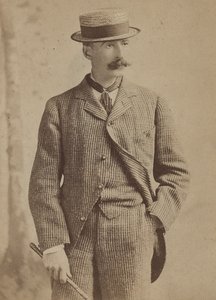
Winslow Homer
1836 - 1910 , Egyesült Államok
Gyors információk
- Artistic Movement Or Style: Amerikai Realizmus
- Artists Or Movements Influenced By This Artist: ['Amerikai festők']
- Artists Who Influenced This Artist:
- Barbizon Schule
- Courbet
- Millet
- Date Of Birth: Feb 24, 1836
- Date Of Death: Sept 29, 1910
- Full Name: Winslow Homer
- Nationality: Amerikai
- Notable Artworks:
- Breezing Up
- A Szántóföldi Gyűjtő
- A Gulf Stream
- Place Of Birth: Boston, USA
Kapcsolódó cikkek
A Boston Szépművészeti Múzeum 25 Gyöngyszeme: Mesterművek és Inspiráció Otthonra
Fedezze fel a Boston Szépművészeti Múzeum 25 legikonikusabb műalkotását! Monet, Renoir és más mesterek festményeinek története, inspiráló otthoni dekorációk. Prémium minőségű reprodukciók a AllPaintingsStore.com-on – fedezze fel a teljes gyűjteményt online!

William Owen: A Poetic Vision of War & Landscape in British Modernism
Explore the poignant war poetry of Wilfred Owen, a key figure in British Modernism. Discover his innovative style, themes of loss & camaraderie, and lasting impact on 20th-century literature. Analysis & historical context included.
Az amerikai realizmus 10 ikonikus remekműve – festmények otthonra a AllPaintingsStore kínálatából
Fedezze fel az amerikai realizmus 10 legikonikusabb remekművét! Ismerje meg Andrew Wyeth, Edward Hopper és más festők történetét. Múzeumi minőségű reprodukciók otthonra a AllPaintingsStore kínálatából – inspiráló faliképek és dekorációk online.

Winslow Homer 25 Mesterműve: Az Amerikai Tájkép Lelkét Megragadó Festmények
Fedezze fel Winslow Homer 25 legikonikusabb művét! Olajfestményei, akvarelljei az amerikai tájkép és tengerpartok lélegzetelállító szépségét ábrázolják. Művészeti reprodukciók galéria minőségben a AllPaintingsStore.com-on. Explore the full collection online!

Harper's Weekly & the Anonymous Hand: Artistic Identity in 19th-Century America
Explore the fascinating world of Harper's Weekly & its often-anonymous artists! Discover Winslow Homer, Thomas Nast, and the impact of 19th-century illustration on American visual culture. A deep dive for art history enthusiasts.


