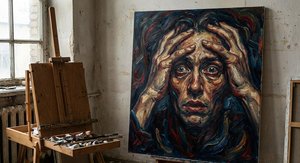
Misch Kohn (1916–2003): A Pioneer of Figurative Expressionism
Misch Kohn, born Harris Kohn in Kokomo, Indiana on March 26, 1916, to Russian immigrants Jacob and Anna Kohn, embarked on an artistic journey marked by profound engagement with social issues and a masterful exploration of printmaking techniques. His formative years were shaped by the Herron School of Art in Indianapolis where he honed his skills before pursuing further studies at Yale University. Notably, Kohn’s artistic trajectory took a decisive turn during his time at Laszlo Moholy-Nagy’s “New Bauhaus” Institute of Design in Chicago, fostering an innovative approach to graphic art that would define his career.- Early Influences: Kohn's initial exposure to European avant-garde movements—particularly Dada and Surrealism—fueled a desire to challenge conventional artistic norms and embrace emotional intensity as a primary expressive tool.
- The WPA Years: Following World War II, Kohn joined the Works Progress Administration (WPA), immersing himself in collaborative projects that addressed pressing social concerns during the era. This experience solidified his commitment to art’s role in shaping public discourse.
Exploring Printmaking Techniques and Conceptual Depth
Kohn's artistic philosophy centered on pushing the boundaries of printmaking mediums—woodcuts, lithographs, etchings—to convey complex ideas and emotions. He meticulously studied the processes involved, mastering techniques like aquatint and drypoint to achieve nuanced tonal gradations and textural effects. His prints often depicted scenes from everyday life interwoven with symbolic representations of human experience, reflecting a humanist sensibility deeply rooted in his Jewish heritage.- Collaboration with Stanley William Hayter: Kohn’s partnership with Stanley William Hayter at Atelier 17 in New York proved pivotal, introducing him to the principles of etching and fostering experimentation with innovative printing methods.
- The Bauhaus Legacy: The influence of Moholy-Nagy's Bauhaus aesthetic—emphasizing geometric abstraction alongside expressive elements—shaped Kohn’s artistic vision and encouraged him to integrate formal considerations into his thematic explorations.
Iconic Works and Critical Recognition
Kohn achieved international acclaim for his distinctive style, characterized by haunting portraits and evocative depictions of urban landscapes during the Second World War. Among his most celebrated pieces are “Season in Hell,” a visceral portrayal of existential angst; “My Grandfather’s Mustache,” which explores themes of memory and identity; “General,” reflecting on the complexities of leadership and responsibility; and “Three Generals,” symbolizing power dynamics and moral dilemmas. His artwork garnered recognition from prominent institutions including the Museum of Modern Art, New York City and the National Gallery of Art, Washington D.C., cementing his place as a seminal figure in postwar American art.Legacy and Continuing Influence
Misch Kohn died peacefully in Castro Valley, California on February 12, 2003, leaving behind an enduring artistic legacy that continues to inspire contemporary printmakers. His unwavering dedication to exploring the expressive potential of printmaking—combined with his profound engagement with social and psychological themes—established him as a champion of figurative expressionism and a visionary artist who profoundly impacted the trajectory of modern art history. Kohn’s work remains a testament to the transformative power of artistic vision and its capacity to illuminate the human condition.Kérdések és válaszok
Misch Kohn műveit hangulat alapján is böngészhetem?
A művész Hangulatok szobája oldala Misch Kohn alkotásait hangulat alapján csoportosítva mutatja be.
Hol tekinthetném meg Misch Kohn műveit időrendi sorrendben?
Misch Kohn műveletei időrendi sorrendben tekinthetők meg a művész Műalkotások időrendje oldalán.
Hány Misch Kohn alkotása tekinthető meg a katalógusban?
A Összes műalkotás oldalon Misch Kohn 19 műalkotás alkotását tekintheti meg.