

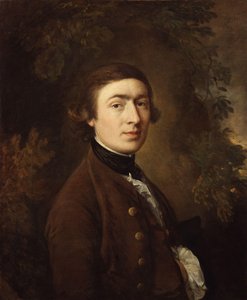
1758. Olio su tela. Gainsborough’s House.

§ 1Catalogue data


§ 2Abstract
Descrizione del reperto
Thomas Gainsborough's "Nathaniel Acton" captures the elegance of the Georgian era with its detailed portrait and serene landscape backdrop—a masterpiece reflecting British artistic heritage.
 Espandi i dettagli
Biografia dell'artista
Thomas Gainsborough (1727-1788): pittore britannico chiave del XVIII secolo, celebre per ritratti eleganti e paesaggi idilliaci. Co-fondatore della Royal Academy!
§ 3Commentary
Thomas Gainsborough: A Portrait of Dignity Amidst Rural Tranquility
Thomas Gainsborough (1727–1788) stands as one of the titans of British landscape and portraiture, a figure whose canvases continue to captivate audiences centuries later. Born in Sudbury, Suffolk, his artistic journey began remarkably early—drawing miniature self-portraits before he reached ten—demonstrating an innate talent that would propel him to international acclaim.
- Early Life and Training: Gainsborough’s formative years were steeped in the traditions of Suffolk weaving. Recognizing his exceptional aptitude for drawing, his father encouraged its development, steering him away from the family trade and toward a path illuminated by artistic exploration. He honed his skills under William Hogarth and Francis Hayman, absorbing influences that would shape his distinctive style.
- The Landscape Vision: Gainsborough’s contribution to art history transcends mere portraiture; he revolutionized British landscape painting. Alongside Richard Wilson, he established a school dedicated to capturing the sublime beauty of the English countryside—a departure from prevailing academic conventions and an embrace of spontaneity and observation. His landscapes are characterized by luminous color palettes and loose brushstrokes that convey a palpable sense of movement and atmosphere.
- Portraiture: Gainsborough’s portraits are renowned for their psychological depth and subtle realism. He skillfully captured the essence of his subjects—aristocrats, merchants, and landowners alike—presenting them with dignity and grace. His technique involved layering thin glazes of color over a toned ground, creating an illusionistic effect that imbues his figures with life and emotion.
- Notable Works: Among Gainsborough’s most celebrated paintings are “The Blue Boy” (1749), depicting a young gentleman in contemplative repose amidst a pastoral scene—a masterpiece of tonal harmony and psychological insight—and “Mrs. Richard Russell” (1762), showcasing the sitter's serene countenance against a backdrop of rolling hills. These works exemplify Gainsborough’s mastery of light, color, and composition.
- Legacy: Gainsborough’s influence extended far beyond his own lifetime. His style profoundly impacted subsequent generations of artists—most notably Constable—who adopted his approach to landscape painting, cementing Gainsborough's place as a cornerstone of British artistic heritage. Today, his paintings continue to inspire admiration for their beauty and emotional resonance.
The enduring appeal of Gainsborough’s oeuvre lies in its ability to convey not merely visual splendor but also profound human emotion—a testament to his unparalleled skill as an artist and his unwavering devotion to capturing the spirit of his time. His landscapes offer a glimpse into the tranquility of rural England, while his portraits invite contemplation on the complexities of human character.
Domande e risposte
A quale movimento e a quale epoca appartiene "Nathaniel Acton" di Thomas Gainsborough?
"Nathaniel Acton" di Thomas Gainsborough appartiene al movimento Impressionism, inserendosi nel contesto dell'epoca Età Moderna del suo autore.
Con quale tecnica è realizzata "Nathaniel Acton" di Thomas Gainsborough?
La tecnica utilizzata per "Nathaniel Acton" di Thomas Gainsborough è Olio su tela. Le riproduzioni mirano a restituire l'aspetto di questa tecnica.
Che tipo di opera è "Nathaniel Acton"?
Nel catalogo, "Nathaniel Acton" di Thomas Gainsborough è classificato come Opere da parete. La categoria permette di trovare opere simili.


 Passa alle stampe


 Per opere d'arte o riproduzioni con un lato superiore a 105 cm (circa 41 pollici), la cornice verrà spedita in forma di kit smontato. Questo metodo garantisce una consegna sicura e previene danni durante il trasporto.


